

$449.00


From watching movies on a private 200-inch floating screen to creating a more flexible workspace, AR glasses are finding more practical roles in everyday life. However, the best AR glasses are not necessarily the ones with the most features. They are the ones that match how you plan to use them.
Whether you want immersive entertainment, portable productivity, or a new way to interact with digital content, this guide explores some of the leading AR glasses available in 2026 and the key factors to consider before choosing the right pair.

AR glasses are wearable devices that add digital content to your view of the real world. Unlike traditional glasses, they use displays, cameras, and sensors to combine your surroundings with virtual information such as images, text, navigation guidance, or virtual screens.
The term AR stands for "augmented reality," which means enhancing the real world with computer-generated content rather than replacing it completely. This is different from bulky VR headsets, which create a fully digital environment that blocks out your surroundings.
Today's AR glasses come in different forms. Some focus on creating a large virtual display for movies, gaming, and productivity, while more advanced models combine transparent displays, spatial tracking, and AI assistance to create more interactive experiences.
Choosing the best AR glasses in 2026 depends on how you plan to use them. A model designed for watching movies and gaming may prioritize display quality, while glasses built for AI assistance or true AR experiences need stronger cameras, sensors, and spatial tracking.
The first step is understanding what you want your AR glasses to do.
Virtual screen glasses
Best for entertainment and productivity, these models create a large private display that appears in front of you. They are ideal for:
For this type of AR glasses, prioritize display quality, comfort, and device compatibility.
Transparent AR glasses
These models are designed to place digital information into your real-world view while keeping your surroundings visible. They are better suited for:
For transparent AR glasses, look more closely at tracking capabilities, camera quality, AI features, and display technology.
Once you know the type of experience you want, display quality becomes one of the most important factors.
For virtual screen AR glasses, pay attention to:
For transparent AR glasses, also consider:
Many newer AR glasses combine displays with AI features. Depending on the model, AI can help you recognize objects, translate languages, summarize information, answer questions, or interact with your surroundings through voice commands.
If AI is a priority, check:
Since AR glasses are designed to be worn like regular eyewear, comfort can make a bigger difference than having the highest specifications.
Consider:
Most AR glasses work as an extension of another device, so compatibility matters before buying.
Check whether the glasses support:
A model with excellent display quality may still be frustrating if it does not connect easily with your existing devices.
Built-in audio can make AR glasses more convenient for everyday use. Look for:
Other useful features may include:
So, what are the best AR glasses for everyday use? The answer depends on the experience you want.
A display-focused model makes more sense if you mainly want a private screen for movies, gaming, or work. If you prefer AI assistance, translation, navigation, and digital information layered over the real world, a transparent AR model will be a better fit.
The following RayNeo models are designed for these distinct needs.
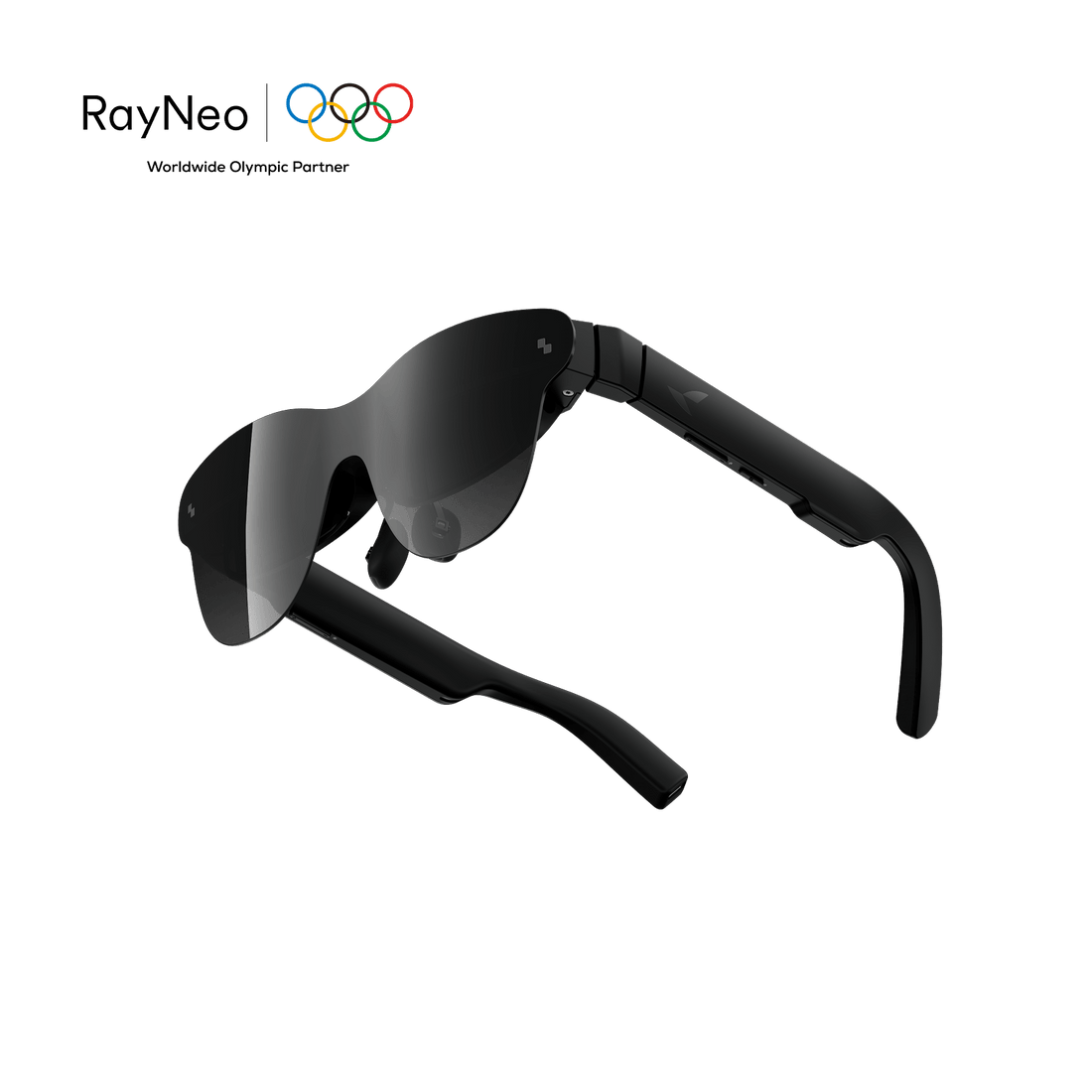
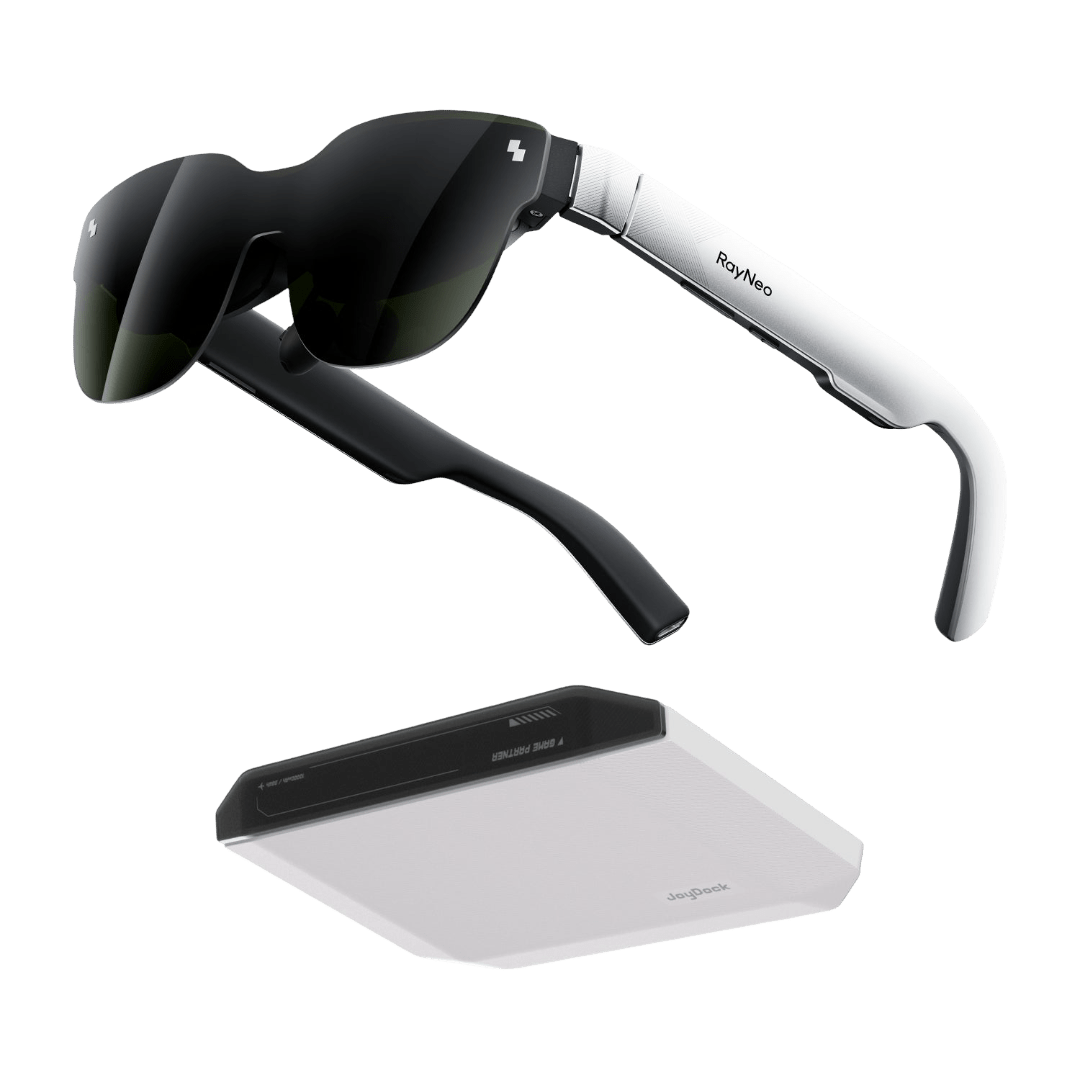
The RayNeo Air 4 Pro AR Glasses are built around one clear idea: giving you a large personal screen that fits into a glasses case.
Connect them to a compatible phone, laptop, tablet, or gaming device, and the dual 1080p Micro-OLED displays create a virtual screen of up to 201 inches. That makes them especially practical for watching movies on a flight, playing handheld games away from a TV, or adding a private display when you are working in a small space.
Image quality is one of the Air 4 Pro's main strengths. HDR10 support, up to 1,200 nits of brightness, and a 200,000:1 contrast ratio help produce vivid highlights, deep blacks, and accurate colors. Its dedicated Vision 4000 chip can also convert SDR video to HDR in real time, so older or non-HDR content can benefit from improved contrast and color.
Four open-ear speakers co-tuned by Bang & Olufsen provide spatial sound, while Whisper Mode 2.0 is designed to reduce sound leakage when you are using the glasses on a plane, train, or in another shared space.

Best for: Movie fans, frequent travelers, commuters, and gamers looking for the best budget AR glasses for immersive viewing and portable gaming.
Key features:
The RayNeo X3 Pro AI+AR Smart Glasses combine a transparent, full-color MicroLED display with cameras, spatial tracking, and Google Gemini AI. Rather than creating one large entertainment screen, they place information such as translations, navigation guidance, reminders, and AI responses within your view while leaving your surroundings visible.
This makes the X3 Pro better suited to tasks that happen while you are moving through the day. You can ask Gemini questions about what you see, display real-time text and audio translations across 14 supported languages, or follow heads-up navigation with routes, arrows, and nearby landmarks.
They also work as a lightweight productivity assistant. Voice commands let you create memos, manage schedules, transcribe conversations, and summarize meetings without reaching for your phone.
The X3 Pro combines a built-in Android virtual environment with RayNeo AIOS to bring compatible apps and AR-specific tools into the display experience. You can interact with supported apps, like TikTok or Instagram, and access features such as the teleprompter, camera, and music player through an intuitive 3D interface.
Through the RayNeo app, you can unlock connected AI experiences and cloud-based features that make the glasses more useful throughout the day. Creator Mode and AR development tools also give developers room to build and test spatial applications.

Best for: Travelers, multilingual professionals, creators, developers, and early adopters who want visual AI assistance and transparent AR features in one wireless device.
Key features:
Finding the best AR glasses depends on how you plan to use them. Whether you want a private screen for movies and gaming, a portable workspace, or more advanced AR and AI features, the right choice comes down to matching the technology with your daily needs. By comparing display quality, comfort, compatibility, and smart features, you can choose a pair that delivers the experience you actually want.
AR glasses can act as a portable alternative to a monitor by creating a large virtual display for work, gaming, or entertainment. However, they may not fully replace a traditional monitor for everyone, especially for long work sessions that require multiple screens, precise text clarity, or extensive multitasking. They are best suited for users who value portability and private viewing.
Yes, many AR glasses can be used with prescription lenses, either through adjustable diopters, clip-on prescription inserts, or custom prescription lens options. However, compatibility varies by model, so you should check whether the glasses support your prescription range and lens type before buying. Some designs may require separate prescription accessories rather than fitting prescription lenses directly into the frame.
AR glasses and smart glasses are designed for different purposes, so neither is always better. AR glasses focus on visual experiences such as virtual displays, navigation overlays, and immersive content, while many smart glasses focus on features like audio, cameras, and AI assistance. The better choice depends on whether you want a wearable screen or hands-free smart features.





Share:
New Tech Gadgets to Watch: Smart Rings, AI Speakers, and More
What Are AR Glasses? Exploring Augmented Reality Wearables