A frame that looks balanced on one person can create a completely different effect on another. Its shape, width, and height all influence how it complements the forehead, cheekbones, and jaw. Choosing a glasses shape for your face shape starts with understanding those proportions, then checking how the frame actually fits.
This guide covers common face shapes, frame styles worth trying, and practical ways to assess comfort. It also explains how these considerations extend to AR glasses, where viewing alignment adds another step to the selection process.
How to Identify Your Face Shape
Face shape provides a useful starting point for comparing frames. A mirror or a clear, straight-on photo can help reveal the features that define the overall outline.
Compare Your Facial Proportions
Pull hair away from the face and look straight ahead with a relaxed expression. In a photo, keep the camera at eye level and avoid taking a close-up selfie, which can distort proportions.
Focus on four features:
-
Forehead width: Compare the forehead with the cheekbones and jaw.
-
Cheekbone width: Notice whether the cheekbones form the widest part of the face.
-
Jawline: Look for a rounded curve, pronounced corners, or a gradual taper toward the chin.
-
Face length: Compare the distance from the hairline to the chin with the width across the cheekbones.
The relationship between these features matters more than assigning an exact measurement to each one.
Recognize Five Common Face Shapes
|
Face shape
|
Common features
|
|
Oval
|
Longer than it is wide, with gently curved contours and a slightly narrower jaw
|
|
Round
|
Similar length and width, with a rounded jawline and soft contours
|
|
Square
|
Similar forehead and jaw widths, with distinct jaw angles
|
|
Heart
|
A broader forehead that tapers toward a narrower chin
|
|
Diamond
|
Prominent cheekbones, with a relatively narrow forehead and jaw
|
Some faces combine features from more than one category. Use the most noticeable proportions to guide the first few frame choices.
Which Glasses Suit My Face?
Frame shape can echo facial contours or introduce contrast. Angular frames add definition beside softer features, while curved frames bring a softer line to a pronounced jaw. Frame size determines how strong that effect becomes.
|
Face shape
|
Frame styles to try
|
Styling direction
|
|
Oval
|
Rectangular, square, softly geometric
|
Add definition while keeping proportions balanced
|
|
Round
|
Rectangular, square, defined browline
|
Introduce straighter lines and visible corners
|
|
Square
|
Round, oval, softly curved
|
Contrast with an angular jawline
|
|
Heart
|
Thin-rimmed, rounded, softly rectangular
|
Keep the upper frame visually light
|
|
Diamond
|
Oval, cat-eye, gently upswept
|
Add interest around the eyes and upper face
|
Glasses for Oval Faces
Rectangular and square frames add structure to an oval face’s softer contours. Geometric designs with rounded corners offer a similar effect with less contrast.
Start with a frame width that fits comfortably across the face, then compare frame heights. Taller frames create a bolder look, while shorter frames leave more of the face visible. Neither should dominate the proportions unintentionally.
Glasses for Round Faces
Rectangular and square frames introduce straighter lines beside rounded cheeks and a softer jaw. A defined upper rim can also draw attention to the eye area.
Choose a frame that is wide enough to fit comfortably, with a height that looks balanced against the face’s length and width. Extremely narrow frames are not automatically the best choice. Round frames remain an option for a softer, coordinated look.
Glasses for Square Faces
Round and oval frames create contrast with a pronounced jawline. Softly curved rectangular frames offer a middle ground for a more understated style.
Compare how the outer corners relate to the face’s width. A frame that is too small can look compressed and feel tight, regardless of whether its shape complements the jaw.
Glasses for Heart-Shaped Faces
Thin rims and subtle upper edges keep attention around the eyes without adding a heavy line across a broader forehead. Rounded frames and softly rectangular designs provide useful starting points.
Consider the full silhouette, including the bridge and temples. A delicate front paired with bulky temples can create a different effect from a consistently slender design.
Glasses for Diamond Faces
Oval and gently upswept frames introduce curves around prominent cheekbones. Cat-eye styles add definition toward the upper outer corners of the face.
Pay particular attention to where the lower rims sit. The frame should rest securely on the nose without pressing into the cheeks or lifting noticeably when smiling.
How to Check Whether Glasses Fit Properly
A flattering outline is only one part of choosing glasses. Frame width, bridge support, and temple fit determine whether that style works in practice.
Frame Width and Temple Fit
The frame should sit level without squeezing the sides of the head. Temples should extend comfortably toward the ears without bowing outward excessively or creating concentrated pressure.
A frame that slips does not necessarily need tighter temples. Bridge fit and overall sizing also affect stability.
Bridge Fit and Frame Position
The bridge or nose pads should support the frame evenly. Check whether the glasses slide during ordinary head movements or sit unevenly, with one side higher than the other.
Smile and speak while wearing them. The lower rims should not press firmly into the cheeks, and the frame should remain stable without frequent repositioning.
Frame Measurements and Prescription Needs
A comfortable existing pair provides a useful size reference. Many frames list lens width, bridge width, and temple length inside a temple arm. Compare these measurements alongside the overall frame width and shape.
For prescription eyewear, lens requirements also influence suitable frame dimensions. An optician can help match the frame to the prescription and lens design. For AR eyewear, check the specific product’s prescription solution rather than assuming conventional lenses can be fitted directly.
What to Consider When Choosing AR Glasses
Choosing AR glasses involves familiar fit checks, including nose support and temple comfort, plus the position of the eyes relative to the display optics. A frame can look proportionate while still requiring a different optical size or nose-pad position for a clear view.
Check IPD and Viewing Alignment
Interpupillary distance, or IPD, is the distance between the centers of the pupils. It is a separate measurement from face width and cannot be determined from a face-shape category.
Check the model’s IPD specifications before selecting a size. Once the glasses are on, assess whether the image is centered and clear across the viewing area. Nose-pad height can affect vertical alignment, so follow the model’s fitting instructions when adjusting the viewing position.
RayNeo GT Max: IPD Size Options and Immersive Viewing
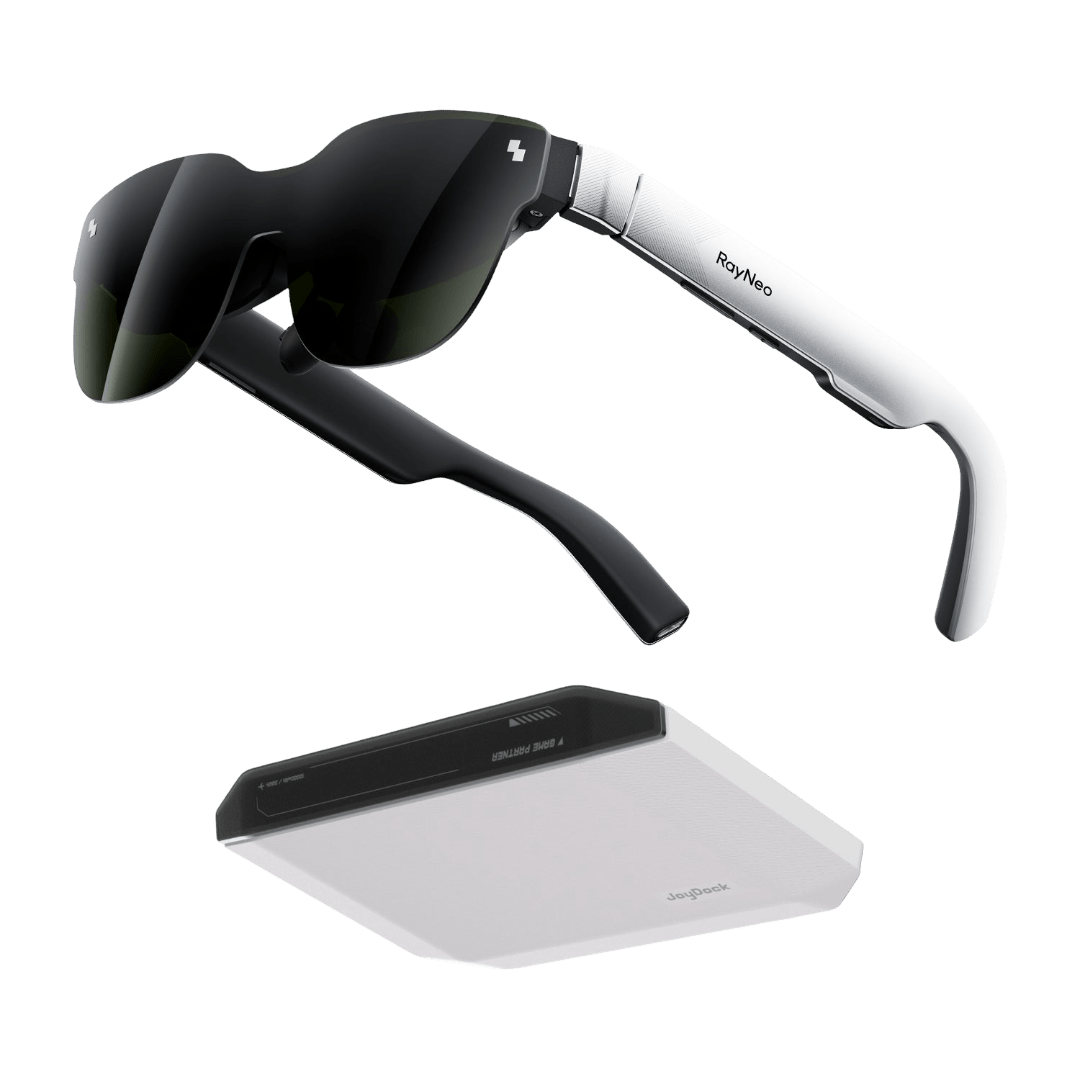
RayNeo GT Max AR Glasses offer three IPD size options: S for IPDs below 64mm, M for 64–67mm, and L for IPDs above 67mm. These are separate optical size options, making IPD measurement an important part of model selection.
RayNeo GT Max combines a 59° field of view with native 3DoF spatial tracking for immersive movies and gaming. Follow, Steady, and Pinned viewing modes provide different ways to position the virtual screen. The three IPD options support optical alignment, while the wide field of view provides an expansive viewing experience.
RayNeo GT: Adjustable Nose Pads and Everyday Entertainment
RayNeo GT AR Glasses weigh 68g and feature a fixed 64mm IPD with adjustable nose pads. Nose-pad adjustment helps position the glasses vertically; the optical IPD remains fixed.
RayNeo GT includes native 3DoF spatial tracking and Follow, Steady, and Pinned viewing modes for travel and everyday entertainment. RayNeo GT connects through a single USB-C cable to compatible smartphones, laptops, tablets, and handheld gaming devices that support DisplayPort Alt Mode video output.
How to Choose Glasses Online
A structured comparison makes it easier to move from an appealing product photo to a suitable pair.
-
Shortlist frame shapes. Choose a few outlines based on facial proportions and personal style.
-
Compare dimensions. Use a comfortable existing pair as a reference, considering both listed measurements and overall frame width.
-
Preview the appearance. Use virtual try-on, where available, to compare frame outlines and colors. Physical try-on remains useful for checking pressure and stability.
-
Check product-specific requirements. Review prescription options and fit information. For AR glasses, also verify IPD specifications and compatibility with the intended device.
Keeping appearance, physical fit, and technical requirements in the same comparison helps prevent one attractive feature from overshadowing the rest.
Conclusion
Choosing a glasses shape for your face shape works best as a practical sequence: identify the main facial contours, compare complementary frame styles, and check how each pair sits. Personal style can guide the final choice within those considerations.
For AR glasses, add IPD and viewing alignment to that process. Combining balanced proportions, stable support, and suitable optical fit creates a stronger basis for choosing glasses for everyday use or entertainment.
Frequently Asked Questions
What if My Face Shape Falls Between Two Categories?
Use the features that stand out most. A face with rounded cheeks and a defined jaw can draw ideas from both round- and square-face recommendations. Compare a curved frame with an angular one, then assess their proportions and fit.
Can Round Faces Wear Round Glasses?
Yes. Round frames can complement soft contours and create a coordinated look. Angular frames provide more contrast, but neither approach is compulsory. Frame size, rim thickness, and personal style all influence the result.
Does Face Shape Determine the Right AR Glasses Size?
No. Face shape helps guide appearance, while frame dimensions, IPD, and nose-pad position address different aspects of fit. Check the product’s optical specifications and assess viewing alignment separately from its visual style.




A frame that looks balanced on one person can create a completely different effect on another. Its shape, width, and height all influence how it complements the forehead, cheekbones, and jaw. Choosing a glasses shape for your face shape starts with understanding those proportions, then checking how the frame actually fits.
This guide covers common face shapes, frame styles worth trying, and practical ways to assess comfort. It also explains how these considerations extend to AR glasses, where viewing alignment adds another step to the selection process.
How to Identify Your Face Shape
Face shape provides a useful starting point for comparing frames. A mirror or a clear, straight-on photo can help reveal the features that define the overall outline.
Compare Your Facial Proportions
Pull hair away from the face and look straight ahead with a relaxed expression. In a photo, keep the camera at eye level and avoid taking a close-up selfie, which can distort proportions.
Focus on four features:
The relationship between these features matters more than assigning an exact measurement to each one.
Recognize Five Common Face Shapes
Face shape
Common features
Oval
Longer than it is wide, with gently curved contours and a slightly narrower jaw
Round
Similar length and width, with a rounded jawline and soft contours
Square
Similar forehead and jaw widths, with distinct jaw angles
Heart
A broader forehead that tapers toward a narrower chin
Diamond
Prominent cheekbones, with a relatively narrow forehead and jaw
Some faces combine features from more than one category. Use the most noticeable proportions to guide the first few frame choices.
Which Glasses Suit My Face?
Frame shape can echo facial contours or introduce contrast. Angular frames add definition beside softer features, while curved frames bring a softer line to a pronounced jaw. Frame size determines how strong that effect becomes.
Face shape
Frame styles to try
Styling direction
Oval
Rectangular, square, softly geometric
Add definition while keeping proportions balanced
Round
Rectangular, square, defined browline
Introduce straighter lines and visible corners
Square
Round, oval, softly curved
Contrast with an angular jawline
Heart
Thin-rimmed, rounded, softly rectangular
Keep the upper frame visually light
Diamond
Oval, cat-eye, gently upswept
Add interest around the eyes and upper face
Glasses for Oval Faces
Rectangular and square frames add structure to an oval face’s softer contours. Geometric designs with rounded corners offer a similar effect with less contrast.
Start with a frame width that fits comfortably across the face, then compare frame heights. Taller frames create a bolder look, while shorter frames leave more of the face visible. Neither should dominate the proportions unintentionally.
Glasses for Round Faces
Rectangular and square frames introduce straighter lines beside rounded cheeks and a softer jaw. A defined upper rim can also draw attention to the eye area.
Choose a frame that is wide enough to fit comfortably, with a height that looks balanced against the face’s length and width. Extremely narrow frames are not automatically the best choice. Round frames remain an option for a softer, coordinated look.
Glasses for Square Faces
Round and oval frames create contrast with a pronounced jawline. Softly curved rectangular frames offer a middle ground for a more understated style.
Compare how the outer corners relate to the face’s width. A frame that is too small can look compressed and feel tight, regardless of whether its shape complements the jaw.
Glasses for Heart-Shaped Faces
Thin rims and subtle upper edges keep attention around the eyes without adding a heavy line across a broader forehead. Rounded frames and softly rectangular designs provide useful starting points.
Consider the full silhouette, including the bridge and temples. A delicate front paired with bulky temples can create a different effect from a consistently slender design.
Glasses for Diamond Faces
Oval and gently upswept frames introduce curves around prominent cheekbones. Cat-eye styles add definition toward the upper outer corners of the face.
Pay particular attention to where the lower rims sit. The frame should rest securely on the nose without pressing into the cheeks or lifting noticeably when smiling.
How to Check Whether Glasses Fit Properly
A flattering outline is only one part of choosing glasses. Frame width, bridge support, and temple fit determine whether that style works in practice.
Frame Width and Temple Fit
The frame should sit level without squeezing the sides of the head. Temples should extend comfortably toward the ears without bowing outward excessively or creating concentrated pressure.
A frame that slips does not necessarily need tighter temples. Bridge fit and overall sizing also affect stability.
Bridge Fit and Frame Position
The bridge or nose pads should support the frame evenly. Check whether the glasses slide during ordinary head movements or sit unevenly, with one side higher than the other.
Smile and speak while wearing them. The lower rims should not press firmly into the cheeks, and the frame should remain stable without frequent repositioning.
Frame Measurements and Prescription Needs
A comfortable existing pair provides a useful size reference. Many frames list lens width, bridge width, and temple length inside a temple arm. Compare these measurements alongside the overall frame width and shape.
For prescription eyewear, lens requirements also influence suitable frame dimensions. An optician can help match the frame to the prescription and lens design. For AR eyewear, check the specific product’s prescription solution rather than assuming conventional lenses can be fitted directly.
What to Consider When Choosing AR Glasses
Choosing AR glasses involves familiar fit checks, including nose support and temple comfort, plus the position of the eyes relative to the display optics. A frame can look proportionate while still requiring a different optical size or nose-pad position for a clear view.
Check IPD and Viewing Alignment
Interpupillary distance, or IPD, is the distance between the centers of the pupils. It is a separate measurement from face width and cannot be determined from a face-shape category.
Check the model’s IPD specifications before selecting a size. Once the glasses are on, assess whether the image is centered and clear across the viewing area. Nose-pad height can affect vertical alignment, so follow the model’s fitting instructions when adjusting the viewing position.
RayNeo GT Max: IPD Size Options and Immersive Viewing
RayNeo GT Max AR Glasses offer three IPD size options: S for IPDs below 64mm, M for 64–67mm, and L for IPDs above 67mm. These are separate optical size options, making IPD measurement an important part of model selection.
RayNeo GT Max combines a 59° field of view with native 3DoF spatial tracking for immersive movies and gaming. Follow, Steady, and Pinned viewing modes provide different ways to position the virtual screen. The three IPD options support optical alignment, while the wide field of view provides an expansive viewing experience.
RayNeo GT: Adjustable Nose Pads and Everyday Entertainment
RayNeo GT AR Glasses weigh 68g and feature a fixed 64mm IPD with adjustable nose pads. Nose-pad adjustment helps position the glasses vertically; the optical IPD remains fixed.
RayNeo GT includes native 3DoF spatial tracking and Follow, Steady, and Pinned viewing modes for travel and everyday entertainment. RayNeo GT connects through a single USB-C cable to compatible smartphones, laptops, tablets, and handheld gaming devices that support DisplayPort Alt Mode video output.
How to Choose Glasses Online
A structured comparison makes it easier to move from an appealing product photo to a suitable pair.
Keeping appearance, physical fit, and technical requirements in the same comparison helps prevent one attractive feature from overshadowing the rest.
Conclusion
Choosing a glasses shape for your face shape works best as a practical sequence: identify the main facial contours, compare complementary frame styles, and check how each pair sits. Personal style can guide the final choice within those considerations.
For AR glasses, add IPD and viewing alignment to that process. Combining balanced proportions, stable support, and suitable optical fit creates a stronger basis for choosing glasses for everyday use or entertainment.
Frequently Asked Questions
What if My Face Shape Falls Between Two Categories?
Use the features that stand out most. A face with rounded cheeks and a defined jaw can draw ideas from both round- and square-face recommendations. Compare a curved frame with an angular one, then assess their proportions and fit.
Can Round Faces Wear Round Glasses?
Yes. Round frames can complement soft contours and create a coordinated look. Angular frames provide more contrast, but neither approach is compulsory. Frame size, rim thickness, and personal style all influence the result.
Does Face Shape Determine the Right AR Glasses Size?
No. Face shape helps guide appearance, while frame dimensions, IPD, and nose-pad position address different aspects of fit. Check the product’s optical specifications and assess viewing alignment separately from its visual style.
Share:
Leave a Comment
We'd love to hear your thoughts. Comments are reviewed before publication.