

$429.00


If you are wondering what are smart glasses, they are wearable electronic devices that add features such as audio, cameras, AI assistance, or digital displays to an eyewear-style design. But what do smart glasses do in everyday life?
Today, smart glasses are increasingly specialized for work, entertainment, communication, and hands-free interaction. Depending on the model, they can reduce reliance on phones, laptop screens, or cameras. Their main capabilities include audio interaction, visual information, and environmental awareness. This guide explains what smart glasses can do, where they are useful, and how to decide whether they fit your needs.

Today, smart glasses generally fall into four broad categories: audio-focused glasses, camera- and AI-enabled glasses, virtual-screen or XR glasses, and AR glasses with spatial awareness. While their functions differ, they share the same basic idea: integrating processors, sensors, connectivity, and other smart features into an eyewear-style design.
The best type is not necessarily the one with the most features. It is the one that best matches how you plan to use it in daily life.
Microphones, cameras, sensors, or touch controls collect input. A processor in the glasses or a connected device handles that information, then delivers the result through audio, a display, or a companion app.
Audio is one of the most common smart-glasses functions. Built-in microphones and open-ear speakers can support calls, music, directions, and voice assistants without requiring users to constantly handle a phone.
Many models also include touch controls on the temples, while some AR glasses support head movements or gestures. The main benefit is simple: quicker, hands-free access to information while staying aware of your surroundings.
Display technology is one of the most important parts of modern smart glasses tech, especially for devices designed around virtual screens, navigation prompts, translated text, or augmented-reality content.
Near-eye displays use compact panels and optical systems to place images within the wearer’s field of view. Micro-OLED is often used for high-contrast video, while some AR systems use MicroLED and waveguide optics for transparent visual overlays.
Resolution, brightness, contrast, field of view, and refresh rate all shape the experience. For movies, they affect subtitle clarity and dark-scene detail. For gaming, refresh rate and latency influence smoothness and responsiveness.
Camera-equipped smart glasses can capture first-person photos and video. With compatible AI software, some models can also identify objects, summarize visual information, or assist with translation.
More advanced AR glasses may combine cameras, inertial sensors, and spatial-tracking technology to understand movement and surroundings. SLAM, for example, can help compatible devices estimate their position while mapping the environment.
These features vary by model, so they should not be treated as standard capabilities across all smart glasses.
What are smart glasses used for in everyday life? Their value depends less on how many features they offer and more on whether those features solve a real problem. The strongest use cases appear when a phone, laptop, TV, or camera becomes inconvenient.
Remote workers and frequent travelers often work in hotels, coworking spaces, airports, or other places where desk space is limited. Display-style smart glasses can provide a large virtual screen while a laptop, phone, or another connected device handles the computing.
Depending on the model and software, some glasses can mirror a single display, while others support ultrawide or multiple virtual screens for documents, messages, spreadsheets, or reference material.
A wearable display can also provide more flexibility in screen positioning because the image is not tied to the physical height of a laptop. OSHA computer workstation guidance recommends positioning displays to help keep the head and neck in a neutral posture. For work-focused use, text clarity, image stability, field of view, latency, compatibility, and fit are more important than screen size alone.
Working in airports, trains, or shared spaces can expose laptop and tablet screens to people nearby. Near-eye displays can make on-screen content less visible to others than a conventional monitor.
This can be useful when reviewing work documents while traveling. However, smart glasses are not a complete security solution. Workplace policies, audio leakage, and device connectivity still need attention.
For frequent travelers, a personal display can provide a more discreet viewing experience without relying on a physical privacy filter.
Travelers often need directions, translations, or quick information without repeatedly looking down at a phone. Compatible smart glasses can bring some of this information closer to the natural line of sight.
Camera-equipped models may capture first-person photos and video, while display-enabled glasses can support navigation prompts, translated text, or contextual information. Some models can also recognize text on signs, menus, or other surroundings and present translated information through audio or a visual display.
These capabilities vary by model, supported languages, software, and connectivity. Their practical advantage is reducing the number of times users need to switch between the surrounding environment and a phone screen.
Camera-equipped smart glasses can also support first-person remote assistance. A technician can share a live view of equipment, wiring, or components with a remote expert while keeping both hands free.
Depending on the hardware and software, the expert may provide voice instructions or visual guidance. This can support field service, maintenance, training, and other hands-on tasks.
The main advantage is that the remote expert sees the same view as the person doing the work.
Display-equipped smart glasses can support teleprompter-style workflows when compatible software is available. Talking points, short prompts, or script text can appear within the wearer’s view while the speaker continues facing the audience or camera.
This can be useful for presentations, video recording, demonstrations, and field reporting. Effectiveness depends on text clarity, display position, controls, and software compatibility.
For gamers and movie viewers, display-style smart glasses can act as a portable personal screen. Their main advantages include perceived screen size, portability, viewing privacy, and the ability to watch or play without installing a large TV or monitor.
Display specifications can affect the experience in different ways. Resolution and contrast influence image detail, while refresh rate can affect motion smoothness in compatible games and video. End-to-end latency, image stability, fit, and source-device performance also matter, especially during longer sessions.
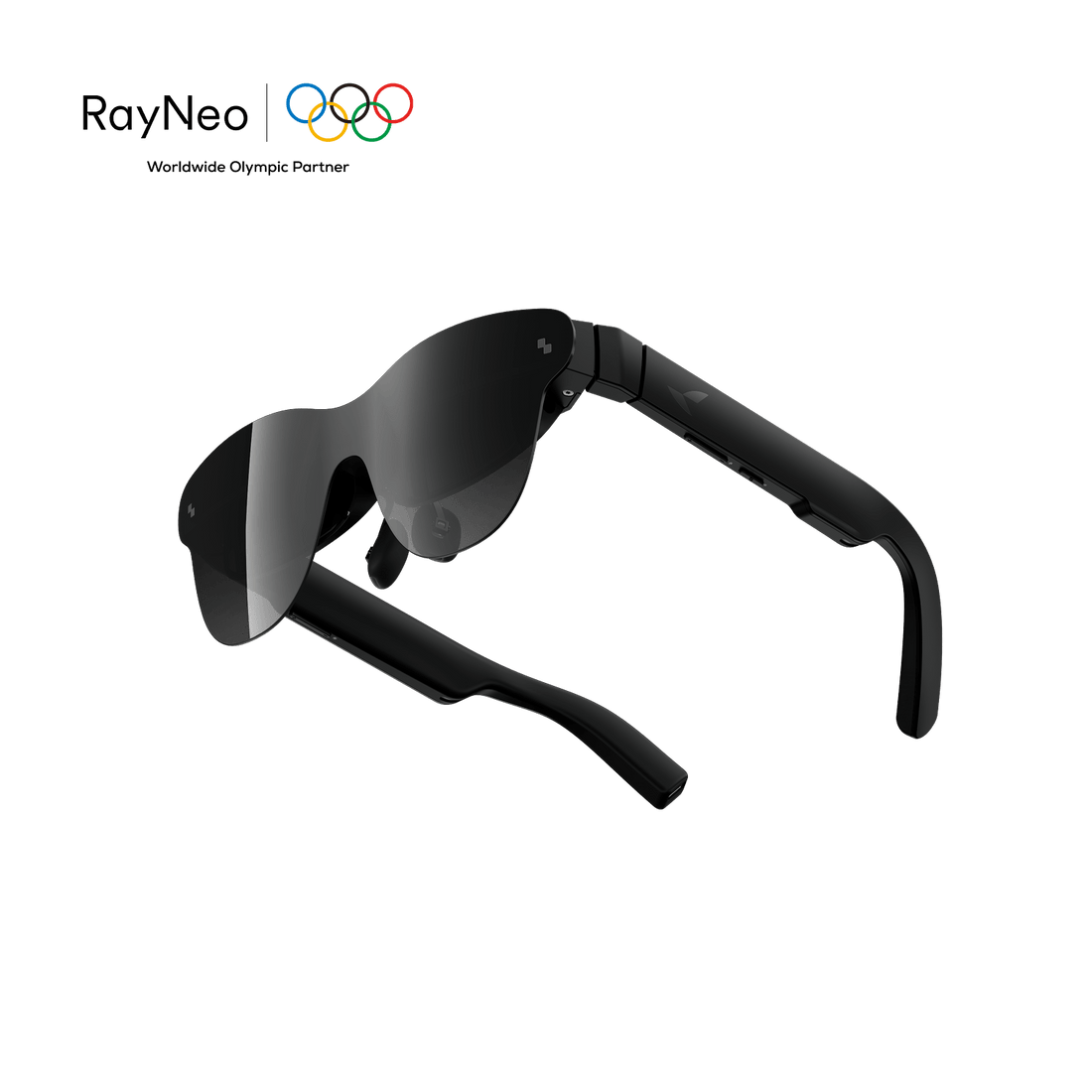
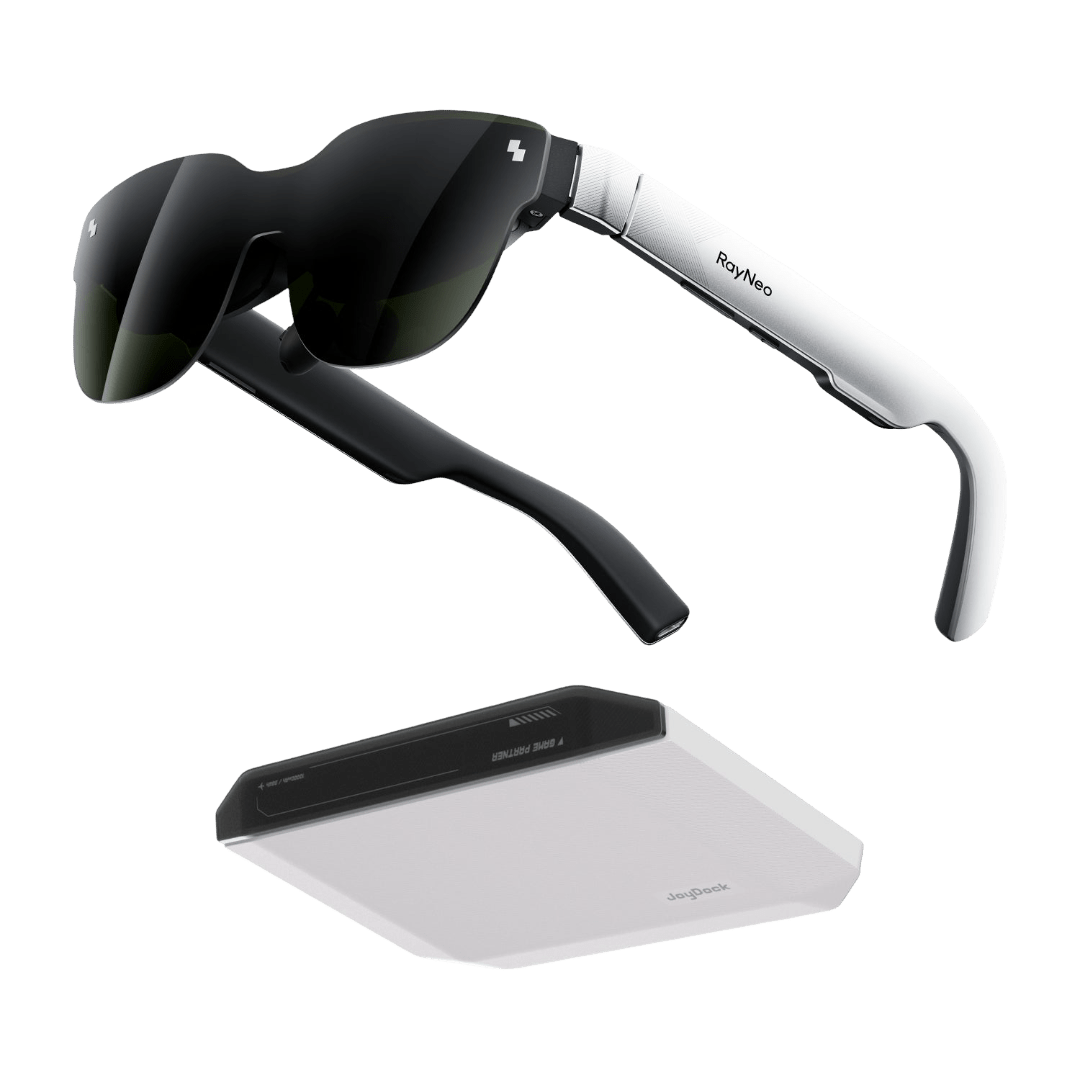
For users interested in this type of portable entertainment experience, the RayNeo Air 4 Pro AR Glasses provide a display-focused example, combining a large virtual screen, high refresh rate, and integrated audio for movies, streaming, and compatible games.
This makes this type of smart glasses especially practical in apartments, bedrooms, hotels, or other spaces where a large physical screen is inconvenient.

You may benefit from smart glasses if you regularly want hands-free audio, a private large screen, first-person recording, or visual guidance. You may not need them if your phone and headphones already solve those problems comfortably.
Before buying, decide which category matches your main use:
Then check phone and computer compatibility, prescription support, battery life, privacy controls, fit, return policies, and whether you need a wired adapter. A model with fewer features may be the better choice if it is lighter, more comfortable, and reliable for your daily routine.
So, what are smart glasses, and do you really need them? The answer depends on what you want them to do. Some focus on audio, cameras, and AI assistance, while others provide AR visuals or a private virtual screen for work and entertainment.
The best choice is the one that solves a real problem, whether that means creating a portable workspace, enjoying immersive entertainment, accessing information hands-free, or supporting professional tasks. Before choosing, consider comfort, compatibility, privacy, battery life, and the features you actually need. The right smart glasses should make everyday tasks more convenient, not simply add more technology.
Sometimes. Some smart glasses can be worn over regular glasses if the frame provides enough clearance, although stacked frames may add bulk or reduce comfort. Other models support prescription inserts or custom lenses instead. Check the fit and prescription options for the model you are considering.
Smart glasses with camera functions typically feature a visible indicator light on the front or side of the frame that stays lit during recording. Some models also use a short audio cue to notify the wearer and those nearby, creating a clear and perceptible recording status. Because of this, being open and providing friendly reminders to those around you when using recording features in public is a key part of responsible smart glasses use.
Most smart glasses currently connect to devices via Bluetooth and wired video output. Audio and AI assistant functions mainly rely on Bluetooth compatibility with iOS and Android. Display mirroring depends on USB-C DP Alt Mode or using an adapter to connect to laptops and console devices that support video output. However, we still recommend checking if your phone and laptop support video output standards before buying to avoid extra hassle with cables and adapters later.
In heavy AR use cases—such as constant spatial tracking, real-time navigation, and camera stream input—the battery life for the current generation of standalone AR smart glasses typically ranges from two to five hours. This depends on processor power consumption, display brightness, and environmental temperature.





Share:
Translation Glasses: What You Can Actually Do with Them Today
New Tech Gadgets to Watch: Smart Rings, AI Speakers, and More