

Sale price$399.00
Regular priceReg. $429.00
Save $30.00

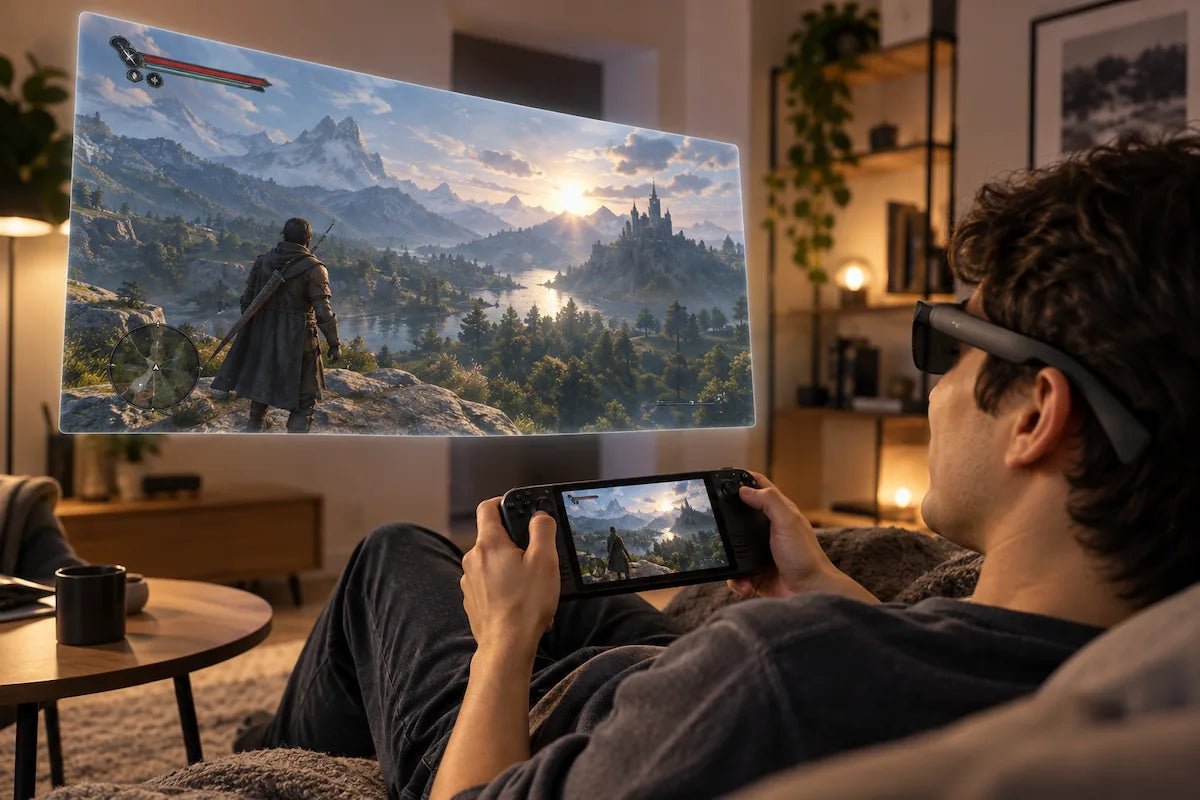
Steam Deck and ROG Ally make it easy to play PC games almost anywhere, but their built-in screens can feel limiting when you are playing cinematic AAA titles, reading small HUD text, or spending hours in an RPG. A larger display can make those games easier to enjoy, yet carrying a monitor or docking to a TV is not always practical.
That is where Steam Deck AR glasses come in. They turn a compatible handheld into a much larger personal display while keeping the console in your hands. In this guide, we will look at what matters for handheld gaming, how AR glasses connect, and which options are best suited to different types of players.

Yes. Compatible AR glasses can connect directly to a Steam Deck over USB-C and work as a large external display, letting you keep the handheld controls in your hands while viewing the game on a much bigger virtual screen.
For gaming, look beyond screen size alone. A Full HD display is a practical match for handheld use, while higher refresh rates can make supported games feel smoother. FOV affects how immersive the game feels, while higher PPD helps keep HUD text, menus, and subtitles clear. Comfort also matters if you plan to play for hours.
For a more immersive setup, the RayNeo GT Max offers a wider 59° view, while the RayNeo GT combines a lighter 68g frame with 49 PPD for clear detail during longer sessions.
AR glasses work with compatible gaming handhelds much like an external monitor. The Steam Deck or ROG Ally still runs the game, handles the controls, and determines the actual frame rate. The glasses receive the video signal and place it on a much larger virtual display in front of you, so you can keep the handheld in your hands without relying on its built-in screen.
Compatibility mainly comes down to USB-C video output. Steam Deck and Steam Deck OLED support DisplayPort video over USB-C for external displays, while ROG Ally models also support DisplayPort through USB-C.
The exact port setup varies by model—for example, ROG Ally X has two USB-C ports with DisplayPort support, which can make charging and external display use easier to manage.
The glasses do not add gaming performance. A pair may support 1080p and 120Hz, but the handheld and game still have to render the resolution and frame rate you select. For demanding AAA titles, a lower resolution or graphics setting may give you smoother performance than simply choosing the highest display setting.
Power is another practical consideration. Display glasses often draw power from the connected handheld, so longer sessions can reduce battery life. If your device has only one USB-C port, charging while gaming may require a compatible pass-through adapter, hub, or dock.
A handheld console is already designed to let you play away from a desk. AR glasses can take that flexibility further by giving you a much larger personal display without adding a portable monitor to the setup.
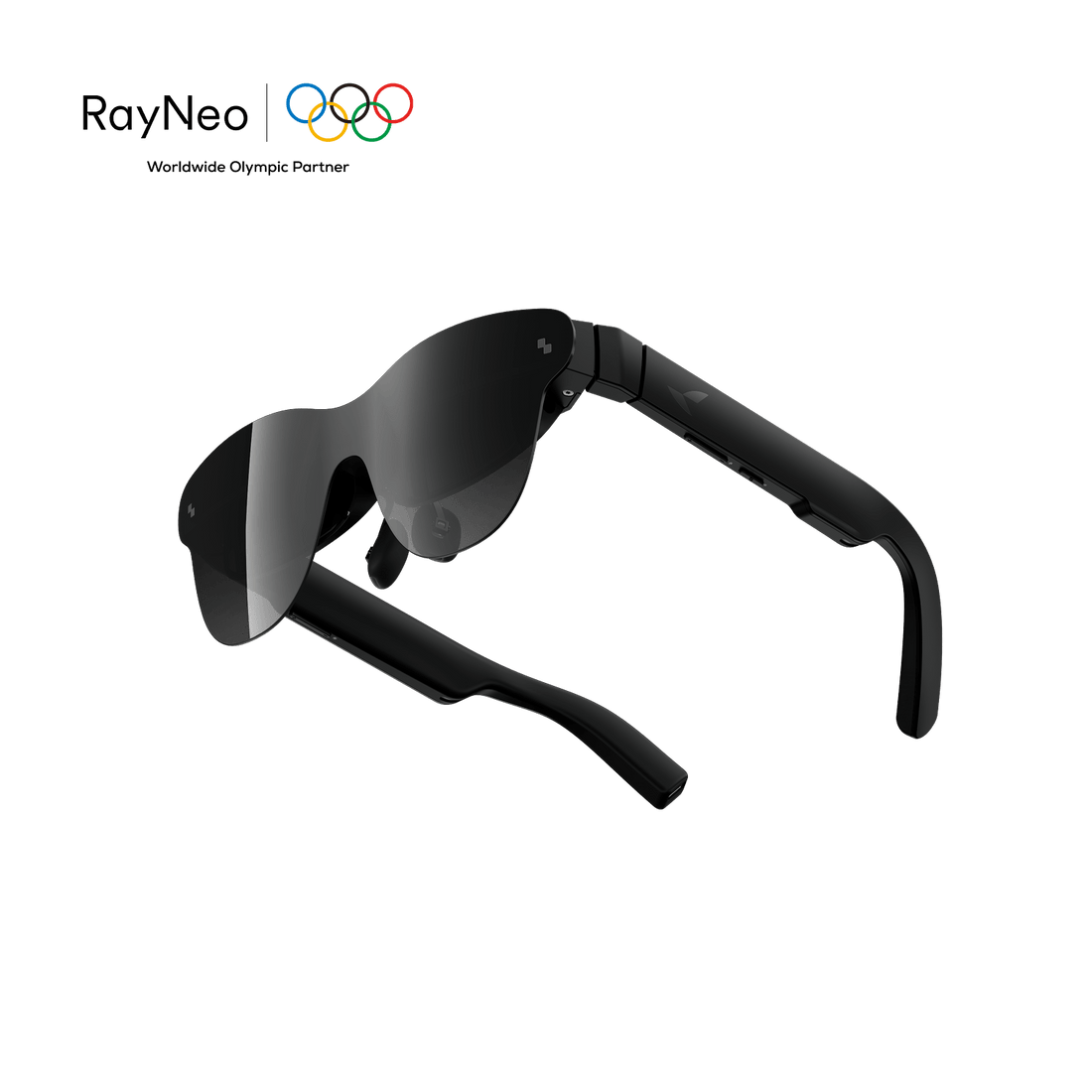
The RayNeo GT Series connects directly to compatible USB-C gaming devices and combines Full HD Micro-OLED displays, native 3DoF, and up to 120Hz refresh for handheld gaming.
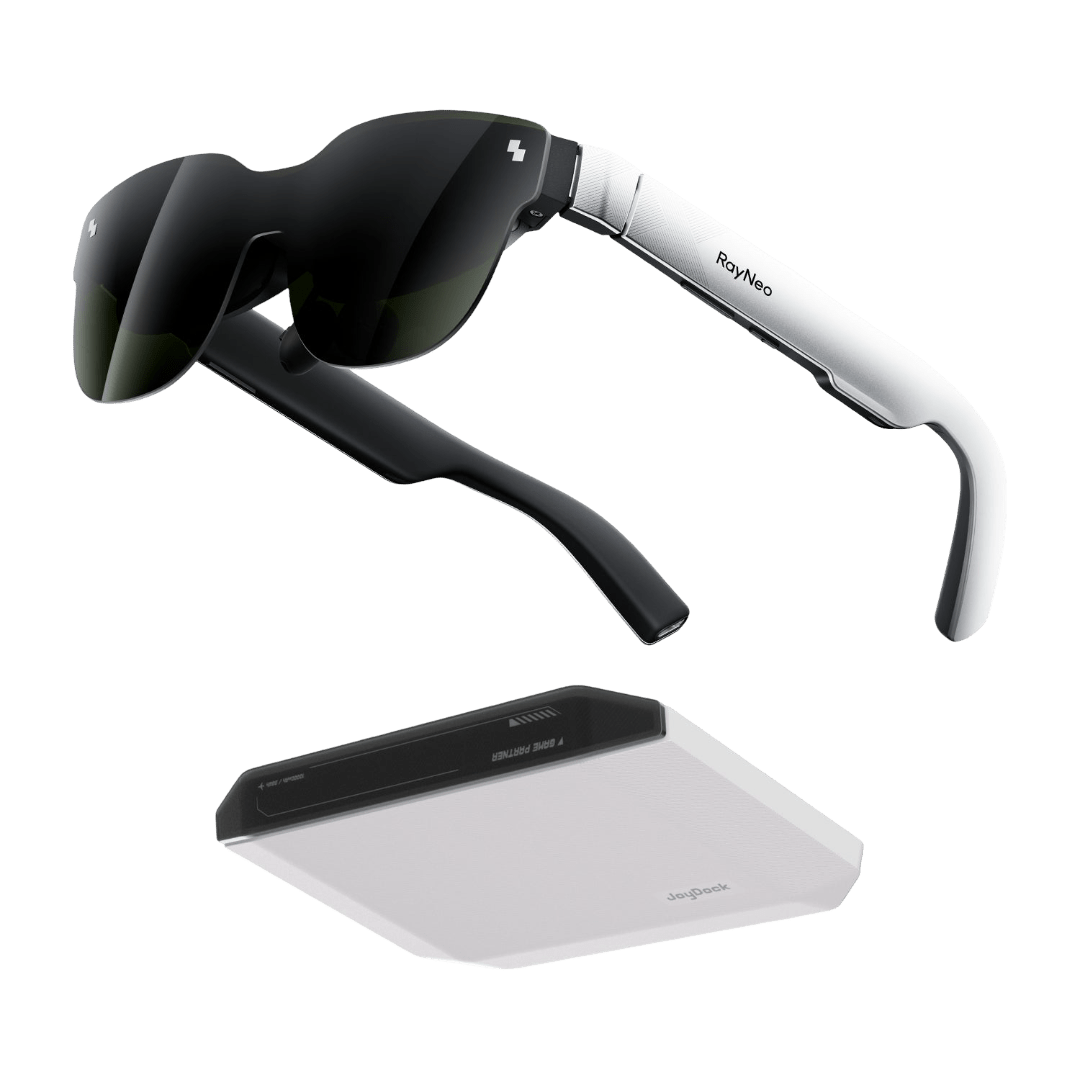
The RayNeo GT Max AR Glasses are built for players who want handheld games to feel more cinematic and expansive. Its 59° field of view gives open-world games, racing titles, action games, and story-driven AAA releases more visual scale, while the adjustable virtual screen lets you choose how much of the game fills your view.

Best for: AAA gamers, racing fans, and handheld players who want a more immersive big-screen gaming experience.
Key features:
The RayNeo GT AR Glasses focus on a lightweight, portable big-screen experience for everyday gaming. At 68g, they are easy to work into longer sessions on the sofa, in a hotel, or while traveling, while the 49 PPD image density helps keep HUD text, subtitles, maps, and inventory screens clear.

Best for: Handheld gamers who play for longer sessions and value lightweight wear, clear game UI, and an easy-to-carry big-screen setup.
Key features:
The best handheld gaming AR glasses should make games easier to see and more immersive without adding unnecessary complexity. Instead of choosing by the biggest virtual-screen number, focus on compatibility, image clarity, refresh rate, fit, and how the display behaves during longer sessions.
A USB-C connector can charge a device without carrying video, so the port specification matters. Look for DisplayPort over USB-C, DP Alt Mode, or a compatible Thunderbolt connection.
Steam Deck and current ROG Ally models support external video over USB-C, but the same is not true of every handheld or USB-C cable. Test the exact cable and device before you travel.
Field of view and PPD describe different parts of the experience. FOV affects how large and immersive the game feels, while PPD affects how fine the image details appear.
As a practical reference, around 40°–50° FOV already creates a large personal gaming display. Moving closer to 55°–60° can feel more enveloping for open-world games, racing titles, and cinematic AAA games.
For HUD text, inventory menus, subtitles, and map labels, higher PPD is more useful. Around 40 PPD or above is a helpful target when fine detail matters.
For slower RPGs, strategy games, and many single-player titles, 60Hz is already sufficient for smooth gameplay. A 90Hz or 120Hz display becomes more useful for racing games, shooters, fast camera movement, or handhelds that support higher-refresh external output.
Keep in mind that a 120Hz display does not make a game run at 120 fps. Actual frame rate still depends on the handheld, game, resolution, power mode, and graphics settings.
A 1920 × 1080 Full HD display is a practical target for gaming AR glasses. It provides enough resolution for detailed game environments and UI elements without pushing handheld hardware toward unnecessarily high external resolutions.
For demanding AAA games, however, the highest output resolution is not always the best choice. Lowering resolution or graphics settings can sometimes give you smoother gameplay, so it is worth balancing image sharpness against the performance your handheld can realistically deliver.
Frame weight is easy to compare, but comfort depends on more than grams alone. Around 70–80g is a useful reference range for lightweight display glasses, while lower weight can become more noticeable during multi-hour sessions.
Also check nose-pad fit, temple pressure, weight distribution, and IPD alignment. Poor optical alignment can make text or screen edges harder to see clearly even when the display itself has strong specifications.
If possible, wear the glasses for 20–30 minutes before a long gaming session to check how they feel over time.
A very large virtual screen is not always easier to play on. For games with dense HUDs or menus, a slightly smaller screen can make information easier to scan without moving your eyes as far.
It is also useful to have different spatial viewing modes. A fixed or pinned screen can feel more like playing in front of a monitor, while a head-following mode works well when you change position frequently. A stabilized mode can be useful when gaming while traveling or in other moving environments.
The best Steam Deck AR glasses should make handheld gaming feel bigger without making the setup more complicated. Start with reliable USB-C video output, then compare FOV, PPD, refresh rate, fit, and charging needs based on the games you actually play.
A wider view suits cinematic AAA titles, while lower weight and higher image density can matter more during longer sessions. For RayNeo, GT Max focuses on immersive big-screen gaming, while GT is designed for lightweight, detail-focused everyday play.
Usually not for basic video output. Steam Deck supports DisplayPort video over USB-C, so compatible AR glasses can connect directly with a video-capable USB-C cable. An adapter becomes useful if you want to charge the Steam Deck while the glasses are connected or if your setup includes other accessories. Make sure any pass-through adapter or hub supports both video output and sufficient USB-C Power Delivery.
Yes, Steam Deck can output high-refresh video to a compatible external display over USB-C, so 120Hz AR glasses can be used at higher refresh rates when the display settings support it. However, a 120Hz display does not mean every game will run at 120 fps. Actual frame rate depends on the game, graphics settings, resolution, power limits, and overall Steam Deck performance.
Yes, they can. Display-focused AR glasses typically draw power from the connected Steam Deck, while the handheld is also powering the game itself. Battery impact varies with screen brightness, refresh rate, game workload, and the Steam Deck model. For longer sessions, lower graphics or refresh settings can reduce power demand, while a compatible pass-through charging setup lets you keep playing without relying only on the internal battery.





Share:
Best Train Entertainment AR Glasses: 2026’s Picks for Stable Viewing
Best Portable Monitor AR Glasses: 2026’s Picks for Work and Travel