

Sale price$399.00
Regular priceReg. $429.00
Save $30.00


A second screen is useful until you have to fit it on an airplane tray table or squeeze it onto a hotel desk. Portable monitor AR glasses move that extra display into your view, giving you more screen space without packing another panel.
For travel and light productivity, though, the biggest virtual screen is not automatically the best choice. Text clarity, fit, spatial stability, device compatibility, and power all affect how practical the setup feels. Here is how to choose a pair that works for both your devices and your travel routine.

Portable monitor AR glasses are wearable displays that receive video from a compatible laptop, phone, tablet, handheld, or media player and place it on a large virtual screen in front of you.
They do not replace the computer itself; they replace or supplement the physical display. In that sense, second screen glasses are most useful when you want extra viewing space but do not have room to set up another monitor.
Most direct connections still depend on the source device for apps, files, controls, and power. The key requirement is video output: a USB-C port may support charging and data without supporting a display signal. VESA explains that DisplayPort Alt Mode is what allows DisplayPort audio/video to travel over a USB-C connection.
AR glasses used as a second display work much like a wearable external monitor. Your laptop, phone, or handheld device still runs the apps and processes the content; the glasses receive the video signal and present it as a large virtual screen in front of you.
The process starts with a compatible video output. For a direct USB-C connection, the source device usually needs to support DisplayPort over USB-C, DP Alt Mode, Thunderbolt, or another supported display-output standard. A USB-C port alone does not guarantee video output.
Once connected, the source device sends the same type of display signal it would normally send to an external monitor.
Inside the glasses, a small display panel generates the image, while the optical system directs that image toward your eyes, so it appears much larger than the physical display itself.
This is why second screen glasses can create the impression of a large monitor without requiring a physical panel on your desk or tray table. Depending on the glasses, spatial tracking may also let the virtual screen stay fixed in one position, follow your head, or remain more stable when you are moving.
When a compatible laptop recognizes the glasses as an external display, you can usually manage them through the operating system’s normal display settings.
You may be able to:
The exact options depend on the laptop, operating system, and glasses. A direct connection normally provides one virtual external display; multiple independent virtual monitors require additional software or hardware support.
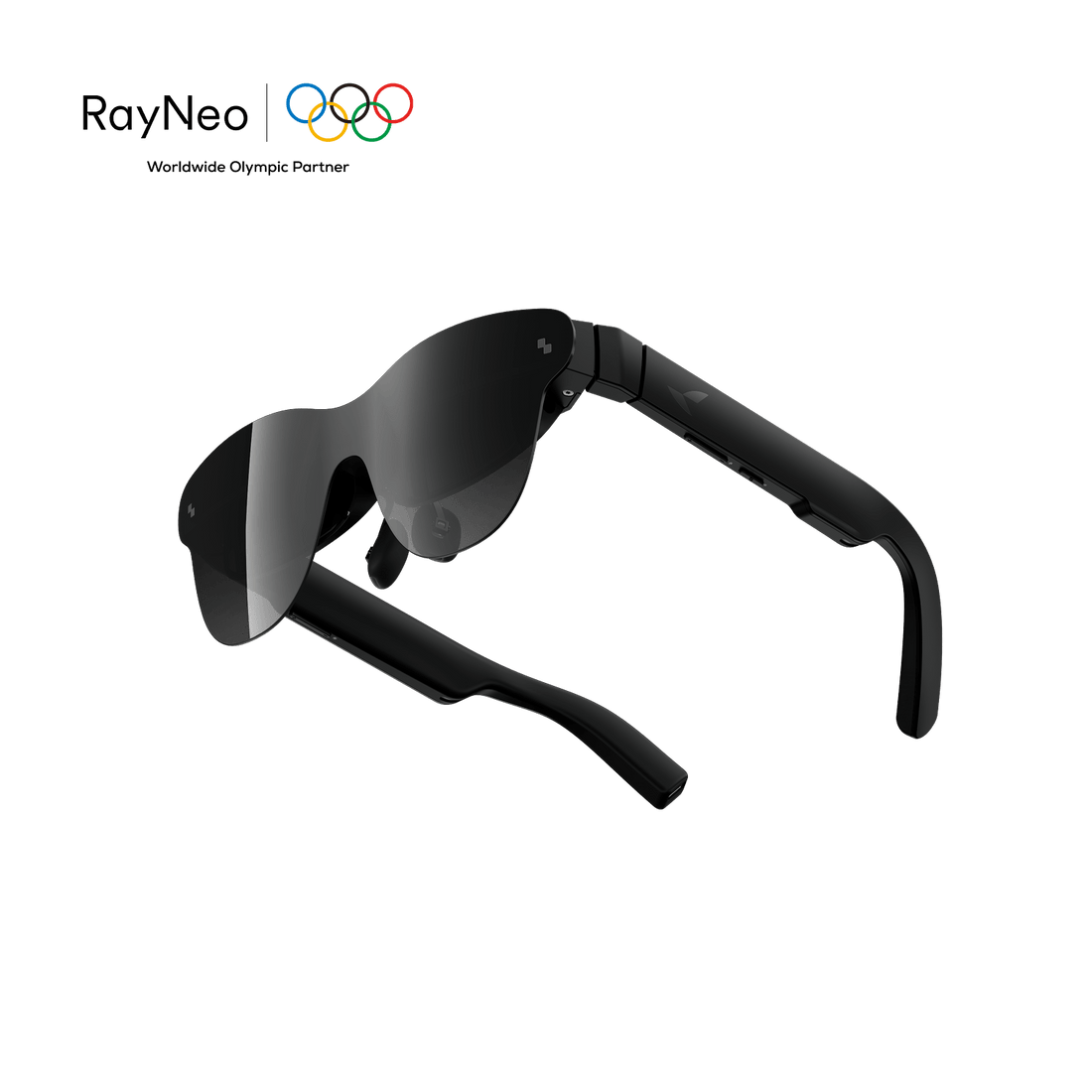
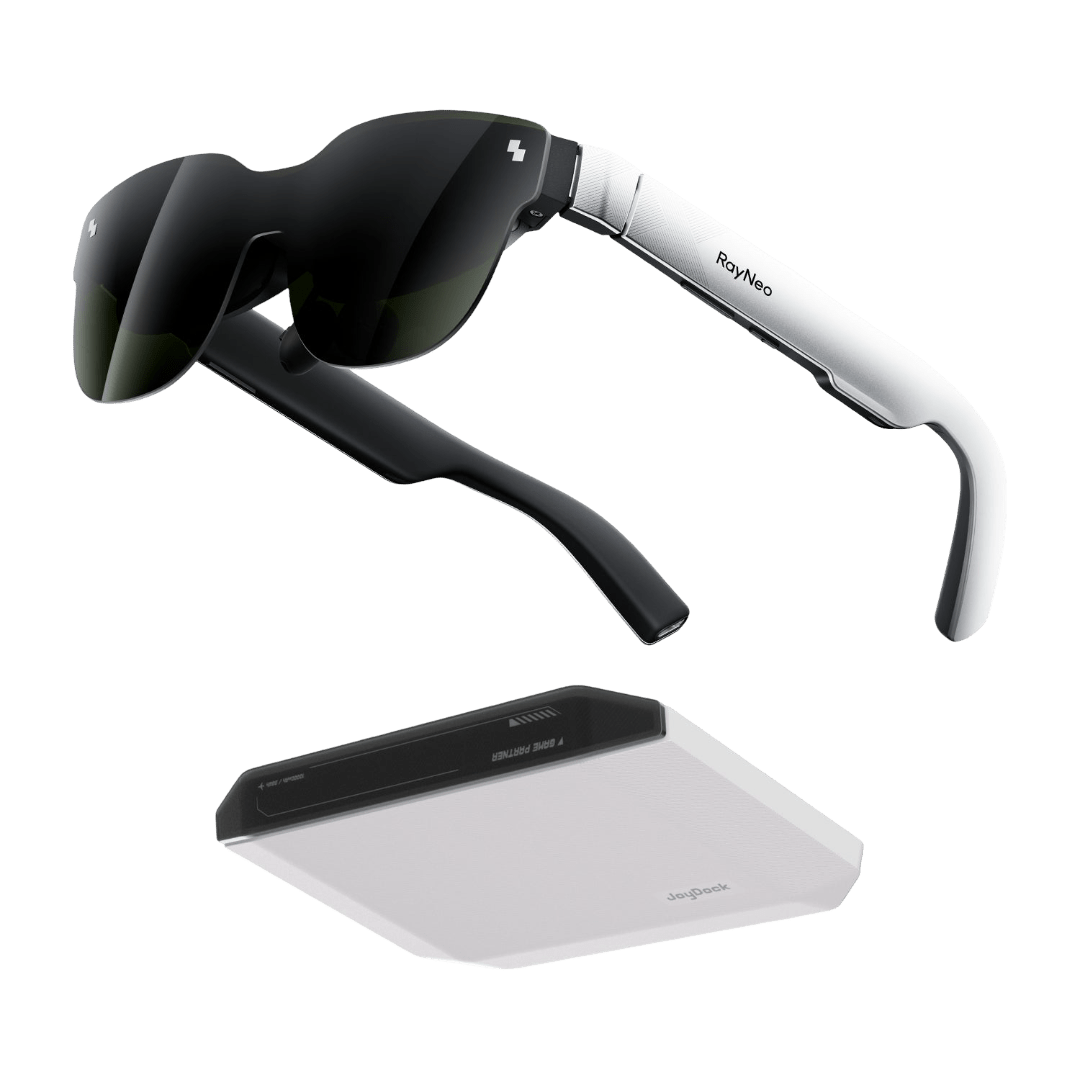
For travelers who want a virtual second display without carrying another panel, RayNeo AR Glasses offer the GT Series for portable work, travel, and entertainment. With native 3DoF spatial tracking and DisplayPort-compatible USB-C connectivity, the lineup gives you different ways to balance screen scale, image clarity, and wearable comfort.
The RayNeo GT Max AR Glasses is built for a wider, more immersive workspace. Its 59° field of view and 267-inch default virtual display give large dashboards, presentation review, media, and broad desktop layouts more visual presence, while the display can be scaled to 227 or 307 inches when you want a tighter or larger view.
Native 3DoF is especially useful away from a desk. Pinned mode keeps the screen fixed for focused work, Steady mode helps filter small environmental movements during travel, and Follow mode keeps the display centered when you want a more casual setup.

Best for: Travelers who want an expansive virtual workspace, flexible IPD sizing, and strong spatial control for work and entertainment.
The RayNeo GT AR Glasses is designed for travel and everyday viewing, with a 68g frame that suits regular commuting and longer portable sessions.
Its 46° FOV and 201-inch default virtual display provide a large workspace without pushing for maximum visual width, while 49 PPD helps keep subtitles, menus, and smaller interface elements clear.
GT also includes native Pinned, Steady, and Follow modes, so the screen can stay fixed during focused work, remain steadier in a moving environment, or follow your view when you change position.

Best for: Frequent travelers and commuters who prioritize lower wearable weight, clear text detail, and a straightforward everyday second-screen setup.
The strongest use cases are places where extra visual space would help but a normal second monitor would be awkward. That is where travel productivity glasses can earn their place in a bag: not by recreating a full office everywhere, but by giving you a larger personal display when your workspace is temporary.
A giant virtual screen can look impressive in a demo, but productivity depends on whether text stays clear, the screen is easy to scan, and the glasses remain comfortable after an hour. Use the ranges below as practical shopping benchmarks rather than formal industry standards.
Full HD per eye is a useful baseline for this class of wearable display, but PPD - pixels per degree - tells you more about how densely detail is presented across your view.
For text-heavy work, values in the mid-40s or higher are a useful target, while high-30s can still work well for video and larger interface elements. Operating-system scaling and font size matter too, so avoid judging readability from resolution alone.
A FOV around 40-50° already creates a large virtual workspace and can make it easier to take in menus, tabs, and document edges at once. Moving toward 55-60° gives you a broader, more immersive canvas, but it can require more eye movement across wide layouts. For productivity, the widest view is not automatically the most efficient one.
Around 70-80g or lighter is a useful starting benchmark for glasses-style displays, but balance and fit matter just as much. Check nose pressure, temple shape, adjustable nose support, and IPD alignment.
If you wear prescription lenses, confirm that the model supports a proper prescription insert rather than assuming your everyday glasses will fit comfortably underneath.
For focused laptop work, a fixed or pinned view is useful because the virtual workspace stays in one place as you turn your head. A follow mode is easier for casual use, while stabilization becomes more valuable on trains and planes. The important question is not how many modes are listed, but whether the glasses support the screen behavior you will actually use.
Travel lighting can change from a bright window to a dark cabin in minutes, so adjustable brightness is more useful than chasing the highest peak-nit figure. An optional light shield can also improve contrast and reduce visual distractions for focused work, but it reduces how much of the environment you can see. Use it only when the situation makes that trade-off appropriate.
Portable monitor AR glasses are most useful when you want more screen space but less hardware in your bag. Start with video-output compatibility, then judge text clarity, FOV, fit, spatial stability, and brightness control based on where you actually work.
A physical monitor still suits shared or all-day desk setups, but for planes, trains, and temporary workspaces, RayNeo’s GT Series offers two compact ways to bring a large personal display with you.
Yes. Compatible AR display glasses can receive video from a laptop, phone, tablet, or handheld and act as an external display. On a supported computer, you can usually mirror the built-in screen or extend the desktop through the operating system’s display settings. A direct connection normally creates one virtual external display; additional virtual monitors depend on the specific glasses, software, adapter, and source device.
Yes, although many display-focused AR glasses use USB-C as their direct input rather than a full-size HDMI port. An HDMI source can often connect through a compatible adapter that converts the display signal for the glasses. Check that the adapter supports your exact source device, resolution, refresh rate, audio, and power requirements, and test the full setup before relying on it for travel or a presentation.
They can, provided the laptop has compatible video output. Thunderbolt and many video-capable USB-C ports can carry an external display signal, but USB-C alone does not guarantee that capability. Check the laptop specifications for DisplayPort over USB-C, DP Alt Mode, Thunderbolt, or another supported output, then confirm the glasses and cable requirements. Once connected, use the Mac or Windows display settings to configure mirroring or an extended desktop.





Share:
Best Steam Deck AR Glasses: 2026’s Picks for Giant-Screen Gaming
RayNeo Pocket TV Pro: Build a Dolby Vision AR Cinema Anywhere