

$429.00

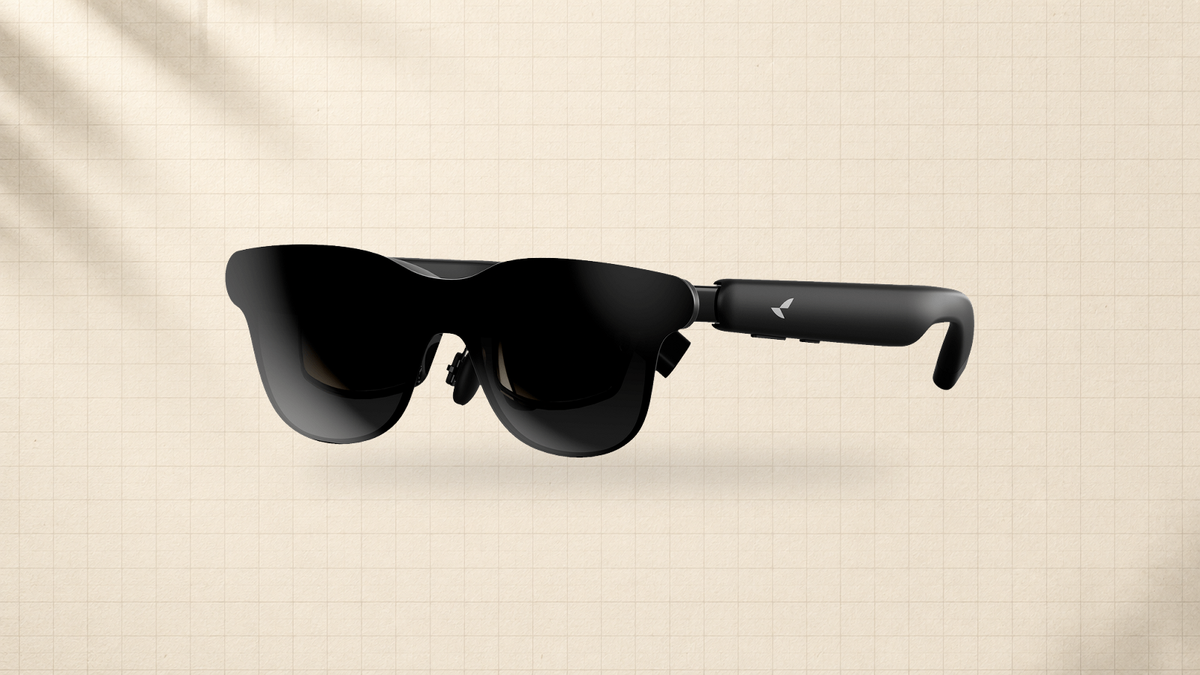
IPD decides which display glasses and which size to buy, the nose bridge decides whether the whole picture sits in view, and head width decides how comfortable the glasses stay through a long film or a flight. All three can be worked out at home with a smartphone, a mirror and a pair of glasses that already fits well.
Each measurement maps to something specific on RayNeo display glasses. IPD selects the S, M or L size of RayNeo GT Max. Nose-bridge shape tells you which of the included nose pads to start with. Head width points to the frame style that suits you, from the one-piece GT series to the flexible temples of RayNeo Air 4 Pro.
IPD, or interpupillary distance, is the distance between the centers of your pupils. In display glasses it decides whether each eye lines up with the center of its optical viewing area, which gives the clearest, most comfortable view. It is the one measurement chosen when ordering, so it comes first. Any one of three routes gives the number:
With a number in hand, the model choice follows. GT Max comes in three IPD sizes: S for under 64mm, M for 64 to 67mm, and L for over 67mm. RayNeo GT is built around a 64mm IPD, and adjusting its nose pads and wearing position centers the image. Air 4 Pro aligns the display through fit, with its nose pads and temple angle centering the full screen. Our guide to GT and GT Max IPD options compares the two GT models size by size.

The nose bridge sets the height of the glasses on your face, and that height decides whether the top and bottom of the picture sit inside your view. Your current glasses are the best measuring tool here.
A low bridge calls for a taller nose pad, which lifts the optics to eye level. A high bridge calls for a lower pad. The nose pad's job is to center the display, so this reading sets the starting pad, and the setting that centers the picture becomes your everyday one.
Every pad comes in the box, so the bridge reading guides your first choice rather than your order. GT Max ships with three nose pads in S, M and L heights, GT with two, and Air 4 Pro with 3-position nose pads plus a nose pad component.

Head width is about pressure and stability over time. Glasses that are too tight press behind the ears and at the temples, while glasses on a narrower head tend to slide forward when you look down. The useful reading here is how frames behave on you, not a number.
These readings point to a frame style rather than a size. GT and GT Max are built as a sports-car-inspired unibody, with fit tuned at the nose pad and four anti-slip temple pads in the box to keep the arms steady. Air 4 Pro takes the adjustable route, with flexible temples and a 9-way flexible adjustment system, which suits heads that usually need a frame adjusted.
Weight matters as much as width for long sessions: GT weighs 68g, Air 4 Pro 76g and GT Max 78g. Our guide to glasses for comfortable long viewing looks at full episodes and films on GT and GT Max.
| Your measurement | RayNeo GT Max | RayNeo GT | RayNeo Air 4 Pro |
|---|---|---|---|
| IPD under 64mm | Size S | GT Max size S matches more closely | Not sized by IPD |
| IPD 64 to 67mm | Size M | Built around a 64mm IPD | Not sized by IPD |
| IPD over 67mm | Size L | GT Max size L matches more closely | Not sized by IPD |
| Low or flat nose bridge | Start with the taller of the three included pads | Choose the pad and setting that make the frame sit higher | Set the 3-position nose pads so the frame sits higher |
| High nose bridge | Start with a lower pad | Choose the pad and setting that make the frame sit lower | Set the 3-position nose pads so the frame sits lower |
| Head width | One-piece unibody, four anti-slip temple pads included | One-piece unibody, four anti-slip temple pads included | Flexible temples, 9-way flexible adjustment |
| Weight | 78g | 68g | 76g |
Air 4 Pro is not ordered by IPD size. Its nose pads and temple angle center the full screen in your field of view.
Put together, the three readings usually point to one pair. An IPD near 64mm with the lightest possible frame as the priority leads to GT. An IPD below 64mm or above 67mm, or a wish for the widest picture, leads to GT Max in the matching size, with its 59° field of view and 267 inch cinema display. A head that usually needs frames adjusted, or a first pair of AR glasses, leads to Air 4 Pro.
My two eyes measure differently from the center of my nose. Which size fits?
Should I measure with my glasses on or off?
What if my IPD lands right between two GT Max sizes?
Once the readings are in hand, the order is simple: RayNeo GT Max in the size that matches your IPD for the biggest picture, RayNeo GT at 68g for IPDs around 64mm, or RayNeo Air 4 Pro for a flexible, adjustable fit.




Share:
How Can I Fix Edge Blur or Double Vision When Using Prescription Inserts With AR Glasses?
How Readable Are Transparent-Display Smart Glasses Outdoors in Bright Sunlight?