

$429.00


RayNeo GT ships with a single, fixed 64mm IPD optical design, aligned to your face through adjustable nose pads rather than through any change to the optics themselves. RayNeo GT Max solves the same problem differently: it ships in three separate hardware variants built around measured interpupillary distance (IPD) and selected at purchase, S for under 64mm, M for 64 to 67mm, and L for over 67mm.
Both approaches are trying to get the same thing right: lining up the optical center of the display with the actual center of your pupils. How well each one does that for you depends mostly on how close your own IPD lands to 64mm, which is why it’s worth understanding before you choose between the two models or pick a GT Max size.
This article covers what IPD actually measures, why it matters for AR glasses specifically, how GT and GT Max each handle it, and how to measure your own number before you order.

Interpupillary distance, the straight-line distance between the centers of your two pupils measured in millimeters, is the number RayNeo had to design around on both models. It’s the same figure an optometrist uses to center prescription lenses, so if you’ve had a recent eye exam, you may already have it on file.
That number varies more than most people expect, which is exactly why a single fixed design doesn’t fit everyone equally well. Research on adult IPD distribution shows the following (ResearchGate: Variation and Extrema of Human Interpupillary Distance):
IPD matters because your pupils need to align with the display’s viewing area. A mismatch can make it harder to find a clear, comfortable view; nose-pad adjustment can help position the frame, but it does not change the optics’ designed IPD. Measure your IPD and check the model’s sizing guidance before ordering. (How-To-Geek: How to Measure Your IPD and Why It Matters for VR)
That’s why GT and GT Max treat IPD differently in the first place. A fixed-IPD design is simpler to buy, but it lines up best for people whose IPD is close to the number it’s built around. A multi-size design asks you to measure yourself first, but it can match a wider range of actual eyes.
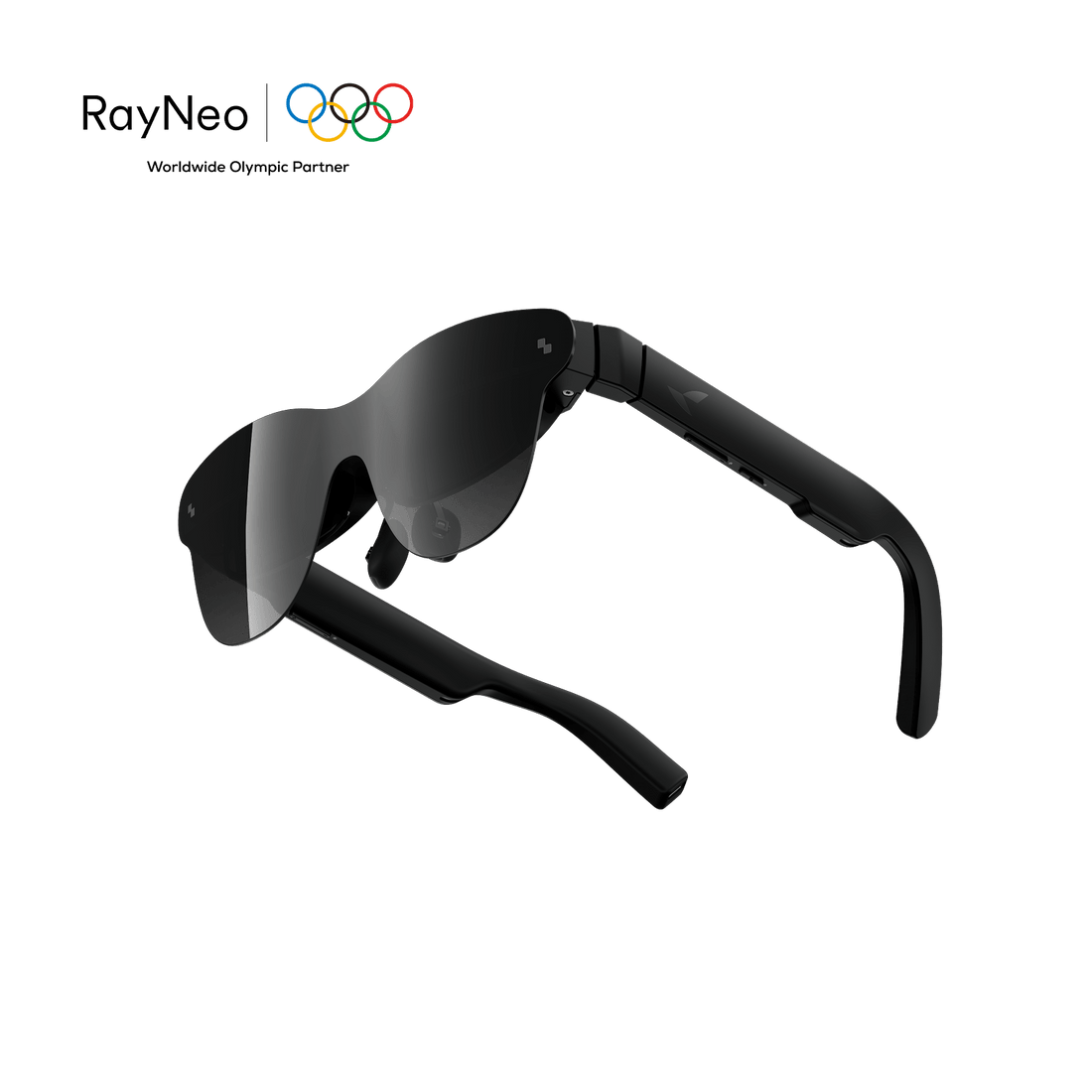
GT’s product page describes the optics in one sentence: a “fixed 64mm IPD optical design.” There’s no IPD selection at checkout and no IPD adjustment mechanism built into the frame. What you do adjust are the nose pads, and that adjustment changes how the frame physically sits on your face (how high or low, how far forward) rather than moving the optical center itself.
64mm sits close to the population average described above. That does not guarantee a suitable fit for every wearer; your own IPD is the relevant measurement.
GT has no published IPD tolerance range around its fixed 64mm optical design. GT Max’s size bands do not establish a comfortable range for GT. Use measured IPD as one fitting input, then check whether the whole display is clearly visible after adjusting the nose pads; pause use if the image remains difficult to fuse or causes discomfort.

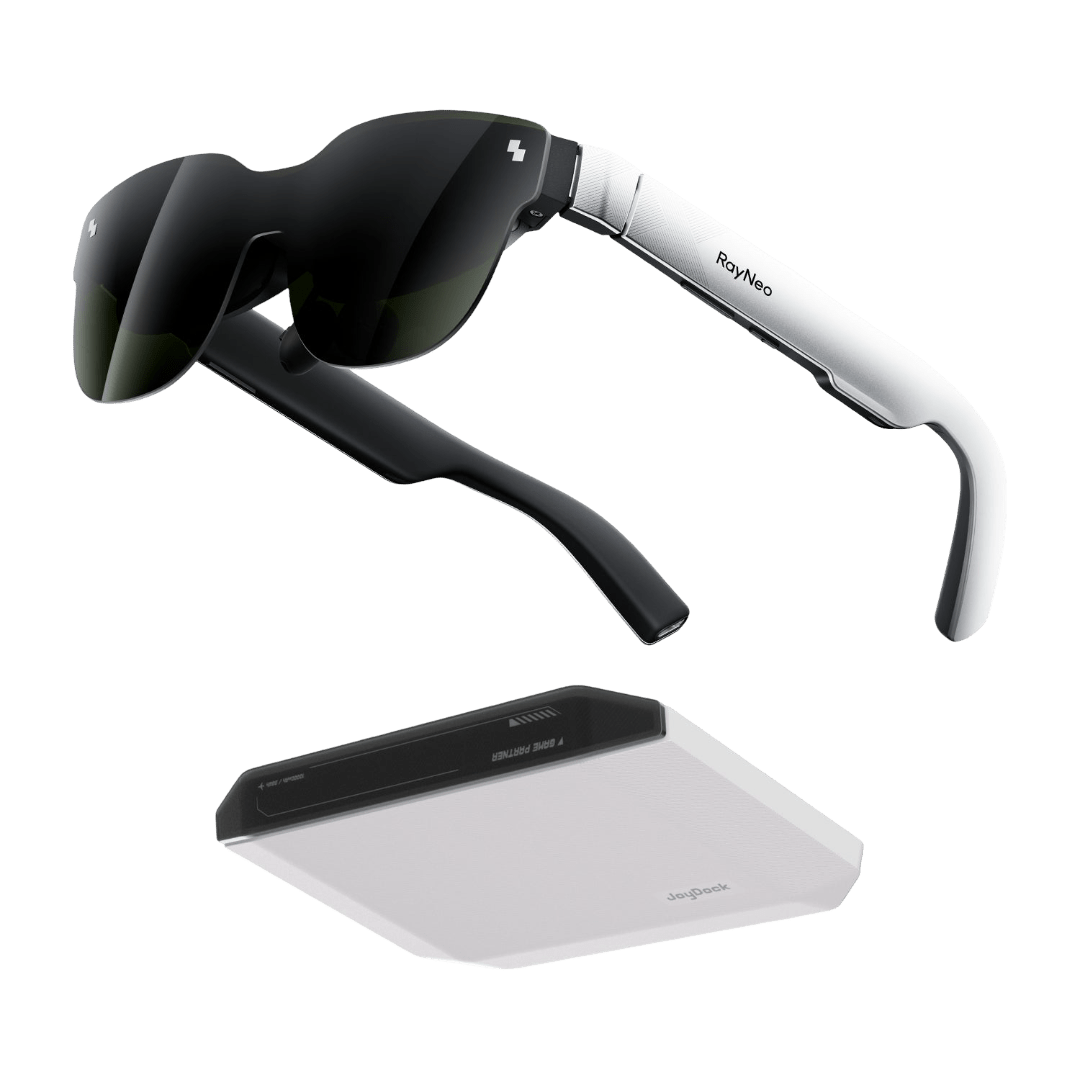
GT Max addresses the same alignment problem with hardware rather than a single fixed number. It ships as three separate SKUs, each built around a different IPD range:
| Variant | IPD range |
|---|---|
| S | Under 64mm |
| M | 64mm to 67mm |
| L | Over 67mm |
This is a purchase-time decision, not a post-purchase adjustment. The optical path and lens positioning are built into each variant at manufacturing, so you choose S, M, or L based on your measured IPD when you order, and that choice determines which unit ships to you. There’s no slider, dial, or software setting that moves the optics after the fact.
Choose the GT Max variant that matches your measured IPD. If the image is unclear or uncomfortable, check the nose-pad position and sizing rather than continuing through discomfort. Nose-pad adjustment changes the frame’s position, not its optical IPD variant.
Open RayNeo’s IPD measurement tool in a smartphone browser and follow its instructions before selecting a GT Max size. Repeat the measurement if it is close to 64mm or 67mm; an optician can help resolve inconsistent readings. The fact that the tool runs in a browser does not establish its measurement method or error range.

RayNeo’s own tool is a direct starting point when deciding between GT and GT Max. Other ways to obtain or check a measurement include:
Whichever method you use, the goal is the same number: a figure you can compare against GT Max’s S/M/L bands, or use to gauge how close you sit to GT’s fixed 64mm design.
As covered above, RayNeo hasn’t published an official tolerance for GT’s fixed design. The table below sticks to GT Max’s own published size bands rather than inventing a GT comfort range RayNeo hasn’t stated.
| Your measured IPD | What it suggests |
|---|---|
| Under 64mm | GT Max’s S variant is built specifically around this range; GT’s fixed 64mm design doesn’t have a smaller-IPD counterpart to fall back on. |
| 64–67mm | GT Max’s M variant covers this range directly; GT’s fixed 64mm design centers near the lower end of this band. |
| Over 67mm | GT Max’s L variant is built specifically around this range; GT’s fixed 64mm design doesn’t have a larger-IPD counterpart to fall back on. |
RayNeo doesn’t publish an upper or lower cutoff for the S and L bands themselves, just the single boundary where each one starts (under 64mm, over 67mm). If your measured IPD sits far outside the typical 62mm to 68mm range, such as closer to 50mm or 75mm, the S or L variant is still the closer optical match of the two GT Max options, but there’s no published data confirming how well the optics hold up at the far edges of either band.
If you’d rather not choose a size, GT removes that step: there’s one SKU and nothing to select, though RayNeo publishes no tolerance range for it, so check fit when it arrives. If you already know your IPD is well away from 64mm, or you’d rather have hardware built around your specific measurement, GT Max’s size selection is the more deliberate route, provided you measure first rather than guessing at checkout.
Do GT’s nose pads adjust IPD?
What happens if I order the wrong GT Max size?
Is IPD the same number used for prescription glasses?
Can two people with very different IPDs share the same pair?
GT and GT Max solve the same optical-alignment problem in two different ways. GT uses a single fixed 64mm design and asks nothing of you at checkout. GT Max asks you to measure first, using RayNeo’s IPD tool or another method above, and then matches that measurement to one of three hardware variants selected at purchase. If you’d rather skip choosing a size, GT’s fixed design is the simpler path, though RayNeo publishes no tolerance range for it. If you know your IPD sits meaningfully above or below 64mm, GT Max’s S/M/L sizing is built to match that more precisely. Check current pricing and stock on the RayNeo GT and RayNeo GT Max product pages before you order.
Sources:





Share:
RayNeo GT vs GT Max: Every Spec Difference in One Table
RayNeo GT Max Refresh Rate and PPD Explained: 120Hz (2D) / 60Hz (3D), 38 PPD