

$429.00


Home cinema AR glasses offer a new way to enjoy movies on a large private virtual screen without installing a projector or taking up wall space with a large TV. For solo viewing, they can combine immersive visuals, spatial audio, and flexible device connectivity in a lightweight wearable design.
This guide explains how home cinema AR glasses work, which display and comfort features matter most, and how the RayNeo GT and GT Max differ for home movie watching.

Home cinema AR glasses are wearable displays that place a large virtual screen in front of your eyes for movies, shows, and other entertainment. Instead of watching a physical TV or projector, you see the content through the glasses while still sitting comfortably on your sofa, bed, or chair. This gives you a more private viewing experience without needing a dedicated home theater setup.
A large virtual screen is only useful if the picture stays clear and the glasses remain comfortable. For movies, focus on display quality, field of view, HDR, fit, and device compatibility.
Look for Full HD resolution or higher to keep subtitles, faces, and fine details clear on a large virtual screen. Micro-OLED displays are well suited to AR glasses because they combine compact size with strong contrast, rich color, and fast response.
Resolution alone does not determine picture quality. Brightness, contrast, color coverage, pixel density, and refresh rate also matter. A higher refresh rate can make motion appear smoother, while strong contrast helps preserve detail in dark movie scenes.
Field of view (FOV) describes how much of your vision the virtual display occupies. A wider FOV can make the image feel larger and more immersive, so it is worth comparing FOV instead of relying only on advertised screen size.
Virtual displays may appear 200 inches or larger, but this is a perceived size rather than a physical screen measurement. Adjustable screen sizes are useful because you can choose a wider cinematic view or reduce the image when you want to see the entire frame more easily.
HDR can improve highlights, shadows, color, and overall detail in high-contrast scenes. Dolby Vision uses dynamic metadata to optimize the picture as scenes change throughout a movie.
If Dolby Vision matters to you, check the complete playback setup. The content, source device, accessories, and AR glasses all need to support the required format for compatible playback.
Comfort becomes more important when you plan to watch a full movie or several episodes at once. Check both the total weight and how evenly the glasses distribute pressure across your nose and ears.
Fit also affects picture clarity. Adjustable nose pads and a suitable interpupillary distance (IPD) help keep the image properly aligned. Multiple IPD options can provide a better fit, while prescription inserts are useful for viewers who need vision correction.
A USB-C port does not automatically mean a device can send video to AR glasses. For a direct connection, your phone, tablet, laptop, or handheld device usually needs compatible video output, such as DisplayPort Alt Mode over USB-C.
Also check compatibility with HDMI adapters, streaming accessories, game consoles, and other devices you plan to use. Wider connectivity makes it easier to use the same AR glasses for movies, streaming, gaming, and everyday entertainment across multiple devices.
For solo movie watching, AR glasses can replace some of the functions of a large TV or projector. They can create the perceived scale of a big screen without taking up wall space or requiring a permanent home theater setup.
They are especially useful in apartments, bedrooms, rentals, or other spaces where a large display may be impractical. You can also use the same private screen from a sofa, bed, or while traveling.
However, AR glasses are not a full replacement for shared viewing because only the person wearing them can see the virtual display. If you often watch movies with family or friends, a TV or projector is still the more practical choice.
For home cinema viewing, AR glasses can provide a large private virtual screen without requiring a TV or projector. The GT Max focuses on a wider, more immersive movie experience, while the GT offers a lighter option for everyday streaming and longer viewing sessions.
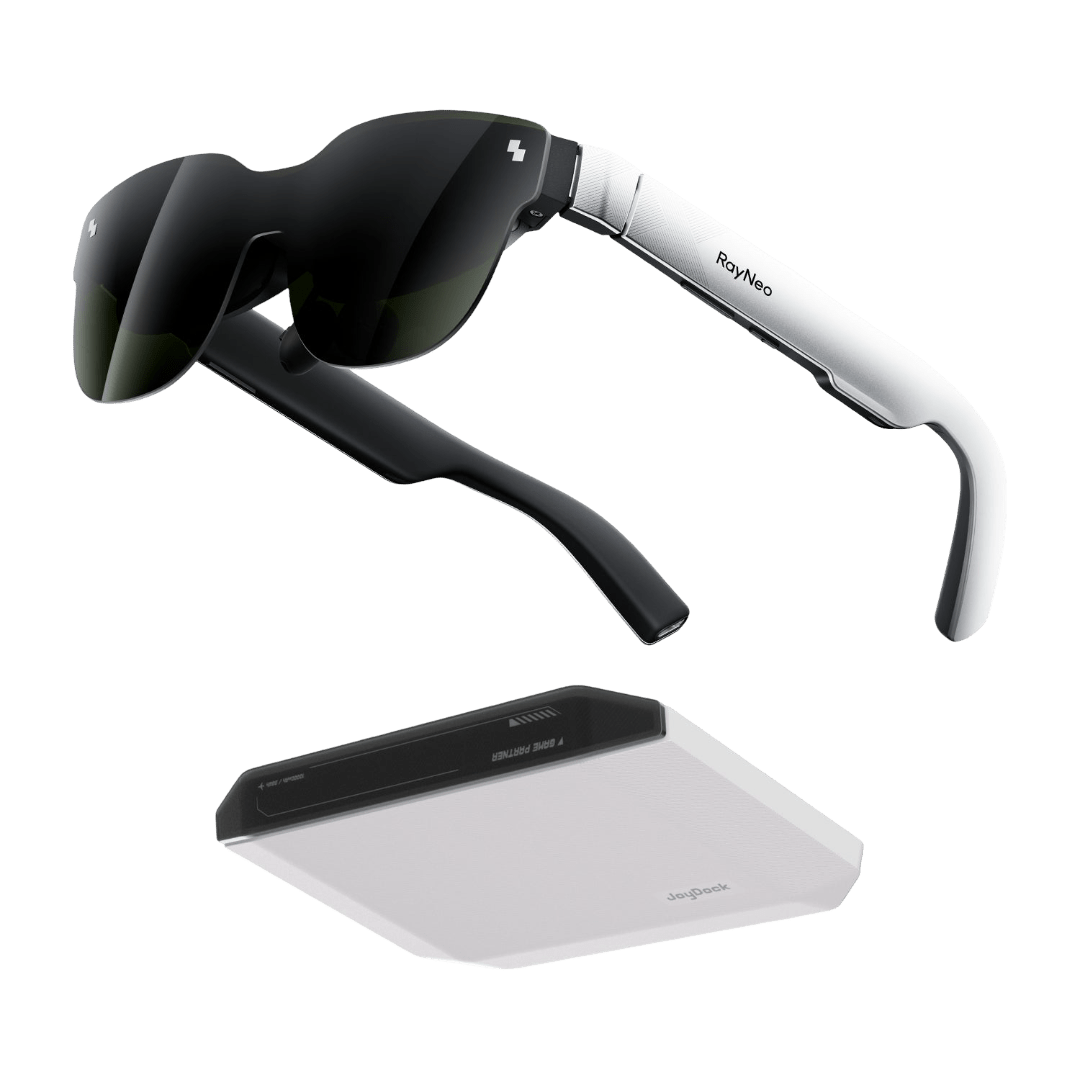
The RayNeo GT Max AR Glasses are well suited to movie nights and longer viewing sessions where a wider, more immersive picture matters. Their 59° field of view and large virtual display help create a private theater-like experience without requiring a TV or projector.
Key Features:

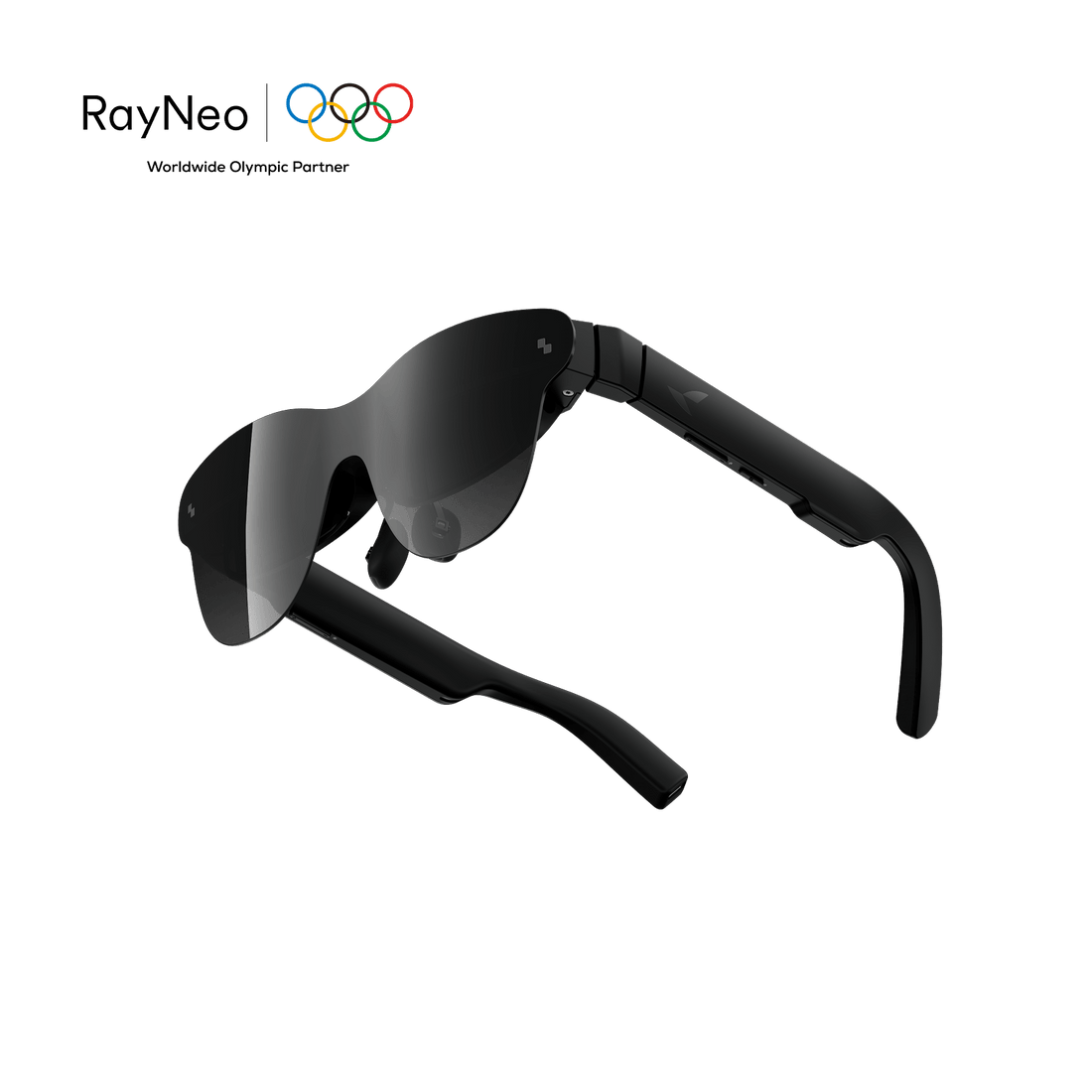
The RayNeo GT AR Glasses offer a lighter alternative for streaming movies, binge-watching series, or relaxing with a large virtual screen on the sofa or in bed. At 68g, they are particularly practical when portability and everyday comfort matter more than maximizing screen size.
Key Features:

Home cinema AR glasses can be a practical choice for viewers who want a large private screen without a permanent home theater setup. The RayNeo GT Max is better suited to users who prioritize a wider field of view and stronger immersion, while the RayNeo GT offers a lighter option for everyday movie and streaming sessions.
Before choosing, compare display size, IPD fit, connectivity, and viewing habits to find the model that best matches your home entertainment needs.
Yes, some AR glasses support Dolby Vision, but the full playback setup must be compatible. Dolby Vision can improve contrast, color, and detail by using dynamic HDR information that changes with each scene. With the RayNeo GT Series, Dolby Vision playback works when the glasses are paired with the compatible Pocket TV Pro and supported content. This helps movies keep more detail in bright highlights and dark areas during playback.
Cinema AR glasses can create virtual screens that feel well over 100 inches, and some models can reach 200 inches or more in perceived size. The exact experience depends on the field of view, optics, display mode, and virtual viewing distance. For example, the RayNeo GT offers 136-, 201-, and 231-inch virtual display options, while the GT Max offers 227-, 267-, and 307-inch options for a wider cinema-style view. These figures describe perceived virtual screen size rather than a physical screen in the room.
Yes, many modern AR glasses can be comfortable enough for a full movie if they are light and fit your face well. For example, the RayNeo GT weighs about 68 grams, while the GT Max is around 78 grams, which helps keep both manageable for longer viewing sessions. The GT Max also offers multiple IPD size options, giving you a better chance of getting a comfortable and properly aligned fit.





Share:
Best Augmented Reality Glasses: How to Choose in 2026
Best Binge-Watching AR Glasses for Comfortable Long Viewing in 2026