

$429.00


that belongs entirely to us. Fighting for the TV on the sofa, staring down at a phone during a commute, or dealing with a mediocre hotel TV while traveling for business are all realistic compromises. Smart TV Glasses like RayNeo Air 4 Pro solve these long-term and trivial frustrations by quietly moving a large screen with cinema-like quality and projector-like dimensions into a pair of glasses. Whether you are on a plane, in your bedroom, or at your desk, looking up feels like sitting in the best seat in the front row. In this article, we’ll cover everything you need to know before buying TV glasses, so you can pick the right pair for truly immersive viewing.
Smart TV Glasses can be understood as AR glasses focused specifically on the audio-visual experience. Through near-eye displays and optical engines, they convert video signals from smartphones, tablets, game consoles, or computers into a massive virtual screen floating in front of your eyes. Visually, the screen appears to be placed several meters away, with common equivalent sizes ranging between 100 and 200 inches. This creates a cinema-like feel without the fatigue caused by looking at something too close.
In terms of operation, most Smart TV Glasses use Micro OLED or MicroLED micro-displays to project images before your eyes via waveguides or prisms, receiving video signals from external devices through USB-C or dedicated adapters. To better understand the technical landscape of these devices, you can explore our guide on what are smart glasses with display to see how they differ from audio-only wearables. Some products act solely as display terminals, while others have built-in processors and operating systems capable of running streaming apps directly. The overall experience is closer to wearing an external monitor on your face, only more private and flexible than a traditional TV.

Whether it is worth buying a pair of Smart TV Glasses depends on two questions. First, how much time do you spend watching videos or playing games? Second, how much of that content consumption happens away from your living room TV? With the rise of streaming, an increasing amount of viewing time occurs during commutes, travel, and in the bedroom. Smart TV Glasses are designed for these fragmented scenarios, bringing the experience back up to large-screen standards.
Immersion comes down to two things: image quality and the presence of the screen. When the screen is large enough and both brightness and contrast are high, it becomes easy to forget where you are. The RayNeo Air 4 Pro AR glasses features 0.6-inch Micro OLED panels with a resolution of 1920x1080 per eye and a maximum refresh rate of 120Hz. It supports HDR10 and approximately 1,200 nits of peak brightness, delivering a virtual screen of up to 201 inches at a perceived distance of 6 meters. For users, this means no longer having to choose between a small smartphone screen and a large living room TV; a true home-theater-quality experience can be opened before your eyes anywhere.
Industry data further illustrates the growth of this demand. Research from MarketsandMarkets shows that the global smart glasses market was valued at approximately 878.8 million dollars in 2024 and is projected to reach about 4.13 billion dollars by 2030, with a compound annual growth rate of 29.4%. Consumer-grade audio-visual entertainment is considered a key driver of this growth. This indicates that moving the large-screen viewing experience out of the living room is becoming a major direction for wearable devices.
Staring at smartphones and tablets for long periods often leads to dry eyes and irritation. This is partly due to the close proximity of the screen, a high proportion of blue light, and unstable low-frequency dimming, which amplifies discomfort. Smart TV Glasses offer two natural advantages in this regard. This built-in protection often addresses the common user question: do blue light glasses work for smart glasses? First, the virtual image is placed at an equivalent distance of several meters, reducing the focusing burden on the eyes compared to looking directly at a phone. Second, many models utilize high-frequency PWM dimming (such as the 3840Hz standard found in the RayNeo Air 4 Pro) and advanced anti-blue light optical solutions to lower peak blue light stimulation while maintaining brightness.
Smart TV Glasses are becoming more than just better 2D screens; they are now entry points for immersive 3D viewing. The RayNeo Air 4 Pro features the Vision 4000 image processing chip, co-developed with Pixelworks. This allows for real-time SDR-to-HDR enhancement and the conversion of standard 2D video into 3D side-by-side formats, giving ordinary films a sense of stereoscopic depth.
However, it is worth noting that this advanced hardware-level processing is designed to bypass the limitations of traditional operating systems. Instead of being tethered to the Android ecosystem, which can often struggle with high-bitrate 3D rendering or proprietary HDR standards, this standalone chip ensures a consistent, high-fidelity experience across multiple platforms without relying on mobile app optimization.
When paired with 3D-supported apps or local files, users can experience a stereo effect similar to entry-level VR headsets while maintaining a lightweight form factor and a natural view of their surroundings. Coupled with a four-speaker spatial audio system tuned in collaboration with Bang & Olufsen, the sound creates a three-dimensional field around your head. Dialogues, ambient sounds, and soundtracks each have their own sense of position, making the cinematic experience far more lifelike, which solidifies these devices as the best smart glasses for binge-watching high-definition content. For those not yet ready to commit to a full VR headset, this offers a practical and powerful immersion upgrade.

The consensus among office workers and commuters is that constantly looking down at a phone leads to significant neck strain. An underrated benefit of Smart TV Glasses is that they naturally raise your line of sight. Whether you are lying in bed, leaning on a sofa, or sitting in an airplane seat, you can maintain a head position closer to looking straight ahead. By viewing the virtual screen through the glasses, you no longer need to bend your neck for hours at a time.
This change may seem small, but it makes a significant difference during long-term use. Feedback from users in social media communities indicates that watching series with smart glasses prevents the neck soreness typically felt after holding a tablet for two hours, resulting in a posture more akin to sitting in a theater. For those who often work late, travel, or watch content in bed at night, this physical comfort can be the deciding factor in making the device a daily necessity.
The magic of the cinema lies in being surrounded by the image. Smart TV Glasses scale this experience down to a wearable form, moving the screen closer while using a wide field of view (FOV) to create equivalent immersion. For instance, the Xreal One Pro is noted for its 57-degree FOV and a virtual screen that can reach up to 171 inches, making it one of the most entertainment-focused AR glasses currently available.
The 2026 best AR glasses RayNeo Air 4 Pro combines a 201-inch equivalent screen with HDR10, 10-bit color depth, and spatial audio to provide an IMAX-like aspect ratio and impact. When looking at the trade-offs of a traditional home theater vs ar glasses setup, the key advantage is that this massive screen moves with you—between planes, hotels, cafes, and bedrooms. This "portable IMAX" sensation offers immediate value to users who frequently travel between cities and stay in different hotels.
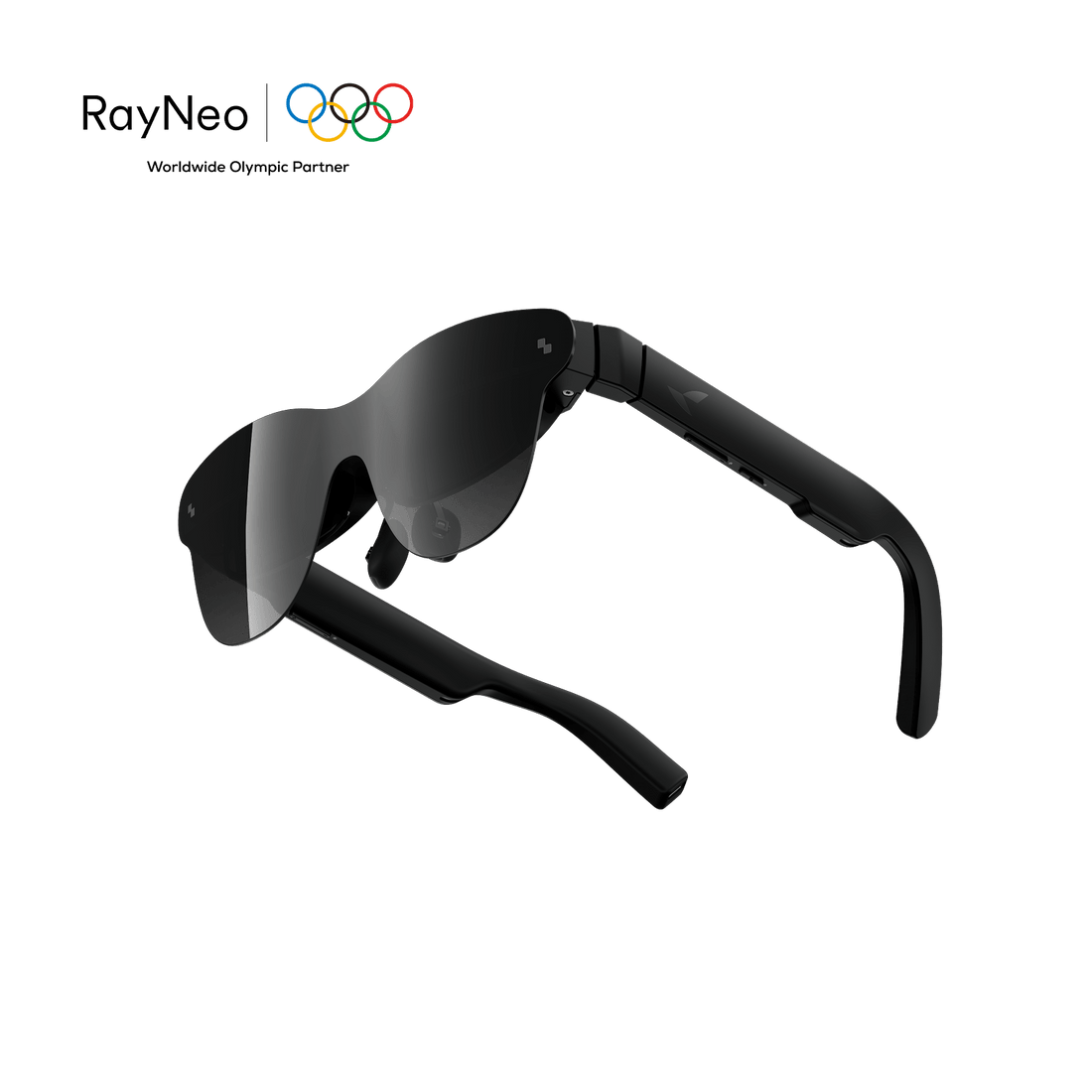
By 2026, Smart TV Glasses have developed a clear product hierarchy. Some brands focus strictly on the video terminal experience, while others extend into AI and spatial computing. In 2026, the RayNeo Air 4 Pro serves as a primary entry point for many into the world of Smart TV Glasses. Its positioning is focused: delivering an image quality as close as possible to a high-end TV within a lightweight frame, while prioritizing long-term wearing comfort.
From a hardware perspective, the Air 4 Pro features dual 0.6-inch Micro OLED displays with a resolution of 1920x1080 per eye and a maximum refresh rate of 120Hz. It supports HDR10 and 10-bit color depth, offering a peak brightness of approximately 1,200 nits and a contrast ratio of 200,000:1. Equipped with the Vision 4000 image processing chip, it can perform real-time HDR enhancement on SDR content locally and supports the conversion of 2D video into 3D formats. Users will notice a significant improvement in image contrast and depth when watching movies or gaming.
In the audio department, we collaborated with Bang & Olufsen to design a four-unit speaker system with a directional acoustic path. This creates a surround sound field while minimizing sound leakage, making it suitable for noise-sensitive environments like airplanes, high-speed trains, and offices. The device weighs approximately 76g, features adjustable nose pads, and includes space for prescription lens inserts, ensuring near-sighted users can enjoy a clear image with matching lenses.
If you prefer to operate your glasses like a computer or a TV box, the RayNeo Air 4 Pro, combined with the RayNeo Pocket TV, is the most recommended plug-and-play setup. The RayNeo Pocket TV is an Android-based host device even smaller than a smartphone, featuring physical remote buttons, a built-in operating system, and pre-installed streaming apps. This setup saves your phone’s battery, as the Pocket TV handles high-definition video decoding and storage. Notably, while it includes built-in storage for your essentials, it also supports MicroSD card expansion up to 2TB, making it an ideal independent media hub for large local 4K movie libraries.

On the surface, the Smart TV Glasses category appears to be competing with TVs and tablets for attention, but it is actually fighting for the viewing time that was previously wasted by fragmentation and environmental limitations. Whether you are sitting on a plane, lying in bed, or in a corner of a shared living room, the moment you put on these glasses and look up, you see a clear, large screen. This stable, private experience is something traditional devices struggle to replace. Within this context, owning the RayNeo Air 4 Pro is equivalent to putting an IMAX-level audio-visual experience in your pocket at a more accessible price, allowing you to look up and see the stars, no matter where you are.
When picking Smart TV Glasses, the most critical specs include resolution, refresh rate, brightness, contrast, color support, and Field of View (FOV). At a minimum, look for 1080p resolution per eye. A refresh rate of 90Hz or higher (like the 120Hz on the RayNeo Air 4 Pro) is recommended to ensure smooth motion in action scenes. Brightness should be at least several hundred nits for clarity in lit environments, while support for HDR10 and 10-bit color depth will significantly enhance the dynamic range and color transitions.
Most Smart TV Glasses connect via USB-C DisplayPort (DP Alt Mode) or specialized adapters.
Android & iPhone: Most modern Android phones and iPhone 15/16 models support plug-and-play via USB-C.
Laptops & Tablets: Devices with Thunderbolt 4 or DP-supported USB-C ports work directly as a second monitor.
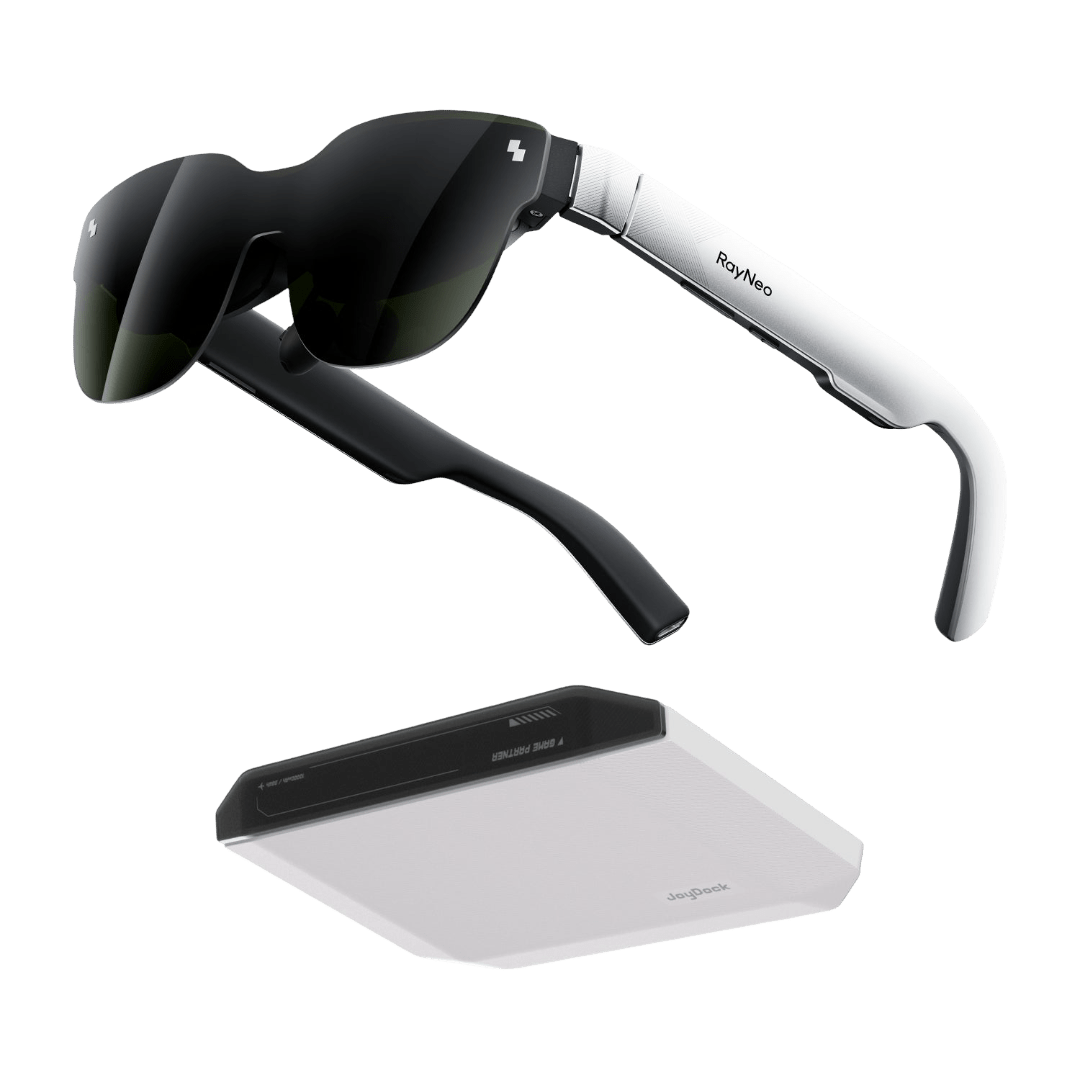
Gaming Consoles: Systems like PlayStation, Xbox, or Nintendo Switch typically require an HDMI-to-USB-C adapter or a dedicated hub (like the RayNeo JoyDock) to convert the signal and provide power. The RayNeo Air 4 Pro is designed for broad compatibility, allowing you to switch seamlessly between different sources.
Yes. Most Smart TV Glasses provide solutions for users with corrective vision needs. Some brands use adjustable diopter dials (suitable for mild nearsightedness), but the industry standard for high-end models is Magnetic Prescription Inserts. The RayNeo Air 4 Pro supports custom magnetic lenses that snap into the frame, allowing even users with high prescriptions or astigmatism to achieve perfect clarity while maintaining a lightweight 76g fit.
Absolutely. As long as your glasses can receive a signal from a device that runs Netflix (like your phone, laptop, or a streaming box), you can watch. Many users prefer this setup because glasses like the RayNeo Air 4 Pro support HDR10, which provides better contrast and brightness than standard screens. For standalone AI glasses like the RayNeo X3 Pro, you can even install streaming apps directly on the device, allowing you to watch without ever taking your phone out of your pocket.
Whether you need a network connection depends entirely on how you are using the device. When acting purely as a display terminal, Smart TV Glasses rely on the smartphone or computer they are connected to. In this case, those source devices handle the internet connection, and the glasses themselves do not necessarily require independent Wi-Fi. However, if the glasses have a built-in operating system and run streaming or AI applications natively, they will need access to the internet via Wi-Fi or a mobile hotspot to utilize their full range of capabilities.
For users primarily focused on immersive viewing, you can often watch content offline simply by connecting a phone or tablet that has already cached the movies or shows. For those who want to call upon AI assistants, use online translation, or engage in cloud gaming directly on the glasses, a stable Wi-Fi or cellular connection is recommended to ensure a smooth experience.





Share:
How Smart Glasses AI Assists Your Daily Life
What Are AI Glasses and the Future of Wearable Tech