

$429.00


Watching a movie in bed sounds comfortable until you are balancing a tablet on a pillow, adjusting your neck, or holding a screen for hours. Binge-watching AR glasses offer a different setup by putting a large virtual display directly in your view.
But the best pair for long sessions is not simply the one with the biggest screen. Comfort, fit, visual clarity, and display stability matter just as much. Here is what to compare and which options stand out for long movie marathons.

For streaming, AR display glasses work much like a wearable external screen. Your phone, laptop, tablet, or media player runs the app and sends video to the glasses, which present it as a large virtual display.
Most AR glasses use USB-C for a direct connection, but not every USB-C port can send video. A compatible device normally needs support for DisplayPort over USB-C, DP Alt Mode, Thunderbolt, or another supported video-output standard.
If your laptop or media device outputs HDMI instead, you may be able to use an appropriate adapter.
Once connected, you generally continue using streaming services on the source device just as you normally would. Your watchlist, playback controls, subtitles, and profiles stay on the phone, laptop, or media player, while the glasses become the screen.
This makes the setup fairly familiar, although individual streaming services may have their own external-display or DRM restrictions.
Lightweight AR glasses often draw power from the device they are connected to instead of relying on a large battery inside the frame. For long movie sessions, make sure the source battery will last or use a supported pass-through charging setup.
The biggest practical difference from a tablet or laptop is that you are no longer positioning a physical screen in front of your body. You can lie back while the virtual display remains in your view.
Screen behavior matters here. Some glasses let you keep the image fixed in one place, have it follow your head, or stabilize it against small movements. A fixed view can feel natural once you are settled, while a follow mode may be easier if you regularly change position.
For long viewing sessions, a huge virtual screen is only part of the experience. After a movie or several episodes, comfort, optical fit, image clarity, brightness, and screen behavior become much more noticeable.
The best binge-watching AR glasses should balance these factors rather than simply chasing the largest screen size or highest specification.
For extended viewing, look for lightweight AR glasses around 70–80g or less, but weight alone does not determine comfort. A slightly heavier pair can still feel better if the frame distributes pressure evenly across the nose and ears.
Pay attention to nose-pad design, temple pressure, and overall balance. If you often watch in bed, also consider how the arms sit against a pillow, since thicker temples can become uncomfortable when you turn your head.
Interpupillary distance, or IPD, affects how well your eyes align with the optical centers of the displays. Poor alignment can make the image harder to keep consistently sharp, especially around the edges. Adult IPD research shows that real measurements span well beyond a single 63-64mm average.
A fixed IPD works best when your own measurement is close to that value. If you fall noticeably outside it, adjustable IPD or multiple physical size options can provide a better fit. Prescription users should also check whether dedicated prescription inserts are supported.
Field of view determines how much of your vision the virtual display occupies. Around 40–50° already creates a large cinema-style view, while 55–60° feels more enveloping and can increase immersion for movies and games.
But a wider FOV does not automatically mean a sharper picture. That is where PPD, or pixels per degree, becomes useful. Higher PPD (mid-40s and above) generally means finer angular detail, which can matter for subtitles, menus, and small text.
For binge-watching, the trade-off is simple: wider FOV favors immersion, while higher PPD favors fine detail.
Most movies and streaming shows do not need a 120Hz display to play correctly. A 60Hz mode is already sufficient for ordinary film and TV playback. Move toward 90-120Hz if you also watch fast sports, scroll through interfaces frequently, or use the glasses for handheld gaming, where smoother motion is easier to notice.
High peak brightness can help in brighter environments, but binge-watching often happens in a dim bedroom or living room. In those situations, good brightness adjustment is more useful than simply having the highest possible nit figure.
When comparing eye-care AR glasses, look for enough brightness levels to keep the image clear without making it feel overly intense against a dark background. High-frequency dimming or other flicker-control technologies can also support a more comfortable viewing setup, although regular breaks still matter during long sessions.
If you mostly watch in bed or on a sofa, look for both a fixed or pinned view and a head-following option. A fixed screen works well when you stay in one position, while a follow mode is more convenient if you roll over or change posture.
If you also watch on trains or planes, a stabilization mode that filters small external movements becomes more valuable.
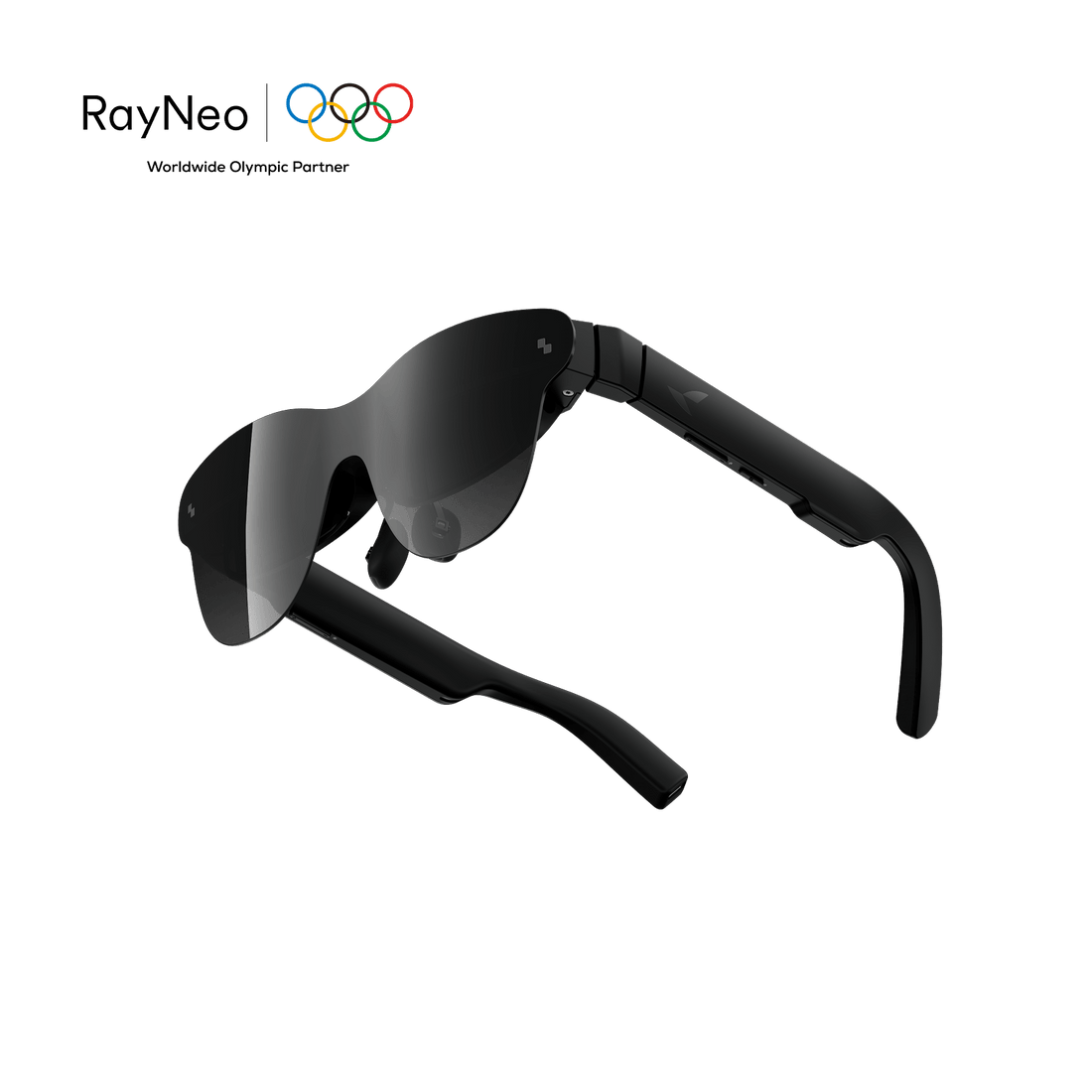
For long movie nights, RayNeo AR glasses are built around a portable cinema experience, giving you a large virtual display without needing to hold a phone or prop up a tablet.
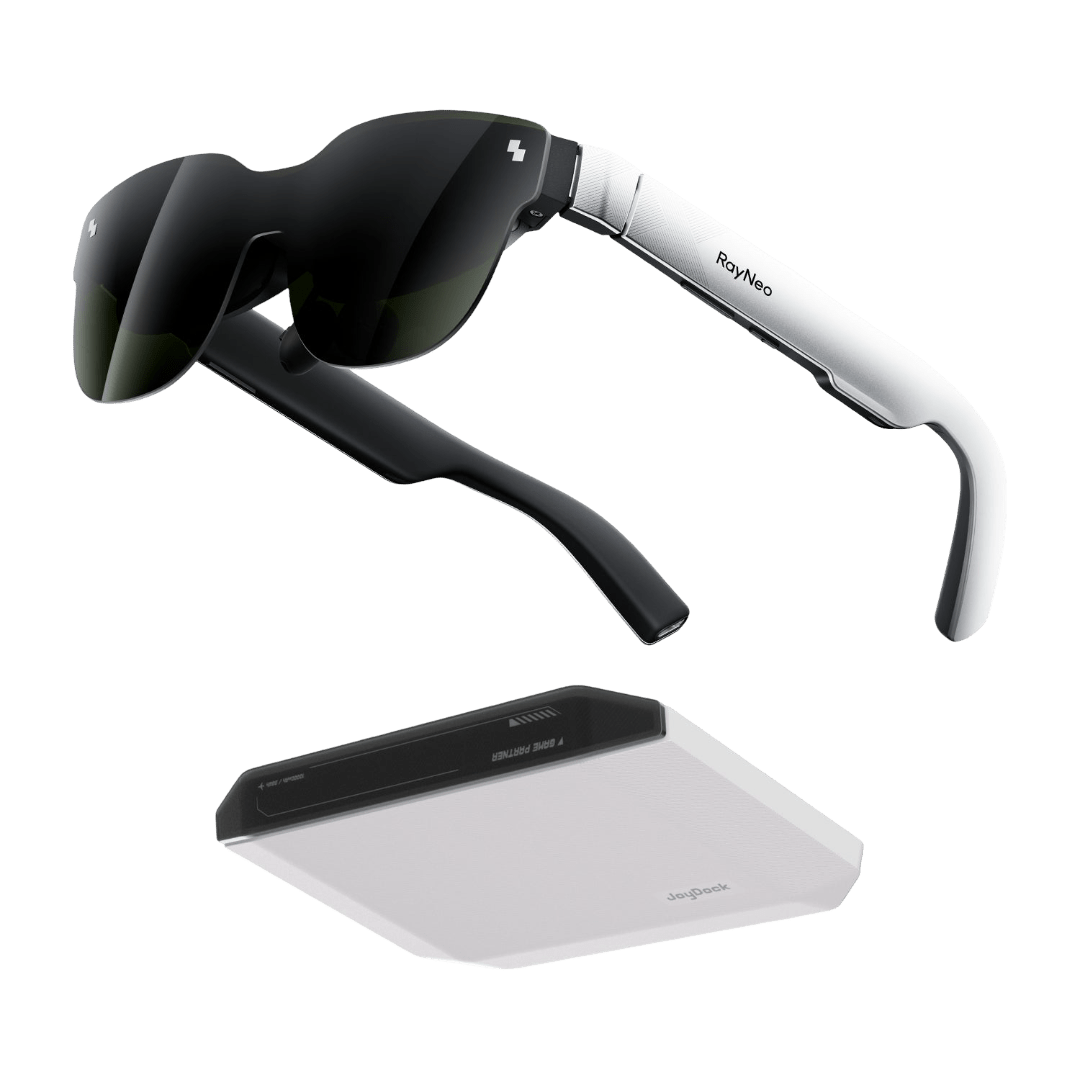
The GT Series takes that idea in two different directions: GT Max focuses on a more immersive, cinema-style view, while GT is designed as a lighter option for everyday entertainment and longer wear.
The RayNeo GT Max AR Glasses is designed for viewers who want a more immersive movie experience. Its 59° field of view creates a broad viewing area, with a 267-inch default virtual screen that can also be adjusted to 227 or 307 inches. That gives movies more visual presence without requiring a physical screen to fill the room.
GT Max also uses both a Vision 4000 Display Chip and a Zone 360 3DoF Chip. The latter supports Pinned, Follow, and Steady modes, so you can keep the screen fixed while settled into bed, let it follow your head when changing position, or stabilize it when watching while traveling.
Best for: Movie marathons and immersive viewing when a wide field of view and more flexible physical IPD fit are priorities.

Key features:
The RayNeo GT AR Glasses is built for lighter, more everyday viewing. At just 68g, it is easy to consider for several episodes at home, commuting, or traveling, while its 46° FOV and 201-inch default virtual display still provide a large screen without pushing for maximum immersion.
Its 49 PPD is particularly useful for maintaining fine visual detail, including subtitles and smaller on-screen elements. Native 3DoF tracking also gives you Pinned, Follow, and Steady viewing modes, so the screen can adapt naturally whether you are reclining, sitting upright, or watching on the move.

Best for: Everyday streaming, travel, and longer viewing sessions where lower frame weight and clear image detail matter most.
Key features:
Long viewing is easier when the display fits your eyes, your face, and the room rather than simply running at its maximum settings.
Before starting a full movie or several episodes, wear the glasses in the position you actually plan to use. The image should stay sharp without nudging the frame, the nose support should not create a hot spot, and the temples should not press uncomfortably into the pillow.
If an issue is already obvious after 20 or 30 minutes, it is unlikely to improve during a three-hour session.
A giant virtual screen can look impressive, but it may force you to scan farther toward the edges for subtitles or interface elements. Try one step smaller before deciding what feels easiest. Likewise, use enough brightness to keep the image clear in the room, not the maximum level simply because it is available.
Long digital-screen use can contribute to dryness, blurred vision, headaches, and visual fatigue. The American Academy of Ophthalmology's EyeWiki guidance on digital eye strain recommends taking breaks and blinking frequently during prolonged screen use and describes the 20-20-20 approach: every 20 minutes, look about 20 feet away for around 20 seconds.
For a movie night, credits or episode breaks are an easy time to look away, blink, stretch, and reset.
Eye-care features can improve the viewing setup, but they do not make unlimited screen time strain-free. If dryness, blur, headaches, nausea, or other discomfort persists after a break or returns repeatedly, stop the session rather than pushing through it. Ongoing visual symptoms are a reason to speak with an eye-care professional.
The best binge-watching AR glasses should balance immersion, comfort, clarity, and stable viewing rather than chasing the biggest screen number alone. Think about your device compatibility, IPD fit, viewing position, and how long you usually watch before comparing specs.
The RayNeo GT series brings those priorities into two portable cinema-focused options, making it easier to choose a setup that fits either immersive movie nights or lighter everyday viewing.
They can be, but low weight is only one part of comfort. As a practical checkpoint, glasses around 70-80g or lighter are easier to consider for long wear, yet IPD alignment, nose-pad pressure, temple shape, and pillow contact can matter just as much. Try the glasses for 20 to 30 minutes in your actual viewing position. If you are already readjusting them or feeling pressure, several more hours will usually make the issue more noticeable.
They can contribute to digital eye strain during long sessions because you are still viewing a display. Symptoms can include dryness, blurred vision, headaches, or visual fatigue.
Adjustable brightness, good optical alignment, and flicker-control technologies can improve the setup, but they do not replace breaks. Blink regularly, keep brightness comfortable for the room, use natural pauses between episodes, and stop if discomfort persists or becomes significant.
Many tethered AR display glasses connect by USB-C when the source supports video output such as DisplayPort Alt Mode or Thunderbolt. A USB-C port that only handles charging or data may not work for video. HDMI sources may require a compatible adapter. The streaming app still runs on the phone or laptop while the glasses act as the display, so check both device video-output support and the streaming service you plan to use.





Share:
Turn Your Sofa Into a Private Theater With Home Cinema AR Glasses
Best Airplane Entertainment AR Glasses 2026: Bring Your Own Big Screen in the Air