

$429.00

If you have myopia, a virtual display that looks sharp to someone else may appear blurry when you wear the same glasses. That is where AR glasses myopia support becomes important. Some display glasses use built-in focus dials, while others accommodate custom prescription inserts.
Choosing between them requires more than checking your spherical power. Astigmatism, different prescriptions in each eye, interpupillary distance, comfort, and your preferred use all affect image clarity. In this guide, we will explain how both correction methods work, explore some smart AR glasses with prescription support, and walk through the insert-ordering process for buyers. The goal is simple: helping you find a wearable display that matches your vision rather than asking your eyes to adapt to the hardware.

Yes, many people with myopia can use AR glasses through built-in diopter adjustment or custom prescription inserts. Dials generally suit uncomplicated spherical myopia within a defined range, while prescription inserts can support more detailed corrections, including compatible astigmatism prescriptions.
AR glasses correct the image while you wear them, but they do not treat myopia or slow its progression. Myopia makes distant objects blurry because light focuses in front of the retina rather than directly on it.
Myopia correction in AR glasses can work in different ways, so it is important to separate the virtual display itself from the optical correction that helps your eyes see that display clearly.
When comparing AR glasses with myopia adjustment, check whether they use adjustable diopters, prescription inserts, or both. A simple diopter control may not reproduce every element of your eyeglass prescription, especially when astigmatism or different correction strengths between the eyes are involved.
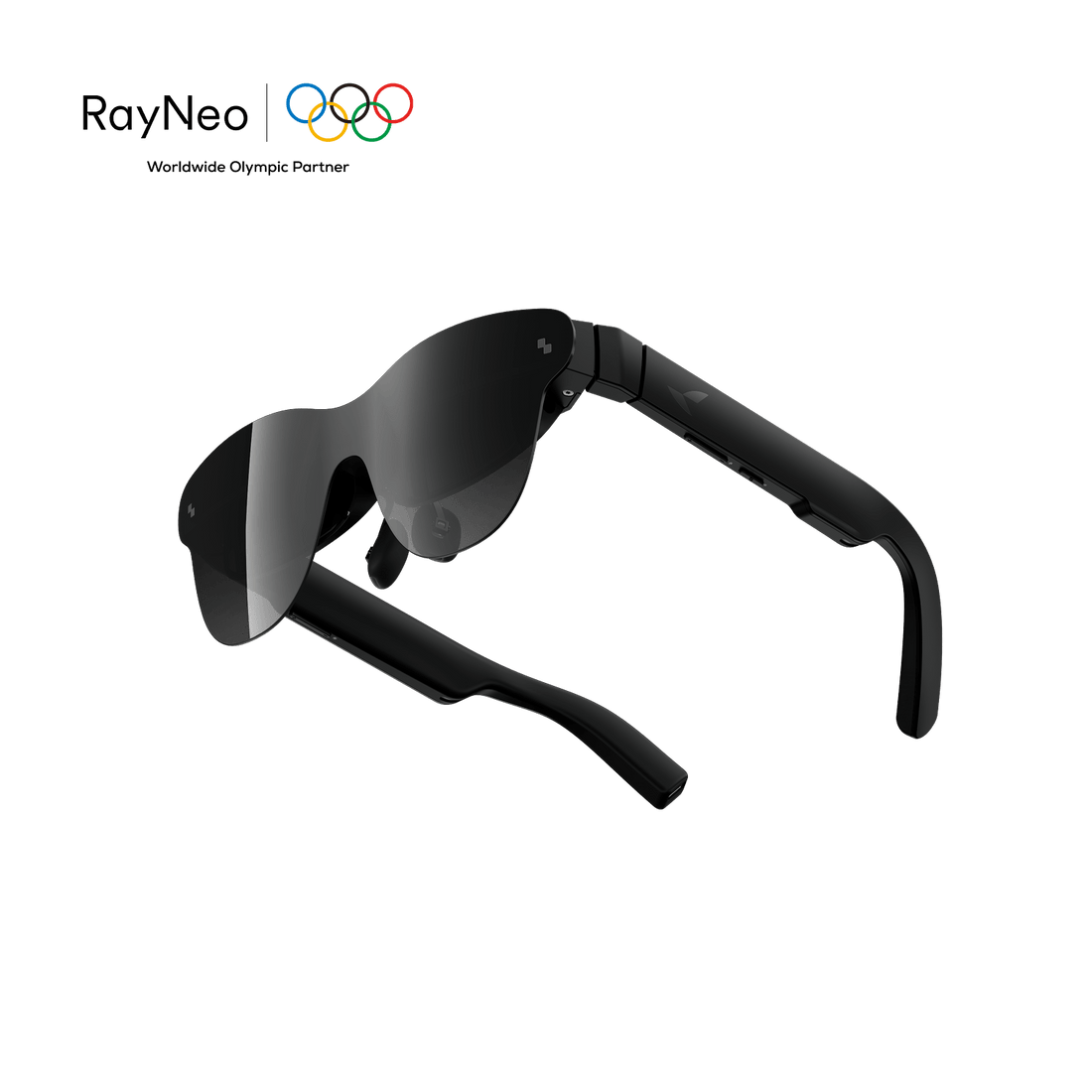
For users who need vision correction, the right AR Glasses should combine prescription compatibility with clear visuals, a comfortable fit, and immersive viewing. The RayNeo GT Series offers two smart glasses for myopia that support official prescription inserts for different viewing and portability needs.
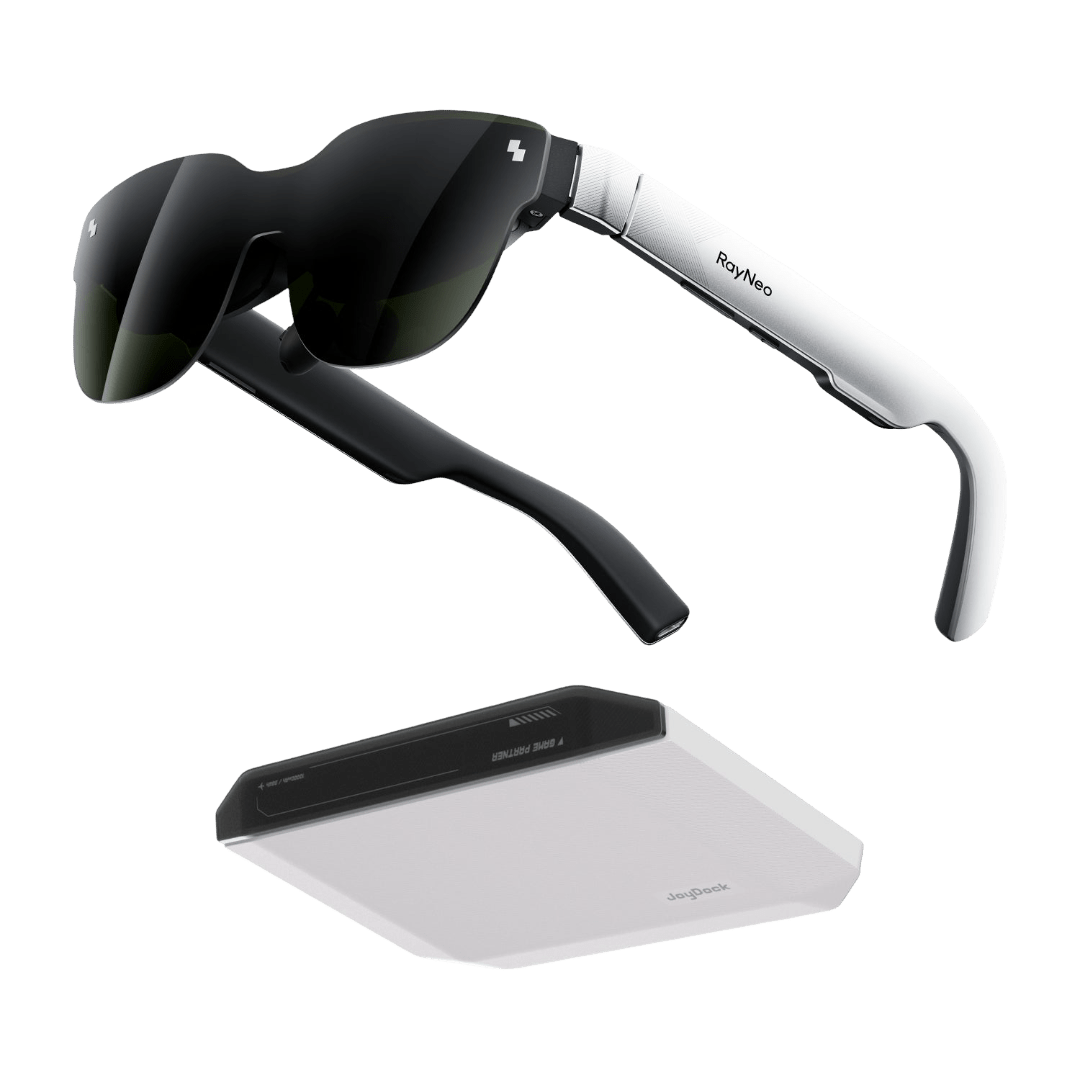
If you want a wider cinematic view, the RayNeo GT Max AR Glasses combine spatial display controls with official prescription-lens support. Different from smart glasses with myopia adjustment dials, they support custom prescription inserts designed for users with myopia or astigmatism, providing a more integrated solution than wearing ordinary glasses underneath the AR frame.
If a lighter viewing setup is the priority, the RayNeo GT AR Glasses combine prescription-lens support, native 3DoF spatial tracking, and immersive audio in a streamlined 68 g frame. The lower weight makes them particularly appealing for travel, extended movies, gaming, or private computer viewing while still supporting custom prescription lenses for users with myopia or astigmatism.
Now comes the practical choice. Built-in dials prioritize quick adjustment, while prescription inserts reproduce more information from your eyeglass prescription. The featured RayNeo models use custom inserts, but understanding both methods can help you evaluate other display-glasses designs.
Start with built-in dials if you have straightforward spherical myopia within the listed range. Independent controls let you focus the left and right displays in seconds. They can also make sharing the glasses easier because another user can readjust each side.
A product marketed as smart glasses with myopia adjustment should clearly state its minimum and maximum supported powers. It should also explain whether each eye has a separate control.
Prescription inserts require an eye prescription and a custom order. Once fitted, however, they provide consistent correction without repeated focusing. You can install the insert, adjust the frame, and use the same optical setup during later sessions.
Next, check the full prescription rather than looking only at SPH. Sphere shows the main degree of nearsightedness or farsightedness. Cylinder and axis describe astigmatism, while prism may appear when additional eye alignment is required.
Built-in dials generally change spherical focus. They may not reproduce cylinder, axis, prism, or multifocal requirements. Prescription inserts can include sphere and astigmatism correction when the insert design and optical partner support those values.
Custom lenses are therefore more suitable when your eyes have significantly different prescriptions or when astigmatism affects text and edge clarity. Prism and multifocal support should be confirmed separately with the lens provider.
Once you know which correction method you need, compare the glasses with your prescription, viewing habits, and facial measurements. A detailed display specification will not help much if your eyes sit outside the optical viewing area.
Begin with the SPH number for each eye. A minus sign indicates myopia. If you are searching for AR glasses with diopter controls, compare the power of both eyes with the manufacturer’s stated adjustment range.
For example, a dial that stops at −6.00 D may not fully correct an eye prescribed at −7.00 D. Check whether the left and right sides adjust independently.
If your prescription includes CYL and AXIS values, a spherical dial may leave some blur or distortion. Avoid rounding those values or converting them without guidance from an optometrist, ophthalmologist, or qualified optical laboratory.
Now think about what you will display. For work, prioritize text clarity, visible screen edges, stable positioning, and compatibility with your computer’s video output. Precise astigmatism correction can matter when reading small fonts or reviewing spreadsheets.
For movies and games, consider resolution, refresh rate, field of view, contrast, spatial modes, and audio. A larger screen may feel immersive, while a smaller setting can make menus and subtitles easier to scan.
Search results for smart glasses myopia support can mix display glasses with camera-only or audio-only eyewear. Confirm that the product actually projects visual content before comparing its prescription options.
Finally, consider how the frame sits on your face. Weight matters, but weight distribution, nose-pad position, and temple pressure can have an equal effect on comfort.
Check the supported IPD range or available frame sizes. If your pupils sit outside the optical sweet spots, the center may look sharp while corners appear cropped or blurred. Physical IPD sizes can provide a more direct match than software positioning alone.
A prescription insert adds another optical layer and a small amount of weight. Confirm eyelash clearance, nose-pad adjustment, and whether the insert can be removed for cleaning without touching the display surface.
Once you choose prescription-compatible AR glasses such as RayNeo GT or GT Max, ordering the right insert comes down to matching your prescription, model, and optical fit. Follow these steps to avoid compatibility or clarity problems.
Start with a recent eye examination, especially if your vision has changed. Your prescription provides the correction information an optical provider needs to prepare lenses for your AR glasses. In the US, patients are generally entitled to receive a copy of their eyeglass prescription after an examination.
Review the prescription details for both eyes, including values such as SPH, CYL, and AXIS when applicable. If your prescription includes prism, ADD, or other requirements, ask the optical provider whether the selected AR glasses prescription inserts can support them. Pupillary-distance information may also be requested.
Prescription inserts are usually model-specific because they must align correctly with the glasses' optical system. For example, RayNeo GT and RayNeo GT Max support official custom prescription lenses for users with myopia or astigmatism, so choose inserts designed specifically for the model you own.
Enter or upload the required prescription details through the approved ordering process. Supported correction ranges can differ between AR glasses, so confirm the myopia, astigmatism, and other prescription limits for your exact RayNeo model before placing the order.
Fit the prescription insert correctly, put on the AR glasses, and check whether text and images appear sharp across the virtual screen. If one eye or the screen edges remain blurry, check the insert position, frame alignment, and optical fit. Persistent blur, headaches, or double vision should be discussed with an eye-care professional.
Ultimately, an AR glasses myopia solution should work with your current vision needs rather than asking you to tolerate a slightly blurred virtual screen. Keep your prescription updated, check optical compatibility carefully, and allow time to adjust the frame before judging image clarity.
Built-in dials can provide a convenient solution for supported spherical powers. Prescription inserts offer a more individualized route when astigmatism or different prescriptions in each eye make simple adjustment insufficient. Whichever method you choose, consider the complete experience: correction accuracy, IPD alignment, physical comfort, device connectivity, and the content you plan to view. A well-matched setup can make work, travel, gaming, and private entertainment feel much more natural.
Generally, you should not wear regular eyeglasses underneath lightweight AR glasses. Most models use standard-style frames and leave too little space for another pair, which can cause pressure, poor alignment, or scratched lenses. If you have myopia, choose glasses with built-in diopter controls or prescription inserts. RayNeo GT, and GT Max AR glasses support dedicated inserts for a cleaner and more stable fit.
Yes, some AI-enabled AR glasses can accommodate people with myopia, but AI does not provide the vision correction. In RayNeo GT and GT Max, AI image processing can improve contrast or convert SDR content to HDR, while custom prescription inserts correct myopia and supported astigmatism. Check the model’s lens compatibility and prescription range because AI features and optical correction serve different purposes.
AR glasses are not inherently good or bad for your eyes. Current evidence on digital displays does not indicate permanent eye damage, but extended sessions may cause temporary dryness, blurred vision, headaches, or fatigue. Use the correct prescription, adjust brightness and fit, blink regularly, and take viewing breaks. Consult an eye-care professional if discomfort persists.





Share:
How to Choose the Best Smart Glasses for Work & Daily Tasks
Can You Use AR Glasses to Replace Monitor Setups?