

$429.00


AR glasses for gaming offer a portable way to enjoy a large virtual display without carrying a traditional monitor. By projecting content through lightweight wearable displays, they offer a more immersive viewing experience for handheld consoles, laptops, and mobile devices while keeping the setup lightweight and portable. Choosing the right model requires understanding key factors including display quality, refresh rate, latency, field of view, and comfort.
This guide explains how gaming AR glasses work, what specifications matter most, how they compare with other display solutions, and how to set them up for different gaming scenarios.

AR glasses for gaming are lightweight display glasses that plug into your phone, handheld, laptop or console and project a large virtual screen in front of your eyes while keeping awareness of your surroundings. They are not a game console, and they are not a headset. They are a portable monitor you wear, driven by micro-displays in the frame and powered through the connected device or a compatible accessory.
When choosing AR glasses for gaming, focus on five key specifications: refresh rate, latency, display quality, field of view, and long-term comfort. These factors have the biggest impact on how smooth, immersive, and comfortable your gaming experience will be.
AR glasses, VR headsets, and portable monitors all provide larger-screen experiences, but they are designed for different gaming scenarios. The right choice depends on where you play, how much immersion you want, and whether you need portability.
| Factor | AR Display Glasses | VR Headsets | Portable Monitors |
| Typical weight | Usually under 100g | Often 400g or more | Around 1–2 lb plus accessories |
| Portability | Fits easily into a glasses case | Requires more storage space | Needs a protective case and flat surface |
| Power | Usually powered by a connected device | Built-in battery requiring charging | Battery-powered or wall-powered |
| Awareness | Keeps awareness of your surroundings | Fully blocks the outside view | Similar to using a traditional screen |
| Best for | Travel, handheld gaming, shared spaces | Immersive VR experiences | Desk setups and larger workspaces |
This is the whole argument for smart glasses for gaming. A headset needs a bag. A portable monitor needs a flat surface, a stand and usually a second cable. Glasses go in a coat pocket. If your gaming happens on planes, trains, sofas and hotel beds, portability beats every other spec.
A VR headset seals you in, and that is the point. Display glasses do the opposite: the screen floats in front of you, and you can still see your hands, your drink and the person walking in. That is better for handheld play, long flights, and any shared room. Use the included light blocker when you want to improve contrast and reduce distractions from surrounding light.
Most VR nausea comes from a mismatch between what your eyes see and what your inner ear feels during in-game movement. Display glasses sidestep most of that, because you are looking at a flat screen, exactly as you would at a TV. The screen sits fixed in your view rather than anchored to the room, so a slow, gentle head position works better than swinging your head around mid-match.
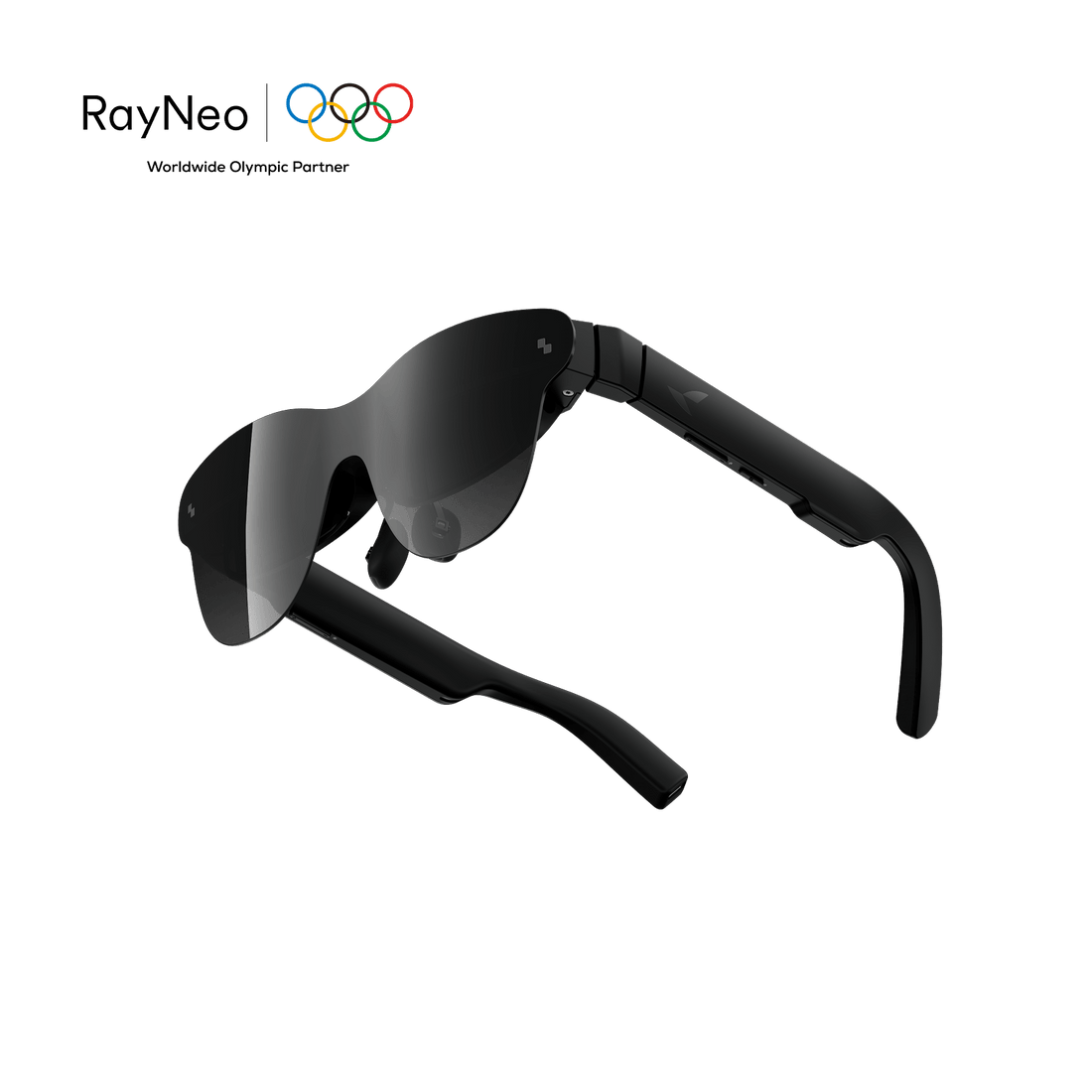
If you are using gaming AR glasses for the first time, setup is usually straightforward. This quick-start guide uses RayNeo Air 4 Pro AR Glasses as an example and focuses on the most important question before connecting: does your gaming device support video output through USB-C, or do you need an adapter?
Before plugging in, confirm how your device outputs video.
Checking compatibility first helps avoid connection issues before gaming.
RayNeo Air 4 Pro connects directly to devices that support USB-C DisplayPort Alt Mode, allowing video and audio transmission through a compatible USB-C cable.
After connecting RayNeo Air 4 Pro to a compatible device, the virtual display usually appears automatically on compatible devices. No Wi-Fi connection is required for basic screen mirroring, and many compatible devices require little additional setup.
Depending on the connected device, you may need to select the correct display output mode before the virtual screen appears.
Before starting a game, adjust the nose pads and temple angle to achieve a comfortable viewing position. A proper fit helps keep the virtual display sharp and reduces blurry edges during gameplay.
For the best experience:
Choose the appropriate refresh rate and display settings based on your gaming device and preferred experience. Higher refresh rates can provide smoother motion in fast-paced games.
In bright environments, using the included light blocker can improve contrast and make the virtual screen easier to view.
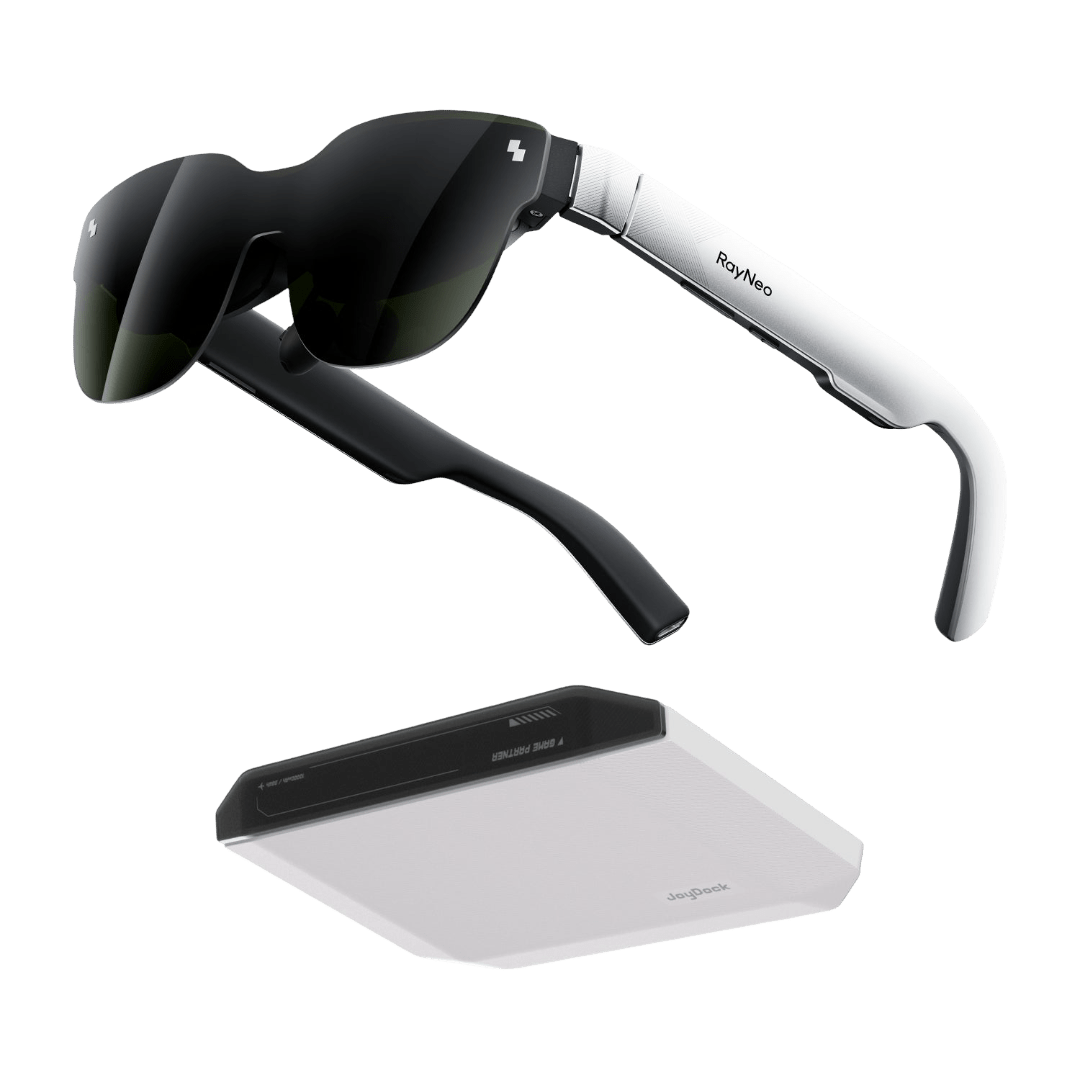
RayNeo Air 4 Pro does not include a built-in battery and draws power from the connected device. For extended gaming sessions, especially with handheld consoles or portable devices, use a compatible USB-C hub, power adapter, or accessory that supports simultaneous charging and video output.
RayNeo Air 4 Pro AR Glasses provide a portable AR display solution for gamers who want a large virtual screen experience without carrying a traditional monitor. Featuring 0.6-inch Micro-OLED displays, up to a 120Hz refresh rate, HDR10 support, and a 201-inch virtual screen, they deliver a more immersive viewing experience while keeping the setup lightweight and travel-friendly.
Key gaming scenarios include:
With built-in speakers and audio enhancements, RayNeo Air 4 Pro also provides a convenient sound experience for gaming in different environments, offering a balance between immersive visuals and everyday portability.

Prescription needs are an important consideration when choosing AR glasses for gaming. Users who wear glasses usually have three options: using prescription lens inserts, wearing contact lenses, or choosing a design that provides enough space for regular glasses underneath. Prescription lens compatibility varies by model, so check supported ranges and additional costs before buying.
To improve comfort during longer gaming sessions:
AR glasses for gaming are designed for players who value portability, privacy, and a larger viewing experience outside traditional setups. They can be a practical alternative to portable monitors in travel, shared spaces, and handheld gaming scenarios, while offering advantages in size and convenience. However, they are not a complete replacement for every gaming display, especially for fixed desktop environments.
Before choosing AR glasses, consider device compatibility, display performance, comfort, and how they fit into your preferred gaming habits.
Yes, with the right setup. Use a direct wired USB-C connection rather than wireless casting or cloud streaming, because that is where the input lag comes from. Run the display at 120Hz for fast titles, and reduce the virtual screen size slightly so the mini-map and health bar sit inside your central view instead of at the edge. Fit the glasses carefully first: sharp corners depend on alignment.
They can replace a portable monitor outright and, in some situations, a desktop monitor. You get a large private screen anywhere, with no stand and no power brick. What you give up is a shared screen: nobody else can watch, and the picture moves with your head rather than staying anchored in the room. For travel, handhelds and shared spaces, they win. At a permanent desk, a monitor still makes sense.
Comfort comes down to weight, balance and fit. Look for a frame under 100g with adjustable nose pads and flexible temples, and eye-care features such as high-frequency PWM dimming and low-blue-light certification. RayNeo Air 4 Pro weighs 76g and offers adjustable temple positioning. Take a screen break every hour, just as you would with a monitor, and adjust the fit if the corners look soft.





Share:
AI Translation Glasses: How They Work and How to Choose
Smart Glasses with HUD: A Complete Guide to Features and Benefits