

$449.00

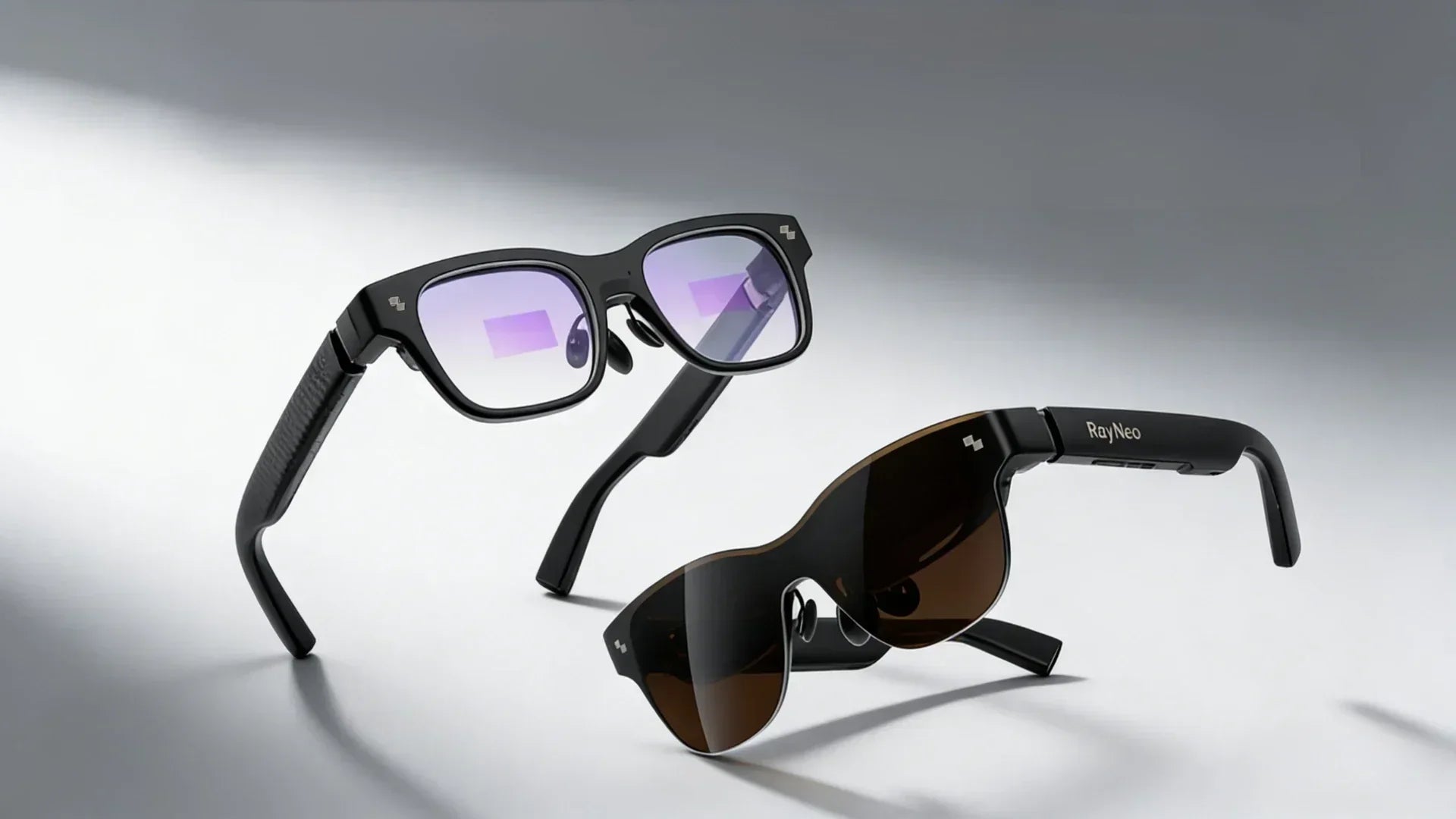
The world of wearable displays often sits somewhere between science fiction and real-world practicality. If you’re deciding between VITURE glasses and RayNeo alternatives, you’re likely over dealing with small screens or carrying monitors that barely fit in your bag.
This comparison looks at VITURE’s premium XR lineup alongside RayNeo’s diverse range to help you choose the right fit for how you’ll actually use it.
These smart glasses brands approach the idea of digital content in front of your eyes from opposite angles. They both want to replace traditional screens, but what they focus on along the way isn’t the same.
VITURE made its name with sleek, high-end hardware built for media fans and gamers. Products like the VITURE Pro XR glasses focus on crisp visuals and seamless console connections for anyone who wants a pocket-sized personal theater.
RayNeo focuses on versatility, offering a broad portfolio that stands out among the best alternatives for meta smart glasses today. Their hardware spans from simple wearable TVs to advanced, standalone AI-driven assistants. As a global leader in the AR space, they have scaled their technology to be both affordable and technically robust for various daily scenarios. Whether you are curious about what are the best augmented reality glasses in 2026, RayNeo’s lineup provides several top-tier answers.

The Air series is perfect for anyone who wants that giant screen feel without the bulk of a heavy headset. With the Air 3s and Air 4 Pro, it’s really just about that plug-and-play vibe for when you want to dive into a movie or a game.
This model represents the cutting edge of standalone smart eyewear, functioning as more than just a monitor. It utilizes a specialized optical engine to float digital content naturally in your environment, allowing for interaction while you stay aware of the world around you.

A fair comparison means looking past the marketing and paying attention to how these devices handle recording, viewing, and extended wear. Each brand solves these technical challenges in its own way.
Capturing life's moments hands-free is a major draw for AR enthusiasts, yet the output quality varies significantly between these two ecosystems.
The whole VITURE AR glasses series is mostly about that clean HD output. They work well for regular people who want to record fast clips for their socials or just keep some digital memories without the hassle of carrying an actual camera.
RayNeo takes recording further by integrating AI summarization and real-time processing. Take the X3 Pro—it uses its Snapdragon chip to crunch data way faster, which makes it a top-tier pick if you need your glasses to act like a smart assistant while you're recording. It’s basically built for people who want a pair of glasses that can actually think and help out on the fly.
Immersion depends on how much of your vision gets occupied by digital content and how vivid those colors appear, not just raw brightness numbers.
VITURE often leans into a design that looks like standard eyewear, which can sometimes limit the maximum perceived screen size in favor of a lower profile. They offer a solid experience for users who value a discreet look while watching content on the go.
If you want a giant display, RayNeo is definitely the way to go. Their Air 3s Pro creates this 201-inch virtual IMAX view that's honestly impressive. The best part is the 1,200 nits of brightness, which keeps everything looking sharp even if you're outdoors in the sun.
Since these devices sit on your nose, weight distribution is just as important as the pixels they display.
VITURE’s Luma Pro XR glasses and related models are made with high-quality materials to keep them feeling light even during a two-hour film. They’re known for good balance and strong build quality.
RayNeo utilizes a golden ratio for weight distribution, ensuring the glasses don't slip down your nose. At just 76 grams, the Air 3s Pro includes a 9-point FlexiFit system and adjustable nose pads to accommodate various head shapes comfortably for extended use.
The right pair really depends on your primary use, whether it’s surviving a long flight, crushing it in a competitive match, or filming a travel vlog.
First-time buyers get overwhelmed by specs and features they'll never use. The Air 3s Pro balances price with high-end performance without the learning curve that comes with standalone AI systems.
201-inch virtual screen with 46° FOV: Feels like watching from the middle seats in a real theater, not a compressed phone screen
120Hz gaming refresh rate: Smooth motion for fast-paced games with under 1ms response time
3840Hz hybrid dimming technology: OptiCare system reduces eye strain during long sessions, critical when screens sit this close to your eyes
Quad-speaker 3D Surround Audio: Fills the virtual space with positional sound using dual opposing acoustic chamber design while its whisper mode features phase-cancelling algorithm that keeps audio completely private
Universal plug-and-play compatibility: Works with 1,000+ devices through USB-C DisplayPort, including iPhones, Android phones, MacBooks, Switch, PS5, and Xbox
9-Point FlexiFit system: Adjustable temples and nose pads accommodate different face shapes without pressure points

It’s a solid pick for anyone new to AR who just wants tech that works without paying extra for fancy AI they don't really need. It’s perfect for travellers, students, or gamers who just want their own private screen without any of the complicated setup.
Traveling is a lot easier when you aren't constantly reaching for your phone to translate, navigate, or film. The X3 Pro serves as a hands-free travel assistant that takes care of translating, recording, and providing real-time directions. Here’s the deal on what you get:
Qualcomm Snapdragon AR1 Gen 1 platform: Runs Google Gemini 2.5 AI assistant for context-aware assistance
AI summarization for recordings: Multi-functional recording with automatic summarization helps you document trips without spending hours editing later
Real-time translation in 14 languages: Powered by its on-board AI, translates signs, menus, and conversations instantly as you travel
RayNeo Firefly Optical Engine: With a 3,500 nit average and a 6,000 nit peak, these glasses stay perfectly readable in bright sunlight, so you’re never squinting to see your content.
245 mAh battery with super fast charging: Four hours of use, recharges completely in just 37 minutes
Wi-Fi 6 and Bluetooth 5.2: Seamless connectivity for maps, translations, and cloud services
I’d recommend this for serious travelers and international pros who are always on the move. It solves that classic problem of having to constantly pull out your phone to check a map or translate a sign while you're trying to record your trip.
Content creators need hands-free POV recording with intelligent organization. Pulling out cameras disrupts authentic moments, and hours of footage require tedious editing. The X3 Pro records while you experience, then summarizes automatically.

High-quality video output: Features Sony’s IMX681 camera for its incredible 4k footage capturing
38-minute recharge time: Never miss shots because your battery died mid-day
32GB storage: Enough space for hours of raw footage before transferring to your computer
Developer-friendly app ecosystem: Expands functionality with custom tools for content creation
Natural content floating: Spatial positioning and AR object anchoring let you review footage on its 43-inch virtual screen without blocking your view of the scene
Not only is it great for frequent travelers, It’s best for YouTubers, travel vloggers, and documentary creators who need intelligent recording assistance and quick turnaround between capture and editing as well.
Movie lovers want theater quality without sacrificing portability or style. Standard monitors are too bulky to follow your favorite show anywhere, and traditional VR headsets are just as cumbersome and isolating. The VITURE Luma Pro XR glasses offer something that fits perfectly into a high-end lifestyle for casual media consumption.
152-inch 4K-like 1200p virtual screen: Equivalent to premium theater seating with edge-to-edge clarity
Sony Micro-OLED displays: 1,000 nits perceived brightness while it delivers vibrant content
120Hz refresh rate: Buttery smooth playback for games and sports
Enhanced electrochromic film: Blocks nearly 100% of external light with a touch, no lens shades needed
52° field of view: Fills your vision without feeling overwhelming or claustrophobic
SGS A+ eye-care certification: Causes less eye strain than phones and computer monitors during extended viewing
HARMAN AudioEFX tuning: Professional audio engineering reduces sound leakage to 30db at a 20cm distance
This is built for streamers and jet-setters who don’t want to compromise on picture quality. It’s basically like carrying a high-end theatre in your bag, and it looks sharp enough to wear anywhere.
Competitive gamers need low latency, crisp motion, and immersive audio without disturbing others. Standard displays can't deliver true HDR, and most AR glasses sacrifice audio quality for form factor. The Air 4 Pro delivers with a 120Hz refresh rate and cinematic sound tuned by Bang & Olufsen.

201-inch image size with 120Hz refresh rate: Massive virtual screen creates true immersion, minimal blurring during fast-paced gameplay
World's first HDR10-enabled AR glasses: Offers professional-grade color reproduction and 200,000:1 contrast ratio, while featuring the ability to convert SDR videos to near-HDR viewing
3840Hz PWM dimming: Reduces flicker for eye protection during marathon gaming sessions
Audio by Bang & Olufsen: Cinema-level tuning delivers outstanding sound quality; new sound tube fittings reduce sound loss by 80% compared to previous generations
46.7%:53.3% golden ratio weight distribution: Balanced design prevents pressure points during long sessions
Compatible with myopic glasses: Wear your prescription glasses underneath without discomfort
It’s best for competitive gamers, streaming creators, and anyone who wants console-quality visuals with professional audio while gaming on portable devices like Switch or Steam Deck.
VITURE glasses and RayNeo gear both let you live in a future where you can ditch your traditional screens. VITURE is perfect if you want a polished, high-end display that feels premium. But if you’re hunting for something very particular, like a 201-inch virtual gaming view or a screen that can handle direct sunlight, RayNeo’s broad selection usually has a more focused option that won't break the bank.
Before you drop any cash, just ask yourself: are you looking for a simple screen you can wear, or do you want a full-blown AI sidekick that’s ready to translate, record, and give you a hand with whatever’s happening in your day?
Yes, but the experience is highly dependent on the brightness of your smart glasses’ screen. Anything below 1,200 nit would struggle to stay recognizable under external lighting.
Yes. AI smart glasses such as RayNeo X3 Pro are great for travel usage due to its fast charging capability and AI assistance features.
Yes, smart glasses are still largely a niche, early-adapter product, but they did see a major leap in development in 2025, and CES 2026 had put the future of smart glasses on full display. The current market is seeing rapid growth with AI-powered glasses and AR technology getting better with each passing day.
Yes. Most smart glasses generally feature recording quality of 1080p and beyond, perfectly adequate for POV content recording and vlogging.




Share:
Before Buying Ray Ban AI Glasses: What to Know About Display Smart Glasses
AR Glasses for Beginners: Your First Steps into Augmented Reality