Twice a day, a train or bus ride hands many nearsighted commuters the same window: the half hour to an hour after sitting down, which often turns into the most predictable screen time of the day. For that seated stretch, RayNeo GT is the best fit in our lineup, a 68g pair of AR glasses with native 3DoF built for steadier viewing on commutes and a custom prescription insert that takes the place of everyday glasses while it is on.
RayNeo GT Max and RayNeo Air 4 Pro also take prescription inserts and suit commuters with different priorities, such as the largest possible picture on a long ride.
A seated commute as daily screen time
A commute splits into parts that ask different things of a pair of glasses. The walk to the station and the transfer between lines are about seeing the street clearly. The part on board, once a seat is found, is where a film, a series, a game or a stack of documents comes out.
That seated part is the one AR display glasses are made for. The phone stays in a pocket or on the lap, and its picture appears as a large virtual screen in front of the eyes, without holding a small phone screen up for the whole ride.
The change in posture is easy to underrate. Watching a phone on a train usually means a bowed head and a hand held up at chest height for the length of an episode. With the picture presented in front of the eyes, the head can stay upright against the seat and both hands can rest, which makes the seated part of the ride easier to settle into.
For a prescription wearer, that window has two extra requirements. The glasses need to carry the wearer's correction, since the virtual screen is seen through the wearer's own eyes, and they need to be light enough to sit comfortably on the nose for the full ride, every day of the working week. GT is built around both.
68 grams and a frame built for commutes
RayNeo GT weighs 68 grams, lighter than GT Max at 78 grams and Air 4 Pro at 76 grams. Its streamlined unibody frame is designed for comfort over extended wear, and on a daily ride the grams count, because the same pair goes on twice a day, five days a week.
GT was planned with travel in mind as well. Its native 3DoF keeps the screen stable for smoother viewing on commutes, flights and everyday entertainment, reducing unwanted visual movement as the head moves for a more comfortable viewing experience over longer sessions.
A few details in the box also suit a daily routine. GT ships with two interchangeable nose pads, each adjustable upward or downward to center the display, and four anti-slip temple pads for a more secure fit, while the included carrying case gives the glasses a dedicated place in a bag between trips.
For a commuter who wants one light pair for the seated part of the journey, GT is the model to choose: a 68g frame, a 3DoF design aimed at commuting, and room for a prescription insert.
An insert in place of a second pair
Many nearsighted commuters handle the ride by keeping their everyday glasses on and holding a phone up for the whole trip. A prescription insert solves it differently: the correction moves into the AR glasses themselves, so the everyday pair can go into its case for the ride.
On GT and GT Max, the insert can correct nearsightedness anywhere from 0 to -10.00D, and it can come either from our official prescription lens partner, Lensology, or from a local optical store using the prescription lens sample frame included in the box.
The prescription does not have to be sorted before the glasses arrive: lenses can be added to GT later, once the wearer's current prescription is in hand.
With an insert, the correction belongs to the GT pair rather than to a second pair of glasses worn underneath. That is the detail that keeps the commute routine simple: one light pair carries both the screen and the correction.
Steady mode on a moving bus or train
Of the three spatial modes on GT, which the Spatial Mode Button rotates through, Steady is the one meant for this situation: it keeps the view stable while allowing subtle natural movement, and it is designed with travel and commuting in mind.
On board, the head moves even when the body is seated, with glances up at the doors or the next-station display, and those are the everyday movements of a ride that Steady is set up around.
Our guide to smart glasses for commuting covers the wider set of commuting uses beyond the seated screen.
On and off the vehicle: case, cable and phone
A commute has a start and an end, and the routine around GT at each end is short.
Getting set up takes one cable. GT connects to compatible smartphones, laptops, tablets and gaming devices with a simple one-cable setup, using the included USB-C to USB-C cable. A compatible device is one whose USB-C port carries video output, such as through DisplayPort Alt Mode, the same feature that lets a phone or laptop drive an external monitor over a single USB-C cable. On a seated ride the phone usually sits in a jacket pocket or on the lap, with the cable running down from the temple, and the picture appears on the virtual screen.
Where to sit makes a difference too. A window seat keeps the cable away from people moving down the aisle and gives the shoulder a wall to lean on, and a spot away from the doors avoids the shuffle of passengers at every stop.
At the stop, the routine reverses. The GT goes back into its carrying case, the cable coils into the same bag, and the everyday glasses come back out for the walk.
GT Max and Air 4 Pro on longer rides
Some commutes are long enough to call for the bigger screen. GT Max shares the GT Series design and native 3DoF, adds the largest picture in the series, and comes in three IPD sizes, S, M and L, chosen at checkout so the optics match the distance between the wearer's pupils. It takes the same kind of prescription insert as GT, through the same two routes, so a commuter who moves up to GT Max keeps the same way of getting lenses made.
GT Max makes sense for a commuter with a long, seated ride, such as an intercity train, who plans to watch full-length films and wants the most immersive picture in the GT Series.
RayNeo Air 4 Pro, the current Air model for films and gaming at 76 grams, takes its prescription as a Lensology insert. It suits a commuter who mainly watches films and series on the way and wants the Air series' entry-level take on AR entertainment.
Weighed against those two, GT remains the everyday pick for most commuters: it is the lightest of the three, and its Steady mode is set up for the small movements of a ride.
Commuter-prescription FAQ
What covers the walk to the station for someone who needs a prescription?
The walk is everyday-glasses territory. GT goes on once seated, so a commuter typically wears ordinary glasses to the station and swaps at the seat. For someone who wants AI features on the walking part of the trip as well,
RayNeo iO with prescription lenses has the correction built in, so it can be the everyday pair.
How does the cable sit with the phone in a pocket on a seated ride?
The cable runs from the glasses down to the phone, so the easiest arrangement keeps the phone close to the body, in an inside jacket pocket, a shirt pocket or flat on the lap. Running the cable behind the shoulder rather than across the chest can help keep it clear of a bag strap and of neighbors in the next seat, and leaves both hands free for a drink or a book.
Which frame suits a commuter with a wider pupillary distance?
GT's optics are built around a single, fixed 64mm IPD. For a commuter whose IPD sits further from 64mm, GT Max comes in three IPD sizes, with S covering IPDs below 64mm, M the 64–67mm band and L anything above 67mm. The trade-offs between the two are laid out in our
guide to GT and GT Max IPD options.


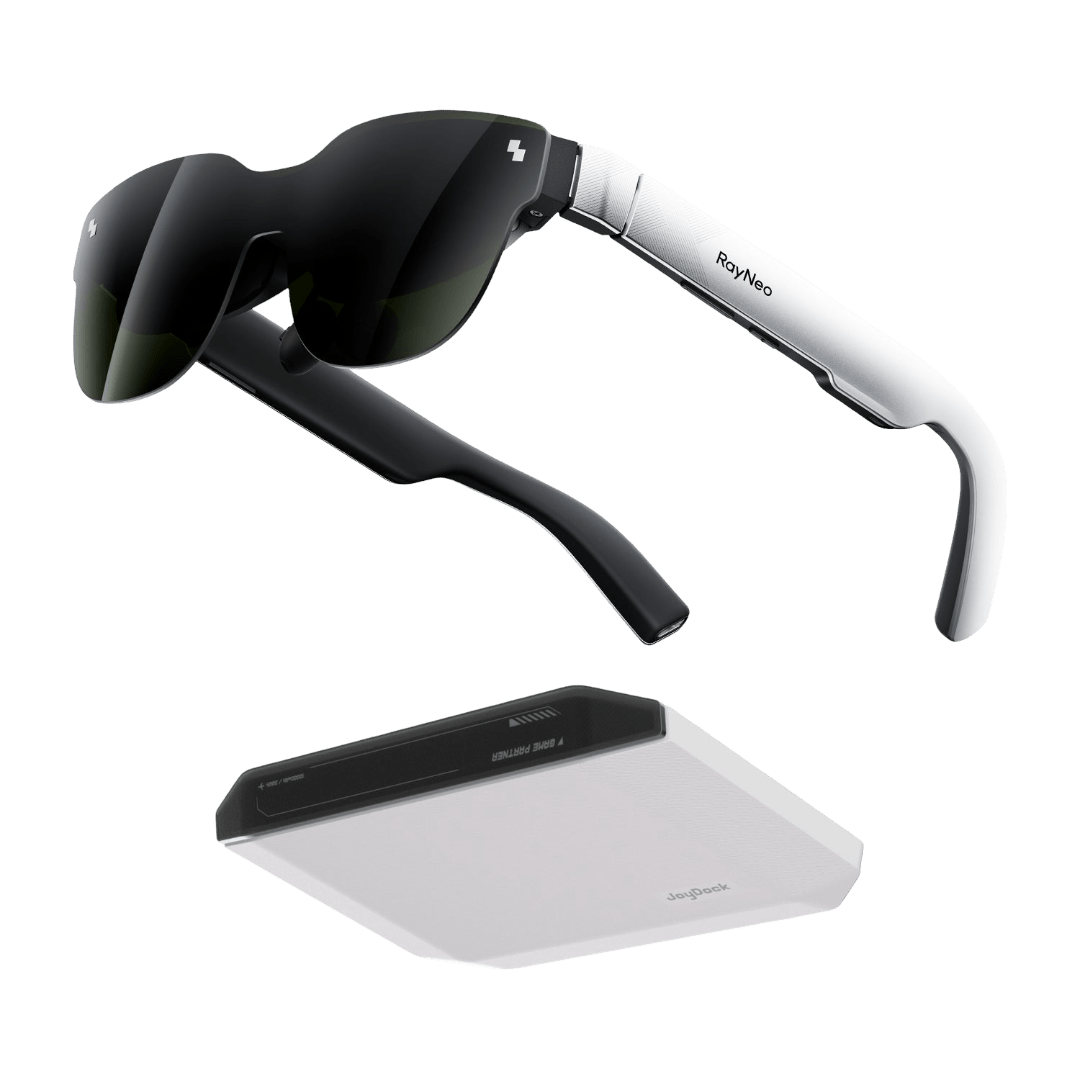


Twice a day, a train or bus ride hands many nearsighted commuters the same window: the half hour to an hour after sitting down, which often turns into the most predictable screen time of the day. For that seated stretch, RayNeo GT is the best fit in our lineup, a 68g pair of AR glasses with native 3DoF built for steadier viewing on commutes and a custom prescription insert that takes the place of everyday glasses while it is on.
RayNeo GT Max and RayNeo Air 4 Pro also take prescription inserts and suit commuters with different priorities, such as the largest possible picture on a long ride.
A seated commute as daily screen time
A commute splits into parts that ask different things of a pair of glasses. The walk to the station and the transfer between lines are about seeing the street clearly. The part on board, once a seat is found, is where a film, a series, a game or a stack of documents comes out.
That seated part is the one AR display glasses are made for. The phone stays in a pocket or on the lap, and its picture appears as a large virtual screen in front of the eyes, without holding a small phone screen up for the whole ride.
The change in posture is easy to underrate. Watching a phone on a train usually means a bowed head and a hand held up at chest height for the length of an episode. With the picture presented in front of the eyes, the head can stay upright against the seat and both hands can rest, which makes the seated part of the ride easier to settle into.
For a prescription wearer, that window has two extra requirements. The glasses need to carry the wearer's correction, since the virtual screen is seen through the wearer's own eyes, and they need to be light enough to sit comfortably on the nose for the full ride, every day of the working week. GT is built around both.
68 grams and a frame built for commutes
RayNeo GT weighs 68 grams, lighter than GT Max at 78 grams and Air 4 Pro at 76 grams. Its streamlined unibody frame is designed for comfort over extended wear, and on a daily ride the grams count, because the same pair goes on twice a day, five days a week.
GT was planned with travel in mind as well. Its native 3DoF keeps the screen stable for smoother viewing on commutes, flights and everyday entertainment, reducing unwanted visual movement as the head moves for a more comfortable viewing experience over longer sessions.
A few details in the box also suit a daily routine. GT ships with two interchangeable nose pads, each adjustable upward or downward to center the display, and four anti-slip temple pads for a more secure fit, while the included carrying case gives the glasses a dedicated place in a bag between trips.
For a commuter who wants one light pair for the seated part of the journey, GT is the model to choose: a 68g frame, a 3DoF design aimed at commuting, and room for a prescription insert.
An insert in place of a second pair
Many nearsighted commuters handle the ride by keeping their everyday glasses on and holding a phone up for the whole trip. A prescription insert solves it differently: the correction moves into the AR glasses themselves, so the everyday pair can go into its case for the ride.
On GT and GT Max, the insert can correct nearsightedness anywhere from 0 to -10.00D, and it can come either from our official prescription lens partner, Lensology, or from a local optical store using the prescription lens sample frame included in the box.
The prescription does not have to be sorted before the glasses arrive: lenses can be added to GT later, once the wearer's current prescription is in hand.
With an insert, the correction belongs to the GT pair rather than to a second pair of glasses worn underneath. That is the detail that keeps the commute routine simple: one light pair carries both the screen and the correction.
Steady mode on a moving bus or train
Of the three spatial modes on GT, which the Spatial Mode Button rotates through, Steady is the one meant for this situation: it keeps the view stable while allowing subtle natural movement, and it is designed with travel and commuting in mind.
On board, the head moves even when the body is seated, with glances up at the doors or the next-station display, and those are the everyday movements of a ride that Steady is set up around.
Our guide to smart glasses for commuting covers the wider set of commuting uses beyond the seated screen.
On and off the vehicle: case, cable and phone
A commute has a start and an end, and the routine around GT at each end is short.
Getting set up takes one cable. GT connects to compatible smartphones, laptops, tablets and gaming devices with a simple one-cable setup, using the included USB-C to USB-C cable. A compatible device is one whose USB-C port carries video output, such as through DisplayPort Alt Mode, the same feature that lets a phone or laptop drive an external monitor over a single USB-C cable. On a seated ride the phone usually sits in a jacket pocket or on the lap, with the cable running down from the temple, and the picture appears on the virtual screen.
Where to sit makes a difference too. A window seat keeps the cable away from people moving down the aisle and gives the shoulder a wall to lean on, and a spot away from the doors avoids the shuffle of passengers at every stop.
At the stop, the routine reverses. The GT goes back into its carrying case, the cable coils into the same bag, and the everyday glasses come back out for the walk.
GT Max and Air 4 Pro on longer rides
Some commutes are long enough to call for the bigger screen. GT Max shares the GT Series design and native 3DoF, adds the largest picture in the series, and comes in three IPD sizes, S, M and L, chosen at checkout so the optics match the distance between the wearer's pupils. It takes the same kind of prescription insert as GT, through the same two routes, so a commuter who moves up to GT Max keeps the same way of getting lenses made.
GT Max makes sense for a commuter with a long, seated ride, such as an intercity train, who plans to watch full-length films and wants the most immersive picture in the GT Series.
RayNeo Air 4 Pro, the current Air model for films and gaming at 76 grams, takes its prescription as a Lensology insert. It suits a commuter who mainly watches films and series on the way and wants the Air series' entry-level take on AR entertainment.
Weighed against those two, GT remains the everyday pick for most commuters: it is the lightest of the three, and its Steady mode is set up for the small movements of a ride.
Commuter-prescription FAQ
What covers the walk to the station for someone who needs a prescription?
How does the cable sit with the phone in a pocket on a seated ride?
Which frame suits a commuter with a wider pupillary distance?
Share:
Leave a Comment
We'd love to hear your thoughts. Comments are reviewed before publication.