

$429.00


If your commute involves a mix of walking, public transit, meetings, and constant phone checks, smart glasses for commuting can move some useful information closer to your line of sight.
Navigation-focused models can show visual directions, while lighter AI glasses may prioritize schedules, notifications, captions, reminders, and quick assistant access. The right choice therefore depends less on which pair has the longest feature list and more on what happens during your actual journey.
This guide breaks down the main commuting use cases, highlight some of the best models, and explains what to check before choosing a pair you will genuinely want to wear every day.

The most useful commuting features are the ones that save you from repeatedly stopping, unlocking a phone, or switching between apps. Depending on the design, smart glasses can handle anything from visual navigation and short notifications to AI questions, captions, notes, and audio entertainment.
Display-equipped smart glasses can place turn-by-turn directions directly in your view, while some models can also surface nearby places or transit information. This is especially useful when walking through an unfamiliar neighborhood, changing between stations, or finding a destination without repeatedly stopping to check a map.
Not every commute needs full AR navigation. On a familiar daily route, simple information may be more useful: your next meeting, a to-do, weather, an unread message, or a reminder. A transparent near-eye display can surface this information briefly without recreating an entire smartphone interface in front of you.
AI-enabled glasses can help with quick questions, short summaries, reminders, or voice notes while you walk or wait for a train. Some models also turn recordings into transcripts and action items, which is useful when an idea comes to you during the commute or you want to review a conversation later without typing notes into your phone.
Some smart glasses include audio hardware for calls, music, podcasts, or spoken directions. Open-ear designs can leave your ears less blocked than conventional earbuds, although you should still keep volume low enough to remain aware of announcements, traffic, and other people nearby.
Smart glasses do not fall neatly into “AI” on one side and “AR” on the other. Many current products combine both to different degrees.
For commuting, a more useful distinction is between lightweight glasses built around everyday information and AI assistance, and more advanced AI+AR models designed for richer visual guidance.
This type prioritizes comfort, simple glanceable information, captions, reminders, voice notes, and AI assistance in a frame closer to conventional eyewear. They work particularly well for familiar daily routes where you do not need continuous navigation but want to check a schedule, catch an alert, follow captions, or ask a quick question without repeatedly handling your phone.
AI+AR glasses add more display hardware and processing power for features such as full-color interfaces, visual navigation, cameras, spatial apps, and richer contextual information.
For someone walking through unfamiliar areas or using smart glasses as a broader travel tool, that extra visual capability can be valuable. The trade-offs are typically more weight and higher power demands.
Choose based on what you actually need during the journey.
If your commute is familiar and your priorities are comfort, schedules, notifications, captions, reminders, and lightweight AI assistance, everyday AI glasses are likely the better fit.
If you regularly need turn-by-turn visual navigation, nearby places, full-color information, apps, or richer AR functions, an AI+AR model makes more sense.
You can compare both approaches across our AI Glasses.
Commuting can mean two very different things: following an unfamiliar route or simply making a familiar daily journey less dependent on your phone. That is why RayNeo X3 Pro and RayNeo iO fit different commuting priorities rather than competing for exactly the same role.
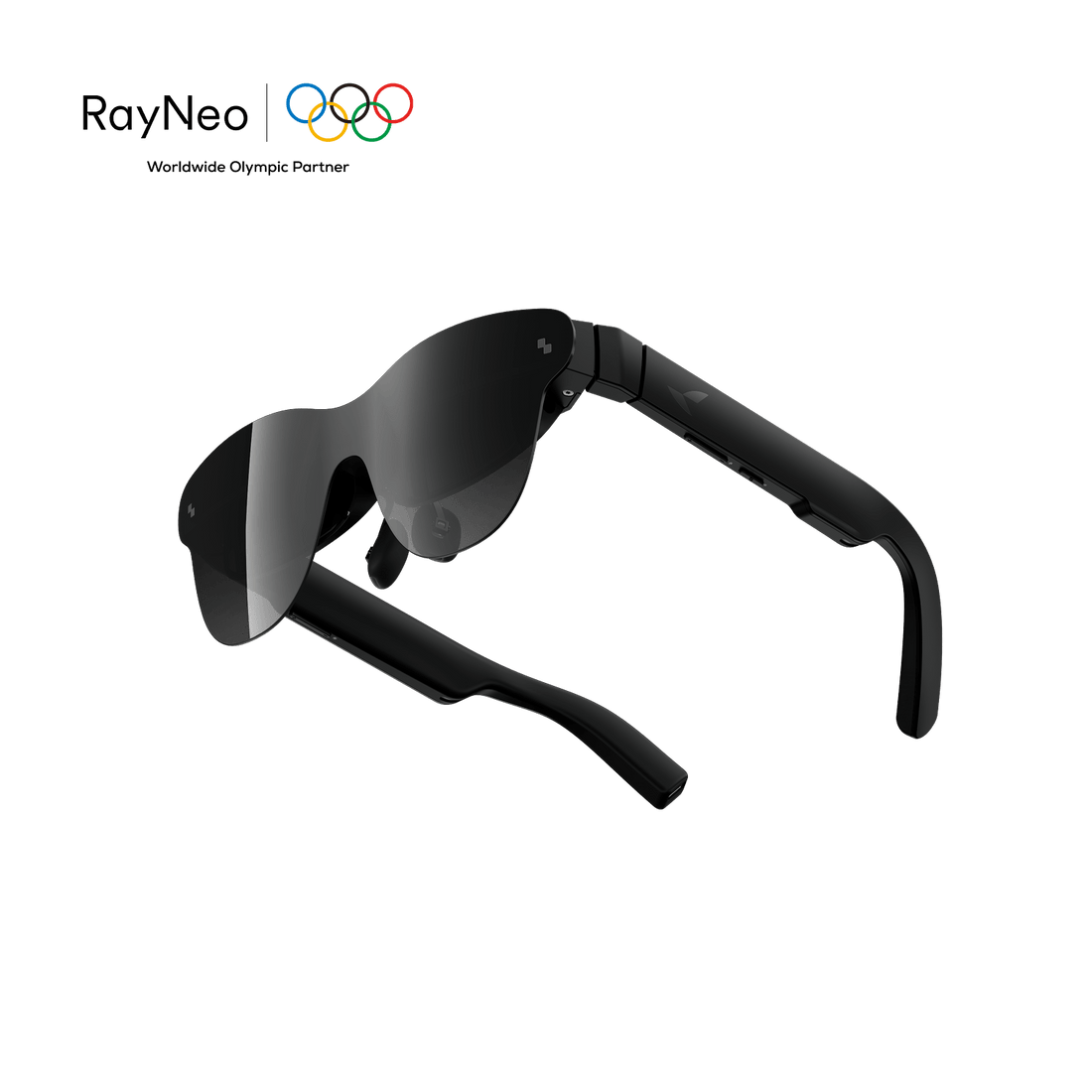
If navigation is a major part of your commute, the RayNeo X3 Pro AI+AR Glasses are the stronger fit.
Their full-color MicroLED display supports heads-up turn-by-turn navigation, putting routes and nearby points of interest directly in your view, while RayNeo AIOS and Gemini Live add broader AI assistance without reducing the glasses to a simple navigation accessory.
Best for: Walking commuters, frequent travelers, and people regularly navigating unfamiliar neighborhoods, stations, or cities who want richer visual guidance rather than basic glanceable notifications.
Here is what you can expect on the move:

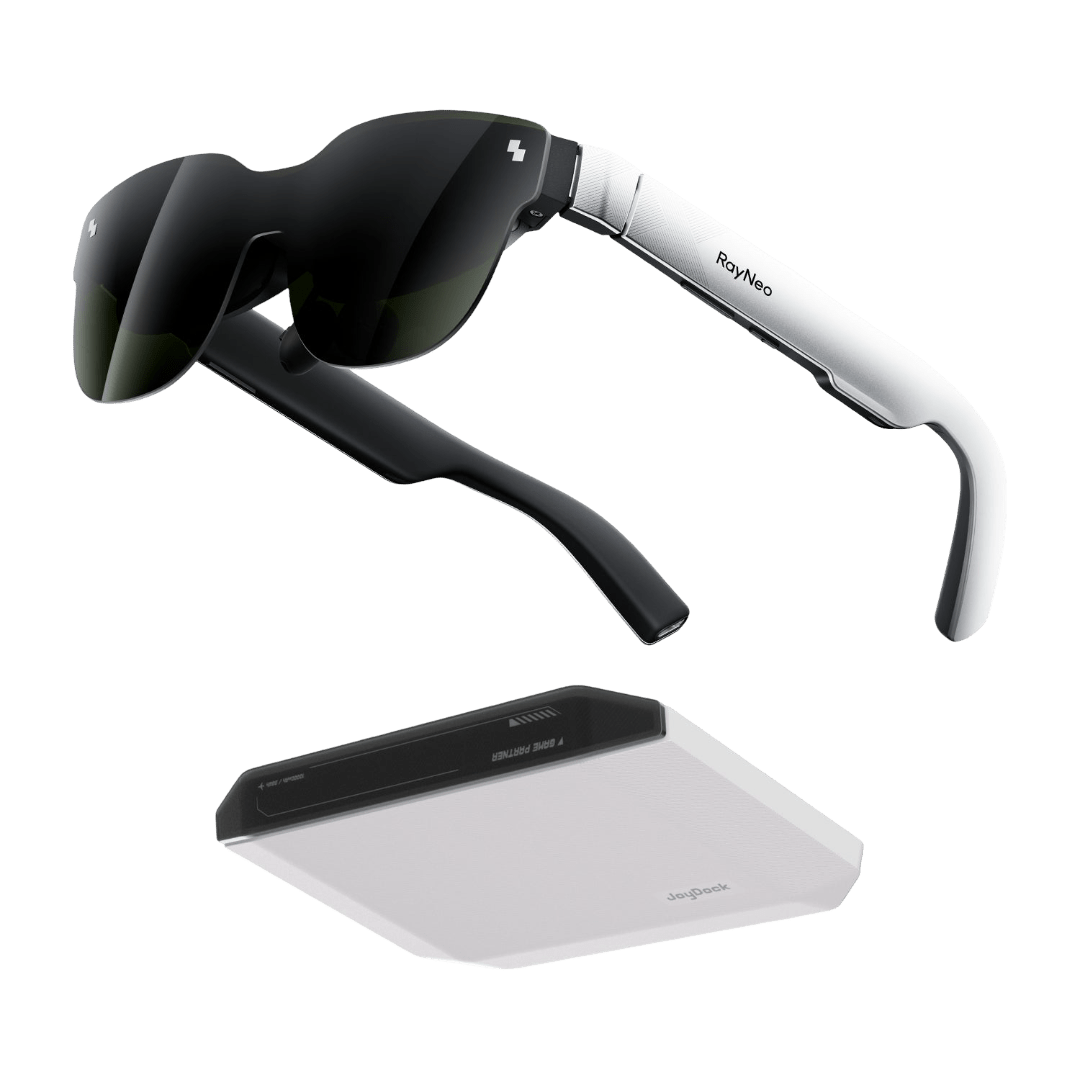
For a familiar daily route where navigation is less important than staying informed without constantly reaching for a phone, the RayNeo iO AI Glasses take a lighter approach.
At 34g with 50:50 weight distribution, iO combines a discreet waveguide display with a Dashboard for everyday information, making it better suited to commuters who want useful context throughout the day without a front-facing camera or bulky speakers.
Best for: Train, subway, bus, and walking commuters who value lightweight wear, quiet visual information, schedules, reminders, captions, and AI assistance more than full-color AR navigation.
Here is how those features help:

The right pair depends less on the longest specification list and more on what happens between your front door and your destination. Start with the features you will actually use every day, then make sure the display, weight, battery, connectivity, and lens options support that routine.
If you need turn-by-turn directions or richer visual guidance, look for a transparent display with dedicated navigation support. If your route is already familiar, a simpler display for schedules, notifications, captions, and reminders may give you more value without adding unnecessary hardware.
Battery figures can vary dramatically depending on what the glasses are doing. Navigation, camera use, continuous audio, translation, and bright displays generally require more power than occasional notifications or short AI interactions.
Look beyond a single battery-life number and check whether the manufacturer provides continuous-use figures for the features you care about.
Commuting glasses may stay on from the morning journey through the workday, so comfort matters as much as capability. Consider total weight, front-to-back balance, nose-pad fit, temple pressure, and whether the frame stays stable while walking.
If you walk or cycle part of your commute, check the product's IP rating rather than assuming smart glasses tolerate rain. An IP rating tells you how well the enclosure is protected against dust and water, but it does not make eyewear suitable for swimming or unrestricted exposure to water.
Some smart glasses operate more independently, while others use a connected phone for setup, notifications, GPS, internet access, or cloud AI. That distinction matters if your goal is reducing how often you handle your phone rather than eliminating the phone from the setup altogether.
If you normally wear corrective lenses, check prescription compatibility before buying. Look at the supported prescription range, fitting process, and whether the smart display remains correctly aligned after custom lenses are installed.
Include any prescription lenses, accessories, charging cases, or optional AI subscriptions when comparing value. A more expensive pair may still make sense if its navigation, comfort, or AI features match something you use every day; an impressive feature you rarely use adds little real value.
Smart glasses can reduce the need to look down at a handheld phone, but hands-free does not mean distraction-free. The safest way to use them depends on whether you are driving, cycling, walking, or riding public transport.
Set up navigation, calls, or other features before the vehicle starts moving. Avoid reading messages, watching content, or interacting with visual interfaces while driving.
The National Highway Traffic Safety Administration notes that any non-driving activity can take attention away from the road. It also points out that looking away for five seconds at 55 mph is roughly equivalent to traveling the length of a football field with your eyes closed.
State distracted-driving laws vary, so check the rules where you drive.
Keep visual prompts brief and maintain awareness of traffic, crossings, other cyclists, and pedestrians. For audio-equipped glasses, use a level that still lets you hear your surroundings. Navigation is most useful when it gives you short directional cues rather than encouraging prolonged attention to the display.
Trains and buses are generally where more detailed glanceable information is easiest to use, since you are not controlling a vehicle. Even then, stay aware of platform edges, announcements, boarding areas, and people around you.
Choosing smart glasses for commuting starts with the journey you actually make. If visual navigation, nearby places, and richer AR information matter most, X3 Pro is built around that experience.
If your route is familiar and you care more about lightweight wear, schedules, captions, reminders, and fewer phone checks, iO takes a more discreet everyday approach. Either way, prioritize comfort, battery, clear information, and a feature set that helps without demanding more attention than the commute itself.
Battery life depends heavily on what the glasses are doing. Lightweight models used for occasional notifications and AI interactions may last a day or longer, while navigation, cameras, audio, and brighter AR displays can use power much faster.
For example, the RayNeo iO is rated for up to 48 hours of typical use, while X3 Pro uses a 245mAh battery and can fully recharge in about 38 minutes. Compare the runtime for the feature you expect to use most.
Yes. Some display-equipped smart glasses can show turn-by-turn directions directly in your field of view. RayNeo X3 Pro, for example, supports heads-up turn-by-turn navigation and can display nearby points of interest while you walk.
Availability varies widely across the category, so check whether navigation is genuinely built into the glasses or simply mirrored from a phone. When walking or cycling, keep cues brief and continue watching traffic, crossings, and your surroundings.
Yes, but the experience depends on how the glasses deliver information. Audio can be harder to hear over trains and station announcements, while a visual display is unaffected by surrounding noise.
The RayNeo iO’s Live Captions are designed for situations including noisy environments, with the microphone system prioritizing the other person’s speech and displaying it as text. For subway commuting, visual captions and glanceable information can therefore be especially practical.





Share:
Smart Glasses Proactive Reminders: A Practical Guide
Smart Glasses for Travel: Benefits, Features, and Top Picks in 2026