

$449.00


Augmented reality technology lets digital graphics blend with physical surroundings in real time. Smart eyewear places helpful info, navigation cues, and virtual screens directly in front of your eyes.
If you are curious about “how do AR glasses work?”, this guide breaks down the essential hardware, tracking systems, projection methods, and top devices to explore today.

Here is a fast look at what powers smart eyewear and how it functions:
Augmented reality glasses are lightweight, head-worn devices that merge virtual imagery with your view of the real world. Unlike virtual reality headsets that block out your surroundings, AR glasses keep you connected to your environment while displaying digital overlays.
These smart wearables put useful digital content into everyday activities. You can view navigation directions on sidewalks, read text messages hands-free, or stream video on large virtual screens while relaxing on the couch.
Modern smart eyewear packs powerful hardware into compact frames. Here are the core components that make these devices function smoothly.
The optical engine acts as the visual core of the device. Tiny displays—such as MicroLED or Micro-OLED panels—generate bright digital graphics. These images bounce through optical waveguides embedded inside transparent lenses, creating sharp visuals while keeping the lenses clear enough to see through.
Integrated sensors constantly evaluate your surrounding environment. Cameras capture video feeds, while miniature gyroscopes and accelerometers monitor exact head movements. Together, these tools let digital elements stay fixed in place even when you tilt, turn, or move around.
A custom mobile system-on-chip manages spatial calculations, optical rendering, and wireless connections. High-performance chips optimize power consumption while processing environmental data instantly, preventing visual lag or motion blur.
Smart glasses pair with external gear or networks using Wi-Fi and Bluetooth. Direct USB-C wired links allow instant plug-and-play connections to smartphones, laptops, or handheld gaming consoles for fast video streaming.
Built-in rechargeable batteries supply power to the processor, display, and sensors. Compact glasses use ultra-light batteries tucked into the frame arms, keeping the device comfortable for daily use.
Understanding how AR glasses work comes down to four distinct steps. The device gathers real-world data, maps your physical room, builds the digital visual, and projects it directly toward your eyes.
Every interaction starts with input gathering. Front-facing camera lenses record surrounding light levels, physical obstacles, and spatial depth. Motion sensors track head movement and orientation, helping the system adjust digital content based on your position.
To place digital items convincingly, the system uses Simultaneous Localization and Mapping (SLAM). These algorithms scan camera feeds to pinpoint stable anchor points—like walls, tables, or floors. Knowing where physical surfaces sit allows the device to overlay digital graphics accurately without unwanted floating.
The internal processor takes the SLAM spatial map, combines it with your app data, and renders the 3D graphics. It adjusts perspective, scale, and lighting in real time so the digital object matches your actual room layout.
Finally, tiny light engines project the rendered visual directly into optical waveguides inside the glass lenses. These transparent optical layers bend and direct light beams into your pupils. The projected light overlaps with ambient light entering through the clear lens, presenting seamless digital content over physical surroundings.
Choosing smart eyewear depends on whether you prefer standalone artificial intelligence tools or a giant wearable screen for daily media. Here are two top choices designed for distinct user needs.
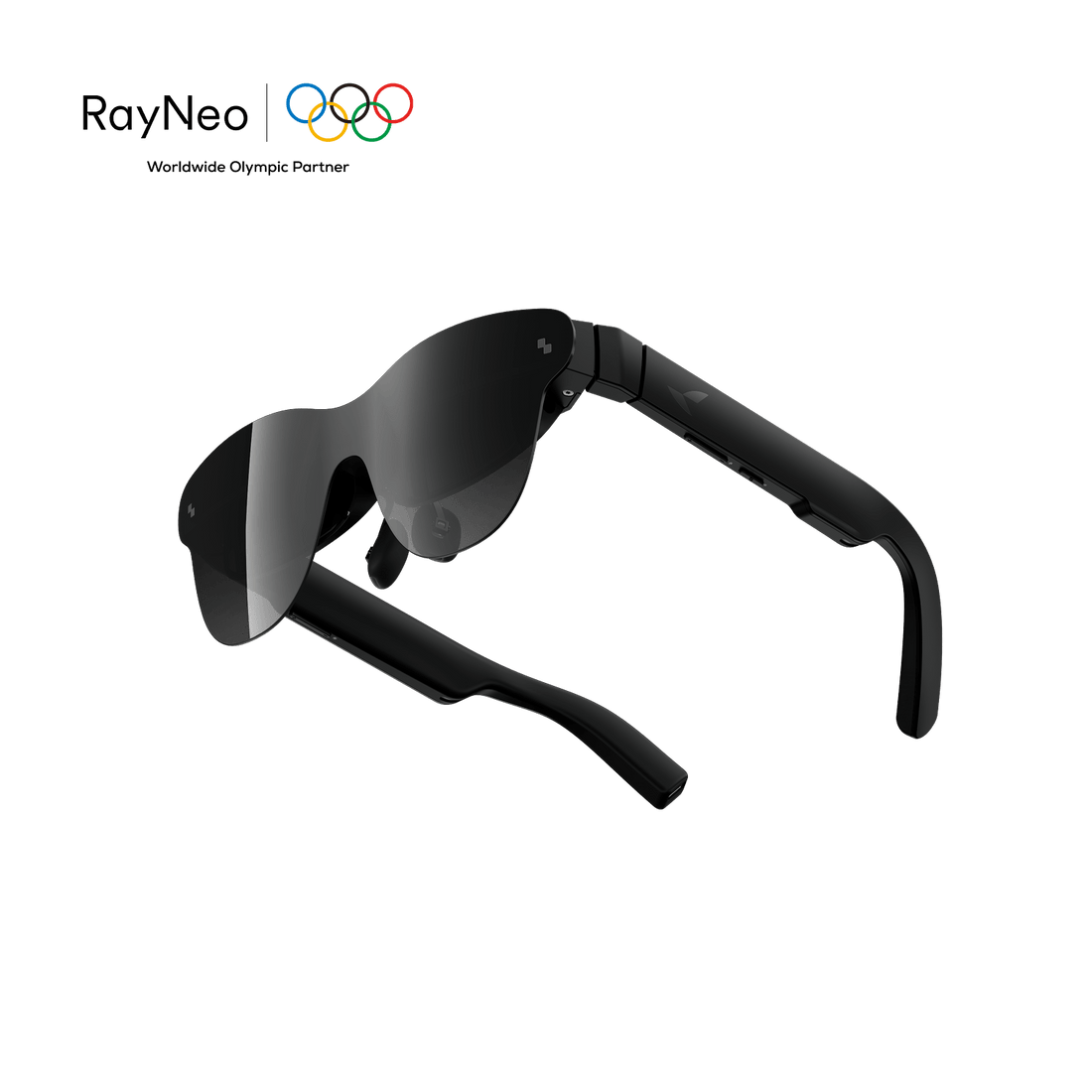
The RayNeo X3 Pro AI+AR Smart Glasses offer a complete standalone smart glass experience. Powered by the Qualcomm Snapdragon AR1 platform, it combines high-end visual hardware with built-in artificial intelligence.

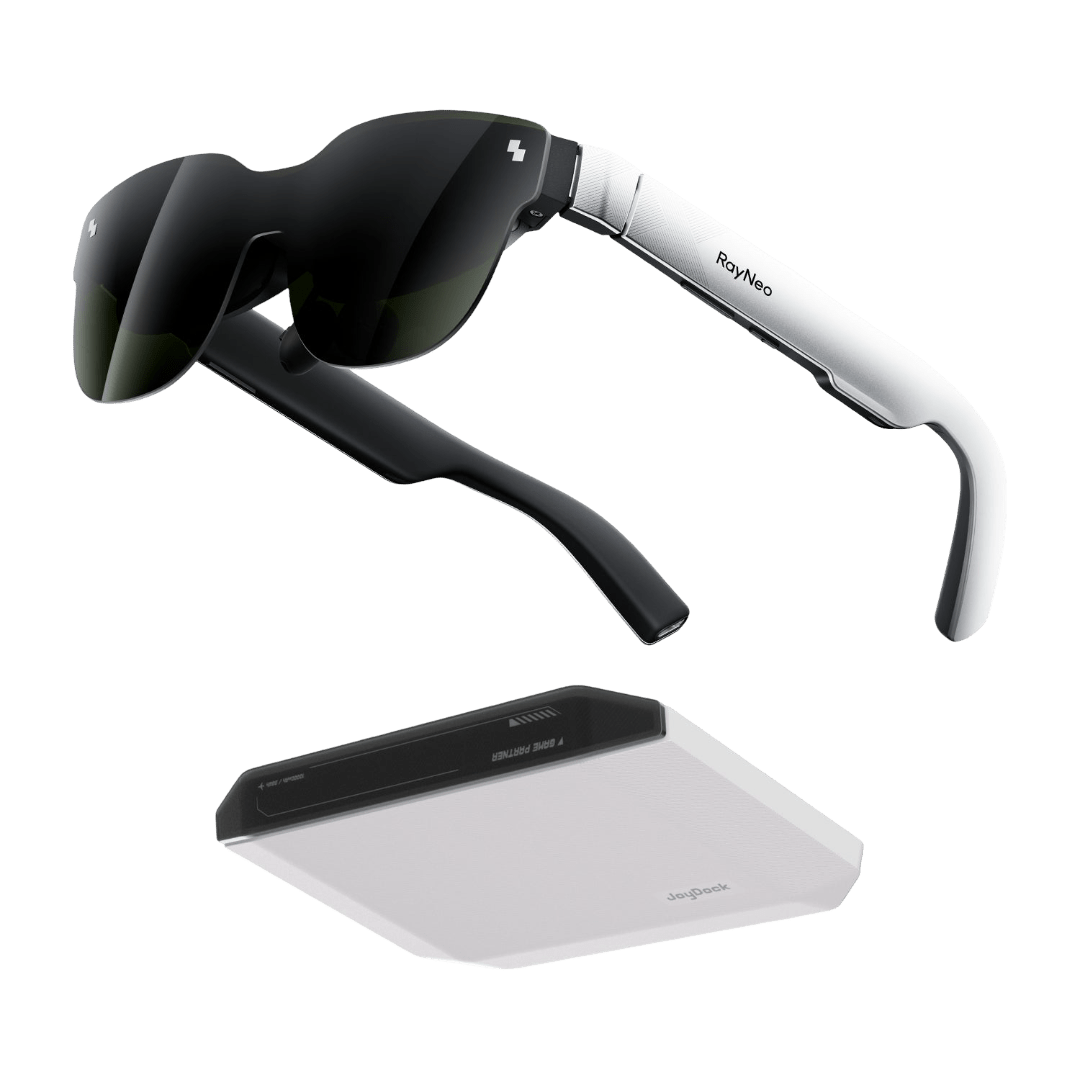
The RayNeo Air 4 Pro AR Glasses bring high-definition theater viewing into a pair of sleek, portable glasses. Designed for entertainment and working on the go, it projects a massive virtual screen anywhere you sit.

If you want to understand how do AR glasses work, the answer lies in the combination of displays, sensors, processors, and optical systems. From optical light engines to spatial mapping, these smart frames make everyday tasks easier. Ready to step into the future? Figure out how to use AR glasses in your daily routine, pick your favorite setup, and enjoy a personal big screen anywhere you go.
Yes, AR glasses feature transparent lenses that allow you to see your physical surroundings completely clearly. Unlike VR headsets that enclose your vision, smart glasses project digital elements directly onto transparent optical lenses. This allows digital text, 3D graphics, and floating notifications to blend naturally into your line of sight while you remain fully aware of the real world, people, and objects around you.
Looking through AR glasses feels like viewing the physical world with a floating, high-definition digital layer over it. Real-world objects remain completely clear, while virtual screens, real-time navigation directions, or notifications hover naturally in your field of view. The digital imagery appears semi-transparent or crisp and solid depending on lighting conditions, creating an effortless hands-free display that seamlessly merges computer graphics with physical reality.
Yes, AR glasses work smoothly alongside prescription eyewear through custom solutions. Many smart glasses feature magnetic prescription lens inserts that easily snap onto the inner frame, delivering clear vision without needing contact lenses. Other designs provide adjustable nose pads and flexible temple arms to fit comfortably over standard optical frames. This flexible setup ensures users enjoy sharp digital displays and full visual correction without sacrificing comfort.





Share:
Using AI Glasses on Proctored Exams: Risks & Detection
AR Glasses Construction: Benefits, Uses, and Buying Guide