

$429.00


Bright windows, headlights, and computer screens can all create distracting reflections on eyeglass lenses. If you are wondering, “What is AR coating on glasses?”, AR stands for anti-reflective coating—a thin lens treatment designed to reduce surface reflections and allow more light to pass through the lens. This can make your vision clearer and your lenses appear more transparent.
In this guide, we explain how AR coating works, the benefits it can provide, the different coating features available, how to care for coated lenses, and when it may be worth choosing.

AR coating, or anti-reflective coating, is a thin optical treatment applied to eyeglass lenses to reduce unwanted surface reflections. By reflecting less light away from the lens, more light can pass through to your eyes, which can improve clarity and make the lenses appear more transparent.
AR, or anti-reflective, coating, reduces the amount of light that bounces off a lens surface. It uses one or more extremely thin optical layers designed so that reflected light waves partially cancel each other out through destructive interference.
With less light reflected away, more light can pass through the lens. This can improve visual clarity, reduce distracting reflections from lamps and screens, and make the lenses appear more transparent.
Modern AR coatings often use multiple layers, with each layer tuned to control different wavelengths of visible light. This is why coated lenses may still show a faint green, blue, or purple reflection at certain angles—the coating reduces reflection rather than eliminating it completely.
AR coating can improve both how glasses look and how comfortable they feel in everyday use. Its main benefits come from reducing unwanted reflections on the lens surface.
Not every anti-reflective coating has the same durability or surface treatment. Basic coatings may focus primarily on reducing reflections, while premium lens coatings can combine several layers and functions.
AR coating can be useful for most prescription-lens wearers, but it is especially worth considering if you:
AR coatings can last for years when they are cleaned and stored properly, but abrasive cleaning and excessive heat can damage the coating.
Use lukewarm water, lens-safe cleaner where needed, and a clean microfiber cloth. Avoid wiping dusty lenses dry with clothing or rough paper products. Store the glasses in a protective case when you are not wearing them.
Also avoid leaving coated lenses in very hot environments such as a car in direct sunlight. Extreme heat can damage lens coatings and may cause crazing, a fine network of cracks in the coating.
For many prescription-glasses wearers, AR coating is most useful when reflections regularly interfere with vision or lens appearance. It is particularly worth considering for high-index lenses, night driving, bright indoor environments, and frequent screen use.
When comparing options, look beyond the words “anti-reflective.” Ask what the coating package includes: scratch resistance, hydrophobic and oleophobic topcoats, warranty coverage, and cleaning requirements can differ considerably between basic and premium treatments.
AR coating does not make a lens scratch-proof, and it should not be confused with UV protection, polarization, or blue-light filtering. Those are separate lens properties, although some products combine several treatments in one coating system.
Anti-reflective (AR) coating on prescription glasses mainly reduces light bouncing from the front and back surfaces of the corrective lenses. AR glasses, or augmented reality glasses, have a more complex optical system, where image clarity can also depend on the display panel, optical engine, contrast, brightness, stray-light control, and how well your eyes align with the optics.
That means a clearer AR display is not simply the result of adding a conventional anti-reflective coating. For display-focused glasses, the entire optical system has to keep the virtual image visible and well defined while managing the light that reaches your eyes.
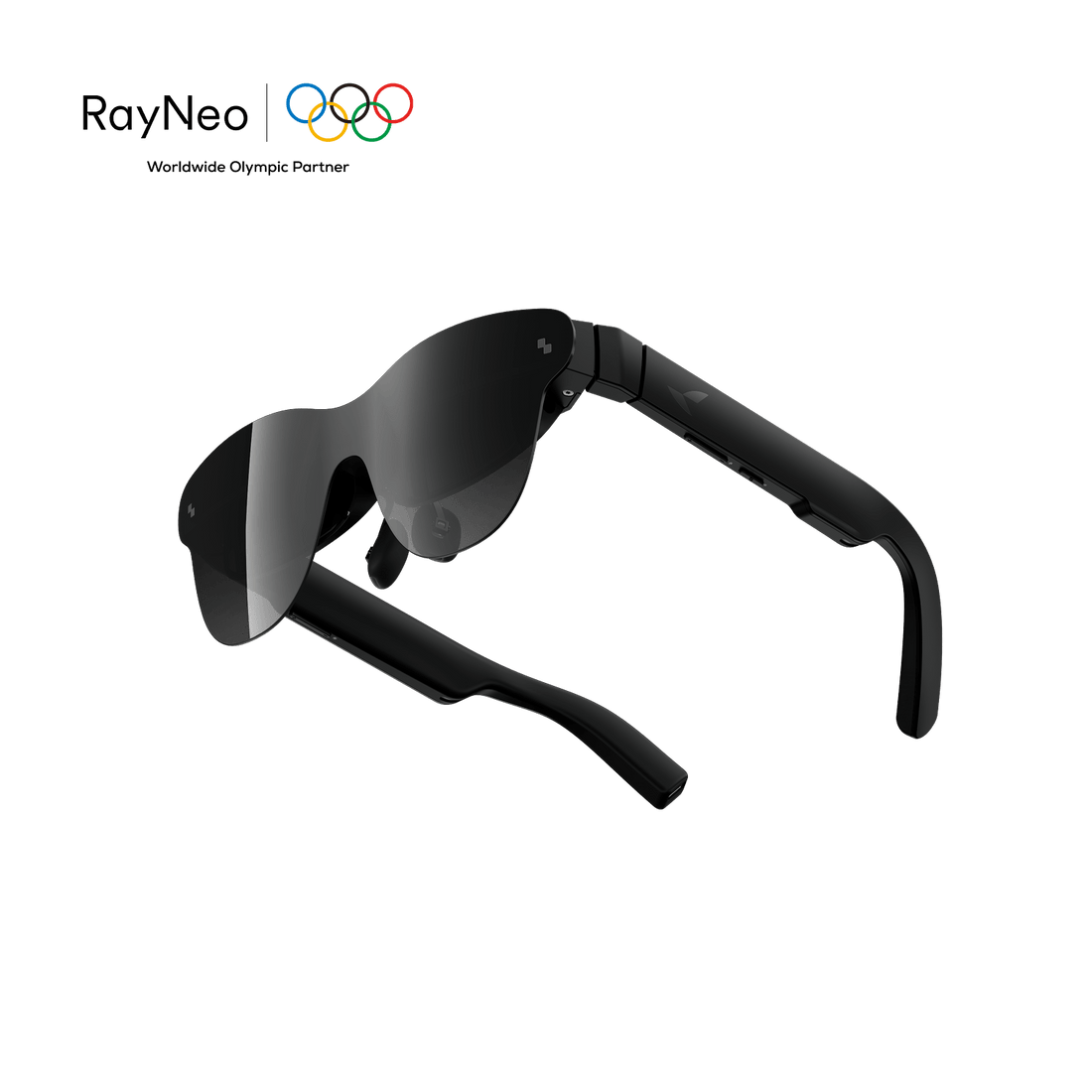
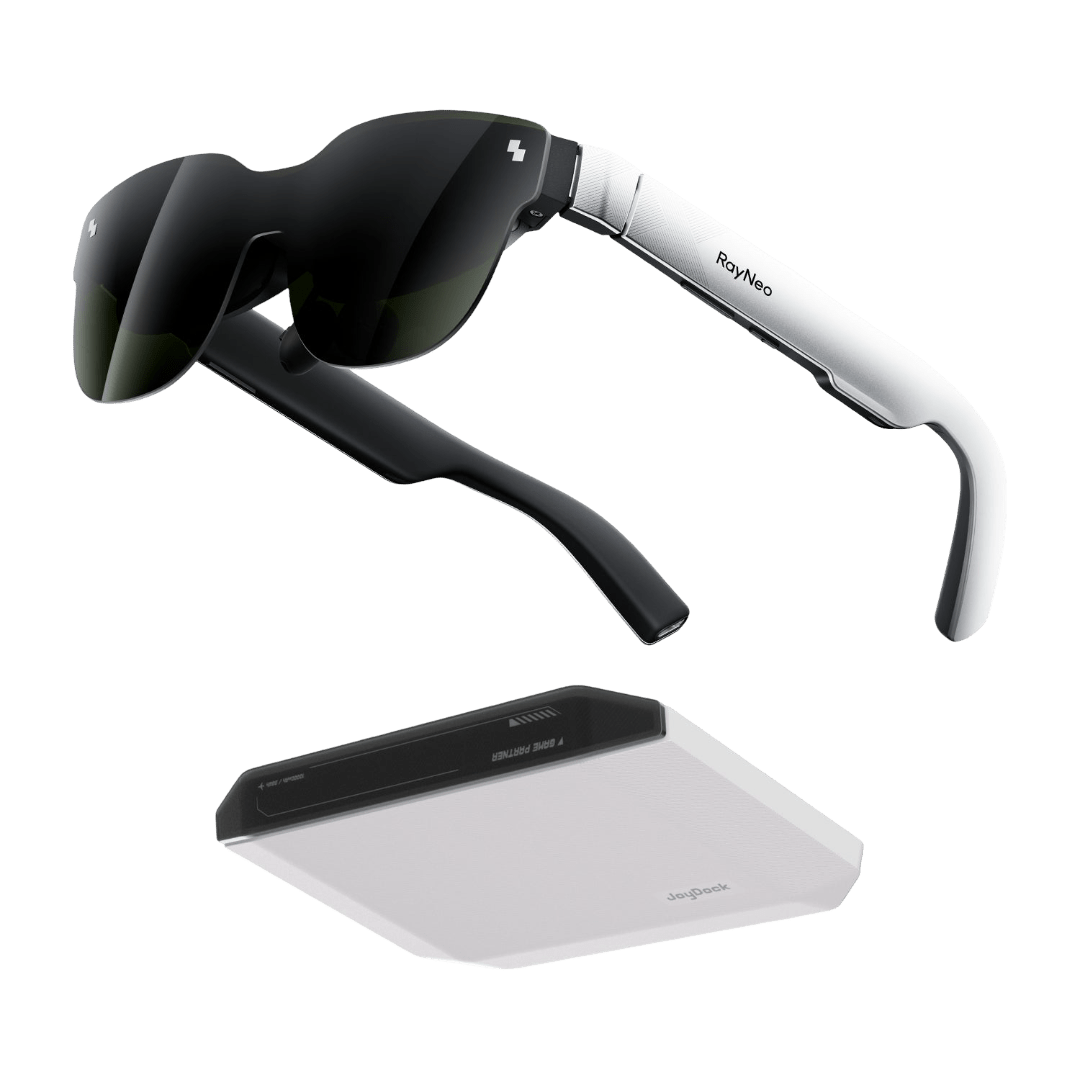
The RayNeo GT Series is a good example of this different approach. Both the RayNeo GT AR Glasses and RayNeo GT Max AR Glasses use Micro-OLED-based display systems with dedicated image processing and spatial screen control.
The GT offers a 46° field of view, while the GT Max expands this to 59° for a wider viewing experience. Both support up to 120Hz refresh rate and up to 1,200 nits perceived brightness, helping the virtual image remain clear across movies, gaming, and other large-screen content.
Both models also support prescription lens inserts. If you need corrective lenses, check whether the prescription insert itself includes an anti-reflective treatment, because that coating is separate from the display optics that create the virtual screen.
Understanding what AR coating on glasses is makes it easier to decide whether the treatment is useful for your lenses. Anti-reflective layers reduce unwanted surface reflections and increase light transmission, while premium coating packages may also add scratch resistance and water-, oil-, or dust-repellent properties.
If you wear high-index lenses or regularly deal with bright lights and nighttime reflections, AR coating can be particularly useful. Good cleaning habits and avoiding excessive heat can also help the coating perform well for longer.
No, AR coating and blue-light filtering serve different purposes. AR coating reduces reflections from lens surfaces, while blue-light filtering reduces or modifies certain wavelengths of blue light. While some lenses can have both treatments, having an AR coating does not automatically mean the lenses filter blue light.
The lifespan of an AR coating is typically 2 to 3 years, depending on its quality, the lens material used, cleaning habits, and daily use. Premium coatings are designed to be more durable, but frequent improper cleaning can cause the coatings to wear out more quickly. Proper storage and careful handling can help maintain their performance.
Look at the lenses under a light and tilt them slightly from different angles. AR-coated lenses often show less visible reflection and may have a subtle blue, green, or purple tint. You can also check your eyewear order details or ask your optician, who can confirm whether an AR coating was applied.





Share:
Best AR Glasses 2026: What to Look for and Which One Fits You
AR Glasses for PC Gaming 2026: What You Need to Know