

$429.00


AR glasses in 2026 have become much more varied. Some turn your phone, computer, or console into a large private screen for movies, gaming, and work, while others combine transparent displays, cameras, AI, and spatial tracking to place digital information within your surroundings.
That means choosing a pair starts with understanding what kind of AR experience you actually want. This guide explains the main types of AR glasses, what they can do, which display and tracking specifications matter, and how to compare models for entertainment, travel, gaming, and everyday use.

AR glasses are wearable devices that add digital visuals to your viewing experience. Depending on their design, they may create a large virtual display in front of you or place digital information within your view of the surrounding environment.
Smart glasses are a broader category. Some focus on audio, cameras, calls, or AI assistance without a visual display at all, while others show simple information such as notifications and captions. AR glasses put more emphasis on the visual experience and can generally be divided into two main approaches.
These glasses work more like a wearable external monitor. They usually connect to a phone, laptop, handheld console, or streaming device and use Micro-OLED or similar displays to create a much larger virtual image.
They are particularly useful for movies, gaming, travel, and portable work, where screen size, resolution, refresh rate, and comfort matter more than cameras or AI assistance.
Other AR glasses use transparent optics such as waveguides to keep the physical environment visible while adding digital content such as navigation, translation, apps, or AI information.
More advanced systems may also use cameras and spatial tracking. With 6DoF tracking, for example, digital elements can respond not only to head rotation but also to changes in your physical position.
The most useful applications of AR glasses depend on the type of display.
Start with the experience you want, then compare the specifications that directly affect that use case. A larger headline screen size or higher resolution does not automatically make one pair better for everyone.
If your priority is movies, gaming, or a portable monitor, look for a video-focused display with strong contrast, a wide FOV, good edge clarity, and compatible video input.
If you want navigation, AI information, apps, or spatial overlays, look instead at transparency, display readability, cameras or sensors, onboard processing, and spatial tracking.
This distinction should come before comparing individual specifications because the two types are designed for fundamentally different experiences.
Resolution tells you how many pixels the display contains, while field of view (FOV) affects how much visual space the image occupies. Pixels per degree (PPD) helps indicate how densely those pixels are distributed within that view.
These numbers should be considered together. With the same resolution, increasing FOV spreads those pixels across a wider viewing angle and therefore reduces angular pixel density. Research into near-eye displays describes this as a fundamental FOV-versus-angular-resolution trade-off.
For gaming, also check refresh rate. Support for 120Hz can make fast movement and scrolling smoother, but your connected device and content must support the same output mode.
Not every AR display moves in the same way when you turn your head.
A simple display may remain fixed to your view. 3DoF tracking follows head rotation and can allow a virtual screen to be pinned or stabilized in space. 6DoF adds positional movement, allowing compatible virtual objects to respond as you move forward, backward, sideways, up, or down.
For movies and travel, screen stabilization may be enough. For interactive spatial AR applications, 6DoF becomes much more important.
Some AR glasses are tethered, receiving both content and power from a phone, computer, handheld, or accessory. Others contain their own processor, wireless connectivity, storage, and battery.
For video-display glasses, do not assume that every USB-C port can output video. A direct USB-C display connection generally requires a compatible video mode such as DisplayPort Alt Mode. VESA specifies DisplayPort Alt Mode as the standard that allows DisplayPort audio/video to travel through a USB-C connector.
Also check whether HDMI devices require an adapter and whether your source device can charge while the glasses are connected.
Optical alignment matters as much as total weight. Check the supported interpupillary distance (IPD), nose-pad adjustment, temple fit, weight distribution, and whether the image remains sharp across the full screen.
If you wear corrective lenses, confirm whether the glasses support prescription inserts and whether your prescription falls within the supported range.
For longer movies, gaming, or work sessions, also consider pressure around the nose and temples, heat, and cable placement rather than comparing gram figures alone.
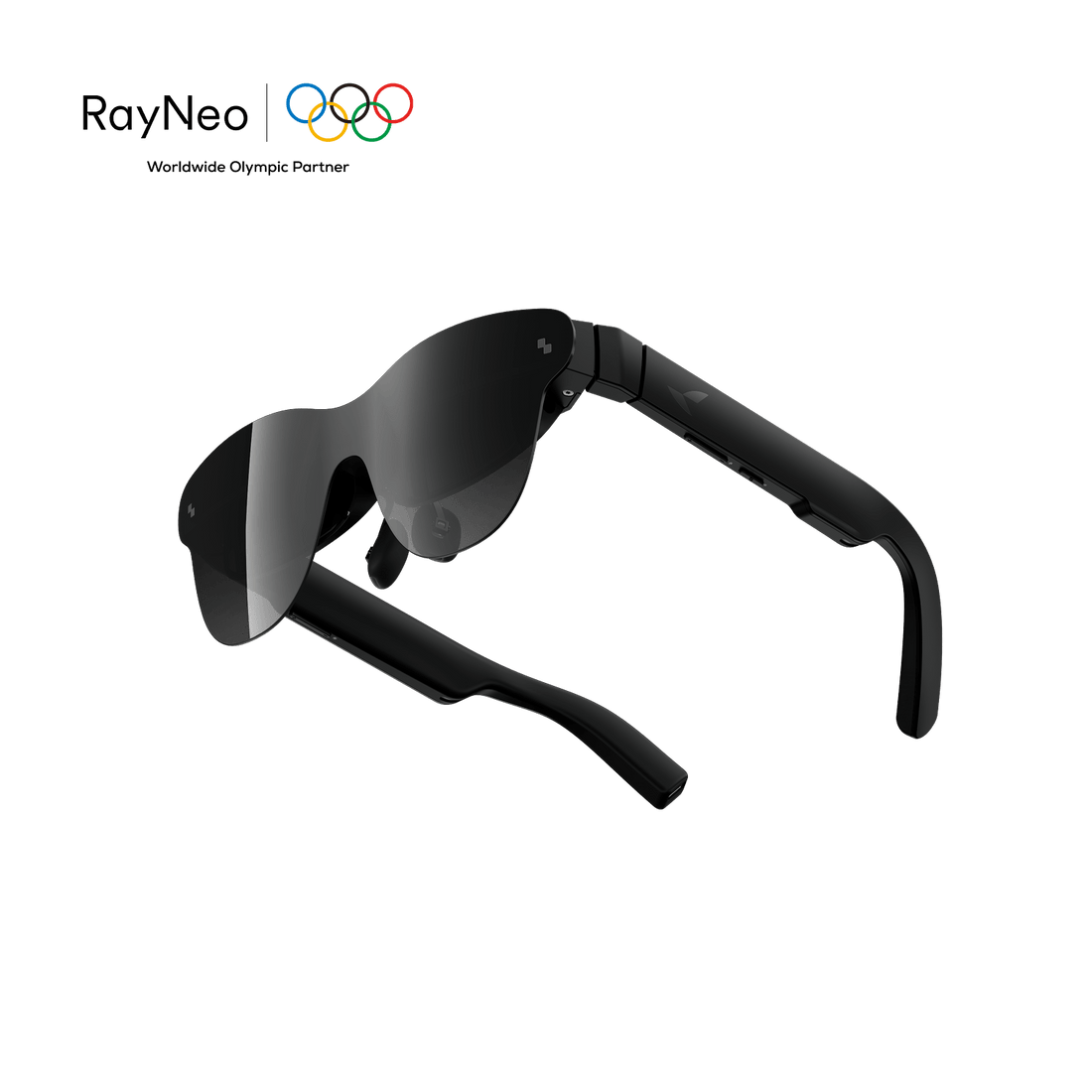
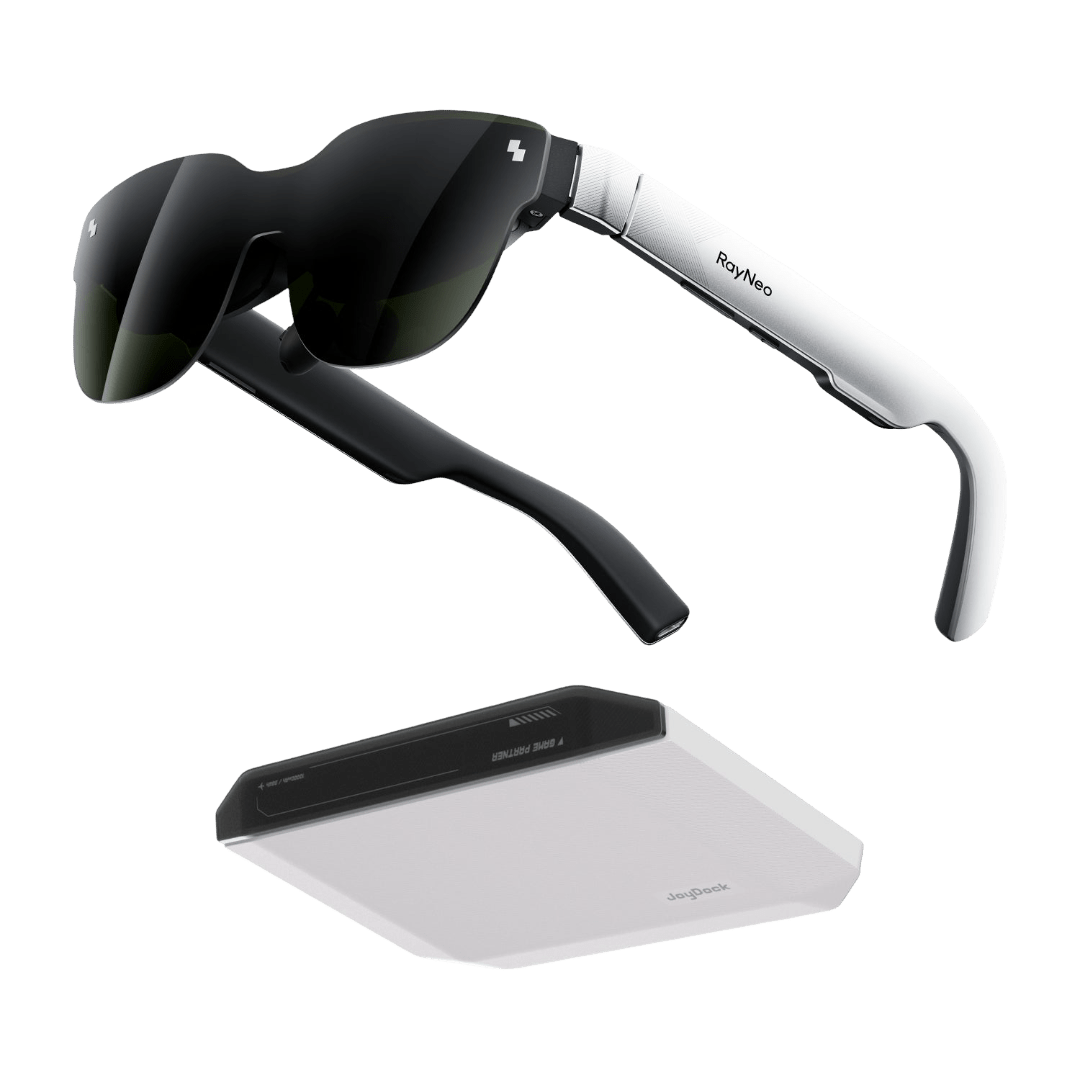
If your priority is a large private display for movies, gaming, travel, or portable work, RayNeo offers several display-focused options with different strengths. The models below range from a wide spatial cinema experience to lighter and more straightforward portable displays.
The RayNeo GT Max AR Glasses focus on a wider and more immersive spatial screen. Their combination of a large FOV, adjustable virtual display, native 3DoF tracking, and integrated spatial audio makes them particularly suited to cinema-style viewing and large-screen gaming.
Best for: Immersive movies, AAA gaming, travel, and people who want a wider spatial virtual screen.

The RayNeo GT AR Glasses bring the same spatial-screen concept into a lighter design. They combine a large adjustable virtual display with native 3DoF tracking and integrated audio, making them a strong fit for portable entertainment, handheld gaming, travel, and longer viewing sessions.
Best for: Portable gaming, movies, travel, and people who want a lighter spatial display.
The RayNeo Air 4 Pro AR Glasses are a more straightforward option when you mainly want to connect a device and start watching or gaming. Rather than centring the experience on native spatial screen anchoring, the Air 4 Pro focuses on a fixed, high-quality Micro-OLED virtual display with broad device connectivity.
Best for: Plug-and-play movies, PC and handheld gaming, console use, and portable entertainment.

Choosing AR glasses 2026 is less about finding the biggest specification and more about matching the display to what you want to do. Start by deciding between a large virtual screen and a spatial information display, then compare FOV, resolution, tracking, connectivity, fit, and prescription support. For movies and gaming, screen quality and stability matter most; for interactive AR, sensors, onboard processing, and spatial tracking become much more important.
Some AR glasses can work with prescription lenses, but the exact setup depends on the model and your prescription. Many display-focused glasses support prescription inserts or custom lenses rather than fitting directly over standard frames. Check the manufacturer’s lens options, supported prescription range, and recommended fitting method before purchasing.
Yes, AR glasses have built-in screens in their optical system. Depending on the model, they use Micro-OLED or other display technologies to project a virtual image in front of your eyes. Some models can simulate screens that are hundreds of inches wide, allowing you to watch movies or play games without carrying a physical monitor.
AR glasses can be worth the investment if you regularly watch movies, play games, travel, or work with compatible devices and want a private large-screen experience. Their value depends heavily on comfort, display quality, compatibility, and usage frequency. They may be less appealing if you rarely consume media away from a conventional TV, monitor, or laptop.





Share:
Smart Glasses for Music: How to Choose the Right Pair
What Is AR Coating on Glasses? Benefits, Types, and Care