

$429.00

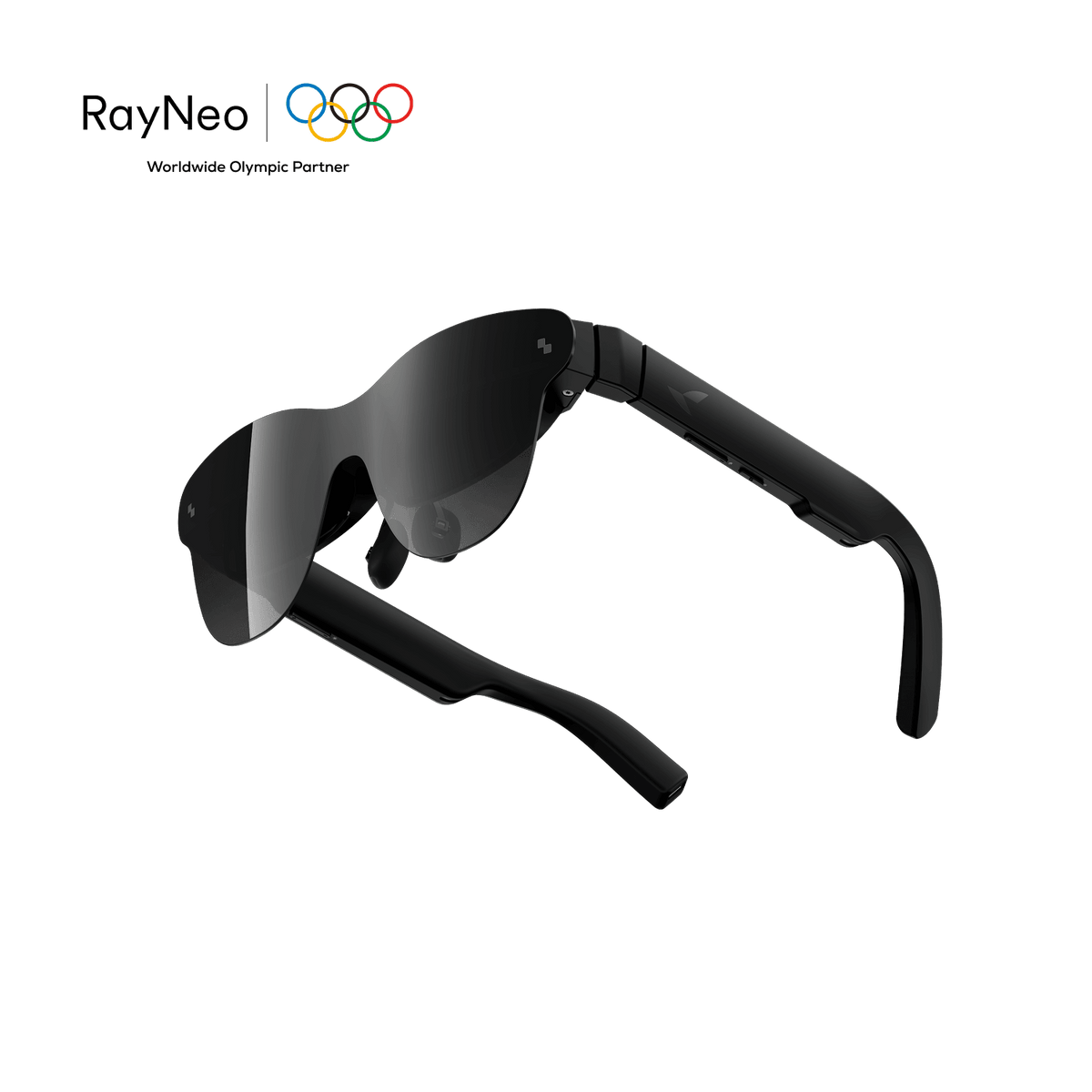
Augmented reality glasses project digital content directly into your real-world field of view. Instead of looking down at a phone screen, you see notifications, interactive graphics, or massive virtual monitors layered over your physical surroundings. This guide focuses on how our current RayNeo lineup breaks down for different consumer needs, helping you choose the right wearable for your lifestyle.
If your primary goal is replicating a large home television or a multi-monitor desk setup, you need dedicated display glasses. The RayNeo GT Max ($399) weighs 78g and is engineered for immersive visual entertainment. It utilizes a 0.6-inch Micro-OLED panel to project a virtual screen up to 307 inches, effectively turning a cramped airplane seat into a private cinema.

These glasses support a 120Hz refresh rate in standard 2D mode, while native 3D content runs at a steady 60Hz. Artificial intelligence 2D-to-3D conversion is available exclusively when connected to the iPhone 15, 16, or 17 series. Audio is delivered through open-ear speakers that provide immersive sound while remaining difficult for others to hear from more than 1.5 meters away.
The GT Max provides a customized fit through Small, Medium, and Large sizing options. It offers a peak brightness of 1200 nits in non-Pinned modes, which include Follow mode (where the screen follows your view) and Steady mode (which absorbs natural movement for travel). When using Pinned mode to lock the virtual screen in one fixed position for focused viewing, brightness adjusts to 336 nits.
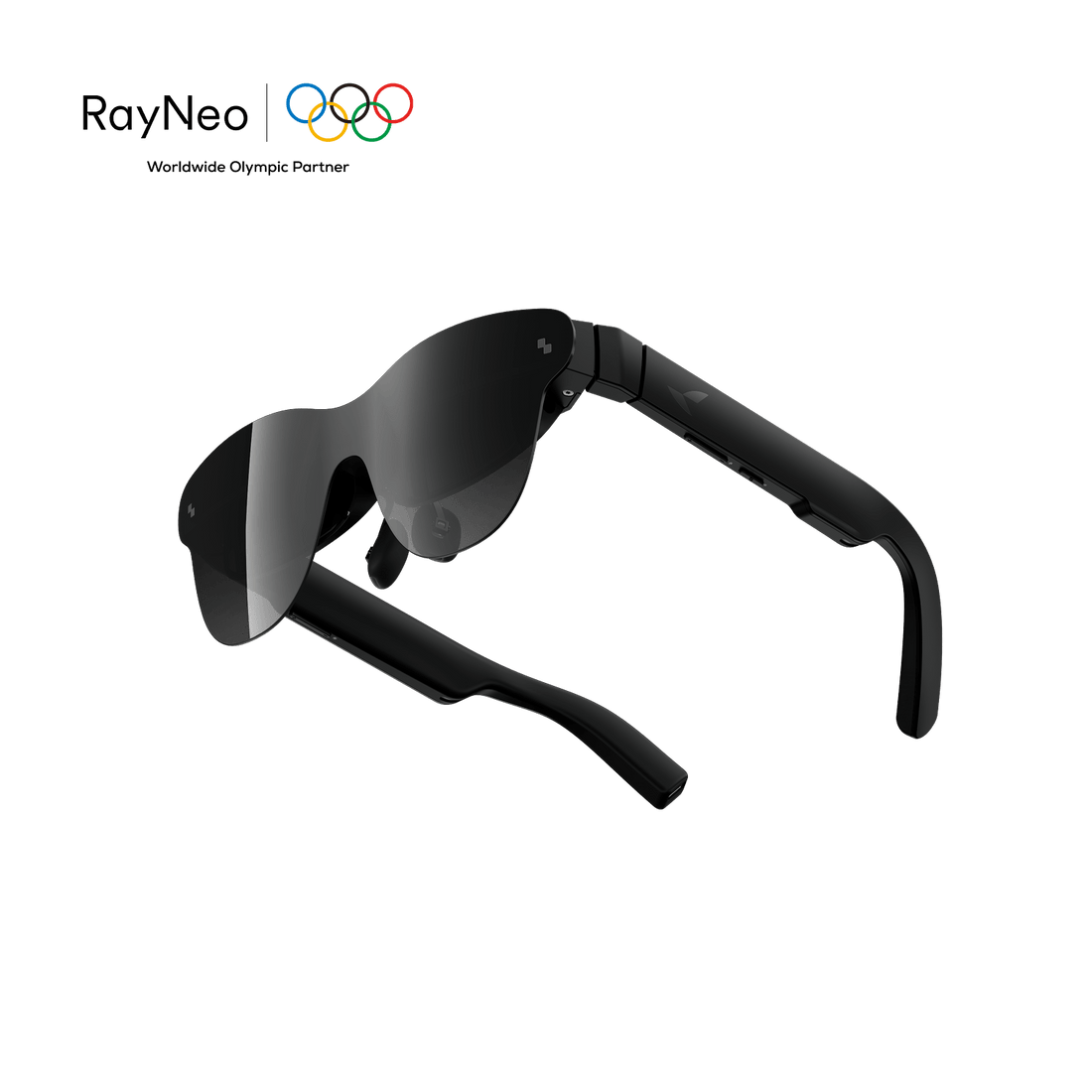
For a lighter option, the RayNeo GT ($299) weighs just 68g and provides a 231-inch maximum virtual screen. It features a fixed 64mm interpupillary distance, meaning the GT Max is the better choice if your pupil spacing falls outside this average.

Neither GT model contains an internal battery, a design choice that keeps them incredibly lightweight for extended wear. Instead, they draw power directly from your connected device, which will utilize your phone or laptop's battery during operation. They connect directly to USB-C devices supporting DisplayPort Alt Mode, like MacBooks from 2015 onward, iPads (10th generation or later), or the iPhone 15, 16, and 17 series.
If you prefer smart features without the bulk of large cinematic displays, AI glasses offer a discrete, everyday alternative. The RayNeo iO AI Glasses are priced at $449 and focus purely on practical daily assistance. Weighing 33g, they feature a single-color green MicroLED display that projects a practical 33-inch equivalent screen viewed from two meters away.

Unlike our entertainment-focused models, the iO glasses are completely camera-free, making them suitable for secure corporate environments. Because the display is monochrome and optimized for text, they aren't designed for watching movies or playing complex video games. They excel at displaying an invisible teleprompter during presentations or showing live translated captions in meetings.
These glasses feature their own internal 240mAh battery, providing up to two days of standard use without needing a tethered cable. Interactions are handled smoothly through a smart crown, voice commands, and head gestures, keeping you connected without reaching for your phone.
When you need a device that captures your surroundings while providing intelligent visual feedback, a hybrid device with an integrated camera is required. The RayNeo X3 Pro is available for $1,299 and combines an AI assistant, spatial computing capabilities, and a front-facing 12MP camera.

The Snapdragon AR1 Gen 1 chip powers these features, projecting a full-color 30-degree FOV display to overlay helpful spatial information. A small LED near the camera lights up during video recording to signal that it's active.
This model processes complex visual data and voice commands simultaneously, supported by a built-in 245mAh battery for standalone power. The robust spatial computing features make this our most capable device, reflecting its premium components and slightly more substantial 76g build.
| Model | Price | Weight | Display Type | Battery | Best For |
|---|---|---|---|---|---|
| RayNeo GT Max | $399 | 78g | Micro-OLED (up to 307") | Powered by host | Premium cinematic viewing, customized fit |
| RayNeo GT | $299 | 68g | Micro-OLED (up to 231") | Powered by host | Lightweight entertainment, gaming on the go |
| RayNeo iO | $449 | 33g | Green MicroLED (33") | 240mAh (internal) | Daily productivity, camera-free environments |
| RayNeo X3 Pro | $1,299 | 76g | Full-color MicroLED | 245mAh (internal) | Spatial computing, first-person capturing |
I wear prescription glasses. Can I use these instead of contacts? Yes, we provide vision correction solutions tailored to the specific device type. For the GT, GT Max, and X3 Pro, we partner with Lensology to offer custom inserts (starting at £95) that clip straight into your AR glasses. If you choose the iO, we offer a complete RayNeo iO AI Glasses with Prescription Lenses package (starting around $608) rather than using clip-in inserts.
Will AR glasses replace my living room television for family movie nights? These devices provide a highly private display for the wearer, rather than a shared screen for multiple people to watch simultaneously. If you want a personal, premium viewing experience, we position the GT series as the world's first Dolby Vision AR glasses system. This format is supported specifically when paired with the optional RayNeo Pocket TV Pro ($199) and playing Dolby Vision-encoded content.
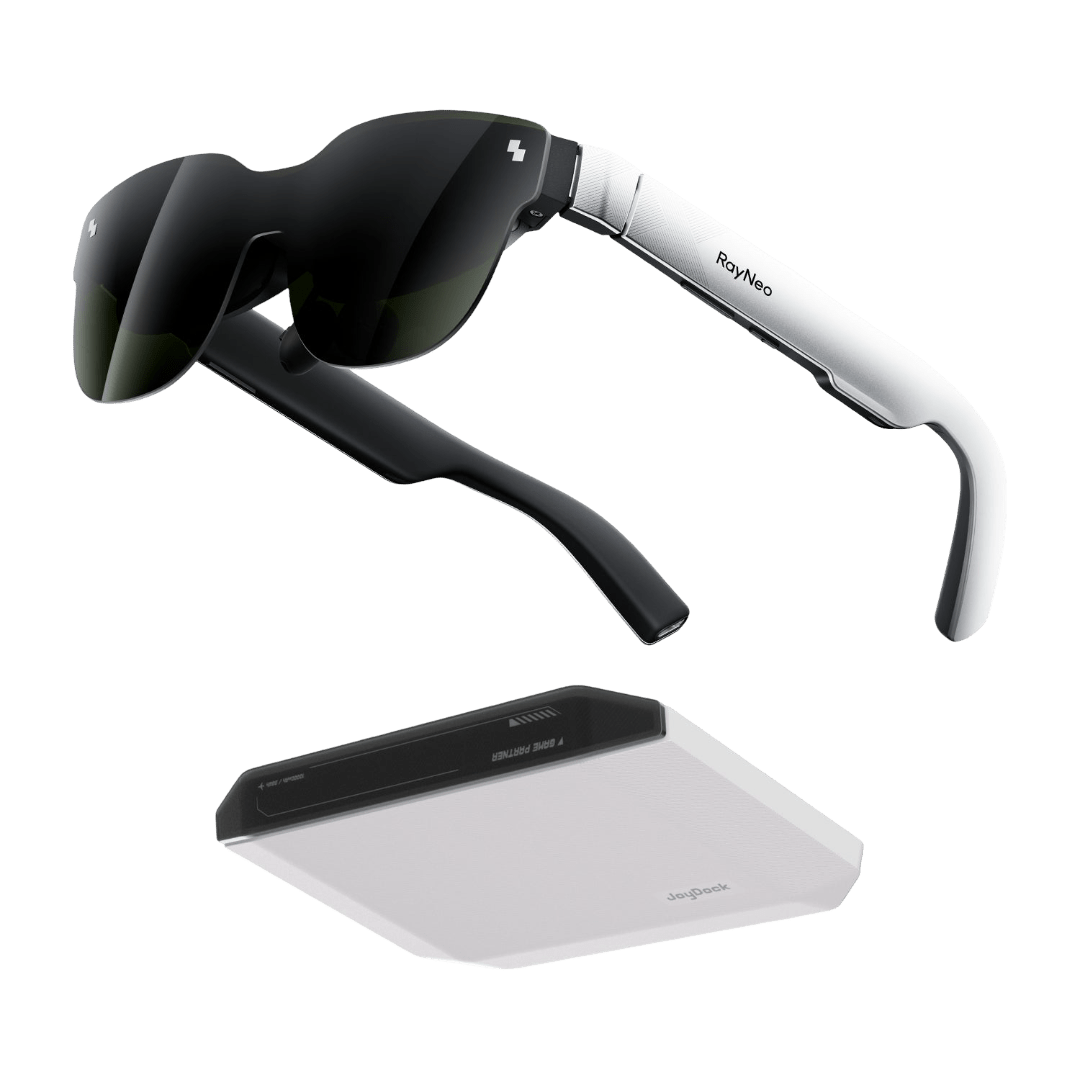
Which model makes sense if I primarily use a Nintendo Switch? The GT and GT Max are ideal for gaming, but standard consoles require specific adapters to connect. Nintendo Switch players can use our specialized JoyDock ($89) to link the console to the glasses; depending on your Switch generation, an additional Back Clip accessory may also be required, so check the JoyDock product page for the current compatibility details. For consoles like the PS5 or Xbox, you would use the RayNeo HDMI Adapter ($64) instead.
What happens if my smartphone doesn't support video output? The GT series requires a device that supports DisplayPort Alt Mode for video output. If you own an iPhone 16e, 17e, or Air model, the USB-C port does not support direct video output. We don't currently offer a confirmed adapter for these specific models, so we recommend checking your device's specifications before purchasing a display-focused AR model.
Augmented reality and AI glasses offer versatile ways to enhance how you work, play, and interact with the world. Head over to our official product pages to check detailed specifications and find the perfect RayNeo model to match your daily routine.





Share:
Play Switch and Consoles on a Massive Display: The Ultimate AR Glasses Gaming Setup
Which AR Glasses Are Light Enough for Everyday Wear?