

$429.00

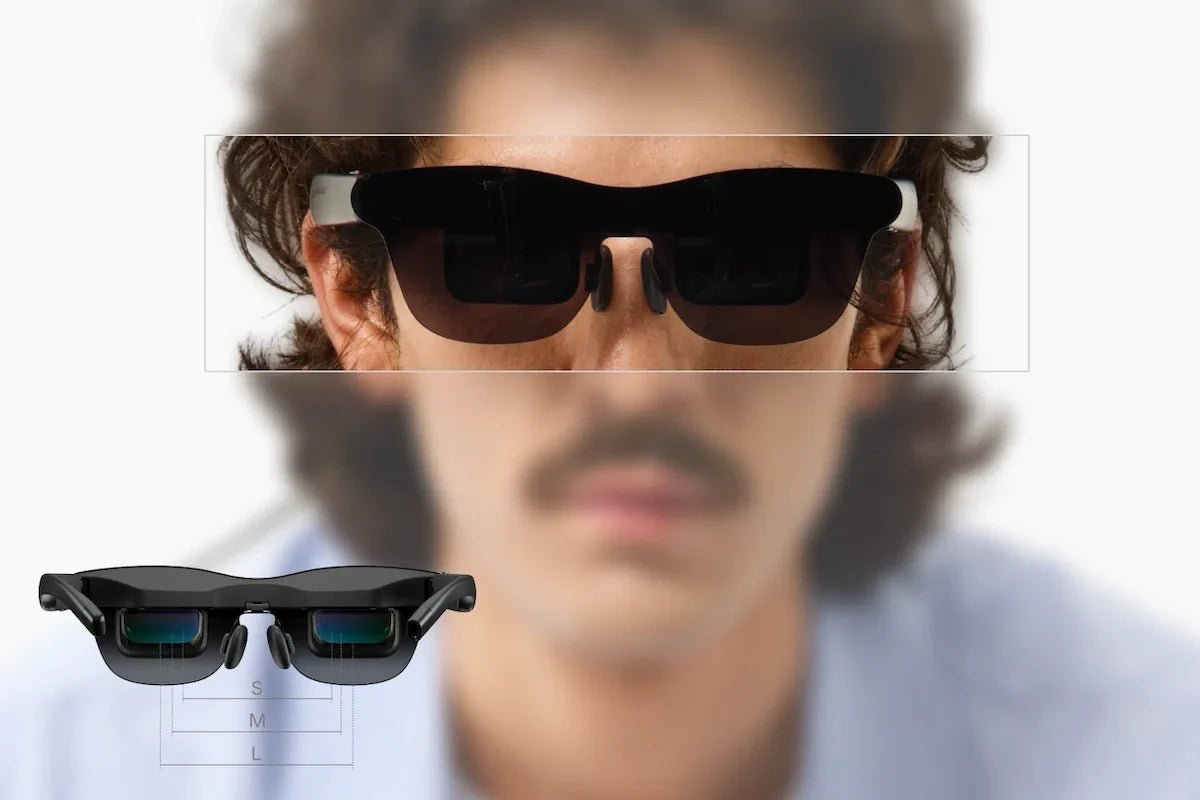
When choosing smart glasses for daily use, physical comfort is just as important as screen size and visual fidelity. Wearing a heavy device on your face can quickly lead to nose bridge pain and ear fatigue. The ideal pair of glasses balances a lightweight frame with powerful display technology, allowing you to work or watch content for hours without feeling weighed down.
To help you find the perfect fit, we have broken down our current RayNeo smart eyewear lineup based on everyday comfort and wearability. Determining if a pair of glasses is genuinely light enough for your routine means looking beyond raw numbers. The weight distribution across the frame, the adjustability of the nose pads, and the flexibility of the temples all play crucial roles in how the device feels over time.
Different categories of smart eyewear also dictate different weight expectations and power designs. Immersive augmented reality systems with large virtual screens require a wired connection for power, which keeps the glasses themselves light. On the other hand, everyday AI glasses focused on notifications pack their own built-in batteries for wireless freedom. Understanding these design choices helps you pick a device that fits your face and your lifestyle.
For users who prioritize minimal weight in a spatial computing device, our RayNeo GT is designed specifically to hit that sweet spot. Available for $299, it weighs exactly 68 grams, currently standing as the lightest model in our GT lineup. This low weight ensures the downward pressure on your nose bridge is kept to a minimum during prolonged wear.

In practical scenarios, a 68-gram frame translates directly to extended physical comfort. You can sit through a feature-length film or process spreadsheets on a flight without feeling an urgent need to remove and adjust the frames. We achieved this streamlined profile by utilizing a fixed 64mm interpupillary distance, which eliminates the heavy mechanical sliders required for adjustable sizing.
Despite its light build, the optical performance remains highly competitive. The GT projects a 201-inch default virtual screen with a 46-degree field of view. Because the virtual screen size is slightly smaller than our Max model, the visual density actually increases to an impressive 49 pixels per degree, providing crisp text while keeping the Peacock Optical Engine 3.0 compact.
Audio integration also helps keep your overall setup light. The GT features a four-speaker system tuned by Bang & Olufsen, delivering Immersive Spatial Sound directly to your ears. This open-ear sound solution means you do not necessarily have to wear additional bulky headphones. As these are open-ear speakers, people sitting very close to you in a quiet room might hear some sound bleed.
Achieving true all-day comfort sometimes requires a tailored fit rather than simply chasing the lowest possible scale reading. Priced at $399, the RayNeo GT Max comes in at 78 grams. The slight weight increase accommodates a more personalized viewing setup and a significantly larger optical system, built for users wanting premium immersion.

Unlike the fixed design of the standard GT, the GT Max is offered in three specific sizes to match your precise interpupillary distance. You can select Small for eye spacing under 64mm, Medium for 64-67mm, and Large for distances over 67mm. This customized sizing ensures your eyes align perfectly with the optical sweet spot, which drastically reduces eye strain during long viewing sessions.
The 78-gram chassis houses a larger display experience, projecting a massive 267-inch default virtual screen with a wider 59-degree field of view and 38 pixels per degree. Both GT models utilize sharp Full HD SeeYa Micro-OLED panels capable of 1200 nits of brightness in non-Pinned modes. If absolute visual immersion is your priority, choosing a customized fit provides an excellent balance for daily wear.
Both GT models prioritize long-term viewing safety alongside physical comfort. They include OptiCare technology with 3840Hz high-frequency dimming. This TÜV SÜD-certified feature reduces invisible screen flicker, ensuring that visual comfort matches the physical lightness of the frames.
The GT and GT Max remain incredibly light because they are powered directly by your connected devices. Instead of packing processors and batteries into the frames, these glasses use a USB-C DisplayPort connection to draw power and data from your phone, laptop, or console. This tethered design keeps the physical weight well under 80 grams, though it does consume your host device's battery during use.
For compatible devices like the iPhone 15, iPhone 17, or recent Android phones such as the Galaxy S25, the glasses plug in directly with a single included cable. If your preferred device does not support direct USB-C video output, you will need an adapter. Older Lightning devices, such as the iPhone 14 and earlier, require an Apple Lightning Digital AV Adapter (not included).
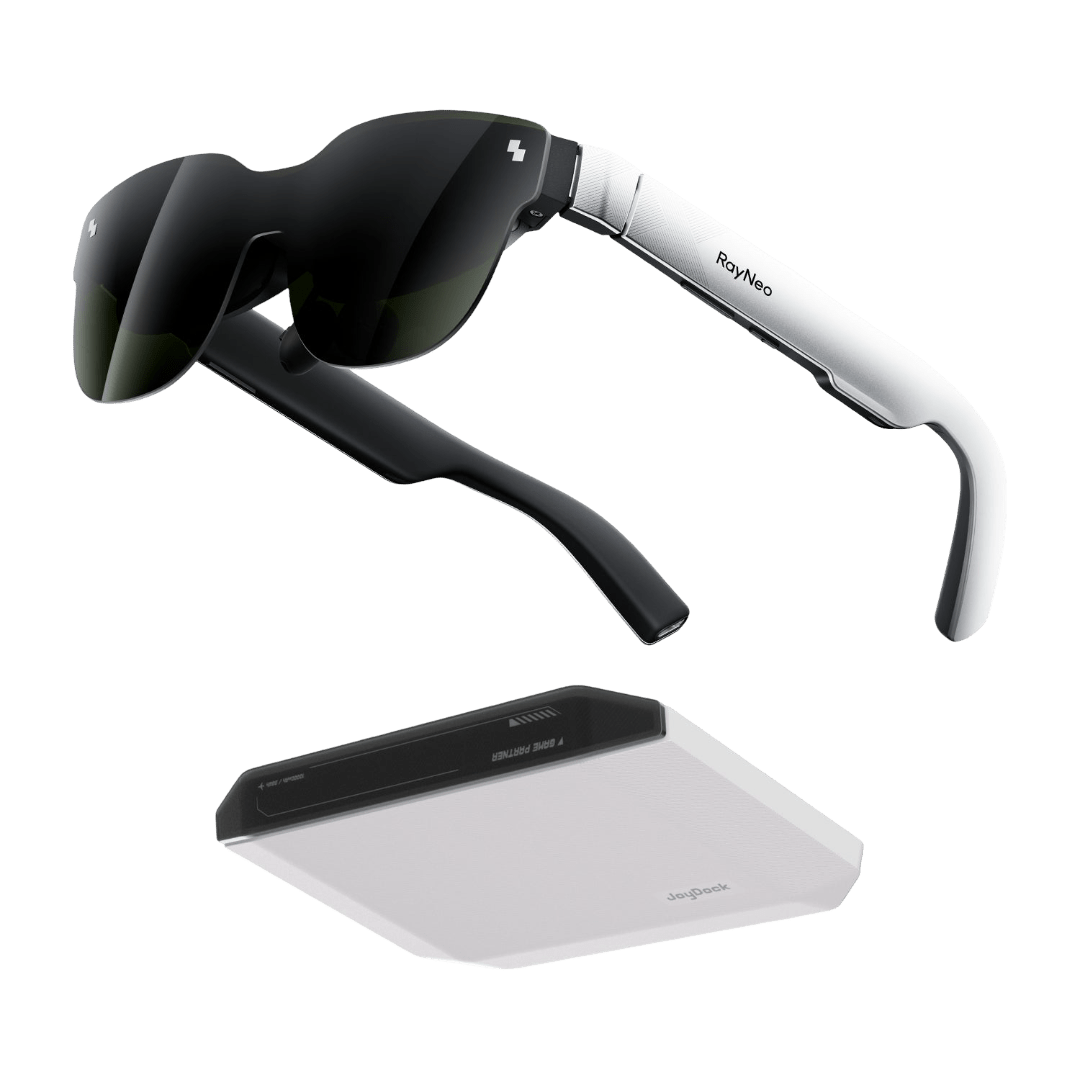
We do not currently offer a confirmed adapter solution for newer devices that feature a USB-C port but lack DisplayPort Alt Mode support, such as the iPhone 16e, iPhone 17e, or iPhone Air. You should check our official compatibility page before purchasing. Connecting a heavier console also keeps the glasses light; the RayNeo HDMI Adapter ($64) for a PS5, or the JoyDock accessory ($89, plus a Back Clip for some Switch generations; check the JoyDock product page for current compatibility) for a Nintendo Switch, handle the hardware connection off your face.
To get the most out of a lightweight AR setup without draining your phone's battery, you can pair the glasses with a dedicated media device. The RayNeo Pocket TV Pro, priced at $199, is a separate media player equipped with Google TV that handles the processing and power delivery. Keeping the media player separate from the headset ensures the glasses stay at their starting weight.
Using this dedicated accessory also unlocks advanced visual features. We describe this pairing with the GT series as the world's first Dolby Vision AR glasses system, provided your content supports it. This modular approach allows you to build a powerful home theater system that is entirely pocketable, all without forcing your neck to support the weight of a heavy built-in battery.
If your search for lightweight smart eyewear is driven primarily by a need for all-day connectivity rather than massive virtual screens, you might be looking for AI glasses instead. Starting at $449 for the Standard model, our RayNeo iO strips away the heavy optical engines required for video playback. This results in an incredibly minimal frame that weighs a mere 33 grams.

Unlike the tethered GT series, the iO features its own built-in 240mAh battery, granting you true wireless freedom. The official battery life is rated for up to 2 days of typical use, allowing you to comfortably wear the glasses continuously from morning until night without carrying a cable. The iO uses a discrete monochrome green display to project notifications and texts directly into your line of sight.
To maintain this sleek profile, the design intentionally omits large full-color panels, built-in cameras, and speakers. The iO features no internal speakers at all. Instead, it utilizes a four-microphone array combined with bone conduction sensors strictly for audio input. This setup picks up your voice for commands, live translation, and audio recording, but it does not play sound out loud for you to hear.
How does the fixed IPD on the RayNeo GT affect physical comfort?
A fixed 64mm interpupillary distance allows the frame to be lighter, avoiding heavy mechanical adjusters. While this design keeps the total weight down, users with exceptionally narrow or wide eye spacing might experience visual strain. That is exactly why we offer the sized GT Max as a personalized alternative.
Will adding prescription lenses make the lightweight GT glasses feel heavy?
The custom prescription lenses for the GT and GT Max, available through our partner Lensology starting at £95, are designed to be extremely thin and light. They clip directly into place behind the displays, adding only a negligible amount of weight that does not compromise the overall comfort of the 68-gram or 78-gram frames. If you prefer a completely integrated solution, our RayNeo iO offers a complete prescription bundle starting at $608.
What is the benefit of a smaller field of view on the lightweight GT?
A 46-degree field of view allows for a much smaller and lighter optical block compared to headsets with wider angles. Because the virtual display takes up a slightly narrower portion of your vision, you do not have to physically turn your head as much to read text at the very corners of the screen. This can help reduce neck fatigue during long work sessions.
Does a lighter frame mean skipping out on advanced display features?
Not at all. Despite keeping the physical weight under 80 grams, we maintained powerful visual capabilities in both GT models. The hardware fully supports Native 3D content playback, and they also feature an AI 2D-to-3D conversion tool when connected to compatible devices like the iPhone 15, 16, and 17 series. You still get a premium visual experience without a heavy headset.
Finding the right pair of lightweight smart glasses ultimately comes down to how you plan to spend your day in them. From a streamlined, tethered display for a long flight to perfectly aligned optics for hours of focused work, we designed our lineup to accommodate different definitions of comfort. For those who want to leave the screens behind entirely, our ultra-light AI frames offer a completely wireless way to stay connected from morning to night.
Choosing the best fit means balancing visual immersion with the physical feel of the frames on your face. We encourage you to explore the RayNeo GT or RayNeo GT Max product pages to see which style naturally aligns with your daily routine.





Share:
What Are Augmented Reality AR Glasses? Consumer Guide (2026)
Choosing the Best RayNeo AR Glasses in 2026