

$429.00

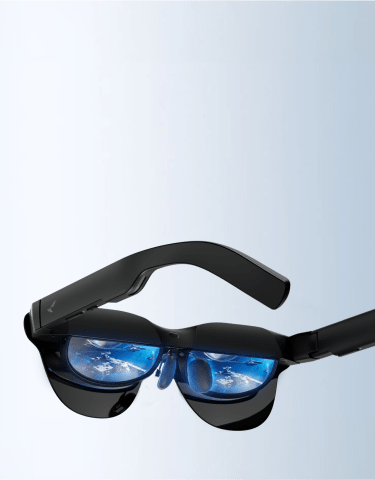
All four of RayNeo’s prescription-compatible AR glasses land within a couple of grams of each other, close to 76 grams, yet they don’t wear the same. What separates Air 2s, Air 3s Pro, Air 4 Pro, and X3 Pro is front-to-rear weight balance, temple clamping force, and nose pad fit, not the number on the scale. Air 3s Pro publishes the most detailed balance figure, Air 2s states the clearest diopter ceiling, Air 4 Pro fits a larger nose bridge, and X3 Pro is the only cordless option.
Five things determine how a pair of AR glasses feels after an hour or two, and how easy it is to figure out whether your prescription is even covered:
Adding a prescription insert doesn’t meaningfully change the first three of these on its own, the insert itself is thin and light. What it adds is a precision requirement: the insert has to sit correctly inside the eyebox for the display to look sharp. A nose pad that’s loose or poorly matched to your face can let the frame shift just enough to throw that alignment off, a comfort problem with an optical consequence, covered in more detail below.
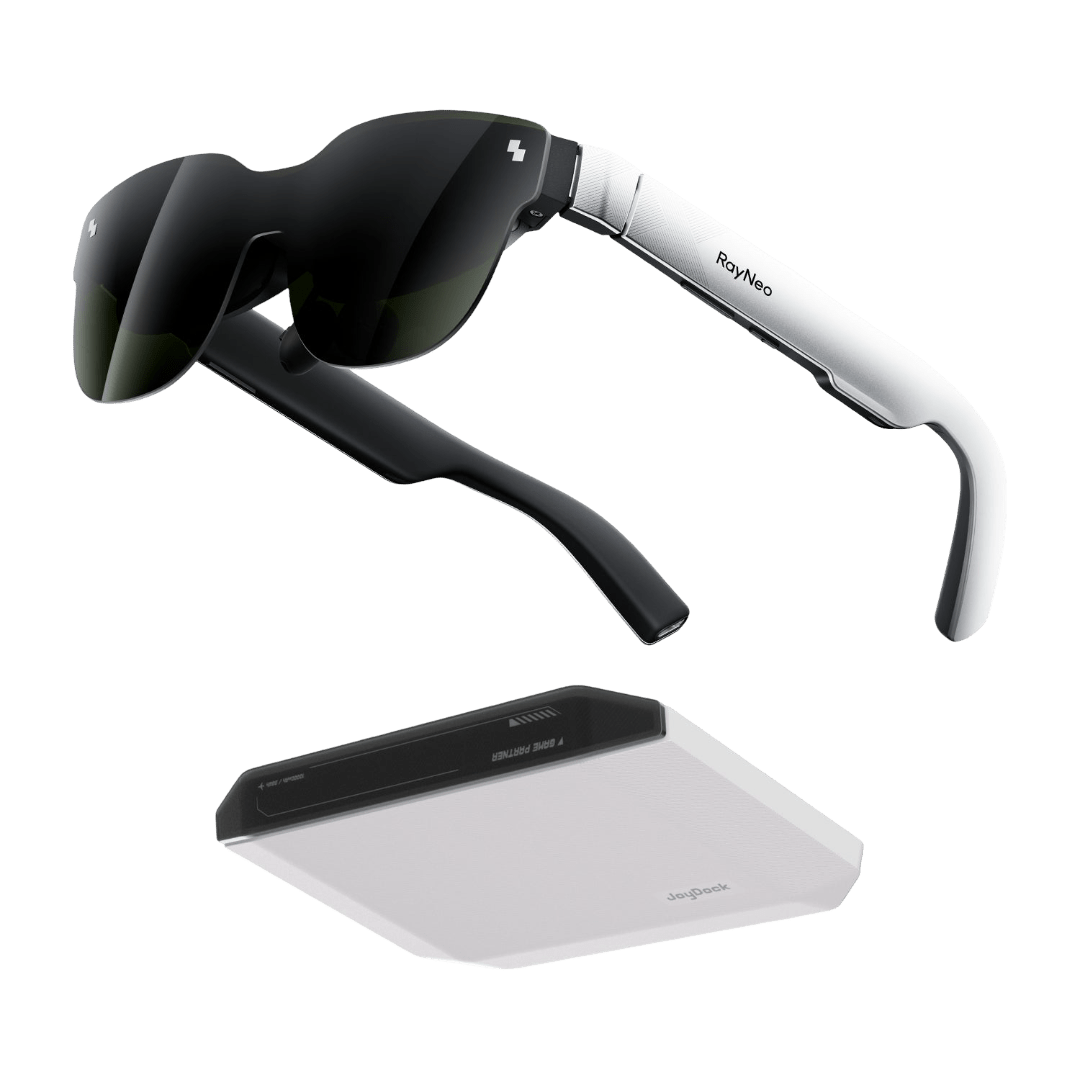
The RayNeo Air 2s uses RayNeo’s 9-point FlexiFit system to adjust across the temples and nose pad, and connects to a phone, laptop, or console over USB-C, the same as Air 3s Pro and Air 4 Pro below.
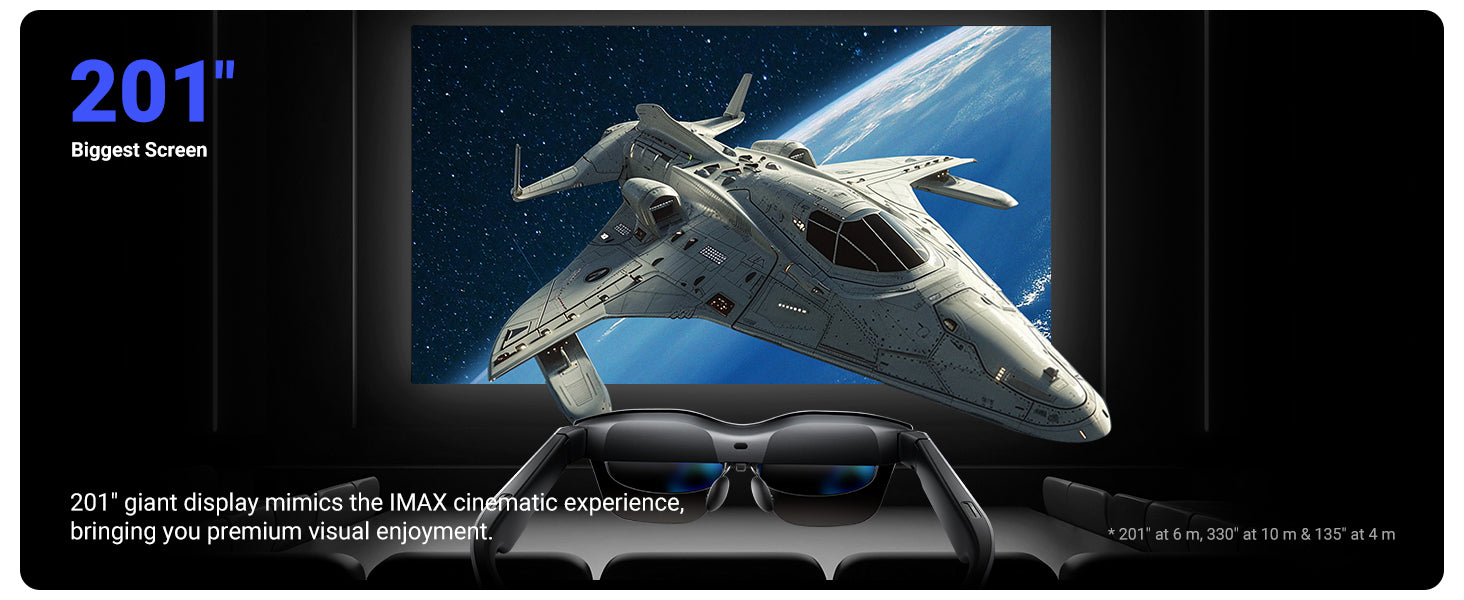
The Air 2s product page describes the prescription option in general terms, a Lensology clip-on accessory, without a diopter figure attached. That specific number lives on RayNeo’s dedicated prescription-lenses purchase page, built for ordering Air 2s inserts, which states that “users with myopia 0 ~ -10.00D and astigmatism 0 ~ -2.00D can order prescription lenses,” and adds directly that RayNeo’s glasses “are not suitable for users with myopia over -10.00D and astigmatism over -2.00D.” That’s a hard cutoff, not a soft guideline, and it’s currently the only place in the four-model lineup where a specific range like this is stated on a page you can visit right now.
Hands-on coverage of the Air 2s describes the glasses as comfortable enough for sitting still or watching something on a couch, with three adjustable nose pad positions and three levels of temple angle. The official spec is 76 grams; some hands-on reviews have measured closer to 78 grams, a difference of about the weight of a coin. On the prescription side, some buyers have gone through a Lensology insert replacement after an initial fit didn’t match, a normal part of custom optical work rather than a sign anything went wrong. Have your current prescription and pupillary distance ready when you order to help the first fit land closer to right.
The RayNeo Air 3s Pro is the one model where RayNeo publishes an exact weight-balance figure, a split designed to keep the frame from sliding down the nose during long, seated sessions.

The Air 3s Pro’s product page also lists a 14×7mm eyebox that covers roughly 93% of interpupillary distances without extra adjustment, the widest documented eyebox-coverage figure in the current lineup. On prescription support, the page states the frame is “engineered with full compatibility for prescription lenses, readily accommodating both near-sighted and far-sighted users.” Neither the product page nor Lensology publishes a specific diopter number for either condition, so nearsighted and farsighted wearers both confirm their exact range with Lensology when placing the order.
Hands-on reviews of the Air 3s Pro describe the nose pads as available in two sizes with three click-in positions, and generally rate the out-of-box fit as comfortable, without needing to perch the frame halfway down the nose the way some other AR glasses require. That coverage also notes a consistent pattern: comfort holds up well for the first 60 to 90 minutes, after which nose bridge pressure or temple contact becomes more noticeable during a continuous multi-hour session, such as a long gaming stretch. For a movie or a shorter session, that ceiling doesn’t usually come into play.
The RayNeo Air 4 Pro ships with a 9-way adjustment system, multiple nose pad sizes, and an unground sample prescription-lens frame you can use to test fit before ordering the real ground lenses.
On prescription support, the Air 4 Pro’s product page lists “Prescription Lens Compatible” on its spec sheet and links directly to a dedicated Lensology page built for ordering Air 4 Pro inserts. Prescription ordering for this model runs through Lensology, and your exact myopia, hyperopia, or astigmatism range gets confirmed there when you place the order.
A Gizmodo review of the Air 4 Pro described the 76 grams as feeling evenly distributed on the shelf, but the reviewer, who noted having a larger nose bridge, found the standard nose pads “didn’t feel particularly ergonomic or forgiving.” Switching to the included large pads helped, though the reviewer still described the fit as “a little bit unnatural” over longer sessions. Worth noting for prescription buyers specifically: that same review reported the imperfect fit introduced slight blurriness at the edge of the display, a reminder that with an insert in place, nose pad fit isn’t just a comfort question, it affects how clearly you see through the correction itself.
The RayNeo X3 Pro is the only model in this comparison that doesn’t tether to a phone, PC, or console, it runs its own Snapdragon AR1 chip, battery, and Gemini-powered AI features over Bluetooth and Wi-Fi. That standalone design is also where its comfort profile diverges most from the Air series.
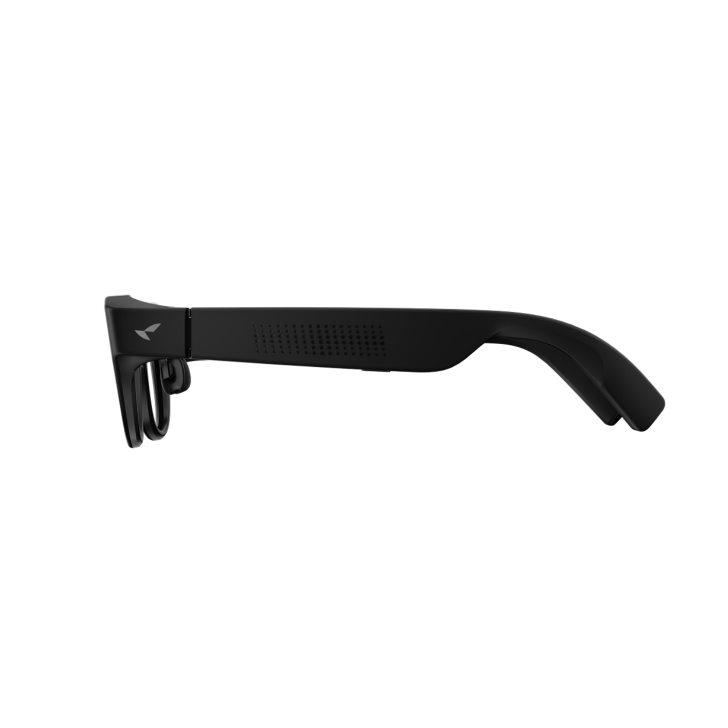
The X3 Pro’s front-to-rear weight balance isn’t published as a figure, but its physical layout differs from the other three models in ways that affect fit.
An Android Police review reported short temple arms with relatively little grip, requiring the reviewer to perch the glasses low on the nose or press them against the bridge to keep the display aligned. A separate long-wear account from Skarred Ghost, worn through a full day at a tech conference, reported genuine nose discomfort after a few hours of continuous wear, enough to need short breaks, something the reviewer partly attributed to his own head shape rather than a design flaw.
On prescription support, the X3 Pro’s FAQ confirms directly: “Yes. RayNeo X3 Pro supports prescription lenses,” and links to a Lensology page built specifically for ordering X3 Pro inserts. The dedicated prescription-lenses purchase page currently handles ordering for the Air 2s; X3 Pro buyers confirm their exact diopter range through Lensology directly when placing the order.
| Air 2s | Air 3s Pro | Air 4 Pro | X3 Pro | |
|---|---|---|---|---|
| Weight | 76g official spec; ~78g in some hands-on reviews | 76g | 76g | 76 ± 1g |
| Weight balance | Not published as a percentage | 46.7% front / 53.3% rear (official figure) | Not published; one reviewer described it as evenly distributed | Not published; independent reviews describe it as front-heavy |
| Clamping force | 15% less than earlier RayNeo AR designs | 15% less than earlier RayNeo AR designs | Not stated on current page | Not stated |
| Nose pad / temple adjustment | 9-point FlexiFit (temples + nose pad) | 9 temple levels, 3 nose pad levels, 2 pad sizes | 9-way adjustment, multiple pad sizes including large plus a sample frame in the box | RayNeo lists one nose pad size; one review reported two included |
| Eyebox / IPD coverage | Not published | 14×7mm, ~93% of IPDs | Not published | Not published |
| Connection | Wired, USB-C to phone/laptop/console | Wired, USB-C to phone/laptop/console | Wired, USB-C to phone/laptop/console | Standalone, Bluetooth/Wi-Fi |
| Prescription info on RayNeo’s current pages | Diopter range stated on a dedicated RayNeo page: myopia 0 to -10.00D, astigmatism 0 to -2.00D | Compatible with near- and far-sighted corrections per product page; no diopter number published | “Prescription Lens Compatible” label plus a direct Lensology link; no diopter number on the current page | FAQ confirms support with a direct Lensology link; no diopter number on the current page |
| Insert starting price (Lensology) | ~£95, ordered via RayNeo’s own purchase page | ~£95, via Lensology | ~£95, via Lensology’s Air 4 Pro page | ~£95, via Lensology’s X3 Pro page |
| Documented long-session note | Comfortable at rest; some buyers have needed an insert replacement after an initial fit mismatch | Comfortable first 60-90 minutes; pressure can build in longer continuous sessions | Standard pads uncomfortable for a larger nose bridge in one review; included large pads helped | Front-heavy balance; one reviewer needed breaks after a few hours |
| Price (checked August 2026) | $159 sale / $299 list | $299 (promo codes have applied further discounts) | $254.15 sale / $299 list | $1,099 sale / $1,299 list |
Prices and promotions change on RayNeo’s site more often than the physical specs above, treat these as a snapshot rather than a fixed number, and confirm at rayneo.com before ordering. Lensology’s £95 starting price is also a floor, not a fixed number, the final price depends on your prescription’s complexity, and it’s worth confirming current pricing on Lensology’s site directly before you order.
For engineered, documented comfort paired with prescription correction: Air 3s Pro. It’s the only model with a published front-to-rear weight balance figure and the widest documented eyebox coverage, and hands-on reviews describe the out-of-box fit as comfortable. It supports both near- and farsighted corrections, though neither the product page nor Lensology publishes a diopter number, so confirm your exact prescription with Lensology before ordering.
For the clearest official prescription number, at the lowest price: Air 2s. It’s the only model where RayNeo’s site states a specific diopter ceiling, myopia 0 to -10.00D and astigmatism 0 to -2.00D, on a page you can check right now. It shares the same core comfort hardware as the pricier models; some buyers have needed an insert replacement after an initial fit mismatch, so have your prescription and pupillary distance ready when you order.
For the best physical accommodation if your nose bridge runs larger than average: Air 4 Pro. It ships with a larger nose pad and a sample prescription frame in the box, so you can test the fit before ordering the real lenses. Prescription ordering runs through a dedicated Lensology page for this model, where your exact range gets confirmed.
For untethered, standalone use where a camera and AI features matter as much as comfort: X3 Pro. It’s the only model that doesn’t need a cable, and its FAQ confirms prescription support directly with a Lensology link, though it also carries the most front-loaded weight feedback of the four models.
If your regular glasses already leave nose-bridge marks or behind-the-ear soreness after a few hours, that’s a signal to prioritize models with more pad-swap flexibility, Air 3s Pro’s two pad sizes or Air 4 Pro’s included large pad, over the Air 2s or X3 Pro’s more limited stock options.
One more step worth taking before you order, whichever model you land on: if your prescription runs on the higher end, astigmatism beyond -2.00D or myopia beyond -10.00D, get that confirmed with Lensology first. They can tell you upfront whether your exact numbers are covered for the frame you’re choosing, which is a quicker fix than finding out after the lenses ship.
Does adding a prescription insert make any of these glasses heavier or change the fit?
Which RayNeo model states the clearest prescription range on its own page?
How much does the prescription insert itself cost, and where do I order it?
How reliable is prescription lens support on the X3 Pro specifically?
What should I do if I have a narrow or larger-than-average nose bridge?
Do these prescription inserts correct astigmatism, or only nearsightedness?
If I switch RayNeo models later, can I reuse the same prescription insert?
Weight won’t help you pick between these four, they’re all within a couple of grams of each other. What separates them is weight balance, clamping force, how many nose pad positions you get to work with, and how your prescription gets confirmed before the insert ships. Air 3s Pro has the most engineered comfort setup on paper, Air 2s has the clearest published diopter number and the lowest price, Air 4 Pro offers the best physical fit accommodation with a sample frame you can test first, and X3 Pro trades some comfort headroom for being the only one you can wear without a cable. Whichever frame fits your face, the last step is the same: confirm your exact diopter range with Lensology when you place your insert order, since that’s where the prescription itself gets locked in, not on the product page. Air 2s, Air 3s Pro, Air 4 Pro, and X3 Pro.




Share:
What New Smart Glasses Are Available Now, and What's Coming Soon?
Best AI Smart Glasses for Camera, Voice Assistant, and Translation