

$429.00

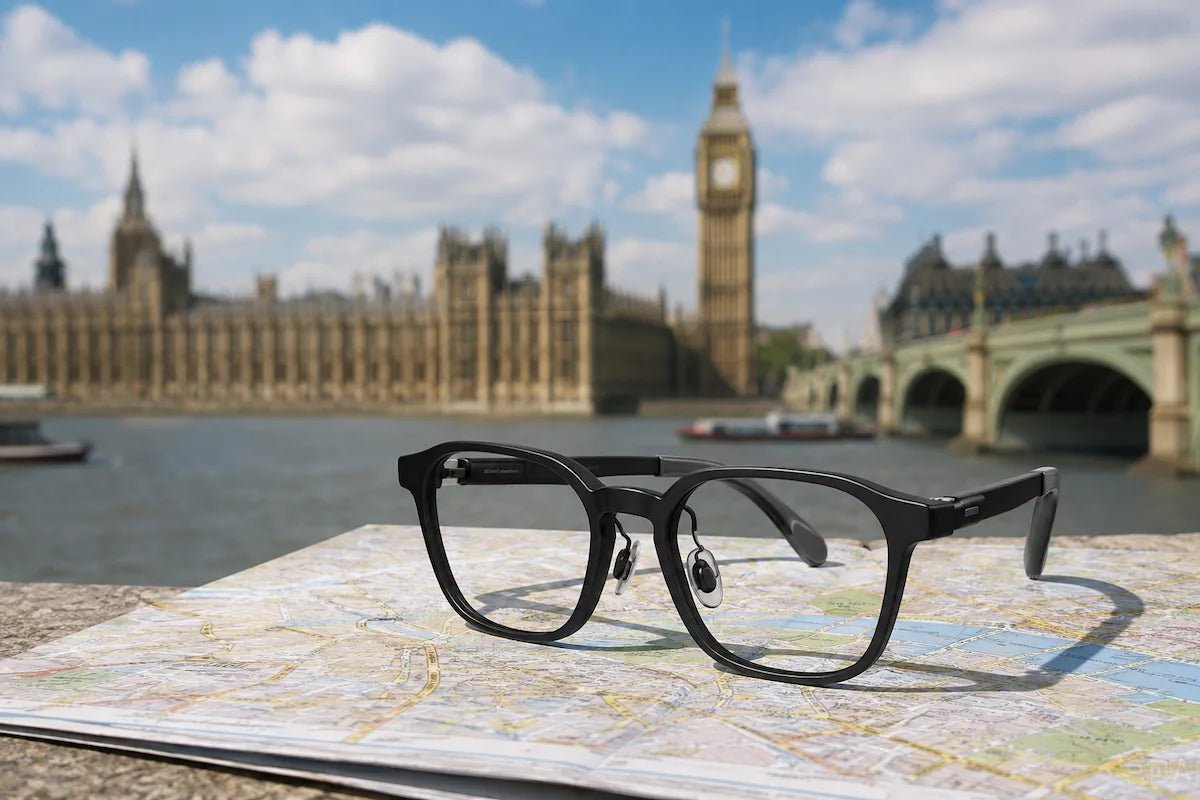
Smart glasses for travel put useful information right where you need it, so you can navigate a new city without staring at your phone. Language barriers, buried itineraries, and one hand always on a screen make trips harder than they should be.
The right pair keeps key travel and translation information available at a glance, so you stay present and aware. This guide walks through the benefits, the features that matter, packing tips, and where RayNeo iO fits.

Smart glasses for travel are lightweight eyewear with features such as microphones, speakers, cameras, displays, or AI assistants depending on the model.
Many newer smart glasses are designed with everyday eyewear styles, helping them blend more naturally into daily life. Instead of pulling out your phone at every turn, you get translation, directions, and reminders in your line of sight or through audio.
For a traveler, that means less fumbling with a screen in an unfamiliar place and more attention on the trip itself.
Smart glasses make travel easier by keeping useful information within reach and reducing the need to check your phone constantly. Key benefits include:
Together, these features help travelers move more smoothly through unfamiliar places.
Travel can mean long days of walking, unfamiliar languages, changing weather and limited access to charging. When comparing AI glasses for travel, focus on the features that will actually make them easier to use away from home.
For international trips, check which languages the glasses support and whether translation works in real time.
It is also worth checking how translated content is presented, whether the glasses rely on a paired phone, and whether an internet connection is required. The right setup can make conversations at hotels, restaurants, transport hubs and meetings much easier to follow.
Travel often means wearing your glasses for hours at a time, so weight and balance matter. Look for a lightweight frame, even weight distribution and a secure fit around the nose and ears. A comfortable pair is easier to keep on through flights, sightseeing, commuting and full-day itineraries.
Check both the rated battery life and how the glasses recharge. Translation, displays and frequent AI use can increase power consumption, so a longer runtime is useful when you are away from a charger. Compact charging accessories and convenient recharging can also make a difference when you are travelling light.
Many smart glasses depend on a paired phone for connectivity, notifications, AI features or translation. Make sure they work reliably with your phone and check whether any important functions depend on mobile data, Wi-Fi or a companion app. This is especially important when roaming internationally or moving between different networks.
Travel exposes glasses to frequent packing, dust, rain, humidity and temperature changes. Look for a durable frame and an appropriate dust and water resistance rating, such as IP65, for the environments you expect to visit. A robust design gives you more confidence when moving between airports, cities and outdoor locations.
Depending on your needs, you may also want to compare camera capabilities for hands-free travel capture or prescription lens support if you wear corrective glasses every day.

For travel days when you would rather keep your phone in your pocket, the RayNeo iO AI Glasses bring useful information, translation, and AI assistance directly into your line of sight.
At just 34g, the lightweight frame combines an ultra-transparent waveguide display with features designed to help you stay organised and communicate more easily on the move.

A little preparation makes smart glasses far more useful on a trip. Keep these habits in mind:
The best smart glasses for travel reduce everyday trip frustrations, including language barriers, navigation challenges, and frequent phone use. Match the features to how you travel, weigh camera capture against a lighter, privacy-first frame, and confirm battery life and durability for long days.
RayNeo iO fits travelers who want translation and glanceable info without carrying a larger device. Decide what matters most on your next trip, then choose the pair that keeps you present from the airport to the destination.
Yes. Smart glasses are generally permitted on planes, whether packed in carry-on luggage or worn during travel. At security checkpoints, TSA rules vary depending on the device and airport procedures. Smart glasses are generally treated like other small personal electronics, but travelers should follow officer instructions. An officer may ask you to power the device on, and camera-enabled models can draw extra questions. In the air, follow crew instructions and use airplane mode during takeoff and landing.
Some do. Several smart glasses offer prescription lenses or custom lens fittings, so you get vision correction and smart features in one frame. Others are designed to be worn over contact lenses or with non-prescription lenses. If you need vision correction, check the specific model's prescription options and supported range before buying. That way you avoid carrying a second pair of glasses and can wear one frame throughout your trip.
It depends on the type. AR/XR display glasses with virtual display capabilities and audio can play movies and shows, making them useful for long flights and leisure time. Lightweight AI glasses focus on glanceable information, translation, and voice help rather than full video playback. If watching content is a priority, choose a model built as a media display. If you mainly want translation and quick info on the move, a lighter assistant-focused pair is the better travel companion.





Share:
Smart Glasses for Commuting: What to Know Before You Buy
Keep Phone in Pocket Smart Glasses: Do More Hands-Free in 2026