

$429.00

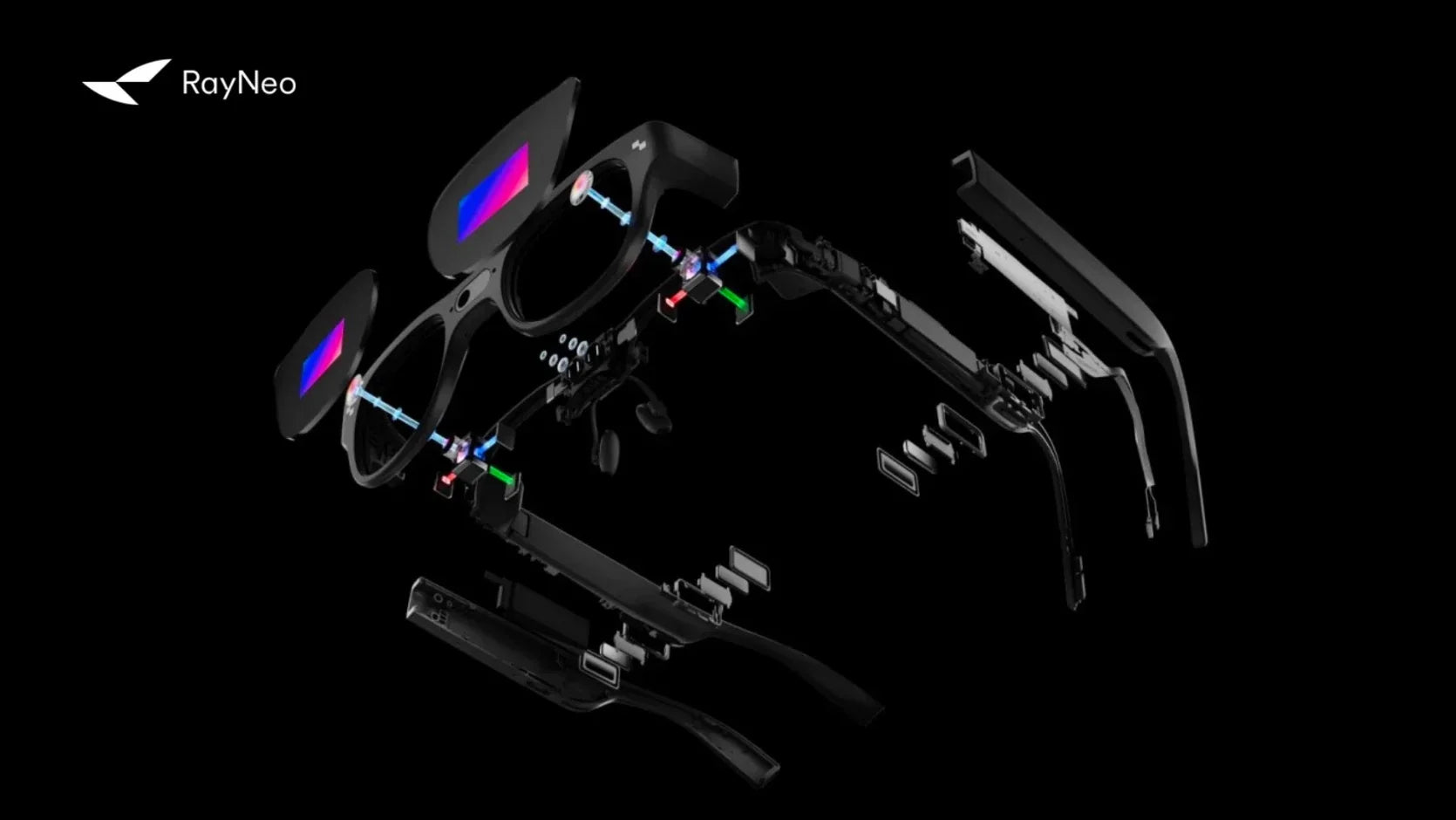
The RayNeo X3 Pro uses a 12MP Sony IMX681 sensor for photo and video capture, plus a second monochrome camera dedicated entirely to spatial tracking. Photos max out at 4K resolution, video tops out at 1440p, and recording time per clip is short because of a small 245mAh battery, not because of the sensor or processing chip.
That single answer covers most of what people search for. The rest of this review explains the hardware behind those numbers and what they mean in day-to-day use.
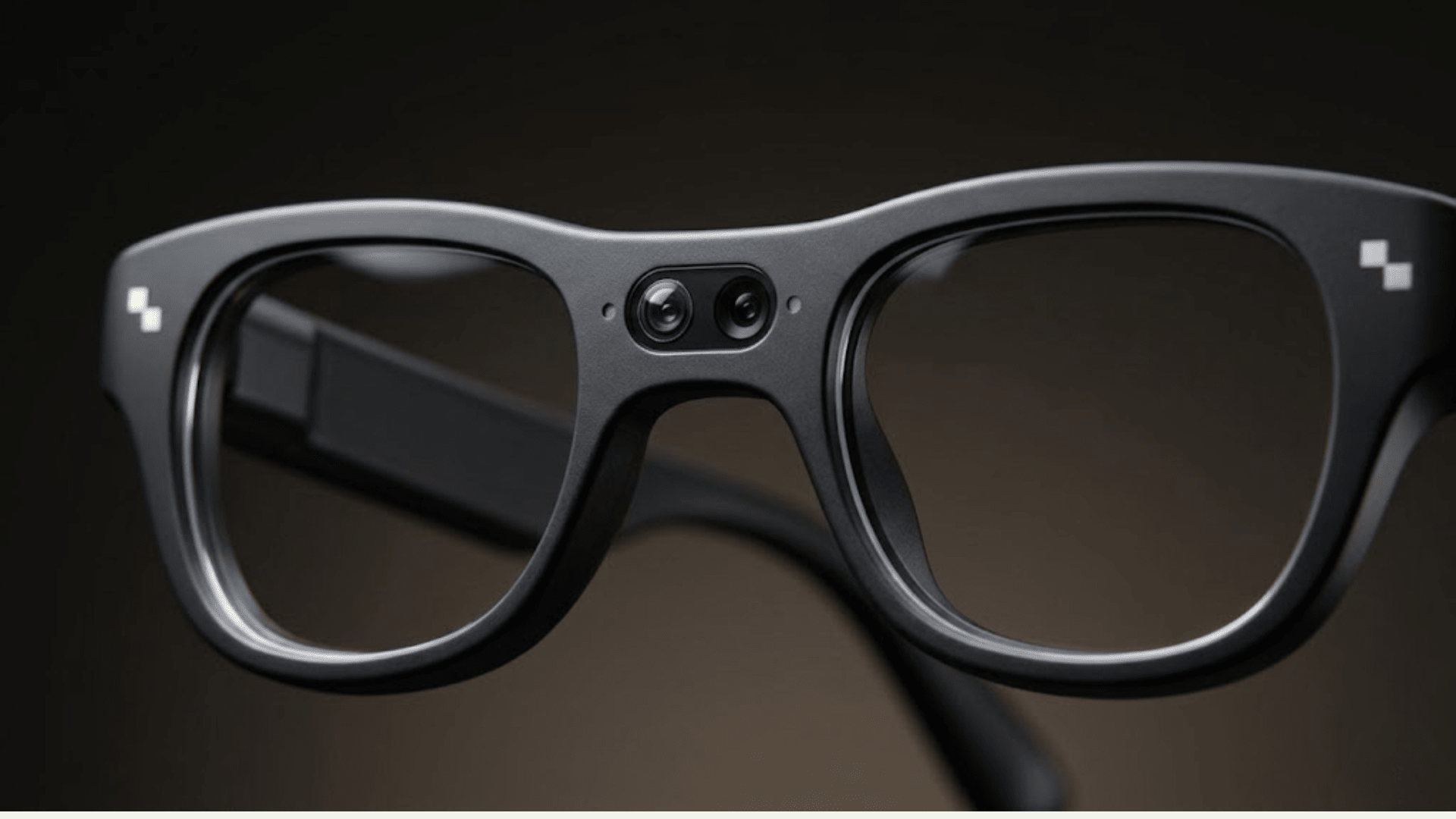
The X3 Pro's primary camera is built around a Sony IMX681, a 12-megapixel sensor. It is a small, well-regarded sensor commonly used in smartphone camera modules.
Twelve megapixels is a mid-range spec by smartphone standards. It is still a reasonable ceiling for the smart glasses category, where camera modules compete for space with displays, batteries, and other sensors.
Image processing runs through the Qualcomm Snapdragon AR1 chip, paired with 4GB of RAM. The AR1 platform is designed specifically for AI glasses and lightweight AR devices, handling the camera pipeline and driving the display output.
That shared workload matters. The X3 Pro's dual-color MicroLED display peaks at 6,000 nits. Camera capture and AR display are separate functional systems, but they run on the same chip and draw from the same 245mAh battery.
A common assumption about dual-camera smart glasses is that both lenses contribute to photo quality, similar to a phone's main and ultra-wide pair. That is not how the X3 Pro is built.
The second camera on the X3 Pro is a monochrome, black and white sensor. It does not capture color images and is not part of the photo or video pipeline at all.
Its job is spatial tracking. The monochrome camera feeds 6DoF (six degrees of freedom) positional tracking, which keeps AR content anchored correctly in space as you turn your head or walk around.
So when someone asks whether the X3 Pro has two cameras for photos, the accurate answer is no. One camera takes pictures. The other tells the device where your head is pointed.
The X3 Pro's still photo output tops out at 4K resolution. Video capture maxes out at 1440p.
This split is common in compact camera systems. Capturing a single high-resolution still requires far less sustained processing and thermal headroom than encoding continuous 4K video.
In practical terms, 4K stills work well for detail-heavy shots like text, signage, or scenery you plan to crop later. 1440p video still looks sharp on a typical phone screen, even without a 4K ceiling.
Neither number should be read as a claim of professional camera quality. The 12MP sensor and 1440p video ceiling put the X3 Pro in line with a capable point-of-view capture device, not a substitute for a phone's main camera.
This is one of the most searched questions about the X3 Pro's camera. The answer is battery size, not sensor or chip limitations.
The X3 Pro runs on a 245mAh battery. That is small by any standard, and it powers the camera, the Snapdragon AR1 chip, and the MicroLED display all from the same budget.
Reported recording limits vary by source. Some secondary reporting cites roughly 9 minutes per clip and about 50 minutes of total recording per charge, though this has not been confirmed on a first-party RayNeo spec sheet.
Independent hands-on testing has shown shorter real-world continuous recording, closer to 25 to 30 minutes before the device needs a recharge or cooldown. This gap is worth knowing before planning a shoot around a specific duration.
The takeaway: this is a battery-constrained camera system, not a storage-constrained one. The 32GB of internal storage is not the bottleneck. RayNeo has not published whether the X3 Pro supports expandable storage via memory card, so buyers should not assume either way.
The X3 Pro has a front-facing LED that stays solid while taking a photo and blinks while recording video. This is a visible signal to people nearby that the camera is active.
It is a hardware-level indicator, not a software toggle. Worth checking if you plan to use the glasses in shared or public spaces where camera awareness matters.
The table below lines up the X3 Pro against two anonymized reference devices: a mainstream camera-first pair of smart glasses, and a pocket-sized standalone action camera. Names are withheld since this section compares camera hardware, not brands.
| Spec | RayNeo X3 Pro | Camera-first smart glasses (reference) | Standalone pocket action camera (reference) |
|---|---|---|---|
| Sensor | 12MP Sony IMX681 (color) + monochrome tracking camera | 12MP sensor | 1/2.3" CMOS sensor |
| Max photo resolution | 4K | Not specified as a separate photo mode | 4K stills supported |
| Max video resolution | 1440p | Up to 3K/30fps for roughly the first 3 minutes, then steps down to 1440p/30fps or 1200p/60fps | 4K/30fps, native, no mid-clip resolution downgrade |
| Has a display | Yes, dual-color MicroLED | No | No |
| Reported/claimed battery life | 245mAh shared with display and chip; camera-specific runtime reported as roughly 25 to 50 minutes depending on source | Manufacturer-claimed roughly 8 hours (general use) | Roughly 32 minutes standalone, roughly 140 minutes with charging case |
| Water resistance | No official IP rating published | Rated for light water exposure per manufacturer | Rated for underwater use to roughly 10 meters |
| Approximate price | $1,299 | Roughly $379 | Starting around $400 |
The "no mid-clip resolution downgrade" line in the table refers specifically to the standalone action camera reference, which records natively at 4K/30fps for the full clip. That is different from the camera-first glasses reference, which steps down in resolution after about 3 minutes.
The camera-first reference glasses avoid the battery-sharing problem because they don't power a display, which is a big part of why their claimed battery life is longer. The standalone action camera has a physically larger sensor and no mid-clip downgrade, both inherent advantages of a dedicated capture device that isn't also running an AR headset.
The X3 Pro's camera exists inside a device doing three jobs at once: capture, spatial tracking, and AR display. That is the tradeoff to understand, not a shortcoming to dismiss outright.
The X3 Pro's camera setup suits short, spontaneous point-of-view capture and quick reference photos. It fits moments where having a camera built into a display-equipped device matters more than raw video length or underwater durability.
It is not built to replace a phone camera for everyday photography, nor a dedicated action camera for long-form recording. A standalone camera with a larger battery and sensor will outperform it on continuous video length.
Where the X3 Pro's design earns its keep is combining capture with the same device already running live AR translation, navigation overlays, or on-glasses assistant features, since you're not carrying a second device for those functions.

The RayNeo AR companion app's App Store listing is written primarily around the prior X2 model. That can read as a red flag at first glance.
The app's version history clarifies this. Version 2.1.0 states full support for the RayNeo X3 Pro, and version 2.2.0 adds gesture interactions exclusive to the X3 Pro.
The outdated-looking store description is a documentation lag, not a functional gap. Camera control and file access through the app are confirmed to work with the X3 Pro.
The RayNeo X3 Pro is priced at $1,299 as of this review. RayNeo has previously run limited-time introductory pricing between $999 and $1,099, so current pricing may not reflect past promotional periods.
The glasses pair to a phone via Bluetooth and Wi-Fi through the RayNeo AR companion app, which is also how captured photos and video get transferred off the device.
The X3 Pro is currently available for purchase rather than pending release, so the camera specs and limitations described in this review reflect a shipping product, not a preview unit.
Do both cameras on the RayNeo X3 Pro take photos? No. Only the 12MP Sony IMX681 sensor captures photos and video. The second camera is a monochrome sensor used exclusively for 6DoF spatial tracking, which keeps AR content anchored as you move your head.
Why is video recording time so limited on the X3 Pro? The limitation comes from the 245mAh battery, shared between the camera, the Snapdragon AR1 chip, and the MicroLED display. It is not a storage or processing limit. Reported figures range from roughly 9 minutes per clip in some secondary sources to observed real-world continuous recording of about 25 to 30 minutes in independent testing.
What is the actual difference between 4K photo and 1440p video on the X3 Pro? Still photos are processed as single high-resolution frames, so they can reach 4K without the sustained thermal and data load continuous video requires. Video is capped at 1440p because encoding a continuous stream at higher resolution demands more processing over time than the device's power and thermal budget allows.
What camera sensor does the RayNeo X3 Pro use? The main camera uses a 12-megapixel Sony IMX681 sensor, a sensor commonly used in smartphone camera modules, chosen for its balance of image quality and physical footprint.
Is the RayNeo X3 Pro's camera water resistant? No official IP rating has been published for the X3 Pro as of this review. Buyers who need water resistance for their use case should treat this as unconfirmed rather than assume any level of protection.
Does the RayNeo AR app fully support the X3 Pro despite the App Store listing referencing the X2? Yes. The store description is written around the X2, but version 2.1.0 of the RayNeo AR app documents full support for the X3 Pro, and version 2.2.0 adds gesture controls specific to the X3 Pro.
The RayNeo X3 Pro's camera hardware, a 12MP Sony IMX681 sensor paired with a dedicated monochrome tracking camera, is a purpose-built setup for a device that has to fit a camera, a display, and spatial tracking into a pair of glasses. The 4K photo and 1440p video ceiling reflect engineering tradeoffs rather than an attempt to match phone or action-camera output.
The clearest limitation is runtime, driven by a small shared battery rather than the sensor or chip. Anyone comparing this to a dedicated action camera or a camera-first pair of smart glasses should weigh that tradeoff against what the X3 Pro adds on top of the camera: a display and AR functionality those reference devices don't have at all.





Share:
Smart Audio Glasses for Calls & Music
Privacy, Legality, and Discreet Recording: What to Know Before You Wear Camera Glasses