

$429.00


Camera glasses raise a specific privacy question that regular cameras and phones do not: they look like ordinary eyewear while being capable of recording video or taking photos. That resemblance to everyday glasses is exactly what makes some people uneasy, and it is also why recording laws and social norms matter more with this product category than with a handheld camera.
This article does not tell you what is legal in your specific city, workplace, or country. Laws about recording people vary widely by region and by setting, and they change over time. Treat this as a starting point for questions to ask, not as legal advice.
A phone held up to record is a visible signal. Someone pointing a phone at you is doing something you can see and react to.
Glasses that record do not send the same visual signal. From a few feet away, most people cannot tell whether a pair of glasses has a camera built in at all.
This is a real, documented concern in the smart glasses category generally, not something unique to one brand. Products in this space that closely resemble standard sunglasses or eyeglasses have drawn public discussion and some pushback specifically because of how easily they blend in with regular eyewear in public settings.
That does not mean camera glasses are inherently improper to use. It means the person wearing them carries more responsibility for signaling intent and respecting the people around them, since the device itself does less of that signaling on its own.
Recording rules generally fall into a few broad categories, though the exact legal line depends entirely on local law.
Public spaces (streets, parks, public transit, plazas). In many jurisdictions, people in public generally have a reduced expectation of privacy, and casual recording in these settings is often treated differently than recording in private spaces. Local rules still vary, and some public settings carry extra restrictions, such as near government buildings or during certain events.
Private spaces (someone's home, a private office, a private event). Recording inside a private space, especially without the owner's knowledge, is treated more strictly in many places, and some situations may require permission from the property owner or the people present.
High-sensitivity spaces (locker rooms, restrooms, changing areas, medical settings, and any setting involving minors). These environments are treated with the highest level of restriction almost everywhere. Recording in these spaces is commonly prohibited or tightly restricted by law, by venue policy, or both. If there is any doubt, do not record, and check local rules before bringing any recording device into these spaces at all.
Beyond these broad categories, some regions also have specific rules about recording conversations, sometimes called two-party or all-party consent requirements for audio. As one widely known example, several U.S. states require consent from all parties before recording a private conversation, while others require consent from only one party. Similar one-party versus all-party distinctions exist in various forms in other countries, so it is worth identifying which rule, if any, applies where you are.
One design response to the "glasses that look normal but can record" problem is a visible indicator light that shows when the camera is active.
RayNeo's X3 Pro AI glasses include an LED indicator on the front of the frame that stays lit during photo capture and blinks during video recording, giving people nearby a visual cue that recording may be happening. This kind of indicator is a transparency feature, similar in spirit to indicator lights found on other well-known camera-equipped smart glasses on the market.
An indicator light is a helpful signal, not a legal shield. It does not change what is legal or illegal to record in a given location, and it does not replace asking for consent when a situation calls for it.
It is also worth comparing this to non-eyewear alternatives. Clip-style wearable cameras, for example, are worn openly on clothing rather than disguised as glasses, which in some ways makes it more obvious to bystanders that recording could be happening, simply because the device does not resemble something people wear every day without a camera.
Before wearing camera glasses in a new setting, it helps to run through a short mental checklist.
None of these questions have a universal answer. They are meant to prompt a quick check before recording, not to replace looking into local law when the setting is unfamiliar or sensitive.
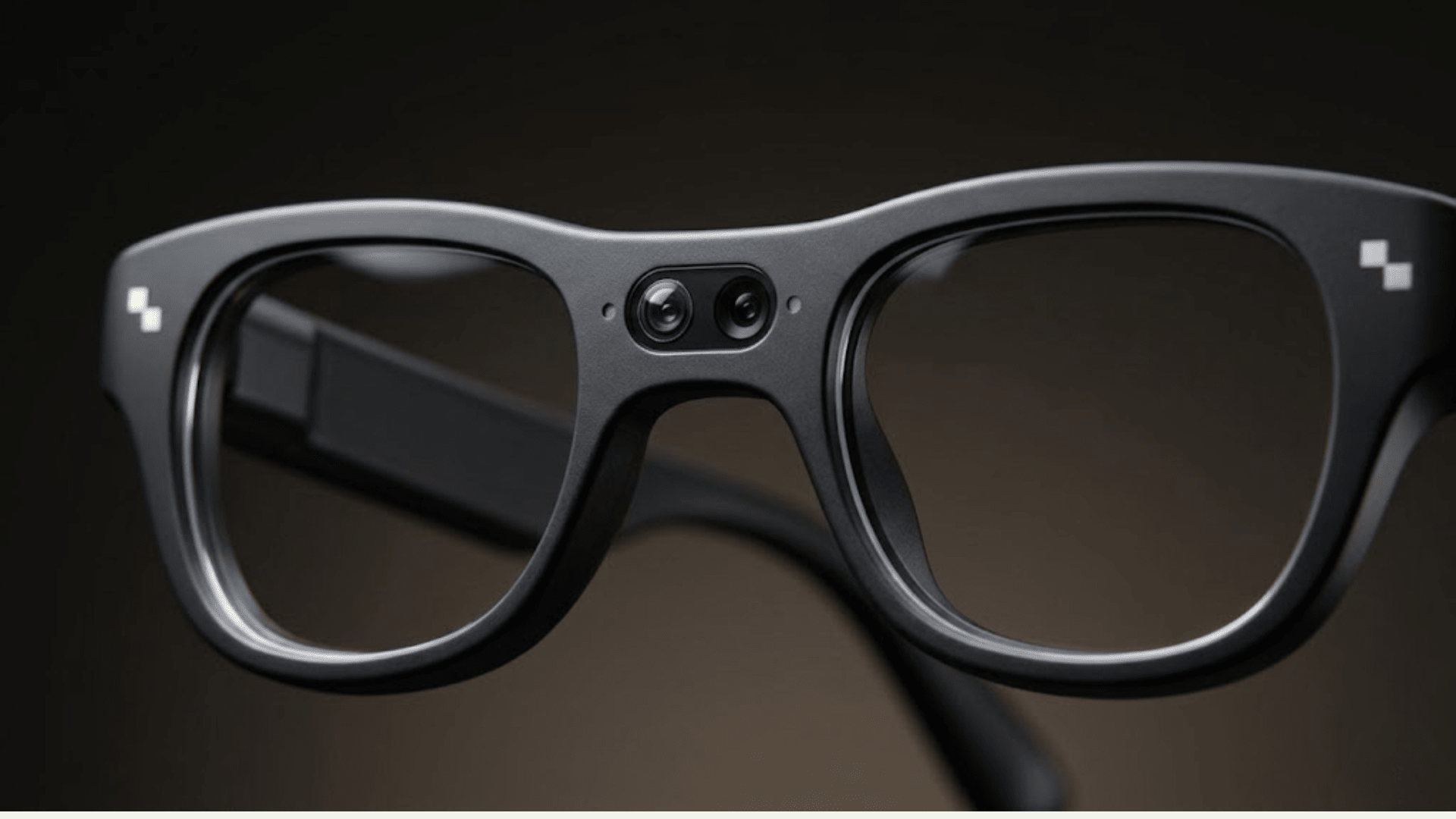
RayNeo X3 Pro is built around a 12MP Sony IMX681 camera paired with a monochrome spatial positioning camera. It is capable of both photo and video capture, with photos reaching up to 4K resolution, in a frame that weighs about 76 grams. It is priced at $1,299 as of August 2026.
The front-facing LED indicator lights up steadily during photo capture and blinks during recording, giving people nearby a visible signal rather than leaving the camera's status hidden. This is a deliberate design choice aimed at reducing the "is this recording me right now" uncertainty that comes with any glasses-form-factor camera.
RayNeo has not published detailed information on how recorded content is stored or processed, such as whether footage stays on the device, transfers to a paired phone, or syncs to cloud storage. Readers who want specifics on data handling should check RayNeo's official privacy policy rather than assume a particular storage method.
This indicator design is a design feature, not a legal guarantee. Anyone using X3 Pro, or any camera glasses, is still responsible for knowing and following the recording rules that apply in their specific location and setting.
X3 Pro is best suited to users who already understand this responsibility, such as people documenting personal travel, hands-free work tasks, or content creation in settings where recording is clearly permitted, rather than users looking for a covert recording device.
| Device Type | Visual Signal to Bystanders | Typical Use Case |
|---|---|---|
| Camera glasses with indicator LED (e.g., RayNeo X3 Pro) | Small LED on frame, easy to miss at a distance | Hands-free POV recording, travel, daily use |
| Camera glasses resembling standard sunglasses (category-wide concern) | Often minimal without an active indicator, contributing to public concern about the category | Casual daily wear, social content |
| Clip-on wearable camera | Visible device clipped to clothing | Action or activity recording where visibility is less of a concern |
| Smartphone camera | Highly visible, phone held up and pointed | General everyday recording |
This table reflects general design characteristics of each device category, not a ranking of legality or ethics, both of which depend on how and where a device is actually used.
Can the recording indicator light on camera glasses be turned off? RayNeo has not published whether the indicator light can be disabled by the user. Treat it as a fixed transparency feature unless the manufacturer states otherwise.
Is it illegal to wear camera glasses in a gym or locker room? Locker rooms, changing areas, and similar spaces are treated as high-sensitivity settings in most places, and recording there is commonly prohibited or heavily restricted by law, venue policy, or both. Many gyms also have their own no-recording-devices policies that apply regardless of local law. Check the venue's rules and local law before bringing any camera device, including camera glasses, into these areas.
Do I need to ask permission before recording someone in public? Requirements vary by jurisdiction. Some places have a lower expectation of privacy in public settings, while others still restrict certain types of recording or publication. This is a question to research for your specific location rather than assume.
Are camera glasses legal to buy and own? Owning and buying camera glasses is generally legal in most markets. The legal questions typically arise around how, where, and of whom you record, not around owning the device itself.
Does an indicator light mean a device is legally compliant everywhere? No. An indicator light is a transparency and trust feature, not a legal certification. Legal compliance depends on local recording laws and the specific setting, which the device itself cannot determine or guarantee.
How is a recording indicator light different between camera glasses and clip-on cameras? Clip-on cameras are worn openly on clothing, which can make the presence of a camera more obvious to people nearby simply due to the device's visible form factor. Camera glasses rely more heavily on an active indicator light, since the glasses form factor itself does not visually announce that a camera is present.
This article is provided for general informational purposes only and does not constitute legal advice. Laws governing recording, photography, audio capture, and consent vary significantly by country, state, city, and specific setting, and they change over time.
Statements in this article using language such as "generally," "commonly," or "in many places" reflect broad patterns and are not statements of definitive law for any specific location. Before recording in any setting, especially private spaces, workplaces, schools, medical facilities, or situations involving minors, readers should independently verify current local, state, and national law, as well as any applicable venue or organizational policy. When in doubt, consult a qualified legal professional in your jurisdiction.





Share:
RayNeo X3 Pro Camera Tech Review: 12MP Sony Sensor, Dual-Camera Design, and 4K Photo Tech Explained
Smart Audio Glasses for Calls & Music