

$429.00

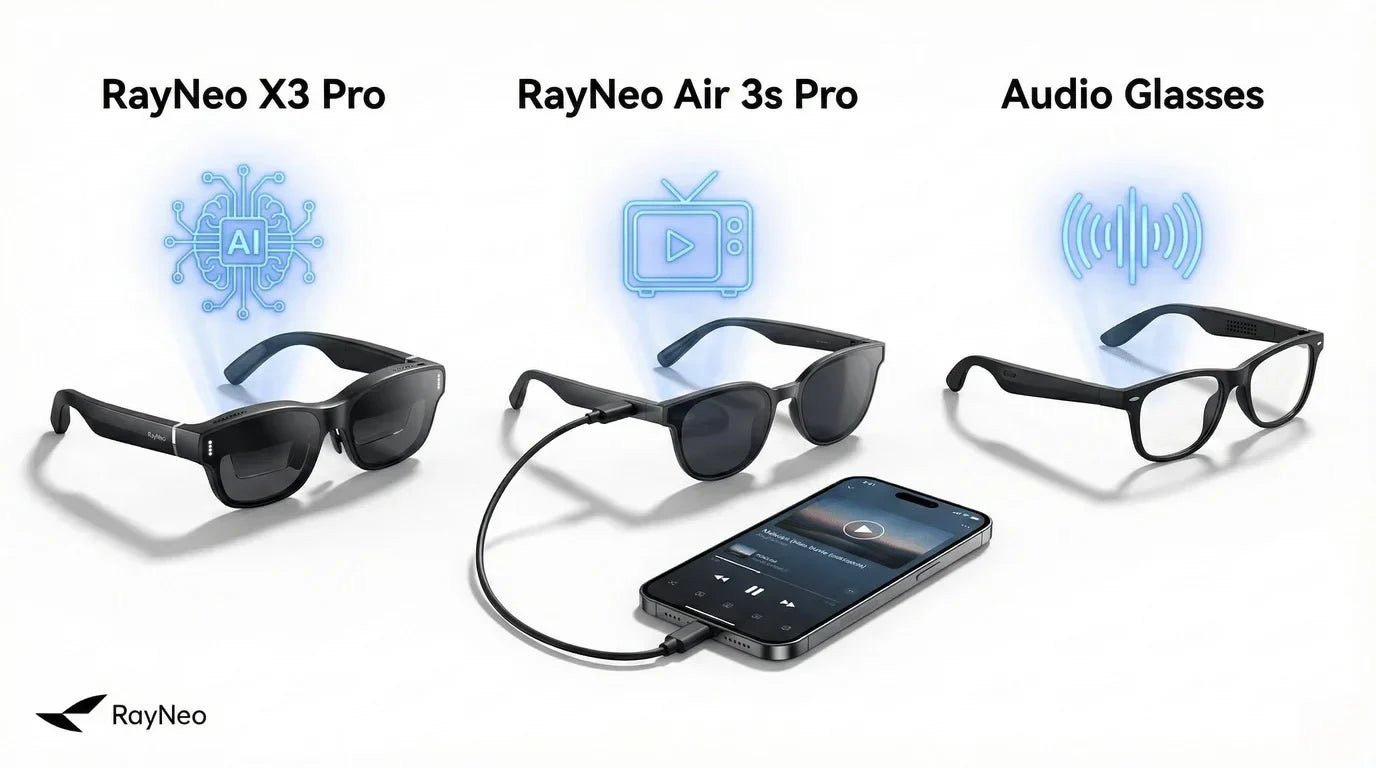
If your main reason for wanting smart glasses is to take calls and listen to music hands-free, the product you actually want is often not the one getting the most attention. Camera-equipped and AR display glasses get most of the marketing spotlight, but many of them treat audio as a secondary feature, not the main event.
This guide explains what "audio smart glasses" really means, what separates a good calling and listening experience from a mediocre one, and where AR-focused devices like the RayNeo X3 Pro do and don't fit into that picture.
Audio smart glasses are regular-looking eyewear with tiny speakers built into the arms near your ears, plus one or more microphones, so you can take calls, listen to music or podcasts, and talk to a voice assistant without wearing earbuds. Most of them use what's called an "open-ear" design, meaning the speaker sits near your ear canal but doesn't plug into or cover it.
That design choice has a real tradeoff you should understand before buying. Because your ear stays open, you can still hear traffic, a coworker talking to you, or an announcement at the airport while you're on a call or listening to a podcast, which is genuinely useful for safety and awareness. The tradeoff is that the sound isn't private or fully isolated, so people standing close to you may catch a bit of what you're listening to, and you won't get the deep bass or noise blocking you'd get from sealed earbuds.
There are two distinct product types that get lumped under this "audio smart glasses" label, and mixing them up leads to disappointment.
Audio-only smart glasses have no camera and no display. Speakers and microphones are the entire product, and the frame design and mic placement are engineered specifically around call clarity and sound leakage rather than shared with a camera system.
Camera-plus-audio combo glasses add a built-in camera for photos and video alongside the speakers and mics. Audio is still marketed as a front-and-center feature on these products, but battery life and internal space are shared with the camera, which is why manufacturers often publish separate battery figures for audio-only use versus mixed use with the camera running.
AR display glasses, like the RayNeo X3 Pro, are a third category built around a different job entirely: showing information in your field of view and capturing photos or video. Speakers and microphones are included mainly so you can interact with a voice assistant, but audio is rarely the reason these products exist.
| Audio-only smart glasses | Camera+audio combo glasses | AR display glasses (e.g. RayNeo X3 Pro) | |
|---|---|---|---|
| Primary purpose | Calls, music, voice assistant | Photos/video plus calls and music | AR display, camera, AI overlay |
| Camera | None | Yes, built in | Yes, built in |
| Display | None | None | Yes, dual-color MicroLED |
| Microphones | Typically 1 to 2, tuned for voice pickup | A multi-mic array (5 mics in one widely reviewed model) | Triple Mic (officially published) |
| Speakers | A small pair of micro-speakers per side | Two custom open-ear speakers (officially published on one widely reviewed model) | Dual Speakers (officially published) |
| Music playback battery | Up to 6 hours of continuous playback (one widely available model) | Shorter, often not broken out separately from mixed use | Up to 3 hours (official RayNeo spec) |
| Detailed audio specs (dB output, frequency response, call noise reduction technique) | Not always published in full | Some brands publish a noise-reduction claim (e.g. "blocks background noise during calls") | Not published beyond mic/speaker count and the 3-hour figure |
| Typical price | Roughly $250 to $300 | Roughly $300 to $400 | $1,299 (RayNeo X3 Pro, as of August 2026) |
| Best for | Users who only want hands-free audio | Users who want photos/video and solid audio in one device | Users who primarily want AR display and camera features |
A good calling experience comes down to two things: how many microphones the glasses use, and whether that mic array is tuned specifically for voice pickup in noisy environments.
One widely reviewed camera-and-audio combo model uses a 5-microphone array paired with software that's advertised to filter out a large majority of background noise during calls, alongside several hours of continuous talk time on a full charge. That kind of published, call-specific spec is what you should look for if calls are your priority.
Open-ear designs generally don't include active noise cancellation the way sealed earbuds do. The open design that lets you hear your surroundings also means you'll hear more of the room during a call, and the person on the other end may pick up some ambient noise too, regardless of which brand you choose.
Open-ear speakers trade audio isolation for awareness. Music sounds clear in quiet rooms, but bass response and sound leakage in loud or windy environments vary between products, and that's exactly the kind of detail that's easy to oversell in marketing copy.
Dedicated audio-only glasses tend to use a small pair of micro-speakers per side, angled to direct sound toward the ear canal while limiting what people standing nearby can hear. That's a different design goal than a camera-first product where audio is one of several features competing for the same internal space and battery.
If all-day music listening is your main use case, continuous playback battery life matters more than almost any other spec. One widely available audio-only model reports up to 6 hours of continuous playback, which is meaningfully longer than the 3-hour music playback figure RayNeo publishes for the X3 Pro, a difference that itself signals where each product's priorities lie.
Here's the honest answer: if calls and music are your main priority, the RayNeo X3 Pro is not the product built for that job.
RayNeo does publish some basic audio hardware specs for the X3 Pro: a Triple Mic and Dual Speakers configuration, plus an official rating of up to 3 hours of continuous music playback. What RayNeo has not published is the finer detail that actually predicts how calls and music will sound in daily use, things like decibel output, frequency response, or the specific noise-reduction technique used during calls. Independent, side-by-side audio testing of the X3 Pro against dedicated audio glasses also isn't available yet.
The X3 Pro is built around a dual-color MicroLED display reaching up to 6,000 nits and a 12MP Sony IMX681 main camera, and that's where its published specs and marketing focus really are. The Triple Mic and Dual Speaker setup exists mainly to support voice assistant interaction (waking Gemini, issuing voice commands for photos) rather than to compete as a standalone calling or music device.
Battery is also worth factoring in. The X3 Pro uses a 245mAh battery with 40-minute fast charging, and the official 3-hour music playback figure is on the shorter side compared to the audio-only category. Running calls or music alongside the display and camera in daily use will draw on that same limited battery.
If you also wear prescription glasses, RayNeo offers magnetic prescription lens inserts for the X3 Pro through its partner Lensology, though you'll want to confirm your exact prescription range and pricing directly with Lensology before ordering. For phone compatibility, the companion RayNeo app is built for iOS 15.5 or later and Android 9 or later, so check your phone's OS version before buying.
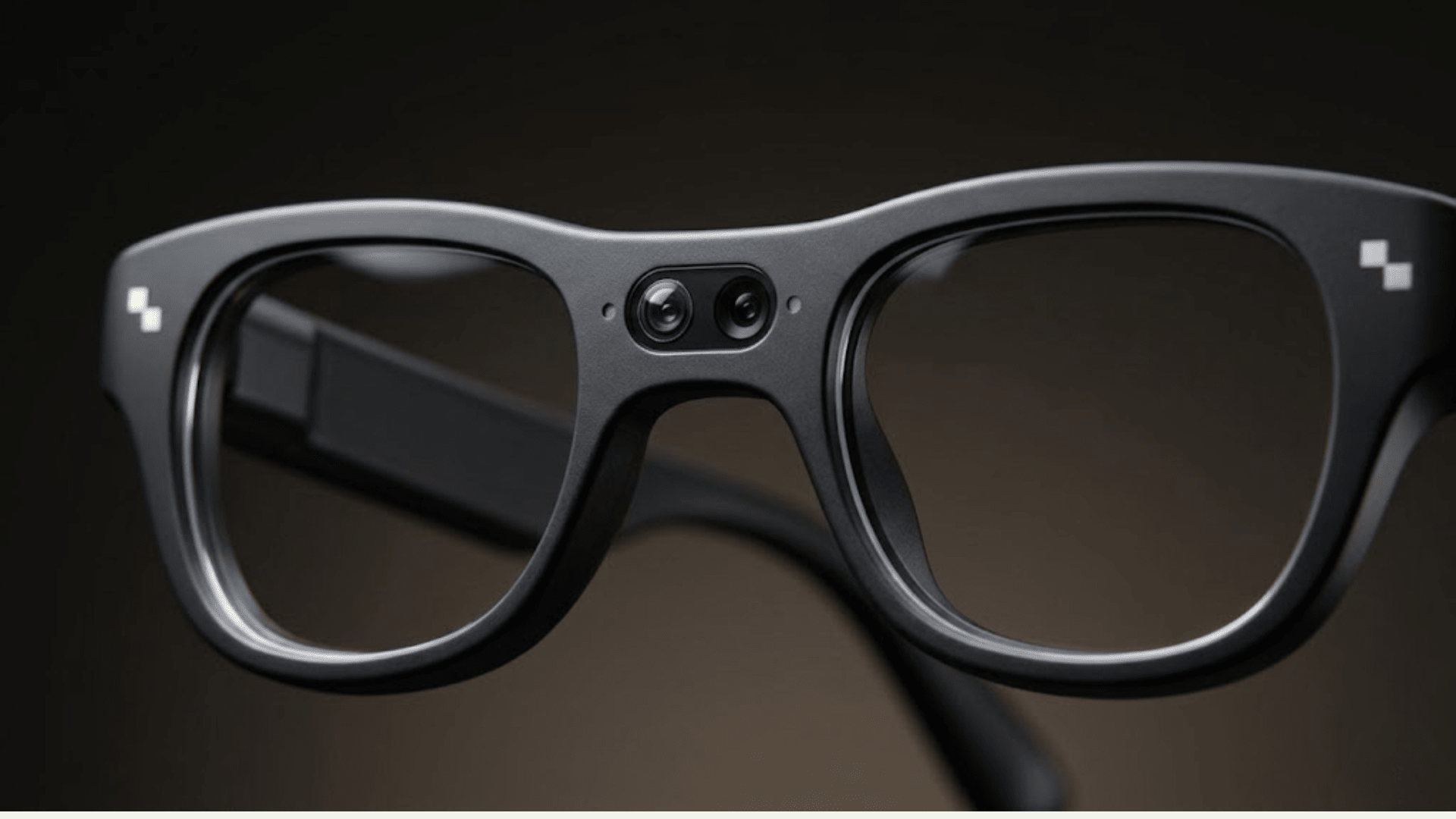
Where the X3 Pro does make sense is if audio is a secondary nice-to-have and your real priority is AR display features and photo or video capture. At $1,299 (as of August 2026), it's a premium option built around a different set of use cases than a calling or music-focused buyer typically needs. If hands-free calls and music are what you're actually shopping for, a dedicated audio-only or camera-plus-audio product will likely serve you better and cost you less.
You mainly want to take calls hands-free: Look at audio-only or camera+audio combo glasses with a published, multi-microphone array and a stated noise-reduction claim for calls. Confirm the continuous talk-time figure before buying.
You mainly want to listen to music or podcasts: Prioritize continuous playback battery life and check whether the product publishes sound-leakage or speaker design details, since that affects how much others around you hear.
You want photos or video plus decent audio: A camera+audio combo device is the more direct fit, since audio performance is typically a stated feature on those products rather than an afterthought.
You want AR display, live translation, or camera-first features and audio is secondary: This is where a product like the RayNeo X3 Pro becomes relevant, understanding that its Triple Mic and Dual Speaker setup is there mainly for voice assistant use and short bursts of music, not built out as a standalone calling or all-day listening device.
Do audio smart glasses sound as good as earbuds? No, not for isolated listening. Open-ear speakers trade sound isolation and deep bass for awareness of your surroundings, so critical listening in loud environments won't match sealed earbuds or over-ear headphones.
Can people around me hear what I'm listening to? It depends on the speaker design and your volume level. Products built specifically for audio-only use typically invest more engineering into directional sound and leakage reduction than devices where audio is a secondary feature.
Can I use audio smart glasses as my only headphones? Yes, for calls, podcasts, and voice assistant use, many people do. Just confirm the continuous playback battery figure matches your daily use pattern before treating them as a full earbud replacement.
Do these glasses have active noise cancellation for calls? Generally no. Open-ear designs prioritize awareness over isolation, so if the person you're calling is in a loud environment, or you are, some background noise will likely still come through despite microphone noise-reduction features.
Is the RayNeo X3 Pro a good choice if I mainly want calls and music? Not really. RayNeo publishes basic specs (Triple Mic, Dual Speakers, 3 hours of music playback), but it's built around AR display and camera functionality, and detailed audio performance data isn't available. If calls and music are your top priority, a dedicated audio-focused product is the better fit.
What should I check before buying any audio smart glasses? Confirm the continuous playback and talk-time battery figures, the number of microphones and whether noise reduction is specifically mentioned for calls, and whether the frame supports prescription lenses if you need them.





Share:
RayNeo X3 Pro Camera Tech Review: 12MP Sony Sensor, Dual-Camera Design, and 4K Photo Tech Explained
Privacy, Legality, and Discreet Recording: What to Know Before You Wear Camera Glasses