

$429.00


If you want to record what you're seeing without holding a phone or camera, three main hardware categories currently address this. Camera-only smart glasses have no display. AR smart glasses combine a camera with an overlay screen. Clip-on wearable action cameras aren't glasses at all, but clip onto clothing or gear.
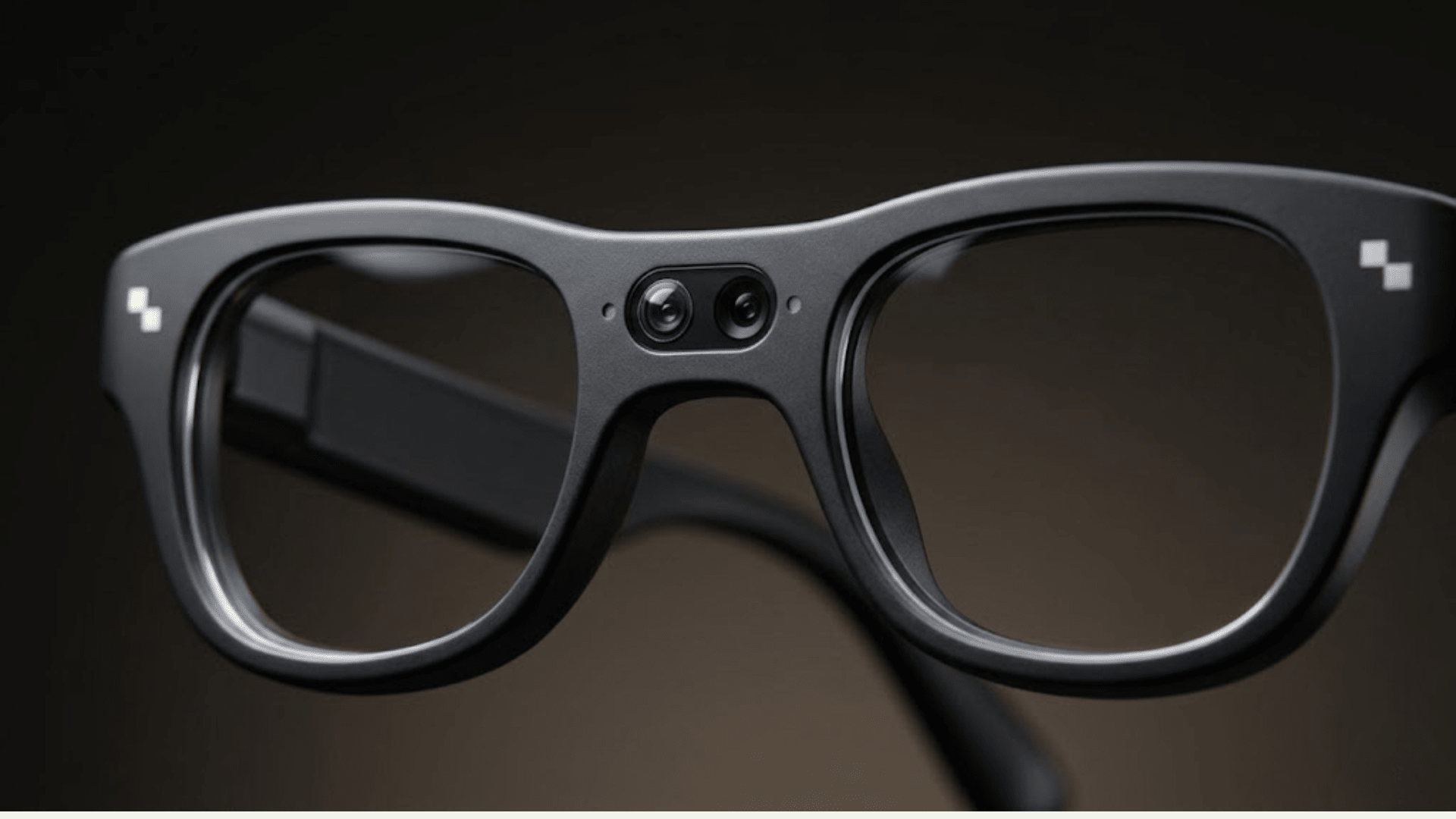
Each trades off recording time, battery life, audio quality, and price differently. RayNeo X3 Pro sits in the AR glasses category, pairing a dual-color MicroLED display with a 12MP camera, so the same device that records your point of view can also show real-time translation, navigation, or notifications while you're moving.
This guide breaks down when hands-free POV recording actually makes sense, what each device type is good at, and where each one falls short.
Some activities simply don't leave a free hand for a phone. Cycling and motorcycling are the clearest cases, since taking a hand off the bars to film is a genuine safety risk.
Parents chasing a toddler through a playground, or cooking through a recipe with both hands full of ingredients, face a similar problem. Hikers scrambling over rocks need both hands free for balance, not for holding a camera.
Vloggers and content creators have a different motivation. POV footage looks more natural than a selfie-stick shot, since it shows the world the way the wearer actually saw it, without an arm or a stick in the frame.
In every case, the core need is the same: capture footage without occupying your hands or breaking your attention on the task in front of you.
A handheld phone delivers the best video quality and the most editing flexibility, but it demands one hand at all times and constant attention to framing. That works for a static shot, not for cycling, cooking, or anything requiring both hands.
Chest-mounted or helmet-mounted action cameras solve the hands-free problem and often beat glasses-based cameras on resolution and stabilization. Their downside is a fixed mounting angle that doesn't follow your head, plus a separate rig to carry.
Glasses-based cameras solve both problems at once, since the camera looks wherever you're looking and there's no separate mount. The tradeoff is that glasses cameras generally can't match a dedicated action camera on raw resolution, frame rate, or continuous recording time, because the hardware has to fit into a pair of glasses.
Four types of devices currently address hands-free POV recording. The table below compares them on the dimensions that matter most for this use case.
| Device type | Display | Camera | Video recording time | Audio recording | Mixed-use battery | Price (approx.) |
|---|---|---|---|---|---|---|
| AR glasses with camera (RayNeo X3 Pro) | Dual-color MicroLED, up to 6,000 nits | 12MP (Sony IMX681), photo up to 4K, video up to 1440p | See note below: independently tested continuous recording is the reliable planning figure | 3-microphone array with beamforming; also supports audio-only recording for AI transcription | Roughly 1-2 hours per multiple independent reviews, less under heavy combined use | $1,299 (as of Aug. 2026, check official site) |
| Camera-only smart glasses (a popular camera-first model from a major social media company) | None | 12MP, video up to 3K/30fps for short clips | About 3 minutes per clip at top quality, then steps down to 1440p/30fps or 1200p/60fps | 6-microphone array, manufacturer claims roughly 90 percent background noise reduction | About 8 hours claimed by manufacturer for typical mixed use | ~$379 |
| Developer-focused AR glasses (a preorder AR headset from a social media/camera company) | LCoS, 51° display field of view | Dual color cameras plus two infrared tracking cameras (detailed specs not public) | Not publicly specified | 6 high-SNR MEMS microphones with bystander-speech rejection | About 4 hours mixed use, extendable with a charging case | ~$2,195, preorder only as of Aug. 2026, expected fall 2026 shipping |
| Clip-on action camera (a popular pocket-sized action camera, not glasses) | 2.2-inch flip screen, on the charging dock only | 1/2.3-inch CMOS sensor, 4K/30fps | Continuous shooting limited by battery, not clip length | Dual built-in microphones, records in mono with wind-reduction and directional modes | About 32 minutes on the camera body alone, about 140 minutes using the charging dock as extended battery | $400 (64GB) / $430 (128GB) |
Only RayNeo X3 Pro and the developer-focused AR glasses have a display, which is what lets you see information overlaid on the real world while you record. The camera-only glasses and the clip-on camera are pure capture devices, with no display for the wearer.
The camera-first smart glasses model from a major social media company is built around one job: capturing short POV clips and photos with a tap or voice command, then syncing them to a phone app. There's no display, AR overlay, navigation, or translation feature.
Its main strength is battery life. A manufacturer-cited roughly 8 hours of mixed typical use outlasts every AR display option in this guide, since there's no screen to power.
The tradeoff is the video clip cap. Top-quality 3K/30fps recording is limited to about 3 minutes per clip, after which the camera steps down in resolution to keep recording. For short social clips this rarely matters, but a full hike or ride still means stitching together multiple shorter recordings.
Audio comes from a 6-microphone array, with the manufacturer claiming roughly 90 percent background noise reduction. That's a genuine strength for capturing clear speech in windy or noisy outdoor settings.
The developer-oriented AR glasses from a social media and camera company target app builders and enterprise use cases rather than everyday consumers. Its dual color cameras and two infrared tracking cameras support more advanced spatial computing than a simple POV camera needs.
Audio is handled by 6 high-SNR MEMS microphones, with a bystander-speech-rejection feature designed to filter out voices that aren't the wearer's own. That's a notable engineering detail, though it's aimed more at developer applications than casual vlogging.
At roughly $2,195, and still in preorder status as of early August 2026 with shipping expected in fall 2026, this isn't a practical option for someone who wants to record a bike ride or hike this month. It's worth knowing about as a signal of where AR glasses are heading, not a near-term buying option.
Worth including here because it directly competes for the same hands-free use case, even though it isn't a pair of glasses. A popular pocket-sized action camera clips onto a shirt, hat, or bag strap using magnets, and its 1/2.3-inch sensor delivers 4K/30fps video that outperforms every glasses-based camera on this list in raw quality.
Its roughly 10-meter water resistance rating makes it a stronger pick for swimming or kayaking, something none of the glasses-based options currently offer with a confirmed rating. Audio comes from dual built-in microphones, recording in mono rather than stereo, with selectable wind-reduction and directional-focus modes.
The obvious limitation is that it's a separate device you clip onto something, not something you're already wearing as eyewear. If you already wear glasses, you're now wearing two things instead of one, and the camera angle depends on where you clip it rather than where your head is pointed.

RayNeo X3 Pro is built around a different premise than the camera-only glasses on this list. Its dual-color MicroLED display, rated up to 6,000 nits, means the same glasses that record your POV can also show real-time translation, turn-by-turn navigation, or incoming notifications while you're recording.
That combination matters for specific use cases. A cyclist navigating an unfamiliar route can see turn directions in their field of view while a POV clip records the ride, without juggling a phone mount and a separate action camera.
Someone traveling abroad can have a conversation translated live in front of them while capturing the moment on video, powered by Google Gemini running the real-time translation and assistant features. The camera itself uses a 12MP Sony IMX681 sensor, with photos up to 4K and video up to 1440p.
A second, monochrome camera on the glasses handles 6DoF spatial tracking for the AR display. It's not used for photo or video capture.
On recording time, there are two different numbers you'll encounter, and they answer different questions. RayNeo does not publish a single official continuous-recording spec on its current product page. Figures widely repeated across retailers and secondhand sources put total recording capacity around 50 minutes, in clips of up to roughly 9 minutes each, but that figure is not confirmed on RayNeo's own spec sheet.
Independent hands-on reviews that tested continuous recording directly measured closer to 25 to 30 minutes before the device stopped. If you're deciding whether X3 Pro can cover a specific activity, such as a bike ride or a hike, use the independently tested 25 to 30 minute figure as your practical planning number, not the widely repeated 50-minute total.
Audio is captured through a 3-microphone array with beamforming, recording sound alongside video. The glasses can also record audio-only clips separately, which the AI can transcribe.
On battery life during mixed use, several independent reviews report roughly 1 to 2 hours when combining the camera, AR display, and AI features together, with heavier simultaneous use draining the battery faster. This is shorter than the display-free camera-only glasses on this list, which is the direct tradeoff for running a display and AI features at the same time.
Storage is 32GB built in. There's a front-facing LED that stays solidly lit while taking a photo and blinks while recording video, giving people nearby a visible cue that a camera is active.

The glasses run on a Snapdragon AR1 chip with 4GB of RAM and a 245mAh battery, weighing about 76 grams. The companion RayNeo AR app requires iOS 15.5 or later; Android 9 or later is recommended as a stability baseline rather than a strict requirement.
One detail worth flagging for anyone checking the app store listing directly: the main app description still centers on the previous-generation RayNeo X2. That can look like a red flag, but the app's own version history clears it up.
Update 2.1.0 explicitly added "full support for RayNeo X3 Pro," and update 2.2.0 went further, adding gesture interactions exclusive to the X3 Pro. App support for X3 Pro is actively being expanded, not neglected.
On prescription lenses, RayNeo X3 Pro does support corrective vision through a magnetic lens insert, supplied by UK-based third-party lens lab Lensology, which lists itself as an authorized supplier for RayNeo products. The reported range is up to -10.00D myopia and -2.00D astigmatism, though that same range appears across multiple Lensology-supported RayNeo products, so it may not be specific to X3 Pro.
Lensology's inserts are single-vision, distance-only, priced around $125 through Lensology's US site. Ordering and pricing are handled directly by Lensology rather than by RayNeo, so confirm current availability and fit on Lensology's site before buying.
RayNeo has not published an official IP rating for dust or water resistance on the X3 Pro. If you plan to wear these while cycling in the rain or in generally wet conditions, contact RayNeo directly to confirm before purchasing rather than assuming either way.
RayNeo also lists a separate V3 series positioned as a lighter, capture-focused alternative to the X3 Pro. Third-party sources currently give conflicting specs for the V3 and a "V3 Slim" variant, and it's unclear whether it's sold outside its home market as of this writing. If a simpler, capture-first RayNeo product is what you're after, contact RayNeo directly rather than relying on unverified third-party specs.
Pricing for the X3 Pro is $1,299 as of early August 2026. RayNeo has run limited-time early-bird pricing in the $999 to $1,099 range in the past, so check the official RayNeo site for the current live price before buying.
Do you want information overlaid on your view while you record, like navigation or translation? If yes, camera-only glasses and clip-on cameras are ruled out, since neither has a display. RayNeo X3 Pro is the practical option today; the developer-focused AR glasses become an option once they ship and drop out of preorder.
Is all-day battery life without recharging your top priority? If yes, the camera-only glasses' roughly 8-hour manufacturer-cited mixed-use battery outlasts every AR display option here, since running a bright display draws more power than a camera alone.
Do you need the highest possible video resolution or real water resistance for swimming or kayaking? If yes, the clip-on action camera is the strongest choice, with 4K/30fps video and a roughly 10-meter water resistance rating that none of the glasses options currently confirm.
Do you already wear prescription glasses and want to consolidate to one pair? RayNeo X3 Pro is currently the only device on this list with a confirmed prescription option, through a magnetic lens insert supplied by Lensology rather than RayNeo directly. None of the other devices here have a confirmed prescription program, so check directly with the manufacturer before assuming.
Is budget the deciding factor? The camera-only glasses at roughly $379 are the least expensive entry point. RayNeo X3 Pro at $1,299 and the developer AR glasses at roughly $2,195 cost more because both include a display and more advanced processing, not just a camera.
Will your activity outlast the device's tested battery or recording time? This is worth checking against the actual numbers above, not just the use case. A long hiking day, an hour-plus bike ride, or an afternoon of childcare will outlast the tested battery or recording time of every device in this guide.
In practice, that means carrying a spare battery or power bank, using an external charging case where available, such as the clip-on camera's charging dock, or planning to record in shorter segments rather than one continuous clip.
Do hands-free recording glasses need to be connected to a phone? Yes, for all the glasses-based options discussed here. RayNeo X3 Pro pairs with the RayNeo AR companion app, and the camera-only glasses similarly rely on a phone app to manage, edit, and export footage.
How long can smart glasses record video continuously? It depends on whether you're looking at manufacturer-cited figures or independent test results, and the two don't always match. For RayNeo X3 Pro, widely repeated figures suggest around 50 minutes total in clips up to about 9 minutes each, but that number isn't confirmed on RayNeo's own spec page. Independent hands-on reviews measured closer to 25 to 30 minutes of continuous recording, and that's the number to plan around.
Do these devices record audio along with video? Yes, all four device types record audio. RayNeo X3 Pro uses a 3-microphone array with beamforming and can also capture audio-only clips for AI transcription. The camera-only glasses use a 6-microphone array with claimed background noise reduction, the developer AR glasses use 6 MEMS microphones with bystander-speech rejection, and the clip-on camera records mono audio through dual built-in microphones.
Are camera glasses waterproof? Not confirmed for any of the AR display glasses discussed here, including RayNeo X3 Pro. If water resistance is a requirement, the clip-on action camera, with its roughly 10-meter rating, is currently the safer choice.
Can I get prescription lenses for AR glasses like RayNeo X3 Pro? Yes. RayNeo X3 Pro supports a magnetic prescription lens insert supplied by UK-based lens lab Lensology, priced around $125 through Lensology's US site, covering single-vision distance correction up to a reported -10.00D myopia and -2.00D astigmatism. Ordering and fitting are handled by Lensology rather than by RayNeo directly, so confirm current details on Lensology's site.
What's the actual difference between camera-only smart glasses and AR glasses with a camera? Camera-only glasses record photos and video with no display, so the wearer sees only the real world with nothing overlaid. AR glasses like RayNeo X3 Pro add a display inside the lens, so the wearer can also see navigation prompts, translated text, or notifications while the camera records.
Is it legal or polite to wear recording glasses in public? Laws on recording in public vary by location, and this isn't legal advice. From an etiquette standpoint, RayNeo X3 Pro includes a front-facing LED that lights up steadily for photos and blinks during video recording, giving people nearby a visible signal that a camera is active.
There's no single best hands-free POV recording device, because the four categories here are optimized for different priorities. If an AR display with navigation, translation, and AI assistance matters as much as the recording itself, RayNeo X3 Pro is the most complete option currently shipping, with the tradeoff of shorter mixed-use battery life and camera specs that don't try to compete with a dedicated action camera.
If the longest battery life and the simplest capture experience matter most, the camera-only glasses are a lighter, cheaper entry point. If video quality or water resistance is the deciding factor, the clip-on action camera outperforms every pair of glasses here, at the cost of not being glasses at all.
Whichever direction fits your activity, plan around the tested battery and recording numbers above rather than the activity length alone, and confirm details like water resistance or prescription lens fit directly with the manufacturer before you buy.





Share:
Prescription Camera Glasses: Can You Wear Them With Vision Correction?
AI Camera Glasses: Photos, Video & Visual AI