

$429.00

Adding an audio track to a video recording changes which law applies to it. Silent video shot in a public place is generally treated as protected activity similar to photography, but a working microphone that captures a conversation pulls the recording into wiretapping and eavesdropping law instead, a stricter body of rules that varies by state. RayNeo’s X3 Pro pairs a camera with a shared microphone array, so recordings on it fall under those audio-consent laws the same way a phone recording would.
Plenty of camera-equipped glasses ship with some kind of microphone, but not all of them use it the same way. A basic ambient mic can pick up background noise just to keep a video clip from being silent. A calling-grade microphone array, built for phone calls or a voice assistant, does a more demanding job and usually produces cleaner audio.
For the legal question this article is built around, that distinction mostly doesn’t matter. What matters is simpler: does the clip that gets saved to your phone have an audio track alongside the video, capturing what was said in the room. If it does, a wiretapping or eavesdropping statute is now potentially in play, whether the microphone that recorded it was a $2 component or a beamforming array built for hands-free calls.
Camera-equipped smart glasses split into two broad groups once you check whether a microphone is actually recording alongside the lens.
Camera-only smart glasses with no display share a few identifying traits worth checking for: a single visible camera lens on the front frame (commonly 12 to 16MP), an open-ear speaker built into the temple arm rather than in-ear buds, and no projected display of any kind, since there’s no viewfinder for checking your framing before or after a shot. They’re built primarily around hands-free photo and video capture plus phone calls, not translation or AR overlays, based on specs reported across several 2026 smart glasses roundups. Because the microphone is there for calling in the first place, video clips shot on these models generally come with a synced audio track by default.
AR glasses that add a display on top of a camera and microphone, like RayNeo X3 Pro, layer a viewfinder and overlay features (translation, navigation, notifications) onto the same camera-plus-audio combination:
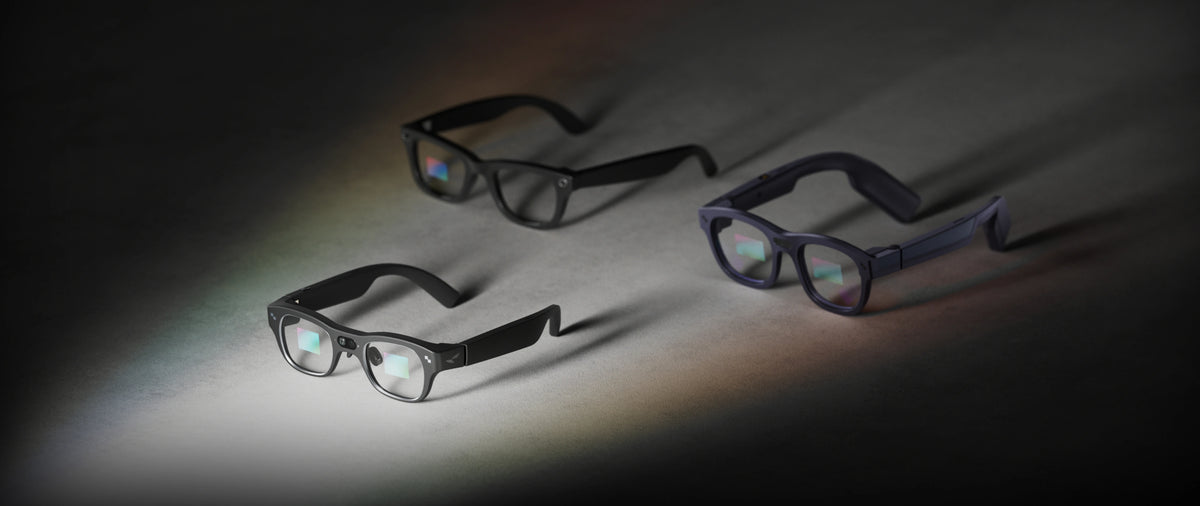
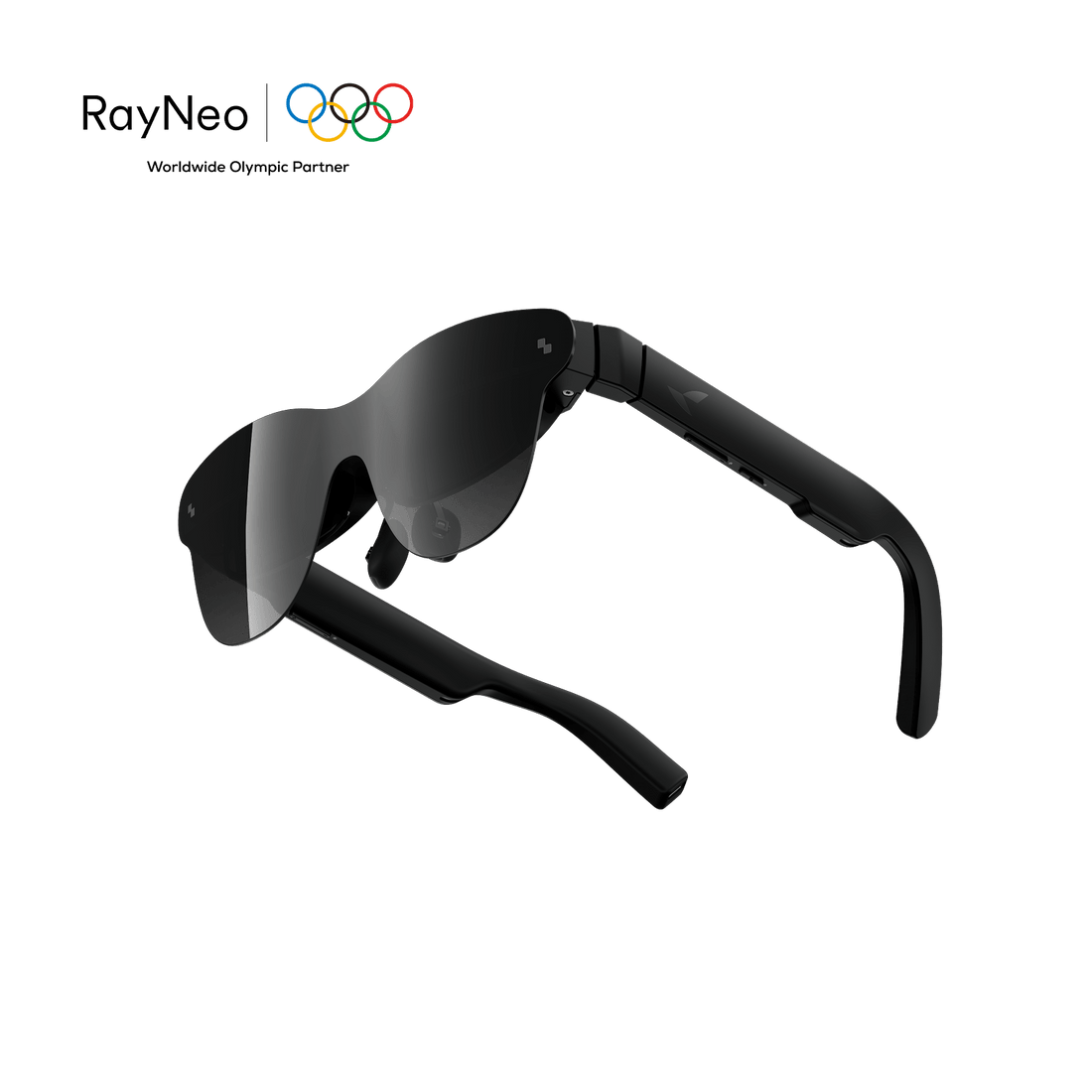
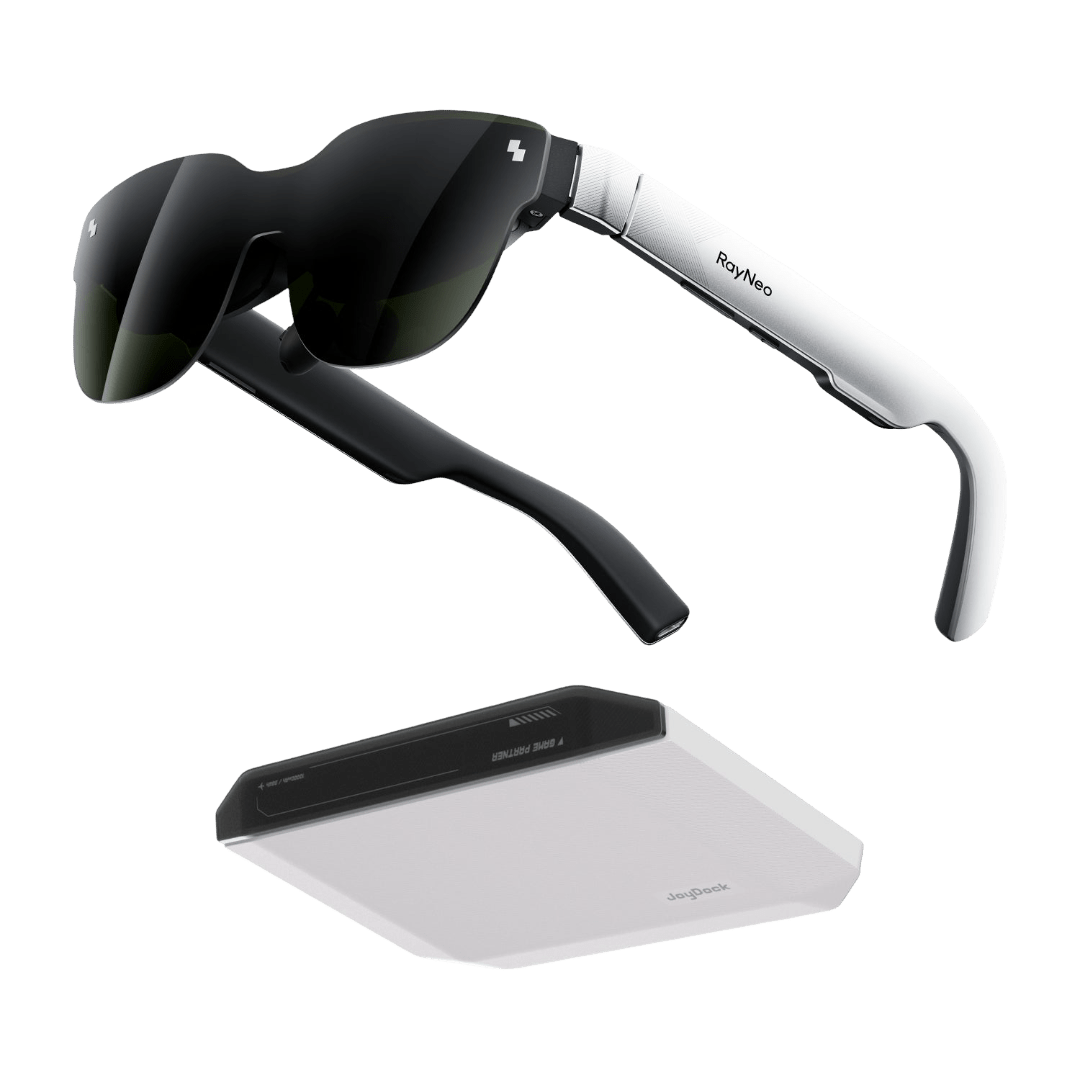
Display-only AR glasses, including RayNeo’s own Air 2s, Air 3s, Air 3s Pro, and Air 4 Pro, don’t have a camera at all, so none of the legal issues in this article apply to them. They’re built for projecting a screen, not for capturing footage of the people around you.
Video recording without sound is generally governed by a much looser standard in the US. If you’re filming in a public place where people don’t have a reasonable expectation of privacy, a sidewalk, a park, a store’s public areas, silent video recording is broadly treated as protected activity, similar to taking photographs. The Reporters Committee for Freedom of the Press describes this as a well-established right tied to the First Amendment, with narrower limits for private property, government facilities with posted restrictions, and situations covered by voyeurism-style statutes regardless of whether you’re capturing sound.
Add a microphone that’s actively capturing a conversation, and a completely different body of law takes over: wiretapping and eavesdropping statutes, which exist specifically to protect the privacy of spoken communication, not images. The federal Electronic Communications Privacy Act sets a floor of one-party consent, meaning at least one person in the conversation, which can be you, has to agree to the recording. States are free to require more than that floor, and twelve currently do.
In 38 states plus Washington, D.C., recording a conversation is legal as long as one participant consents, and that participant can be the person doing the recording. Twelve states go further and require consent from everyone being recorded:
| All-party consent states |
|---|
| California |
| Connecticut |
| Delaware |
| Florida |
| Illinois |
| Maryland |
| Massachusetts |
| Montana |
| New Hampshire |
| Oregon |
| Pennsylvania |
| Washington |
Source: Recording Law’s 2026 state-by-state guide, cross-checked against its wearable recording device guide.
A few of these states split the rule further depending on the situation, treating phone calls differently from in-person conversations, for example. The penalties behind these laws aren’t symbolic, either: Pennsylvania classifies an illegal recording as a third-degree felony that can carry up to seven years in prison, according to Recording Law’s guide.
Even in all-party consent states, the rule generally applies to what courts call a “confidential communication,” not to every sound your glasses happen to pick up. Under California’s Penal Code 632, for instance, a conversation only counts as confidential if a party has an objectively reasonable expectation that it isn’t being overheard or recorded, a standard set by the California Supreme Court in Flanagan v. Flanagan. A loud conversation in a crowded restaurant or at a public event is treated differently than a private exchange in someone’s home or office, though where exactly that line falls depends on the specific facts and the state involved.
Consent law is only one layer. Plenty of gyms, theaters, medical offices, and workplaces ban recording devices outright, independent of whether recording would otherwise be legal there, and camera glasses fall under those bans the same way a phone camera would. Some venues have started asking visitors to remove or cover camera-equipped glasses at the door for exactly this reason.
Private spaces with a strong expectation of privacy, bathrooms, changing rooms, locker rooms, carry a separate layer of legal risk on top of ordinary consent law: most states have voyeurism or intrusion statutes that restrict recording in those spaces regardless of whether audio is involved or whether anyone present would technically consent.
The consent framework described above is built around recordings that get saved, a video clip with an audio track sitting in your camera roll. Real-time features like live translation or a voice assistant that processes what someone is saying without saving a permanent file raise a question no court has directly settled: does capturing someone’s speech only for a few seconds, with nothing written to a file, trigger the same consent law as a saved recording? This article isn’t offering a legal conclusion on how that question would ultimately be decided. What it can say is the more cautious position, and the one worth following in practice until the law catches up: treat a live translation conversation the same way you’d treat a saved recording under your state’s consent rule, rather than assuming real-time processing is automatically exempt.
Here’s why that caution holds up. A microphone that’s actively capturing someone else’s speech is still capturing that person’s communication, even if the processing happens live and nothing gets saved afterward. Some state wiretapping statutes are written around the act of intercepting a communication, not narrowly around whether a permanent copy exists once the conversation ends, though how courts would apply that standard to real-time AI translation specifically hasn’t been tested. In a twelve-state all-party consent jurisdiction, that points toward getting agreement from the other person before relying on live translation in a private conversation, not toward assuming a lack of saved audio settles the question on its own.
This is the part of the privacy conversation that’s changing fastest, and it’s worth being precise about where things actually stand as of late August 2026.
There is currently no federal law in the US requiring wearable cameras, including smart glasses, to include a recording indicator light. Multiple 2026 smart glasses roundups and reviews note that most current camera-equipped models ship with one anyway, but that’s a voluntary design choice manufacturers can drop in a future model, not a legal requirement.
That’s starting to shift at the state level, though neither proposal has been signed into law yet:
SB 1130 is further along in the legislative process than HB 2603, but neither has cleared both chambers or been signed into law. If either bill passes, it would apply to devices sold or used in that specific state, not nationwide, and manufacturers would have to decide whether to build a compliant indicator into models sold there.
Since this is where the abstract legal framework meets an actual product, here’s what’s confirmed and what isn’t, based on RayNeo’s official X3 Pro product page as of August 2026.
| What matters | Confirmed |
|---|---|
| Visible camera lens | The 12MP camera sits in a visible housing along the browline rather than concealed behind the lens or hidden in the frame. |
| Outward-facing recording light | RayNeo’s published spec sheet doesn’t list a separate outward-facing indicator light as a documented feature. |
| Physical shutter or lens cover | The frame uses an open-lens design; RayNeo’s product page doesn’t describe a manual cap, shutter, or physical cover over the lens the way some laptop webcams include. |
| Audio captured with video | The device runs one 3-mic beamforming array for calls, voice commands, and video, rather than a separate microphone spec dedicated to video audio, so clips draw on that same array for sound. |
| Video-only recording (audio off) | Video capture pairs with the shared microphone array by default; RayNeo’s product page doesn’t describe a separate video-only mode that mutes audio while recording. |
| Recording consent law | No exception for eyewear. The same one-party or all-party consent rules described above apply to X3 Pro exactly as they would to a phone camera. |
The visible camera housing is a real, if partial, form of transparency: someone looking directly at the frame can generally tell there’s a lens there, which is a meaningfully different situation from a camera hidden entirely inside the frame. It isn’t the same thing as an active recording indicator, though, since a visible lens looks the same whether or not it’s currently capturing anything.
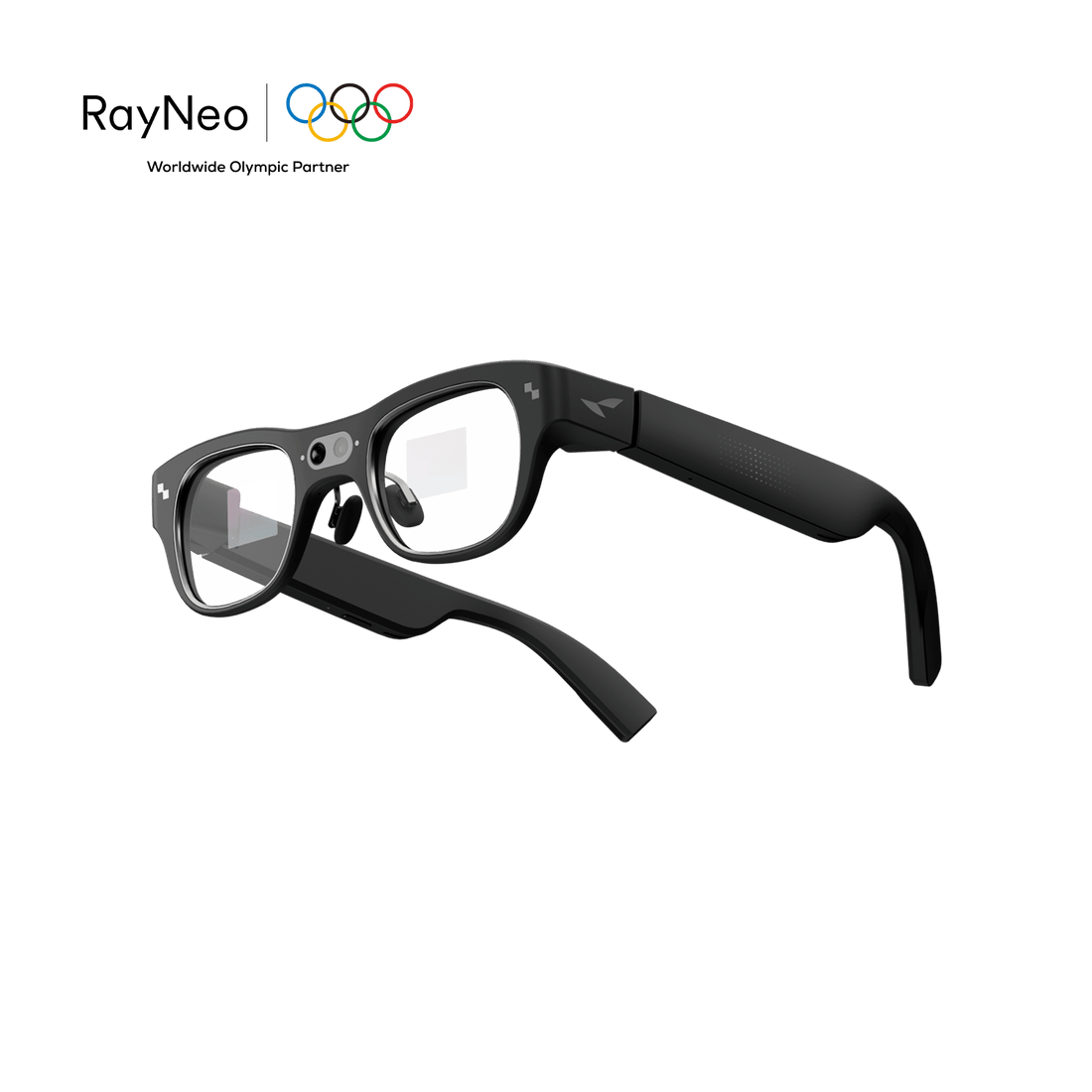
If a dedicated recording light, a physical way to block the lens without powering the device off, or a video-only mode that skips audio is a specific requirement for you rather than a nice-to-have, weigh that gap in what’s currently published for X3 Pro against how you plan to use the glasses.
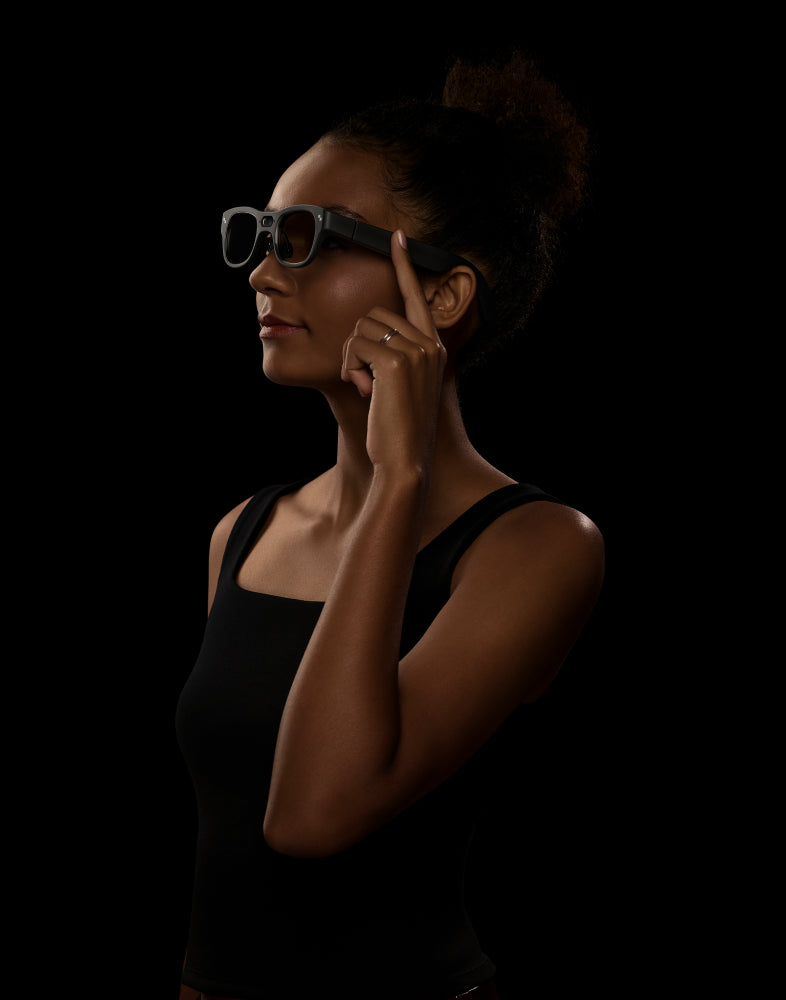
The temple arm carries touch controls for functions like playback and calls, built into the frame itself. The specific gesture for starting or stopping a recording is a detail worth checking in the in-box quick-start guide before you rely on it in the moment, since RayNeo hasn’t published exact gesture mapping for that action separately from the general control layout.
The one-party and all-party framework above is specific to the US. Outside the US, recording consent follows each country’s own wiretapping, data protection, and privacy statutes, and they don’t map cleanly onto that framework. Many countries with data protection regimes modeled on the EU’s approach also treat a recognizable face or voice captured on video as personal data, which can trigger separate obligations around why you’re recording and what you do with the footage afterward, on top of whatever consent rule applies to the recording itself.
If you’re traveling with camera glasses or live outside the US, checking your specific country’s rules on audio and video recording, both in public and in private settings, is worth doing before relying on the US-specific pattern described in this article.
If my glasses record video but the microphone is muted, do consent laws still apply?
Can I get in legal trouble for recording audio only, with no video at all?
Are RayNeo’s Air series glasses affected by any of this?
Will California’s SB 1130 or Pennsylvania’s HB 2603 make current smart glasses illegal to use once passed?
Does a visible camera lens count as giving legal notice that I’m recording?
The legal framework here doesn’t change based on which glasses you buy; it changes based on whether the device you’re wearing captures sound along with the picture, and where you’re standing when you use it. A camera-only or AR-and-camera model like RayNeo’s X3 Pro puts you in exactly the same legal position as recording with a phone: know your state’s consent rule, respect venue policies separately from the law, and don’t treat the absence of a blinking light as permission.
If avoiding this entire category of risk matters more to you than having a camera at all, RayNeo’s Air series sidesteps the question by not including one. If the camera and audio combination is what you actually need, for capturing conversations, tutorials, or first-person video, X3 Pro currently discloses a visible lens and a shared microphone array for calls and video, but not a dedicated recording indicator, a physical way to cover the lens, or a video-only mode that skips audio. That’s the specific gap to weigh, not a reason to assume the device is any riskier to use responsibly than a phone camera, just a reason to go in with accurate expectations about what it does and doesn’t signal to the people around you.
For current specs, see the RayNeo X3 Pro product page. For a camera-free alternative, see the RayNeo Air 3s product page. Before your next recording, look up the one-party or all-party consent rule in your own state using the sources below, since that’s the detail that actually determines what’s legal where you live, not which glasses you’re wearing.
Sources





Share:
Which AI Glasses Are Available With Prescription Lenses? Every RayNeo Model, Compared
Smart Glasses With Prescription Lenses: Are They Actually Comfortable for Daily Wear?