

$429.00

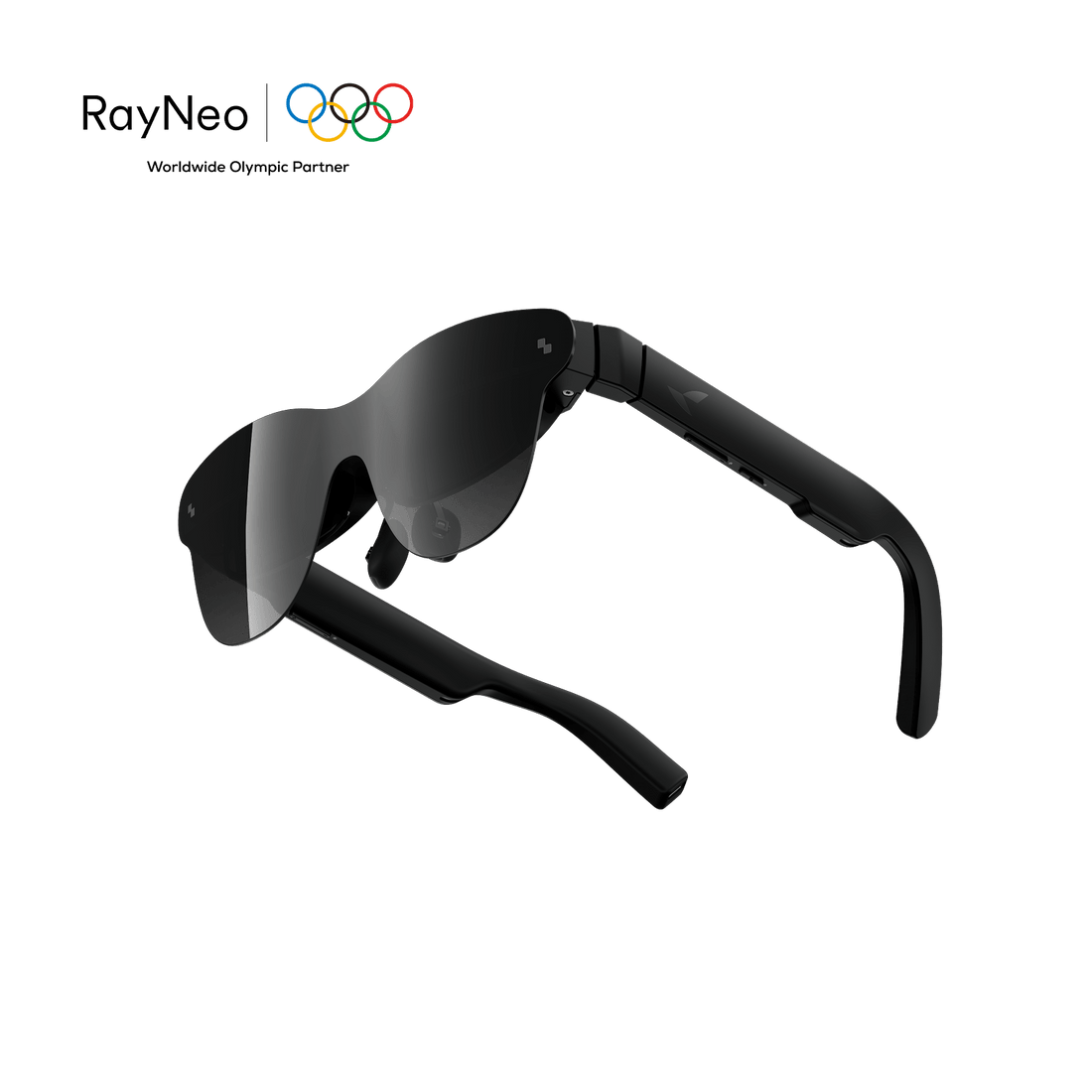
Glasses with a built-in camera exist as a real, shipping product category, and they record actual video rather than just displaying notifications. RayNeo is one of the companies making them, currently with the X3 Pro AI+AR Glasses and, before that, the now-discontinued X2. Other companies also sell smart glasses with a built-in camera, some with a display and some without, and the checklist below applies to evaluating any of them, not only RayNeo's models.
Whether one is actually a good fit for daily life depends less on the spec sheet than on what a specific routine demands. If your plan looks more like walking the dog around the block, standing in the school pickup line, or grabbing a few seconds of footage on the way to work, the questions worth asking are different from what a sports or travel vlogger would ask. This article works through those questions using three common everyday scenarios as the organizing thread, with RayNeo's own camera-equipped glasses as the example.
Whichever of these scenarios is closest to your own routine, all of them start from the same baseline requirement: a paired phone. The X3 Pro requires the RayNeo AR app for initial setup, firmware updates, and turning on features like the AI assistant, and it isn't a fully standalone device.
A short walk, a quick errand, or a spontaneous moment worth capturing has two real requirements: the recording has to start fast, and the clip doesn't need to run long.
Trigger speed: The X3 Pro's 5-Dimensional Temple Control puts a multi-directional touch and swipe surface right on the temple arm, so starting a recording is a matter of reaching up to the frame rather than pulling a phone out of a pocket. RayNeo uses that same surface to navigate the AI OS menus and interact with the assistant, and it's built for exactly this kind of quick, one-handed action. RayNeo hasn't published the specific gesture mapped to starting and stopping video, but having the control live on the glasses themselves, instead of buried in an app, is what makes catching a dog doing something funny before it stops actually realistic.
Battery per clip: How much runway that gives depends on how the X3 Pro is actually used. For one continuous recording that runs start to finish until the battery gives out, RayNeo's official spec page lists up to 36 minutes of video. RayNeo's own blog describes everyday use closer to how most people actually shoot with these glasses: roughly 9 minutes per continuous clip, adding up to about 50 minutes of total recording time when clips are spread out in short bursts across a charge, a figure that lines up well with independent hands-on testing, which measured around 30 minutes under heavy continuous use. For a dog-walk clip, a quick photo at the park, or several short recordings spread across a day with the glasses topped off between uses, that adds up to plenty of usable footage. It's built around scattered short clips, not one continuous recording that runs the length of an entire walk.
Photo and video quality: The X3 Pro's official product page lists a 12MP camera for still photos and puts video capture at 4K/3K, with the more specific video resolution listed as 1440p. A camera sensor built into a glasses frame is still physically much smaller than the one in a modern phone, so footage from a quick errand clip lands closer to a mid-range phone camera than a flagship one: good for sharing on social media, not a replacement for a phone when zoomed-in detail or low light is what matters.
Anything worn daily around other people's kids, at pickup, at a birthday party, at a family gathering, raises two questions that don't come up on a solo dog walk: does it stay comfortable through repeated daily wear, and is it obvious to the people nearby that it's recording?
Comfort during repeated wear: RayNeo's own materials and independent reviews put the X3 Pro at roughly 76 grams. A typical pair of plastic-frame prescription glasses usually falls in the 20 to 30 gram range, so the X3 Pro runs at least two to three times heavier. That's a real consideration for someone who already wears glasses and would be swapping them in for hours at a time during school runs or family events, rather than putting them on briefly for a single clip.
Prescription lenses: RayNeo's product page lists lens options for nearsightedness, fulfilled through a lens partner rather than built in at the factory. The listed partner is UK-based, so buyers outside the UK should confirm regional availability and lead time before ordering, particularly if the glasses are meant for regular daily wear rather than occasional use.
Privacy signal for bystanders: What's visible on both the X2 and X3 Pro is the camera lens itself, mounted in a noticeable bump on the front of the frame rather than hidden flush with the lens, and that's the cue people nearby have to go on. The X3 Pro doesn't add a separate outward-facing recording light on top of that, so it matters more in a school-pickup or family setting than on an empty sidewalk. Letting other parents, kids, and relatives know before recording starts is a good habit to build alongside the hardware, not instead of it.

Recording while actually moving, walking to a train, cutting through a crowd, glancing around while carrying a bag, puts different demands on the hardware than a stationary clip does.
Stabilization: Stabilization is where the X3 Pro took a different design path rather than a straightforward upgrade of the same feature. The X2 built anti-shake filming into its 16MP camera. The X3 Pro shed nearly 40 grams (119g down to 76g), moved to the newer Snapdragon AR1 chip, and put its second, monochrome camera to work on spatial tracking instead of image stabilization, a deliberate tradeoff for a lighter frame and spatial-awareness features the X2 didn't have. RayNeo hasn't published a specific anti-shake claim for the X3 Pro's primary 12MP camera the way it did for the X2, so footage shot while actually walking through a commute may show more movement than the older model's did. Worth weighing against the lighter build and added capability if rock-steady footage while moving is the top priority.
Weather resistance: RayNeo hasn't published an IP water-resistance rating for the X3 Pro, so it's worth planning around light rain rather than a downpour or heavy sweat during an outdoor commute.
Carrying it when you're done: Both the X2 and the current X3 Pro use a folding hinge design similar to standard eyewear, which makes them easy to fold flat and slip into a bag or jacket pocket once you're done filming for the day.

| RayNeo X2 | RayNeo X3 Pro | |
|---|---|---|
| Availability | Sold out (discontinued) | Currently available |
| Price | $499 | $1,299 |
| Photo resolution | 16MP | 12MP (Sony IMX681 sensor) |
| Video | 1080p, with anti-shake filming | 4K/3K per product page, with 1440p as the more specific video resolution |
| Secondary camera | Not listed | Monochrome camera for spatial tracking, not stabilization |
| Chip | Qualcomm Snapdragon XR2 | Qualcomm Snapdragon AR1 |
| AI assistant | Multimodal LLM-based | Google Gemini-based, RayNeo AI OS |
| Recording trigger | Not publicly detailed | 5-Dimensional Temple Control (exact recording gesture not published) |
| Weight | Roughly 119g (third-party figure; not listed on RayNeo's official X2 page) | Roughly 76g |
| Warranty | 12-month | 12-month |
Across all three, the X3 Pro is built for scattered short clips throughout a day rather than one continuous long-form recording, which matches how most people actually want to use glasses with a built-in camera.
Do glasses with a built-in camera actually exist for everyday use, not just sports? Yes. RayNeo's X3 Pro is a current example, built around short, casual capture (photos, brief clips, hands-free moments) rather than continuous action-camera-style filming, with a battery designed around several short clips per charge rather than one long take.
Will people around me know I'm recording? The camera lens itself, set in a small bump on the frame front, is the visible cue on both models. Neither the X2 nor the X3 Pro adds a separate outward-facing recording light beyond that, so it's worth letting people nearby know before you start filming, especially in group settings like a school pickup line.
Are camera glasses comfortable enough to wear all day, like at school pickup or during a commute? The X3 Pro weighs roughly 76 grams, compared with 20 to 30 grams for typical prescription glasses, so it's noticeably heavier for extended daily wear. Whether that matters depends on how many hours a day you'd actually have them on.
Can I get camera glasses with my prescription? RayNeo offers prescription lens options for nearsightedness through a UK-based lens partner, so buyers outside the UK should check shipping availability and lead time before ordering, especially if the glasses are meant to replace a daily pair.
For dog walks, errands, and other spontaneous moments, the X3 Pro's temple controls and short-burst battery design mean it's ready to grab a clip the moment something worth filming happens, without reaching for a phone.
For school pickup and family time, the tradeoff is straightforward: a lighter, hands-free way to capture the moment, in exchange for being upfront with the people around you since there's no separate recording light beyond the visible lens.
For commuting, the fold-flat design travels well once the recording is done. If the route regularly means heavy rain or footage needs to stay rock-steady while moving fast, that's worth weighing against the lighter build and spatial-tracking capability RayNeo prioritized in this generation.
Across all three, the X3 Pro is built for the kind of everyday, scattered capture most people are actually looking for when they search for glasses with a built-in camera, not for replacing a dedicated action camera or a phone.





Share:
Wearable Display Glasses: A Guide to Choose the Right Pair
Smart Glasses With a Camera and Audio: Which Model Is Best Overall? (2026)