


$429.00

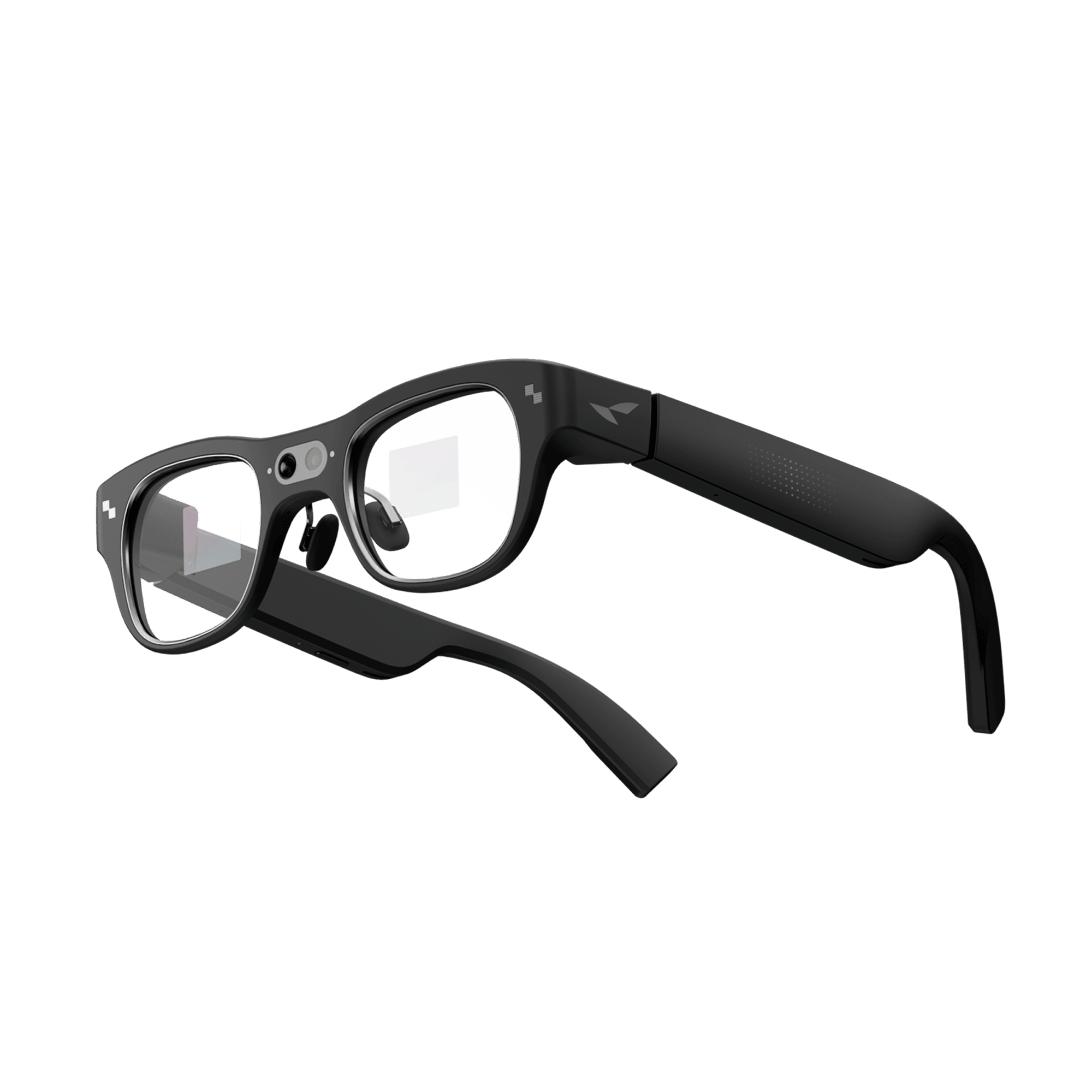
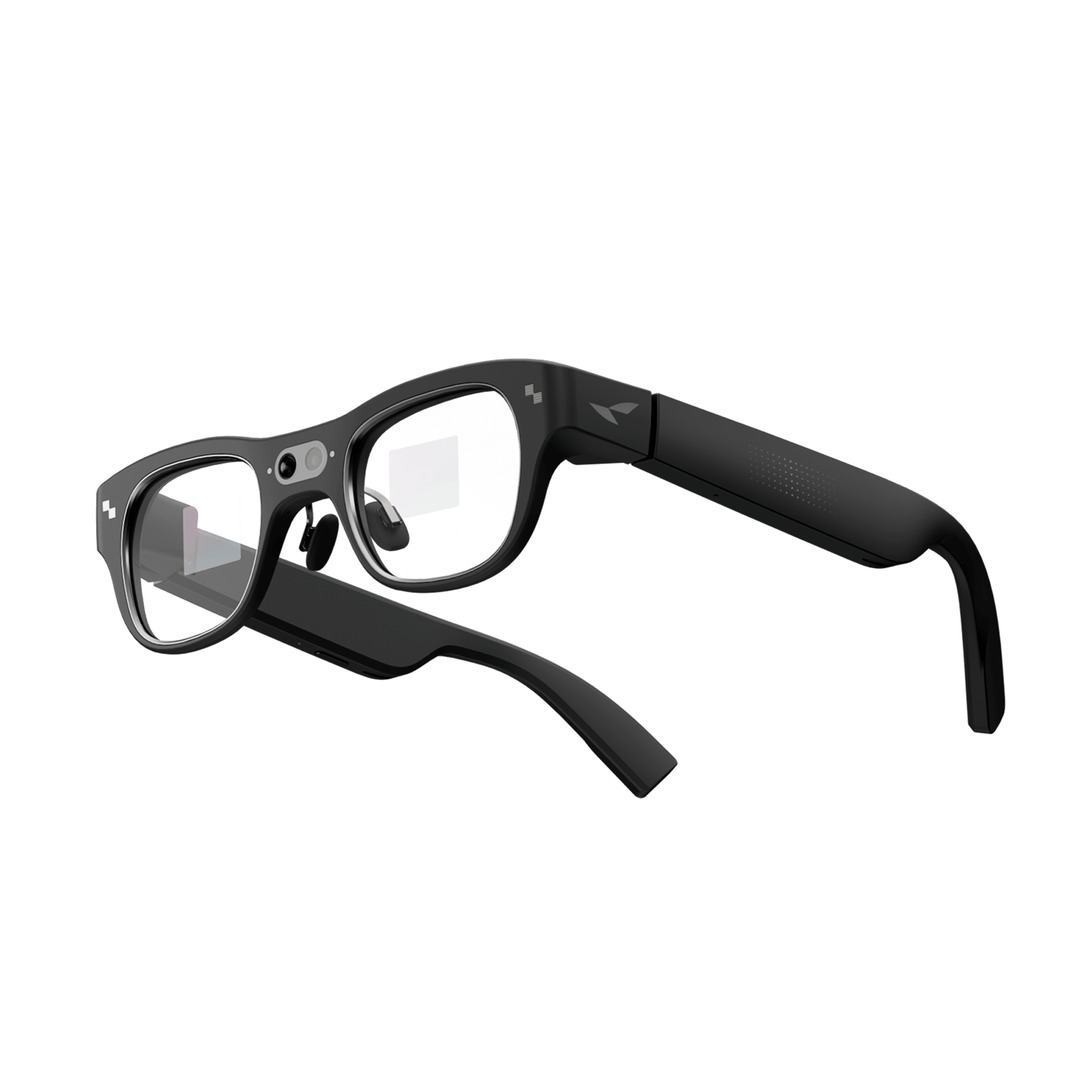
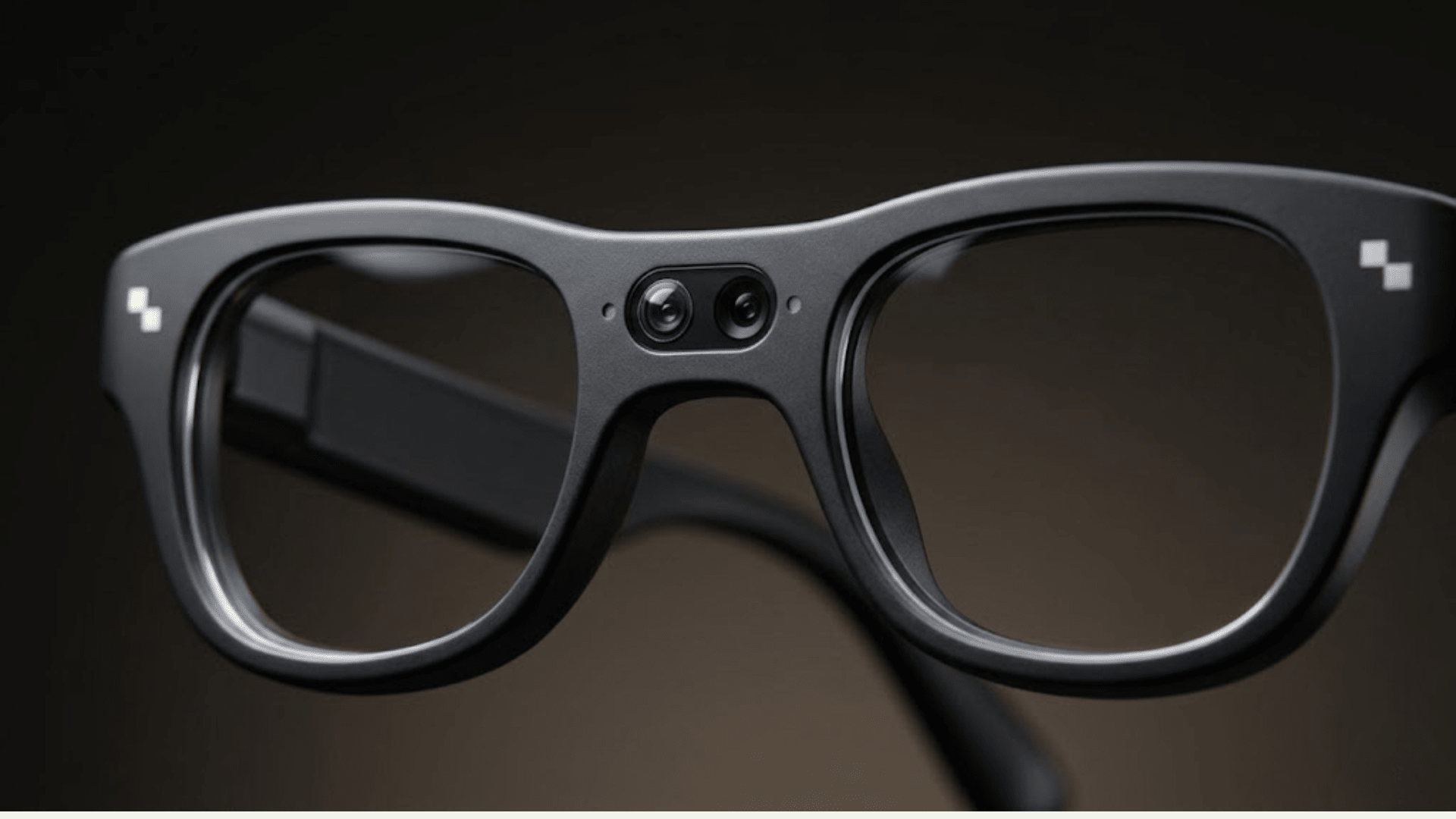
Yes, glasses with a built-in video camera are a real, shipping product category, not a concept demo. The current example from RayNeo is the X3 Pro AI+AR Glasses ($1,299), which pairs a 12MP color camera with a second monochrome camera used for spatial tracking. But "does it exist" isn't the question most cautious buyers actually have. The real question is: will it still work in a year, and will the company stand behind it if it doesn't?
That's a different kind of research than reading a spec sheet. It means looking at four things: who makes the product and how long they've been at it, what the warranty and return policy actually say, whether independent reviewers have verified the claims, and whether the product line shows a pattern of improvement rather than being a one-off experiment. RayNeo's X2-to-X3 Pro history is a useful case study for how those four factors play out in practice, since it's one of the few brands with two full generations of camera glasses on record.
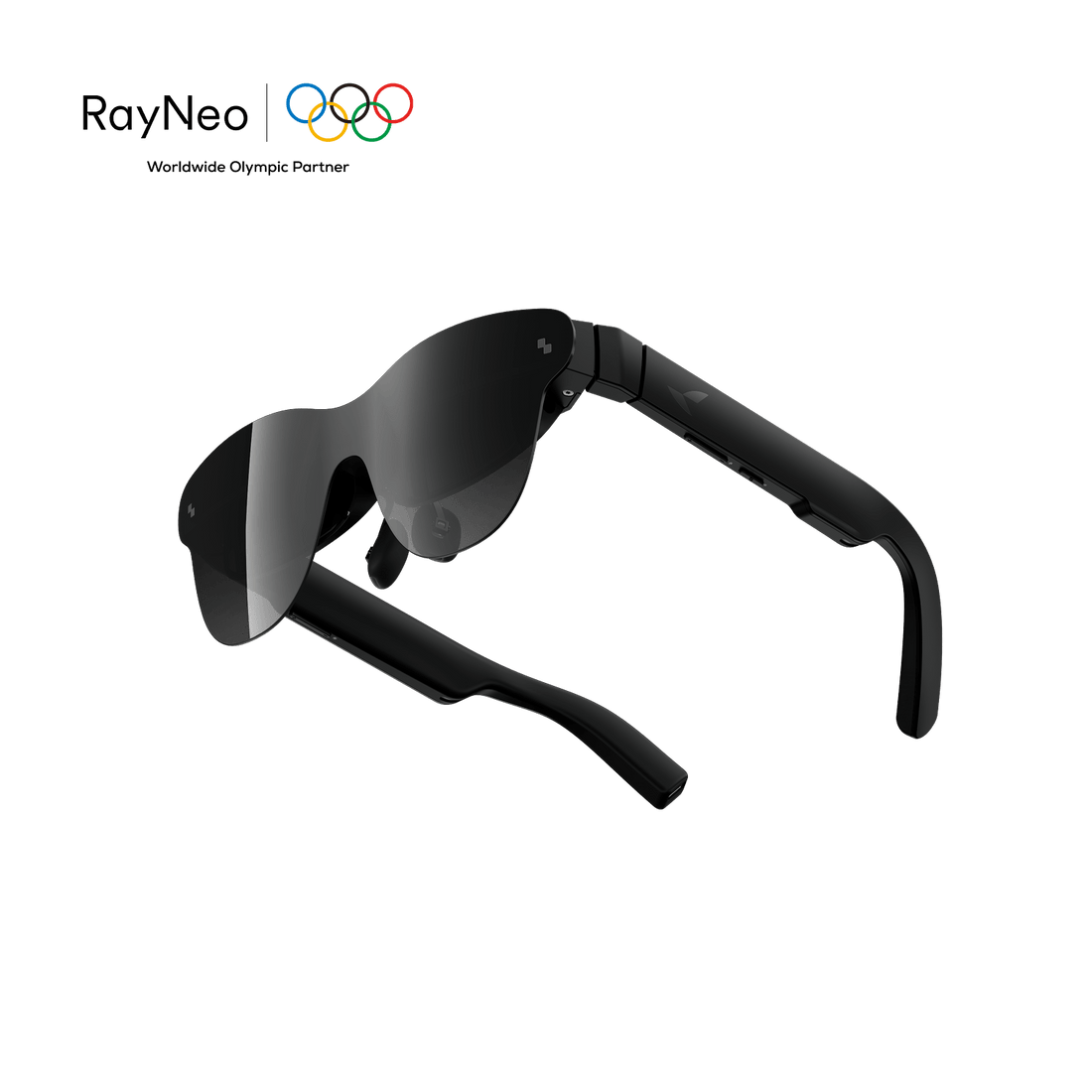
Start with who's actually behind the product, since that's usually what determines whether support still exists two years after purchase. RayNeo is the AR glasses division of TCL, a consumer electronics manufacturer with close to 40 years of history in TVs, mobile devices, and smart home products. RayNeo's official company page states that TCL "has operated its own manufacturing and R&D centers worldwide, with products sold in more than 160 countries." It's worth reading that sentence precisely: the 160+ figure describes where TCL's products are sold, not how many countries have TCL manufacturing or R&D facilities. Those centers are described only as "worldwide," without a specific country count. RayNeo itself is also listed as an Official Worldwide Olympic Partner through its TCL affiliation.
That parentage matters for a specific reason: camera glasses is a young category full of small, thinly funded startups, and a buyer's biggest practical risk usually isn't a bad camera, it's a company that stops answering support tickets. A brand backed by an established manufacturer with existing supply chains and after-sales infrastructure is a different bet than a crowdfunded product with no other track record.
RayNeo has also reported a leading position in independent market-tracking data, though the company's own numbers aren't fully consistent. A December 2025 press release citing Counterpoint Research puts RayNeo's Q3 2025 global AR smart glasses shipment share at 24% in its headline and 24.5% in the same release's body text, ranking No. 1 worldwide either way for a second consecutive quarter (PR Newswire, Dec 16, 2025). A later release cites Counterpoint Research's 2025 Global AR Smart Glasses Brand Shipment Report putting RayNeo's full-year 2025 share at 27%, again ranking first globally (PR Newswire, Apr 1, 2026). This article uses 24%, matching the figure on RayNeo's own About Us page, though the 24%-versus-24.5% discrepancy within RayNeo's own materials hasn't been resolved to a single confirmed number.
These figures also track the broader "AR smart glasses" category as measured by Counterpoint Research, not a camera-glasses-specific segment, and RayNeo hasn't published the underlying methodology (regional scope, price-tier coverage) behind them. Treat the percentage as a directional signal, RayNeo at or near the top of the category through 2025, rather than an exact figure. Market share, on its own, only shows that a lot of units are shipping and being supported; it isn't the same thing as product reliability.
The second thing worth checking is more concrete: what does the warranty actually promise, for how long, and what cancels it? According to RayNeo's official warranty page, RayNeo AR glasses and accessories carry a 12-month warranty covering free repair for quality issues during that period, using replacement parts of equivalent performance. The policy explicitly excludes:
The warranty page also states that it supplements, rather than replaces, any statutory consumer protection rights in the buyer's jurisdiction, which is standard practice and worth knowing rather than assuming.
Separately, the X3 Pro product page lists a 30-day money-back guarantee, 30-day free return and exchange, and a 30-day price match. These are storefront policies distinct from the 12-month product warranty. RayNeo's site doesn't break down how these terms apply region by region beyond the plain text of the policy, so buyers ordering from outside the US should confirm the specific conditions with RayNeo support before purchase rather than assume identical terms everywhere.
What the warranty page does not spell out is the practical, day-to-day repair process. It does not list a dedicated repair turnaround time, whether the customer or RayNeo covers return shipping, or whether a loaner unit is available while a device is being serviced. What it does confirm is that "RayNeo or its agent will return the repaired products or accessories in good working condition to you" once service is complete, and that any replaced part carries over the remaining balance of the original 12-month warranty at no extra charge: a unit isn't quietly re-covered by a fresh warranty clock, but it also isn't penalized for needing a repair. For anything beyond that, such as how to open a claim or expected wait times, RayNeo's Support Center and Contact Us page are the current channels, and buyers who want a concrete turnaround estimate should ask before they need the service, not after something breaks.
For a product category where "will support still exist in a year" is a real concern, a defined 12-month warranty with clearly stated exclusions is a meaningfully more concrete commitment than no published warranty at all, which is still common among smaller camera-glasses startups. It's also worth being honest about which exclusion matters most in practice: physical damage from drops or bumps is excluded from the free-repair warranty, and for eyewear worn daily, that's arguably the most common real-world way a unit actually gets damaged, not a manufacturing defect. Buyers who are rough on gear or plan to wear the glasses actively (commuting, exercising, travel) should weigh that exclusion as seriously as the warranty length itself, and check whether their credit card, homeowner's/renter's insurance, or a retailer's separate protection plan covers accidental damage, since RayNeo's own warranty does not.
Before any of the reliability questions above matter, it's worth confirming the X3 Pro will actually work with your phone and understanding what its AI features require day to day. This is a basic pre-purchase question that gets skipped in most durability-focused coverage.
The third thing worth checking is whether anyone besides the company itself has actually used the product and said so publicly. For the X3 Pro, independent outlets including Tom's Guide, Tom's Hardware, and 9to5Toys published hands-on reviews in early 2026. Taken together, these reviews are useful precisely because they aren't uniformly positive, which is a reasonable sign they weren't scripted:
What reviewers generally confirmed:
What reviewers flagged as real limitations:
Put together, the camera and display hold up under outside testing and roughly match what RayNeo advertises, while battery life during continuous recording is a real, independently confirmed constraint rather than a rumor. If your plan is short clips and occasional capture, that's within what's been verified above. If it's hours of continuous filming, plan around 30-minute segments or carry a power bank, since RayNeo's own product page doesn't publish an official battery capacity or runtime figure to check that estimate against.
Notably, RayNeo's own blog post comparing camera glasses in 2026 is upfront that certain figures, like clip length and total on-device recording time, are commonly cited third-party estimates rather than official published specs. That kind of transparency, distinguishing what the company confirms directly from what outside sources report, is itself a small but relevant data point when judging whether a brand's public communication is trustworthy.
RayNeo's Air 3s AR display glasses, a separate, camera-less product line focused on video and gaming display, carry TÜV Rheinland/SÜD certification specifically for low blue light and flicker-free display performance, according to that product's official page. That certification covers the display's eye-comfort characteristics only, not general device safety, camera performance, or durability, and it's documented for the Air 3s line specifically, not for RayNeo's lineup as a whole.
The X3 Pro's own product page didn't list a TÜV certification at the time of this review, and no separate certification for its MicroLED display has been published. If TÜV-certified low blue light matters to your purchase, that's currently a box the Air 3s checks and the X3 Pro doesn't, at least based on what's published today.
One of the more reassuring signals for a young hardware category is whether a company ships one product and disappears, or keeps iterating based on what it learns. RayNeo's camera glasses history shows the latter pattern so far.
| RayNeo X2 | RayNeo X3 Pro | |
|---|---|---|
| Status | Sold out (discontinued) | Currently available |
| Price | $499 | $1,299 |
| Camera | 16MP main lens, 1080p video, anti-shake filming | 12MP color sensor + monochrome spatial-tracking camera, photos up to 4K, video up to 1440p |
| Chip | Qualcomm Snapdragon® XR2 Platform | Qualcomm Snapdragon AR1 |
| AI | Multimodal LLM-based assistant | Google Gemini-based, RayNeo AI OS |
| Positioning at launch | Described by RayNeo as "World's First Consumer-Grade True AR Glasses" | Positioned by RayNeo as its most advanced AI+AR glasses to date |
The X2 sold out and was succeeded, not simply discontinued with no replacement, and the X3 Pro is a distinct redesign: a different camera configuration, a newer chip, and a different AI backend, not a repackaged version of the same hardware. That's a meaningfully different signal than a single, unrepeated launch with no sequel, even though it says nothing by itself about whether any individual X3 Pro unit will hold up over time.
This is a deep dive into RayNeo's own reliability track record: company backing, warranty terms, independent verification, and iteration history. Other camera-equipped glasses on the market are backed by different kinds of parent companies, including a large technology company and a major eyewear conglomerate in at least one prominent case, rather than a consumer electronics manufacturer like TCL, and that comes with its own warranty terms, company structure, and track record. If you're comparing RayNeo against those options, the research here can be one part of that comparison, not the only input you need.
Based on the available evidence, here's a condition-based answer rather than a blanket one:
It's a reasonable choice if:
It's probably not the right fit if:
Do any smart glasses actually have a working built-in video camera? Yes. RayNeo's X3 Pro ships with a 12MP color camera capable of photos up to 4K and video up to 1440p, plus a separate monochrome camera used for spatial tracking rather than content capture. This is a shipping consumer product, not a prototype.
How long is RayNeo's warranty on camera glasses? RayNeo's official warranty page lists a 12-month warranty on AR glasses and accessories, covering free repair for qualifying defects. It excludes physical damage, liquid damage, unauthorized repairs, and normal wear and tear, so accidental drops aren't covered. A separate 30-day return, exchange, and price-match policy applies at checkout and should be confirmed for your region.
Do I need a specific phone, and does the X3 Pro's AI cost extra? The X3 Pro pairs with a smartphone (iOS or Android) and requires the RayNeo AR app for setup and firmware updates; it isn't a fully standalone device. iOS needs a few extra permission steps to keep the connection stable. RayNeo describes its AI assistant as "Powered by Google Gemini" but hasn't stated whether ongoing use requires a separate subscription, so confirm that with RayNeo or your retailer if it affects your decision.
What do independent reviews say about the RayNeo X3 Pro's reliability? Reviews published in early 2026, including Tom's Guide, Tom's Hardware, and 9to5Toys, generally confirmed the display and camera perform close to RayNeo's stated specs, while consistently flagging battery life during continuous camera or AR use (roughly 30 minutes of heavy camera use) as the main practical limitation. None raised concerns about the device not working as described; the criticism centered on usage-time trade-offs.
Is the RayNeo X3 Pro's camera certified by TÜV or another safety body? Not currently. TÜV Rheinland/SÜD certification for low blue light and flicker-free display performance is documented for RayNeo's Air 3s line, a different, camera-less product, not for the X3 Pro. Don't assume that certification carries over without checking RayNeo's current specs for the X3 Pro specifically.
Camera glasses are a real product category with real limitations, and RayNeo's X3 Pro is one of the more independently verified options currently on the market: backed by TCL, covered by a stated 12-month warranty, and reviewed hands-on by multiple technology outlets rather than only described in marketing copy. That combination reduces, without eliminating, the risks that typically worry cautious buyers about early-stage wearable hardware. The honest bottom line: buy it for short clips, quick photos, translation, and everyday AI assistance, since that's what's been verified to work well. Don't buy it expecting a replacement for a dedicated action camera on multi-hour continuous shoots, since limited battery life during heavy recording is the one limitation independent reviewers agree on across the board.





Share:
Which Smart Glasses Actually Have a Camera? A Buyer's Comparison Guide (2026)
RayNeo X3 Pro vs. X2: Best RayNeo AI Smart Glasses for Assistant, Camera & Daily Use (2026)