

$429.00

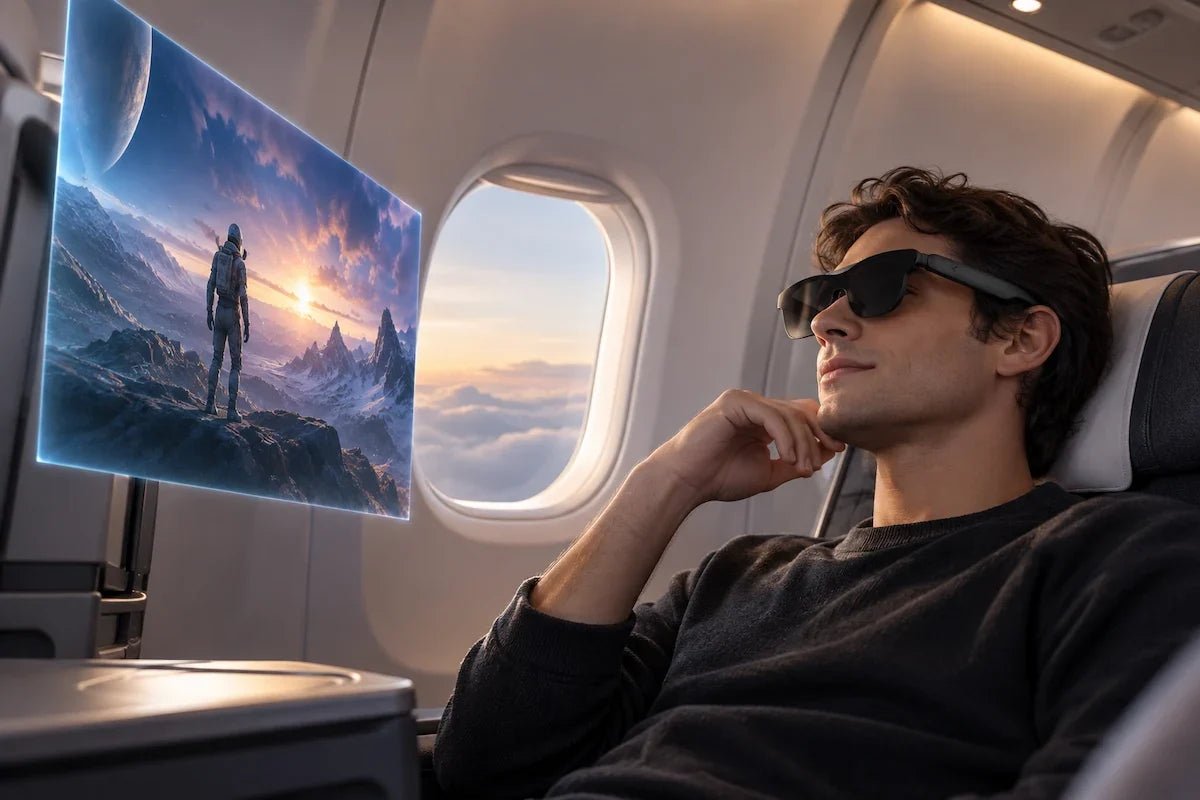
If you are considering wearable displays, you likely want a portable big screen for productivity or entertainment without carrying bulky monitors. This guide focuses on how our current RayNeo lineup of AR and AI glasses addresses this specific need, helping you decide which model matches your routine.
Whether these devices are a worthwhile investment depends entirely on your daily habits. To help you make an informed decision, let's explore how these glasses fit into a real-world workflow and outline the key factors you should weigh before purchasing.
When deciding if an AR setup is worth it, you have to look at what you already own. Modern AR display glasses like our RayNeo GT series act as advanced external monitors and do not have built-in batteries. They draw power directly from your connected smartphone, tablet, or laptop to achieve a lightweight design for comfortable extended wear.
This means your viewing time depends on your host device, which will consume its own battery during your viewing sessions. You will also need to verify compatibility. While newer devices like the iPhone 15, 16, and 17 series support direct connections, models like the iPhone 16e, 17e, and iPhone Air do not support USB-C video output, and we don't currently offer a confirmed adapter for them. For Android phones and Windows laptops, check if your specific device supports video output via USB-C DisplayPort Alt Mode.
Another factor in your purchase decision is where you plan to use the glasses. Our displays feature an open-ear acoustic system built into the temples, delivering spatial sound while keeping you aware of your surroundings.
If you often work in very quiet public spaces like a library, the sound might be slightly audible to someone sitting right next to you. If your routine demands complete audio isolation or total privacy for sensitive meetings, you can connect wireless earbuds to your host phone or laptop instead of relying on the open-ear speakers.
Airplanes and trains are perfect environments to maximize the value of wearable displays. Instead of trying to work or watch a movie on a cramped tray table with a laptop, you can lean back in your seat and turn that space into a private cinema with a large virtual screen.
If you work from coffee shops or a minimal home office setup, buying an AR display is often more practical than carrying multiple monitors. Mirroring your laptop screen onto a large private display gives you far more visual space to work with than a cramped laptop panel alone, without needing to carry a second monitor.
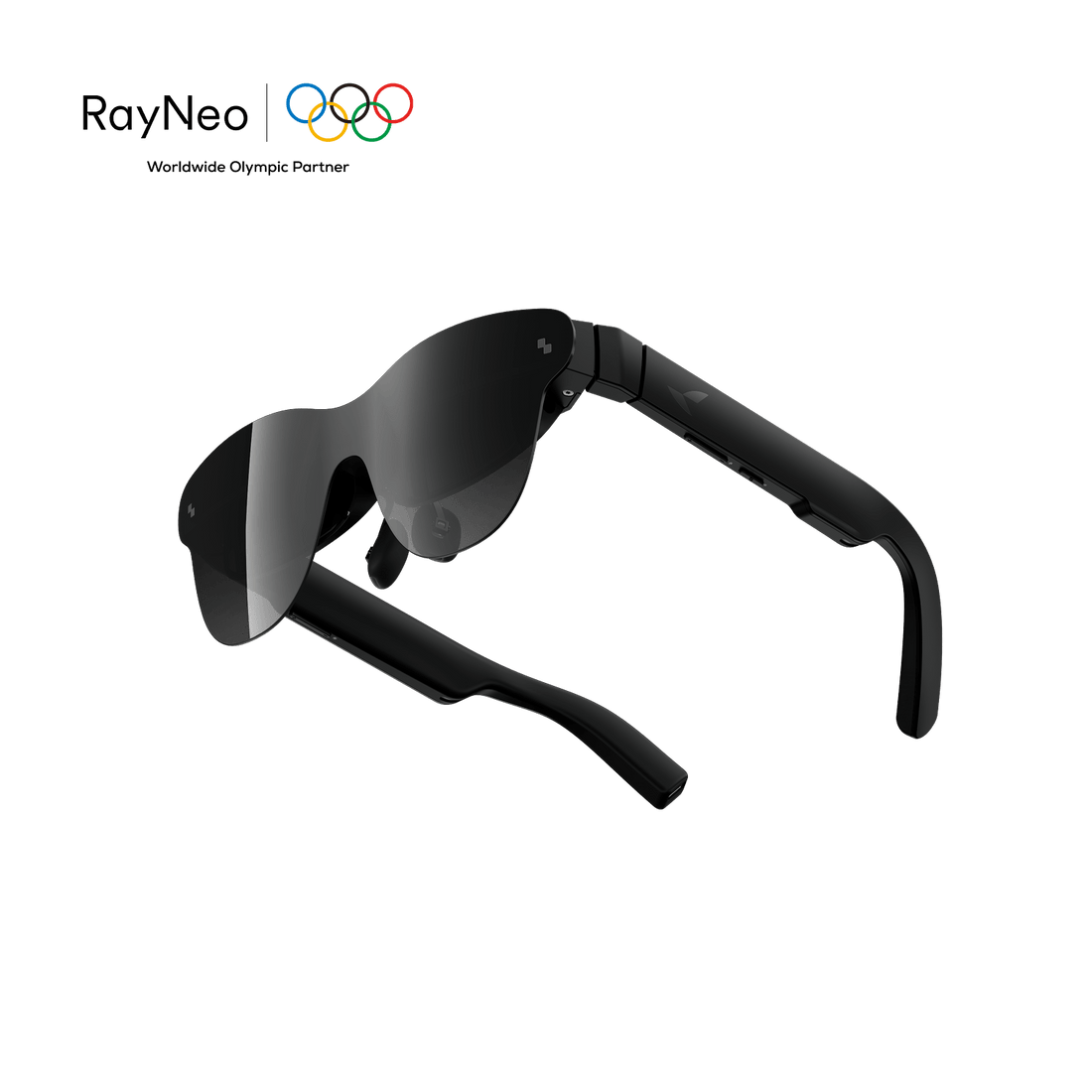
If you are ready for a wearable display, the RayNeo GT Max ($399, prices subject to change) is our premium choice. It weighs just 78g and offers an expansive 59-degree field of view. To ensure visual clarity, it comes in three IPD-matched sizes (Small, Medium, and Large) selected at purchase.
The display reaches 1200 nits of brightness in non-Pinned Mode, meaning your virtual screen remains clear even in well-lit rooms. Note that its 2D-to-3D conversion feature is exclusively available when connected to an iPhone 15, 16, or 17 series device. The GT Max is an ideal investment if you want the largest possible screen and a personalized optical fit.

If you prefer an even lighter frame and do not require personalized IPD sizing, the RayNeo GT ($299) delivers similar core technology. It weighs only 68g and uses a fixed 64mm IPD, trading some field of view for a more streamlined profile.
Like the Max, the GT model reaches 1200 nits of brightness in non-Pinned Mode and draws power directly from your connected host device. This model is the smartest choice for those prioritizing the lightest possible wearable without needing the absolute largest virtual screen size.

If your main goal is staying connected with notifications or translations rather than watching a large virtual screen, AR displays might not be the right purchase. In this case, our AI glasses are a better fit. The RayNeo iO AI Glasses ($449) weigh just 33g and are designed entirely without a camera.
Unlike the GT series, the iO features its own 240mAh battery, providing up to 2 days of battery life for all-day wear without a continuous wired connection.
They focus on audio productivity with live translation across 55 languages and a built-in voice assistant. The iO is a great buy for staying organized on the go, but you should skip it if you are looking for a monitor replacement to watch movies.

Are AR glasses worth buying if I wear prescription lenses? Yes, but you will need to factor in the cost of a custom solution. For the RayNeo GT series, we partner with Lensology to offer custom prescription inserts starting at £95. These inserts clip into place inside the AR glasses. For the RayNeo iO, we offer a dedicated RayNeo iO AI Glasses with Prescription Lenses bundle starting at $608.
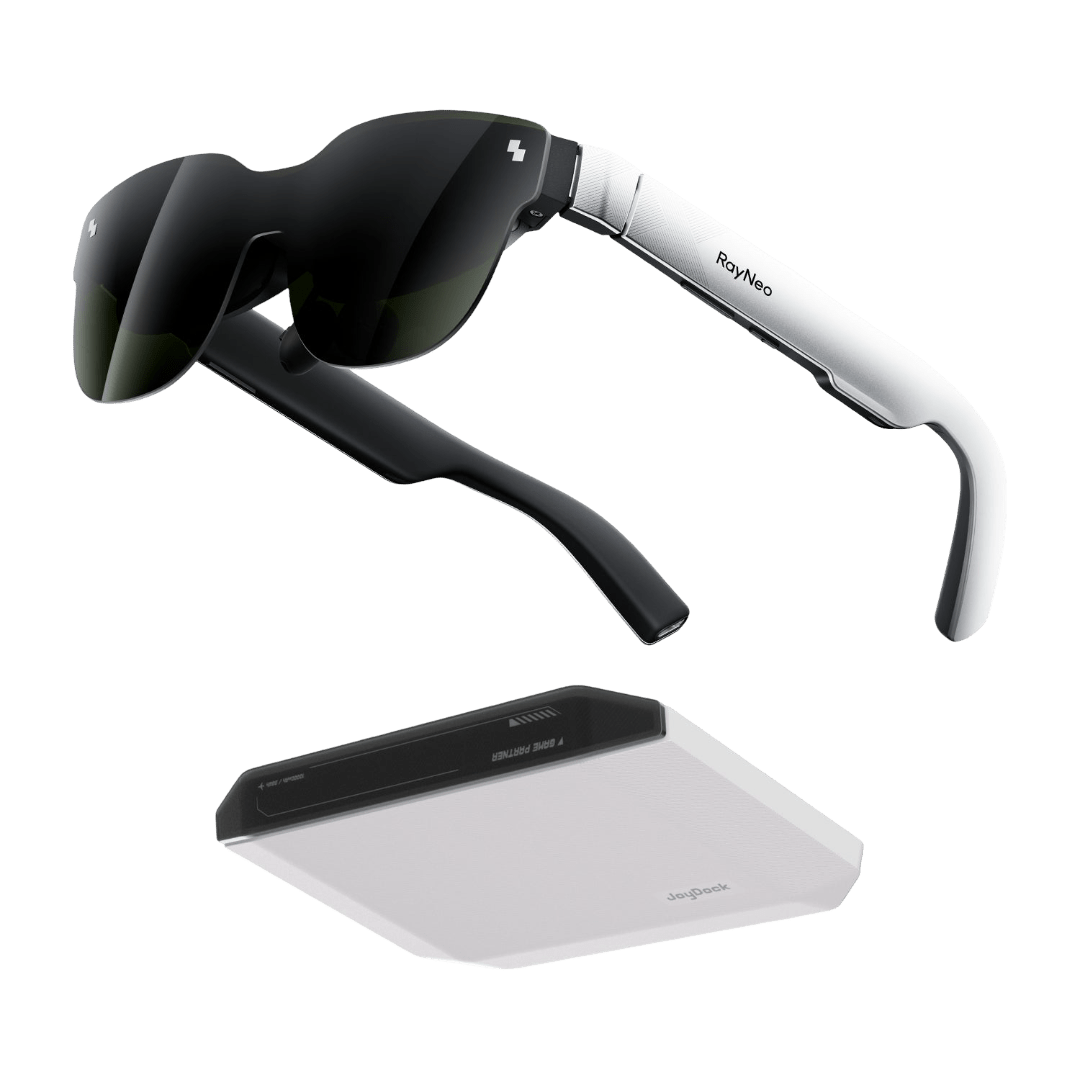
Should I buy AR glasses specifically for console gaming? They can certainly enhance your gaming, but keep in mind you might need additional accessories depending on your console. To connect a Nintendo Switch, you will need our JoyDock ($89); depending on your Switch generation, an additional Back Clip accessory may also be required, so check the JoyDock product page for current compatibility. For consoles like the PS4, PS5, Xbox, or a PC without a compatible USB-C port, you can use the RayNeo HDMI Adapter ($64).
Is the Dolby Vision support worth the extra investment? We describe the RayNeo GT series as the world's first Dolby Vision AR glasses system, which offers incredible color and contrast. However, this format is only supported when the glasses are paired with our RayNeo Pocket TV Pro ($199) and you are viewing Dolby Vision-encoded content. You will need to decide if that accessory fits your entertainment budget.
Are these glasses a good investment for a shared family TV replacement? Our AR glasses are specifically designed to provide a completely private viewing experience. They project a virtual screen that is only visible to the person wearing the device. Because of this personal design, they are highly valuable for individual entertainment on the go, rather than serving as a shared living room television for family movie nights.
AR display glasses bring incredible flexibility to your daily routine, but they are not a one-size-fits-all solution. If you are a frequent traveler tired of cramped airplane screens, or a flexible worker needing a multi-monitor setup at a cafe, the ability to pull a massive private display out of your pocket offers tremendous value.
By matching your specific devices with the right connection methods and evaluating your personal workspace needs, you can determine if this technology makes sense for you. Explore the RayNeo GT Max or RayNeo GT product pages to see which model best fits your daily life.





Share:
Which AR Glasses Work Without DP Alt Mode?
Which Camera Smart Glasses Are Most Socially Acceptable in Public?