

$429.00


Let’s start with the practical problem: packing a laptop is easy; packing a large desktop display is not. That difference explains why people increasingly consider AR glasses to replace monitor setups at home, in hotel rooms, or while traveling. Instead of placing a panel on a desk, the glasses send a private virtual screen directly into your view.
Does that make a physical monitor unnecessary? Sometimes, yes. AR display glasses can give you a large workspace without taking over a table, but text clarity, device compatibility, software, and comfort still shape the experience. This guide explains how the technology works, where AR smart glasses fit, and what US buyers should check before choosing a wearable display for work, entertainment, or a mix of both.

Yes, AR glasses can replace a monitor for portable work, private viewing, gaming, and focused single-screen tasks. They work best when your device supports video output and you are comfortable using a virtual display, while a physical monitor remains more practical for color-critical work, long sessions, and permanently arranged multi-screen desks.
AR glasses can function as a portable virtual monitor by displaying video from a compatible laptop, phone, tablet, handheld console, or media device. Instead of replacing the computer itself, they act as a wearable screen, giving you a larger private display without carrying a physical monitor.
Many display-focused AR glasses use compact Micro-OLED or similar microdisplays combined with an optical engine. The system directs and enlarges the image so it appears as a large virtual screen at a comfortable viewing distance.
The advertised screen size is a perceived virtual size rather than a physical panel measurement. Models with 3DoF tracking can also control how the display behaves. For example, RayNeo GT Max supports Steady, Pinned, and Follow modes, allowing the screen to remain stable, stay fixed in virtual space, or move with your head. An AR glasses computer monitor setup may mirror or extend a desktop depending on the connected device and software.
Next, check the port rather than assuming every USB-C socket sends video. Direct connection generally requires DisplayPort video output over USB-C. The DisplayPort Alt Mode standard carries display signals through a compatible USB-C port, but some ports handle only charging and data.
Compatible laptops, tablets, phones, and handheld systems may connect with one cable. HDMI-only devices need a powered adapter, while certain phones require a digital-video adapter. Confirm the computer model, port capabilities, operating system, cable, and accessory requirements. A matching connector shape does not confirm video support.
Choosing the best AR glasses for monitor replacement comes down to screen size, spatial control, comfort, and connectivity. The three RayNeo models below suit different work, travel, gaming, and entertainment priorities.
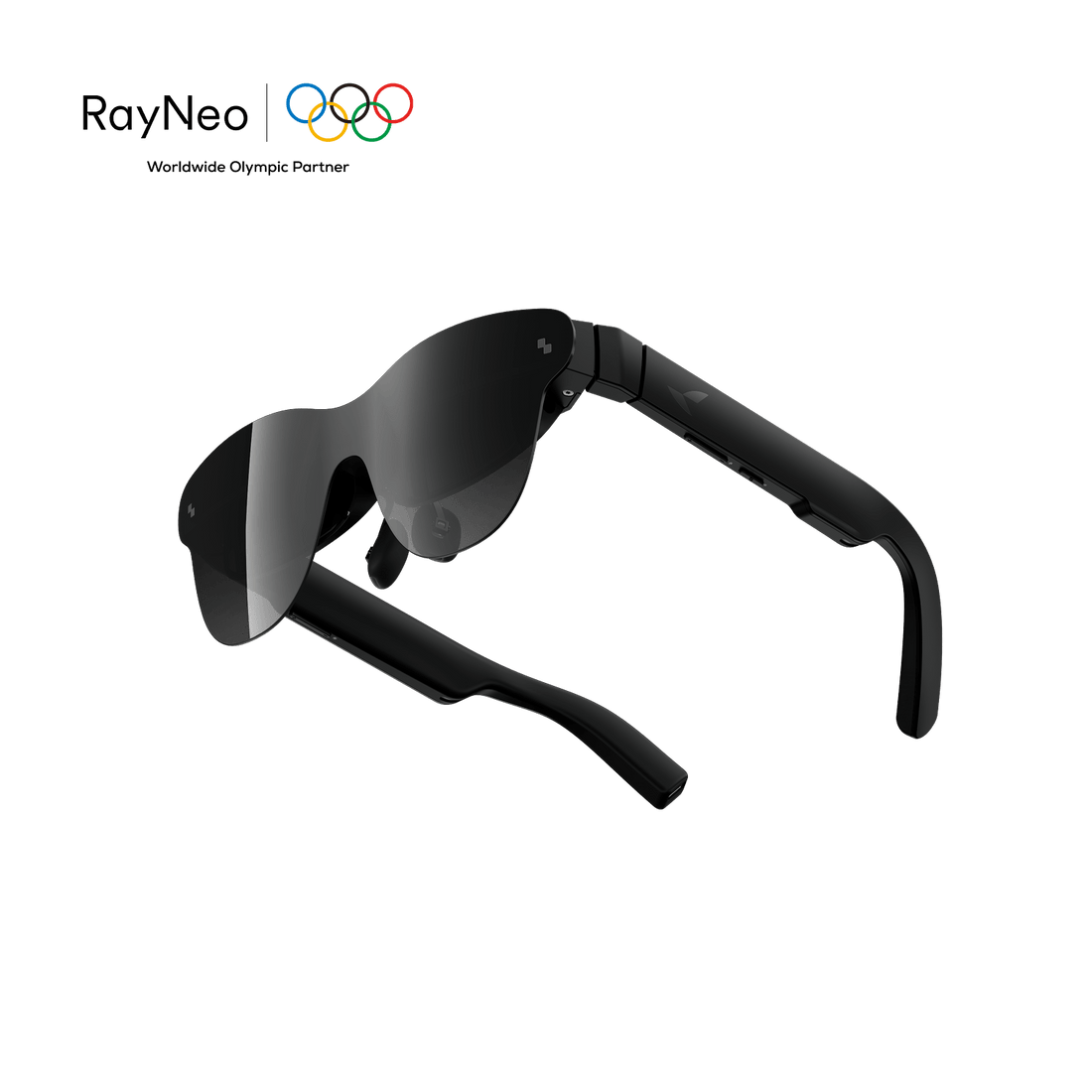
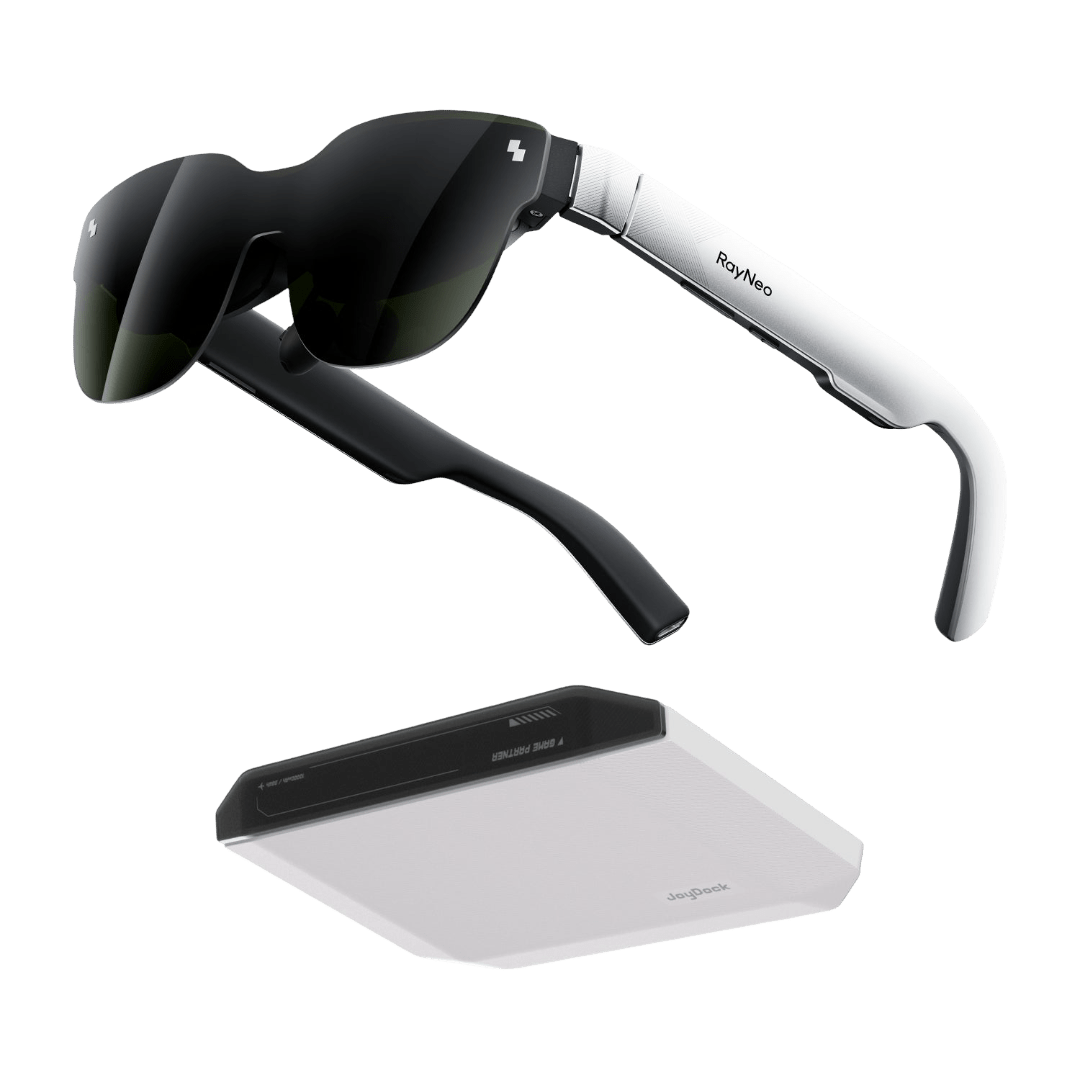
For users who want a wide AR glasses computer monitor, the RayNeo GT Max AR Glasses combine a 59° field of view with native 3DoF tracking and adjustable virtual screen sizes. They are particularly suited to travel, focused computer work, gaming, and entertainment where a larger spatial display is valuable.
The RayNeo GT AR Glasses offer a lighter option for users who still want spatial control from a wearable virtual monitor. At 68 g, they suit portable work, movies, gaming, and travel while retaining native 3DoF tracking.
For simpler screen mirroring, the RayNeo Air 4 Pro AR Glasses provide a large fixed virtual display without GT-style 3DoF anchoring. They are well suited to laptop mirroring, video, and gaming when spatial positioning is not essential.

Before choosing smart glasses as monitor hardware, think about your real workflow: the devices you connect, the size of text you read, where you work, and how long you plan to wear them. These practical factors matter more than headline specifications alone.
Start with per-eye resolution, PPD, contrast, and edge sharpness. Full HD can look excellent for movies but may feel less comfortable for spreadsheets or dense documents. Test your usual browser zoom, font size, and document scaling if possible. Also check IPD alignment and nose-pad adjustment, because poor optical positioning can blur menus, taskbars, and screen corners.
A wider field of view can create a more immersive workspace, but bigger is not always better. Smaller virtual-screen settings may make corners easier to scan without moving your head. If you see claims such as AR glasses 3 monitors, confirm whether this means software-created virtual desktops rather than three independent physical inputs.
Compare more than total weight. Nose pressure, temple tension, frame balance, cable placement, prescription inserts, and IPD fit all affect long-session comfort. Try shorter sessions first, adjust your chair and keyboard position, and take regular viewing breaks.
Finally, verify whether the glasses support simple mirroring, an extended desktop, or multiple virtual windows. When using smart glasses as monitor devices, check operating-system compatibility, supported resolutions, refresh rates, companion apps, virtual-screen limits, and whether your preferred setup reconnects reliably after unplugging.
So, where do wearable displays genuinely help? Their advantage is not simply a large picture; it is the ability to carry a private workspace into places where a normal monitor is awkward or unavailable.
In practice, AR glasses make sense on flights, trains, hotel desks, shared apartments, and temporary workspaces. They let you review documents or watch content without exposing the screen to people nearby. Spatial modes are useful when movement would make a fixed image distracting, while adjustable screen size can help you switch between a cinematic view and a more compact working canvas.
They also work well for focused tasks such as writing, research, email, coding with readable text scaling, and presentation rehearsal. If your laptop display feels too small but carrying another panel is impractical, wearable screens offer a clear space-saving benefit.
By contrast, a conventional monitor remains preferable for eight-hour desk routines, professional color work, detailed design, shared viewing, and workflows that require several persistently visible applications. You can glance between physical panels without spatial software and choose larger native resolutions, ergonomic arms, and calibrated displays for specialized tasks.
Physical screens avoid facial pressure and draw no power from your mobile device. If coworkers need the same content, a visible panel is easier to share. A hybrid approach may work: use AR glasses for travel and privacy, then return to a monitor for prolonged, precision-heavy work.
Once you confirm that your computer or other source device is compatible, setting up AR glasses, like the RayNeo GT series, is straightforward. Focus on connection, display detection, readability, and spatial positioning to create a comfortable virtual-monitor setup.
Ultimately, choosing AR glasses to replace monitor hardware is less about chasing the largest virtual screen and more about matching the display to your routine. A traveler may value native stabilization and privacy, while a home user may care more about text sharpness, easy connection, and comfort during a two-hour session.
Before deciding, test the work you actually perform: open your busiest spreadsheet, smallest code window, or longest document. If the interface stays readable and the glasses remain comfortable, a wearable display can become a practical primary screen away from a desk. If your day depends on precise color, constant collaboration, or several persistent panels, treat AR glasses as a flexible companion rather than a full-time replacement.
Yes, you can code with AR glasses by connecting them to a compatible laptop, desktop, or handheld computer and using the glasses as a mirrored or extended virtual display. A large perceived screen can make code editors, terminals, and documentation easier to view while traveling. However, text clarity, field of view, keyboard access, and software support determine whether the setup feels comfortable for long programming sessions.
Yes, AR glasses such as the RayNeo GT, GT Max, and Air 4 Pro contain Micro-OLED display systems that create a large virtual screen in front of the wearer. They do not use a conventional screen mounted across the lens. Instead, optical components direct images from small internal panels toward the eyes, allowing compatible phones, computers, and gaming devices to appear on a private wearable display.
No, current AR glasses cannot deliver the same fully enclosed and immersive environment as a dedicated VR headset. AR glasses generally keep the real world visible while adding digital information or presenting a virtual screen within a limited field of view. Some models support stereoscopic 3D content and head-tracked 3DoF positioning, but these features do not provide the room-scale movement, wide visual coverage, or isolation associated with VR.





Share:
AR Glasses Myopia: Dials or Prescription Inserts?
Smart Glasses with In-Lens Display: How They Work and What to Choose