

$449.00

Short videos now compete for attention in seconds, and POV has become one of the quickest ways to place viewers inside a scene. If you are checking the POV meaning, it usually refers to “point of view”, a style that shows events from a specific person’s angle. This makes clips feel more direct, personal, and easy to grasp.
In this article, you will learn what POV means in video and social media, how it differs from other perspectives, why it attracts engagement, how it works across platforms, and how AI smart glasses can help record POV videos.

POV stands for “point of view”, meaning the position or perspective from which something is seen, told, or understood. If you are asking what does POV stand for, it usually refers to whose eyes or perspective the audience is following.
In video, POV describes footage filmed from a particular person’s perspective. The camera may act as their eyes, making viewers feel as if they are part of the scene.
On social media, POV is often used in captions such as “POV: you just finished your last exam.” It sets up a situation and asks viewers to imagine themselves in that moment.
Understanding how POV compares to other common filming styles helps clarify why it feels so distinct on screen.
The third-person view shows the subject from the outside, much like a camera following someone through an experience. The audience watches the person move through a scene without sharing their perspective. This approach works well when the focus is on the individual, but it keeps viewers at a distance from the action.
POV removes that distance by placing the camera where the person’s eyes would be. Instead of watching a hiker walk through a forest, the viewer moves along the trail with them, seeing what’s ahead and noticing details as they appear. This sense of presence is what makes POV feel more immersive.
Selfie mode turns the camera toward the creator, putting their face, reactions, and expressions at the center of the shot. POV does the opposite, pointing the camera outward to show what the creator is seeing. Both formats involve filming alone, but they serve different goals. A food creator might use selfie mode to capture their reaction to a dish, then switch to POV to show the moment they cut into it, letting viewers focus on the food rather than the person.

Different creator communities use POV in distinct ways, shaping the format to fit their content and audience. While the perspective stays the same, the purpose and feel of POV can vary widely depending on how it’s used.
First-person shooter games introduced many people to POV long before it became popular on social media. Games like Call of Duty and Valorant lock the view into the character’s perspective, showing only hands, weapons, and the immediate environment. This creates a sense of urgency and immersion that pulls players and viewers into the action. When streamers share gameplay clips, the audience experiences tense moments exactly as the player does, which translates well to platforms like Twitch and YouTube.
Action sports rely heavily on POV to capture intensity and movement. Snowboarders, surfers, and skateboarders often use helmet-mounted cameras to record tricks from their own viewpoint. Viewers see the terrain approach at speed and follow split-second decisions as they happen. Mountain biking POV, in particular, highlights how quickly conditions change, with rocks, roots, and sharp turns unfolding in real time. This style works because it delivers raw experiences that most people wouldn’t encounter themselves.
In vlogging, POV helps turn everyday routines into something more engaging. Filming from eye level makes simple activities feel more personal, whether it’s shopping for groceries or preparing a meal at home. Cooking videos shot in POV let viewers follow each step naturally, as if they were performing the task themselves. By removing staged angles and heavy editing, POV vlogs feel more honest and relatable, which is why they resonate so strongly with audiences.

The basic meaning is not enough to define POV as the format’s popularity goes further. POV content quickly sets a scene, creates relatability, supports concise storytelling, and gives viewers clear reasons to comment and share.
POV gives viewers the setup before the action fully unfolds. A short line such as “POV: you’re late to your first day at work” immediately defines the role, setting, and tension. That fast setup suits short-form feeds, where creators have only a few seconds to earn continued viewing.
A POV caption can establish the character and situation without a long introduction, leaving the video to deliver the joke, reaction, or payoff. This makes the format well suited to TikTok, Instagram Reels, and YouTube Shorts, where compact storytelling pairs naturally with short videos and rapid scrolling.
Many POV videos are built around situations people recognize from their own lives, giving viewers a reason to tag friends, comment, share the post, or create their own version. This participatory format can also help users form connections around shared humor, interests, and everyday situations.
Instead of simply watching another person, viewers are asked to imagine themselves inside a familiar, funny, awkward, or aspirational situation. This personal framing can build a stronger emotional connection and prompt comments such as “this is so me,” helping POV posts feel more relevant and socially engaging.

POV content can look quite different from one platform to another. TikTok commonly uses it for short scenario-based videos, while Instagram and X often apply POV through captions, memes, reactions, and other compact posts.
On TikTok, POV videos often place viewers inside a short scenario, such as a first date, classroom moment, workplace situation, or fictional scene. Creators usually combine on-screen text, facial expressions, dialogue, music, and camera angles to establish the setting quickly. The format works especially well with trends because users can reuse the same idea, sound, or setup while adding their own version.
On Instagram and X, POV is often used in captions to frame a photo, Reel, meme, or short post from a specific perspective. A caption such as “POV: you finally finished your Friday meeting” gives the audience an instant situation to relate to. Instagram commonly pairs POV captions with visual content, while X often uses the format for jokes, reactions, observations, and text-based scenarios.
POV posts work best when the audience can understand the scenario quickly and step into the intended role. Poor framing, unclear captions, or forced trends can weaken the idea, so creators should keep each post simple and easy to follow.
Good POV content comes from a mix of technical choices and small creative details. The goal isn’t perfection, but making the footage feel natural and easy to follow from a first-person perspective.
Believable POV footage matches how people naturally see the world. If the camera sits too high or too low, the perspective feels off and breaks immersion. Eye-level placement makes scenes feel intuitive, helping viewers forget they’re watching a recording and instead focus on what’s happening in front of them.
Purely static POV clips lose attention quickly. Simple actions like opening doors, picking things up, or pointing at details add context and depth. In cooking videos, for example, seeing hands chop, stir, and plate food makes the experience feel active rather than observational. These small movements help anchor viewers in the scene.
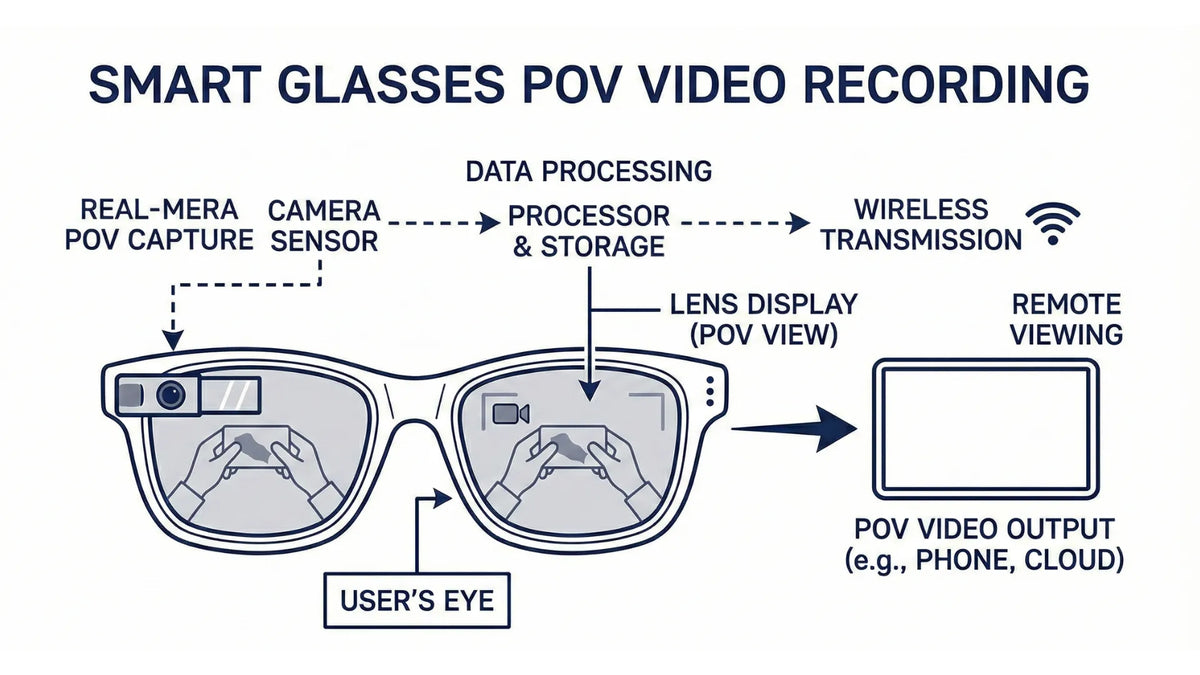
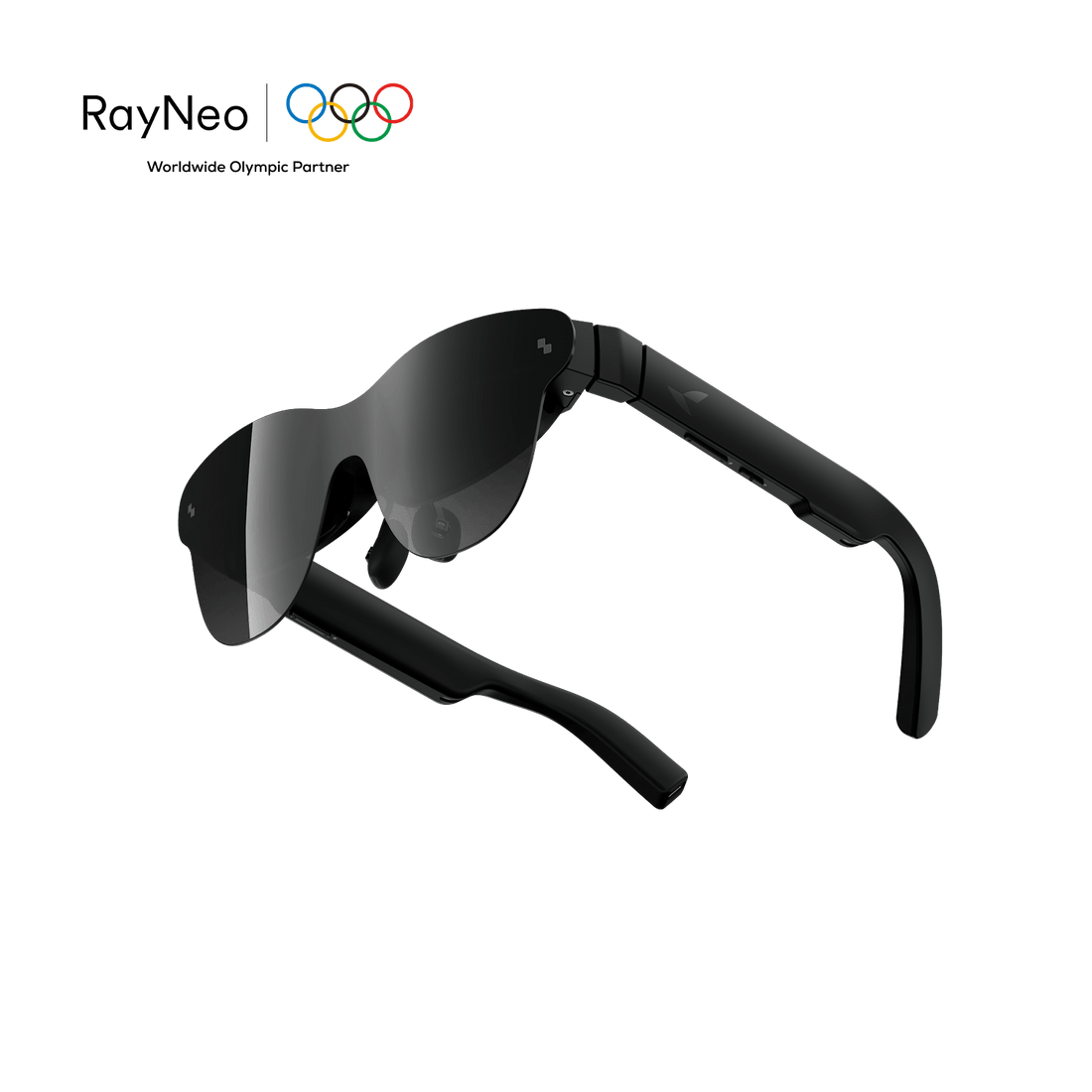
For a more natural hands-free setup, AI smart glasses can record from close to your actual line of sight. The RayNeo X3 Pro AI+AR Glasses use a 12MP Sony IMX681 sensor for photos and videos, alongside a separate monochrome camera for spatial tracking. Photos reach up to 4K, while video recording supports up to 1440p. Its 245mAh battery means individual recording clips are relatively short, making it better suited to brief POV scenes.
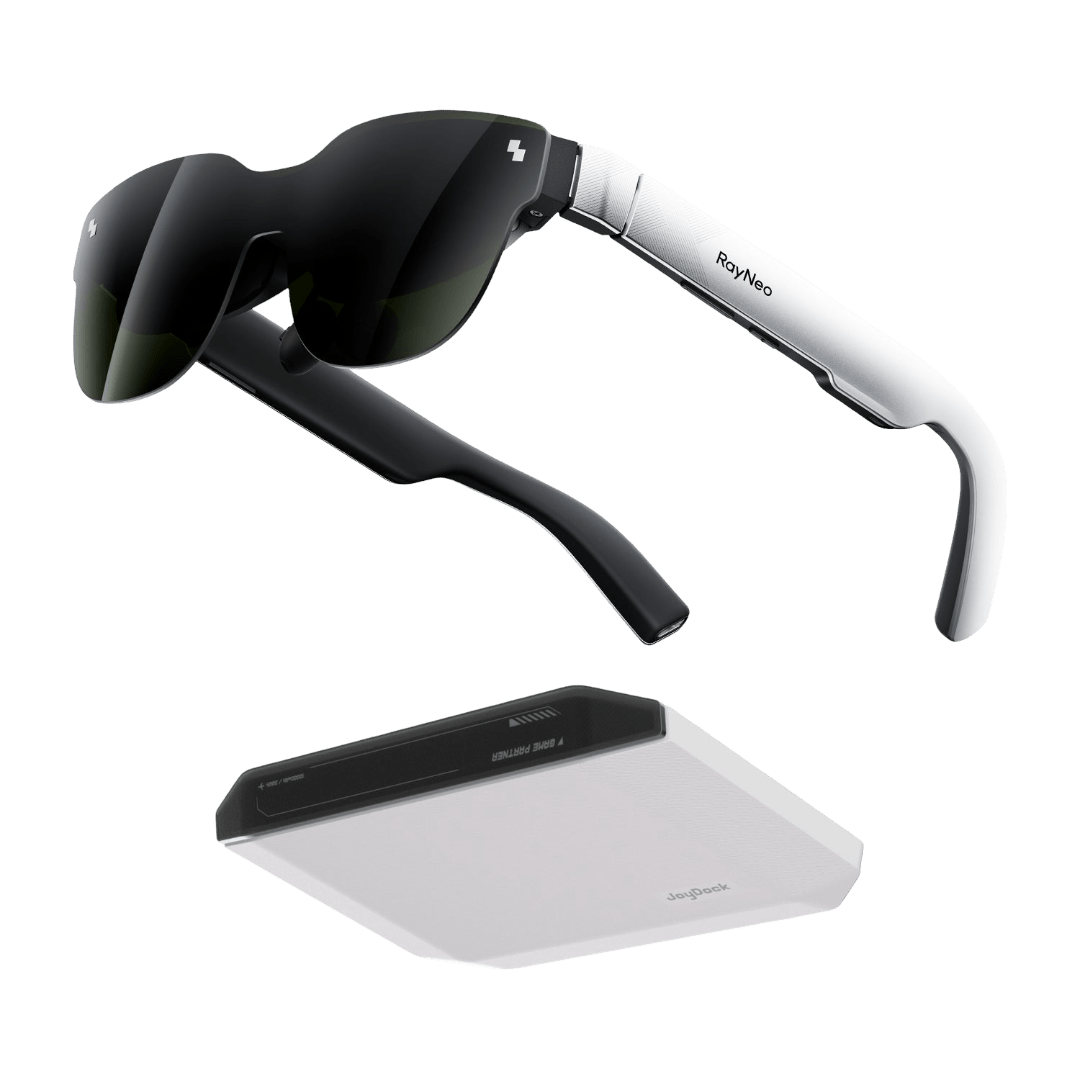
Besides the model above, another smart glass option worth considering is the RayNeo Air 4 Pro AR Glasses. While they do not record video directly, they can create a first-person Cinematic 3D viewing setup with native 3D and AI 2D-to-3D conversion. Universal Plug-and-Play also lets you connect phones, laptops, and consoles via USB-C for up to 120Hz HD entertainment.

Understanding POV meaning starts with recognising POV as “point of view”, a format that places audiences inside a specific perspective. Unlike third-person or selfie footage, POV creates a closer first-person feel and suits gaming, sports, vlogging, TikTok, Instagram, and X. Clear framing, concise captions, eye-level filming, and hands-free tools such as AI smart glasses and AR glasses can help creators produce more convincing POV content.
In street slang and casual online speech, the meaning of POV is usually “point of view.” People use it to describe someone’s perspective, situation, or what they are seeing. On TikTok, Instagram, and in memes, “POV” often introduces a scenario and places the viewer directly inside it, as if the event is happening to them.
People say “POV” so often because it has become a quick way to frame videos, jokes, and personal stories on social media. In simple terms, POV means “point of view,” showing a situation from a certain person’s perspective. Platforms like TikTok and Instagram helped make the term common, especially in short videos designed to feel personal and relatable.
“POV” means “point of view.” In chat, people use it to describe a situation from someone’s perspective, often in a funny or relatable way. For example: “POV: You open your phone to check one message and end up scrolling for an hour.” You can use “POV:” before describing a moment you want someone to imagine experiencing.





Share:
Best 8 Alternatives to Ray-Ban Meta Smart Glasses
Help Me Choose for 2026: The Definitive AR Glasses Buying Guide