

$449.00

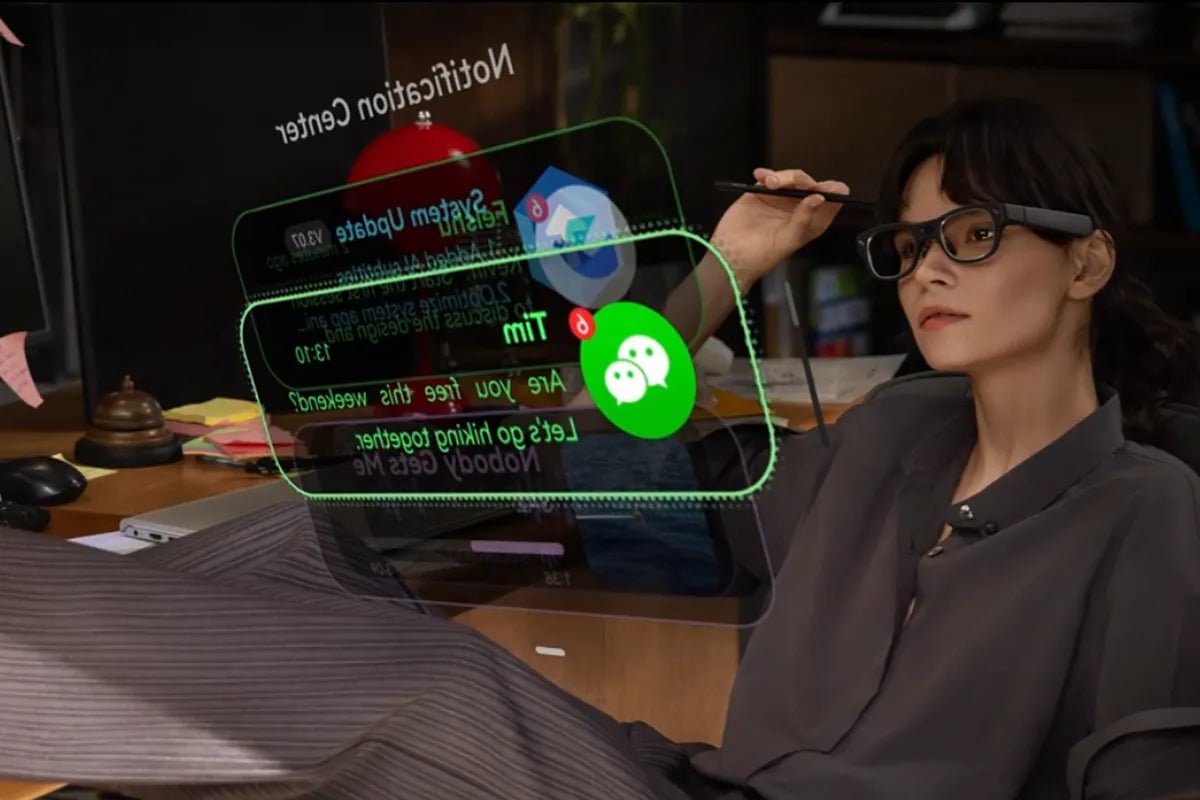
Imagine stepping outside and seeing live navigation arrows overlaid on the sidewalk, or hearing a real-time translation of a foreign language whispered directly into your ear. Smart eyewear is making this sci-fi concept a daily reality.
But how do AI glasses work behind the scenes? These lightweight devices combine advanced sensors, smart processors, and tiny optical engines to transform how you interact with the digital world. Let us break down the technology powering this revolution.

Smart eyewear needs to understand your environment before it can help you. To do this, frames rely on a suite of tiny, highly accurate sensors designed to gather audio, motion, and visual inputs continuously.
Your voice serves as the primary control panel for smart frames. A multi-microphone array sits embedded in the frame to capture your commands cleanly. These setups use noise-canceling tech to isolate your speaking voice from loud traffic or busy room chatter. Beyond taking voice commands, these microphones listen to ambient sound to drive features like live conversation captioning and instant translation.
An Inertial Measurement Unit combines two critical sensors: an accelerometer and a gyroscope. This package tracks your precise head movements and orientation in real time. Motion tracking provides the spatial awareness needed to keep digital graphics anchored. For instance, as you walk down a street, the IMU ensures floating navigation arrows remain steady and readable instead of jittering across your field of view.
Visual input changes how smart eyewear operates, dividing devices into two distinct design categories:
Smart eyewear functions as a seamless extension of your smartphone rather than an isolated gadget. Constant connectivity ensures data moves smoothly:
Gathering sensor data is only the first step. Understanding how AI glasses work requires a look at their dual-layer processing architecture.
Modern frames balance speed, battery life, and privacy by splitting workloads between local hardware and cloud networks:
After processing your request, the device delivers results clear of distractions. If you wonder how do the ai glasses work when displaying digital content, the answer lies in specialized optics and focused audio hardware.
To show visual information without blocking your vision, smart eyewear projects light through specialized optical lenses. Micro-OLED or MicroLED projectors throw crisp graphics into transparent optical waveguides embedded inside the lenses. These waveguides bounce light directly into your eye. The result is a crisp digital overlay—like turn-by-turn directions or live text subtitles—floating naturally over the real world right in front of you.
For audio feedback, tiny open-ear speakers sit built into the frame arms near your temples. These directional speakers beam sound downward toward your ear canals. This design allows you to hear clear assistant responses, music, or phone calls while keeping your ears open to surrounding traffic and ambient noises.
Packing advanced hardware into a standard eyewear frame creates unique engineering challenges, especially regarding power management and battery weight.
Modern frames rely on custom-shaped Lithium-Polymer (LiPo) batteries. Engineers mold these high-density batteries directly into the frame arms to distribute weight evenly across your nose bridge and ears. Because these batteries remain small to keep the frames lightweight, active power management shuts down idle sensors when not in use. This efficiency provides several hours of continuous, active smart feature usage on a single charge.
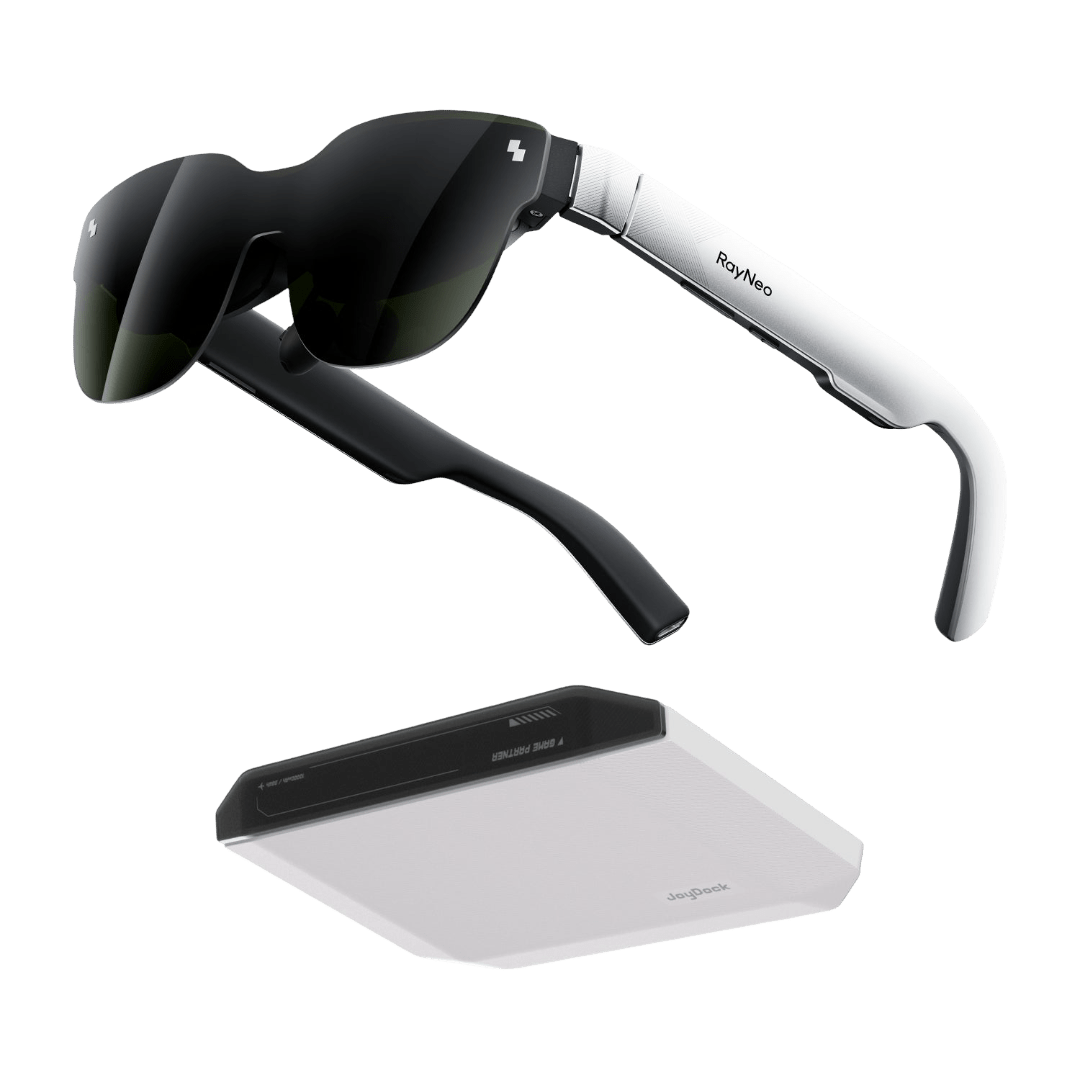
To extend daily use, smart eyewear relies on protective charging cases equipped with internal power banks:
Learning how AI glasses work helps reveal their enormous practical value in daily life. Here are a few ways this tech simplifies daily tasks:
RayNeo offers standout options tailored for lightweight everyday wear and immersive spatial computing experiences.
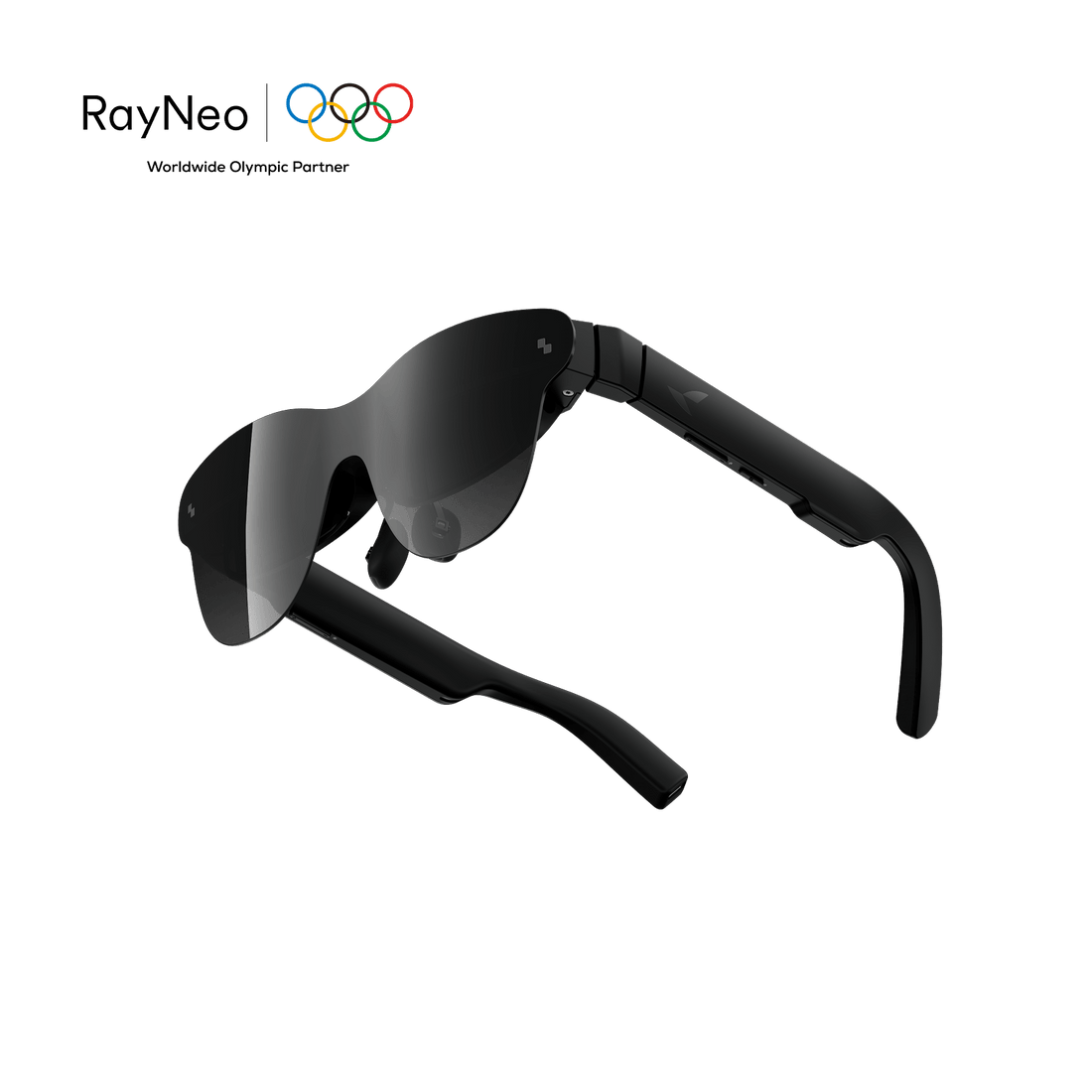
The RayNeo iO AI Glasses combine a classical frame aesthetic with advanced optical engineering. Featuring an ultra-thin 0.6 mm lens display, it floats bright digital information directly into your view using a vivid 1700-nit MicroLED engine. The Firefly Nano optical system eliminates bulk, allowing the frame to maintain a balanced, everyday look without needing outward-facing cameras.
Who It’s For: Users seeking ultra-lightweight, comfortable glasses for discrete voice assistance, hands-free notifications, and daily organization without privacy concerns.
Key Features:
The RayNeo X3 Pro AI+AR Smart Glasses offer a full AR experience, combining high-resolution visual output with conversational artificial intelligence. Powered by the Qualcomm Snapdragon AR1 platform and Google Gemini AI, these glasses process rich visual data, run native spatial applications, and deliver full-color optical projection straight to your eyes.
Who It’s For: Tech enthusiasts, power users, and creators who want full-color AR displays, spatial app access, real-time visual navigation, and deep AI support.
Key Features:

Understanding how do AI glasses work comes down to seeing how optics, sensors, local processors, and cloud computing unite in a single lightweight frame. These devices turn complex data into clear audio and visual cues, helping you stay connected while keeping your phone in your pocket. As battery efficiency and optical projection continue to improve, smart eyewear will redefine how we work, travel, and communicate every day.
AI glasses use open-ear directional speakers built into the frame arms. These tiny speakers target sound straight toward your ear canals, minimizing sound leakage. In normal environmental noise, people standing next to you will not hear your audio. However, if you listen to loud music or take phone calls in a very quiet room, nearby individuals might hear soft, faint sounds coming from your frames.
Yes, AI glasses can read text out loud or display it right before your eyes. Models equipped with cameras can scan physical text—like book pages, restaurant menus, or street signs—and read the words to you using text-to-speech audio. Meanwhile, visual display models can project digital documents, incoming text messages, or live presentation speech scripts directly onto your lenses for hands-free reading.
You can take pictures with AI glasses if your specific model features a built-in camera. Devices with camera technology allow you to capture photos and high-resolution videos completely hands-free using quick tap controls or voice commands. However, some privacy-focused smart glasses deliberately leave out cameras. These camera-free frames focus exclusively on audio tools, live translation, and screen teleprompting to protect user privacy.





Share:
Inside the Smart Glasses Market: Growth & RayNeo Tech
Using AI Glasses on Proctored Exams: Risks & Detection