

$449.00


Picture yourself ordering lunch in Tokyo, asking for directions in Madrid, or meeting a new client in Berlin. Instead of looking down at a phone and passing it back and forth, you see translated text while keeping your attention on the person speaking. That is the practical promise behind glasses that translate 40 languages.
These wearables combine microphones, speech recognition, machine translation, and a near-eye display. They can reduce language friction, but they do not replace human interpreters or careful judgment. Accuracy changes with background noise, accents, dialects, internet quality, and the complexity of a conversation. Let’s look at how the technology works, where it can genuinely help, and what travelers should check before choosing and packing a pair.

Yes. AI glasses can recognize spoken language, translate it with only a short delay, and show captions within the wearer’s field of view. Performance depends on the supported language pair, network access, microphone quality, speech clarity, and environment, so users should expect occasional delays or errors rather than interpreter-level accuracy. They work best for short, everyday exchanges in which speakers take turns and talk clearly.
The process looks simple from the wearer’s perspective, but several technologies work together behind the scenes. Audio must be captured clearly, turned into written words, translated without losing the speaker’s meaning, and displayed quickly enough to follow the conversation.
Built-in microphones listen for speech and send the audio to an automatic speech recognition system. Multiple microphones can help separate the person in front of you from surrounding chatter or your own voice. The software then divides the sound into recognizable speech units and creates a transcript. Noise, reverberation, accents, and unfamiliar vocabulary can reduce recognition performance, making crowded restaurants and overlapping conversations more difficult.
Next, the translation model interprets the transcript and produces equivalent text in the selected language. Modern systems consider context rather than replacing every word individually, which helps with natural sentence order and common expressions. Even so, idioms, slang, technical terms, humor, and culture-specific references may be translated too literally. For medical, legal, financial, or safety-critical discussions, confirm important details with a qualified human interpreter.
Finally, a tiny optical engine projects the translated captions onto a transparent lens or waveguide. The text appears within your field of view while you can still see the speaker and your surroundings. This hands-free format makes glasses that translate languages different from a phone screen. You can maintain eye contact, notice gestures, and follow signs or menus without repeatedly shifting your attention to a handheld device.
Phone translation apps remain affordable, familiar, and useful. Translation glasses are not automatically more accurate, because both may rely on similar cloud-based speech and language models. Their main advantage is how you access the translated text.
That difference matters most when the exchange is physical and fast. Imagine moving through a customs line, carrying a suitcase, comparing items in a market, or greeting several people at an event. A wearable display can reduce the small interruptions caused by raising, repositioning, and sharing a phone.
The practical differences include:
A phone still has advantages. Its larger screen suits long passages, maps, typed input, and side-by-side text. It is also easier to share with another person. Think of translation eyewear as a hands-free option for short, live exchanges—not a universal replacement for every translation tool.
Translation eyewear works best when you need quick context while staying engaged with the world around you. It may help you understand a question, confirm a price, or follow the main point of a discussion without pausing to type.
Travelers can use live captions while checking into a hotel, ordering food, shopping, asking for transit help, or joining a guided activity. Being able to read a reply without lowering your gaze can make the exchange feel more personal. Download any required apps, pair the glasses, and test your language pair before leaving the US. Keep a phone-based or offline backup for areas with limited cellular service.
In a multilingual meeting, captions can help you follow the general discussion, names, numbers, and action points. They may also reduce the mental strain of constantly switching between languages. Still, do not rely on an unreviewed transcript for contracts, compliance decisions, or confidential negotiations. Ask participants before activating recording or memo features, follow company security policies, and arrange a professional interpreter when precision or confidentiality matters.
Learners can compare spoken words with translated captions during informal conversations, tours, or language exchanges. This immediate connection may help with vocabulary recall and listening practice. Try reading the original-language caption first, then use the translation only when needed. Because AI can mishear or oversimplify a phrase, check unfamiliar grammar and pronunciation with a teacher, reliable dictionary, or course material rather than treating every displayed sentence as a perfect lesson.
Do not choose translation glasses by language count alone. A long list has little value if the pair you need performs poorly or if the device becomes uncomfortable after 30 minutes.
Start with your most common setting: tourism, business meetings, language study, or everyday multilingual communication. Then compare the complete experience, including accuracy, connection requirements, fit, controls, battery behavior, privacy, and how quickly you can start a conversation.
Confirm both source and target languages, not merely the total number supported. Check whether the system handles two-way conversation, regional variants, and the accents you commonly hear. Look for options that distinguish speakers or filter the wearer’s voice. Translation quality may drop with overlapping speech, jargon, names, or noise, so test the glasses in conditions similar to an airport, café, conference floor, or classroom before depending on them.
Separate “typical use” from continuous translation time, as active microphones, displays, and network processing can drain power faster. Check the charging method and whether a travel case adds extra capacity. Also ask what works offline. Some products need a companion phone and active data connection.
Weight matters, but balance, nose-pad fit, temple pressure, lens options, and heat matter too. If you wear prescription lenses, confirm compatibility and the extra US cost before buying. Try the controls while walking or carrying a bag: a tactile dial or subtle head gesture may be easier than repeated voice commands. A transparent display should keep your surroundings visible, but you should still avoid reading captions while driving or crossing busy streets.
Look for a visible recording indicator, clear controls, understandable retention settings, and an easy way to delete transcripts. US audio-consent rules vary by state, with some states requiring all-party consent for certain private conversations, depending on the circumstances. Asking first is safest; a status light does not replace consent.
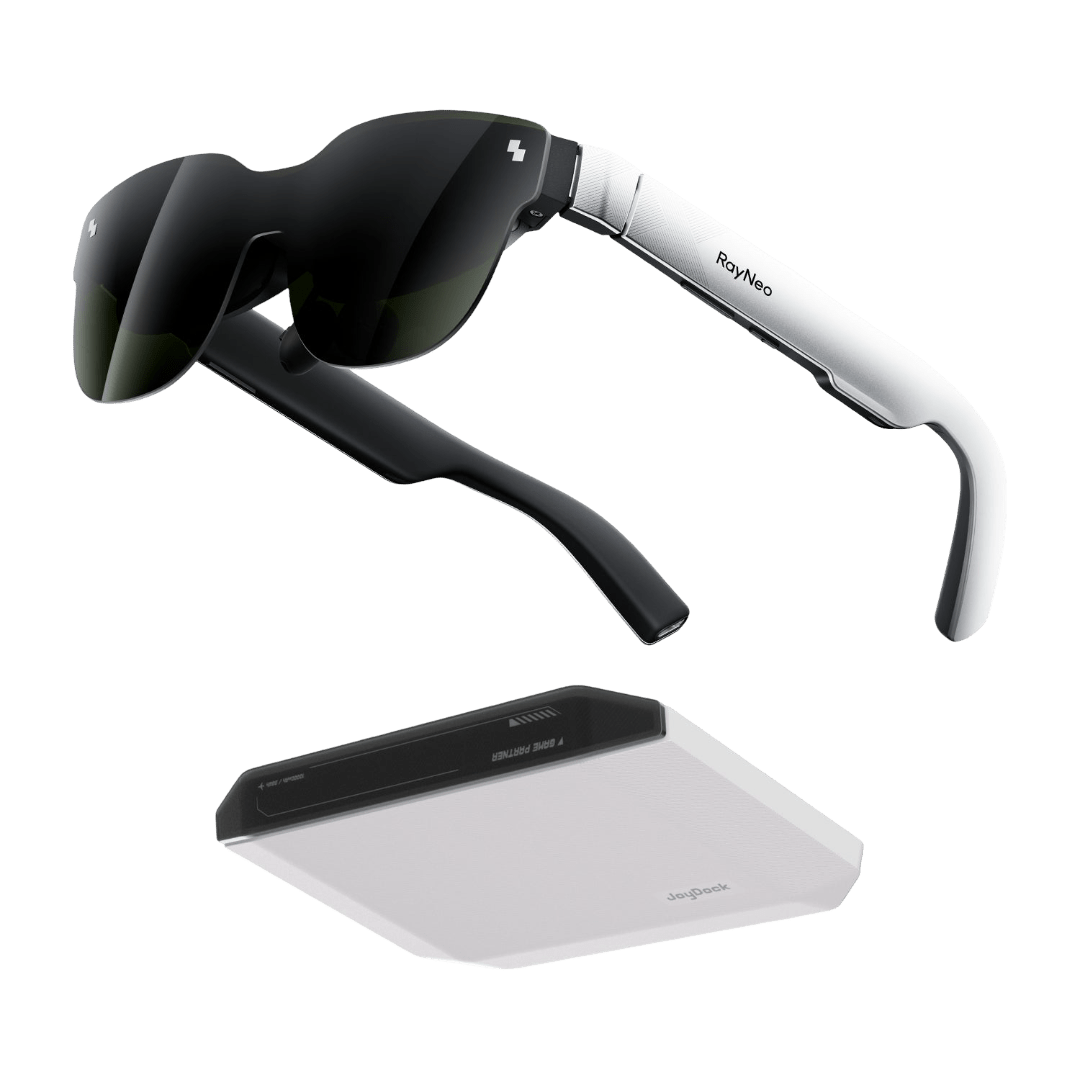
The next step for AI translation glasses is not simply adding more features. It is making useful assistance feel like ordinary eyewear. RayNeo iO follows that direction with a transparent display, everyday controls, and live captions designed to keep conversations in view. Its focus on visual information rather than built-in speakers also distinguishes it from audio-led smart glasses.
The RayNeo iO AI Glasses are designed for travelers and professionals who want translated text without holding up a phone. Its live-caption system supports translation across 40 languages, prioritizes the other speaker, and presents the translated reply on the lens. That visual approach keeps the wearer focused on the person rather than a handheld screen.
The best reason to use glasses that translate 40 languages is not to eliminate every language barrier. It is to make ordinary interactions easier while preserving eye contact and keeping your hands free. That can be genuinely helpful during a trip, particularly when you need the gist of a short conversation and have a reliable connection.
Before buying, think beyond the headline language count. Confirm your language pair, continuous-use battery life, phone and internet needs, prescription support, and privacy controls. Most importantly, know when to slow down. A quick caption may be enough for ordering coffee, but important health, legal, financial, or safety information deserves human confirmation. Used with realistic expectations and respect for others, translation eyewear can become a practical travel companion rather than an attention-grabbing gadget.
If the glasses help you stay present instead of pulling you away from the conversation, they are doing their most valuable job.
AI translation glasses can be more convenient for hands-free, face-to-face conversations because translated speech or captions stay accessible without repeatedly checking a phone. Translation apps are usually more versatile, offering wider language support, typed input, camera-based sign translation, and larger screens for reviewing text. Choose glasses for natural live interactions and an app when accuracy, broader features, or detailed translation matters more.
Yes. Translation glasses can process spoken conversations in near real time using built-in microphones, speech recognition, AI translation, and either a lens display or audio output. Some models depend on a companion phone and cloud processing, while others handle part of the work on the device. Results may vary with background noise, accents, connection quality, and how quickly or clearly people speak.
Most translation glasses need a smartphone connection through Bluetooth, and many also require Wi-Fi or cellular data for cloud-based speech recognition and translation. The phone may provide internet access, manage language settings, or display the other speaker’s translated response. Some glasses offer limited offline language packs, but support and accuracy may be narrower. Check the connection requirements before traveling, especially if roaming coverage will be limited.




Share:
Can You Get Smart Glasses with Prescription? Here’s What to Know Before Buying
Can Smart Glasses Phone Notifications Replace Your Phone?