

$449.00


Since the invention of GPS navigation, we have always been looking down to find our way. Now, the road is finally starting to find you. In this article, we will break down the underlying principles of AR navigation, how it achieves real-time overlays in smart glasses, and how this technology is reshaping the way we interact with the physical world.
For a long time, navigation has suffered from three major pain points: looking down at a phone makes it easy to miss turns, occupied hands compromise safety, and traditional maps offer almost no perceptible sense of direction in complex indoor spaces like airports, malls, and hospitals. We are seeing that once navigation data can be directly overlaid onto real roads, floors, door numbers, and intersections, smart glasses upgrade from a mere small screen extension to a spatial interface. In this moment, navigation evolves from a simple tool into a foundational capability.
AR navigation refers to a dynamic system in wearable display devices that uses spatial perception and tracking technology to understand real-world scenes in real time. It then overlays directional guides, path lines, and POI markers directly into the user's field of vision. This system must meet three prerequisites: first, it must continuously track the pose of the user's head and body relative to the environment; second, it must align digital maps or spatial models with the physical world; and third, the overlaid information must be visually stable without drifting or shaking.
Technically, we break AR navigation down into four core concepts. Visual perception allows the glasses to see and understand the surroundings. Localization and registration align real-world coordinates with map coordinates. Path planning determines the next move. Finally, rendering and display ensure the results are presented stably before the user's eyes. In the smart glasses form factor, all this work must be completed with extremely low power consumption and limited computing power, which is why we see heavy use of specialized AR SoCs and local AI acceleration modules in actual products.
AR navigation in smart glasses operates as a cohesive underlying technology across three levels: understanding the environment, determining position, and pinning virtual information stably onto reality.
In most AR smart glasses, computer vision and SLAM (Simultaneous Localization and Mapping) serve as the foundational layer for making navigation possible. The glasses use forward-facing cameras to continuously capture the scene, extracting features such as corners, edges, and textures in real time to build a sparse or dense point cloud map of the environment. The SLAM system simultaneously estimates the camera pose and optimizes the map while correcting cumulative errors. This ensures that even after several minutes, the virtual path remains accurately placed on the ground.

With visual SLAM alone, glasses can determine their position relative to the immediate surroundings. However, to achieve city-scale navigation, they must integrate GPS, IMU (Inertial Measurement Unit), and map data. Outdoors, satellite positioning serves as the absolute location signal, while the IMU provides high-frequency attitude and short-term displacement estimates. SLAM is then used for fine-tuning and error correction. When combined, the user position can be stably mapped to the coordinates of a map service.
Real-time data input is equally critical, covering traffic conditions, road closures, public transit schedules, and weather changes. This data is typically obtained via a 5G or Wi-Fi connection through a phone or the glasses themselves. In terms of experience, users see more than just a static route; they see a dynamic plan that updates in real time based on congestion or transit delays. In our proprietary systems, we control the overall navigation refresh frequency to within hundreds of milliseconds to balance battery life with fluidity.
To make a virtual path line stay pinned to a specific sidewalk, we use spatial anchoring technology to bind virtual objects to specific 3D coordinates or visual feature points in the environment. In cloud or local maps, each anchor has a fixed ID and pose information. Once the glasses recognize the corresponding area, they can load the preset navigation content into the correct position.
In practical applications, indoor anchors are often initialized using QR codes, visual markers, or high-precision indoor maps, and are subsequently maintained dynamically via SLAM. Public spaces like airports or hospitals can deploy shared anchor networks, allowing all compatible glasses to align within seconds of entering the area. This allows a user to see virtual signs for gates or clinics the moment they step out of an elevator.
The display system determines the visual quality and comfort of AR navigation. Currently, mainstream AR smart glasses predominantly use waveguide solutions paired with MicroLED or micro-OLED light sources to couple virtual images into the lens and direct them to the eye. This approach allows the glasses to maintain an appearance close to ordinary frames while providing sufficient brightness and field of view for long-term wear.
HUD and projection-based solutions remain common in automotive environments, where the car windshield or a dedicated transparent screen acts as the background for navigation info.
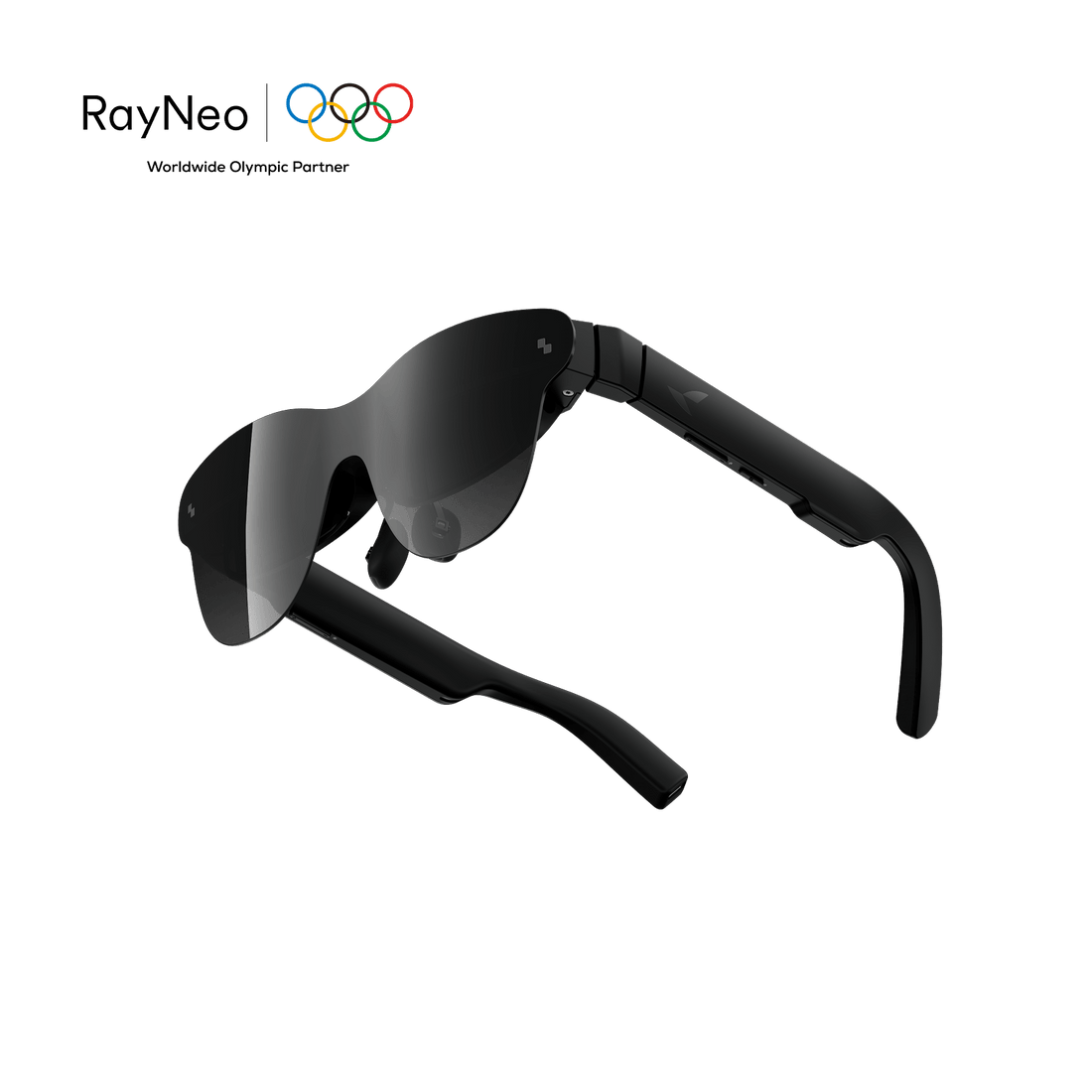
HUD and projection-based solutions remain common in automotive environments, where the car windshield or a dedicated transparent screen acts as the background for navigation info. This pursuit of seamless optical integration is shared by the best ar glasses for augmented reality experiences, such as the RayNeo X3 Pro AI+AR Glasses, which utilizes binocular MicroLED waveguides with a 640×480 resolution, a 30 degree field of view, and a 60Hz refresh rate. In urban nighttime pedestrian navigation, it provides clear arrow edges and text, while its lightweight structure—weighing approximately 76 grams—minimizes fatigue during extended use.
The protagonist of traditional GPS navigation has always been the smartphone. Information is presented on a two-dimensional screen, forcing users to constantly switch between real-world road conditions and the on-screen map while relying on abstract blue dots and arrows. At the registration level, traditional navigation only knows your approximate location and heading; it struggles to understand exactly which building you are looking at or which step you are standing on.
AR navigation on smart glasses offers key differences on three levels. At the perception level, using cameras, IMUs, and depth sensors, the system can achieve centimeter-level relative pose estimation, making it highly sensitive to the user's line of sight and minor head rotations. At the presentation level, navigation arrows and path lines can be pinned directly to the ground, sidewalks, or floor signs, so users no longer need to perform mental projection. At the interaction level, glasses allow for simple interactions via head movements, voice, or gestures. Compared to the traditional requirement of unlocking and touching a phone, this is significantly safer.
Summarizing smart glasses reviews from recent years, expectations for navigation focus on three areas: freeing hands, improving safety, and reducing wayfinding anxiety. In commuting and travel scenarios, as long as navigation info is stably overlaid in the field of vision, the frequency of looking down at a phone can drop by over 70%. This difference is especially pronounced when cycling or walking through complex intersections.
Another frequently mentioned benefit is the reduction of cognitive load. Users no longer need to translate a 2D map into a 3D path; they simply look up and follow virtual guide lines on the ground or floating road signs. When using public transit at night in a city or in a foreign country, this reduction in psychological pressure is far more valuable than hardware specs. Many users in surveys describe the experience by saying they finally do not have to stop and walk repeatedly to check their phones.
The following section provides a direct comparison between these two navigation methods, highlighting the shift from abstract 2D screens to intuitive spatial overlays.
|
Feature |
Traditional GPS Navigation |
AR Smart Glasses Navigation |
|
Primary Interface |
2D smartphone screen |
3D spatial overlay in field of vision |
|
Environmental Awareness |
Requires frequent head-down checks |
Continuous awareness of surroundings |
|
Positioning Precision |
Meter-level (GPS/GNSS) |
Centimeter-level (SLAM + Sensor Fusion) |
|
Cognitive Load |
High (mental mapping required) |
Low (follow direct visual cues) |
|
Interaction Mode |
Handheld touch and unlock |
Hands-free voice or head gestures |
|
Safety Level |
Lower due to visual distraction |
Higher with constant eyes-on-the-road |
In pedestrian navigation, AR smart glasses can draw translucent path lines and turn arrows directly in the walker's field of vision. Driving scenarios require even stricter latency and glare control; the glasses must overlay lane-keeping assistance, deceleration alerts, and upcoming intersection info without obstructing the view of the road. These functions are typically achieved through synergy between in-car HUDs and the glasses. For indoor navigation in places like airports, malls, and hospitals, AR navigation combined with SLAM and visual markers can provide high-precision guidance across multi-level spaces. Following floating arrows through corridors and up escalators is far more intuitive than deciphering floor structures on a phone map. Numerous users in the community have noted that getting lost indoors is one of the daily hassles they most hope to see solved.
In the previous section, we understood how AR navigation works from a process perspective. Now, we will focus on the underlying key technologies that support it, including AI recognition, network and cloud computing, sensor configurations, and software ecosystems. For readers looking to evaluate generational differences in products, this information can directly help judge a pair of glasses' technical ceiling.

AI and machine learning allow navigation systems to move beyond knowing where you are and begin understanding what you are looking at. On smart glasses, a common approach is to run lightweight convolutional networks or Transformer models locally to recognize critical objects like road signs, lane markings, floor guides, and traffic lights in real time. These recognition results enhance path planning—for example, by providing timely visual alerts if a user takes the wrong exit or misses a turn.
5G and cloud computing primarily solve two challenges: the computational and bandwidth pressures brought by large-scale maps and heavy AI inference. For city-scale AR navigation, glasses cannot store high-definition 3D maps of an entire city locally; they are typically loaded in chunks from the cloud as needed. The high bandwidth and low latency of 5G significantly reduce the waiting time users perceive during the loading process.
In industrial and remote assistance scenarios, AR glasses also offload specific visual tasks to the edge cloud—such as complex 3D reconstruction or high-precision object detection—returning only the results to the glasses for display. To make AR interaction feel natural, end-to-end latency must be controlled within 20 milliseconds. The combination of 5G and edge computing is currently one of the few solutions capable of approaching this goal in real-world network environments.
The sensor suite directly determines the precision ceiling of AR navigation. Typically, this requires at least an IMU, binocular or wide-angle cameras, and—in some products—ToF (Time-of-Flight) or structured light depth sensors. The IMU provides high-frequency acceleration and angular velocity to maintain pose estimation if visual tracking briefly fails, while binocular cameras calculate the relative depth structure of the scene through parallax.
In our testing and development experience, SLAM that relies solely on RGB cameras shows significant instability in complex lighting, especially at night or in environments with plain white walls. By introducing depth sensors, the system gains more robust geometric information, maintaining localization quality even when textures are sparse. This directly improves the effect of navigation arrows staying pinned to the ground or the edges of stairs.
From a development ecosystem perspective, AR SDKs like ARCore and ARKit provide modular foundational capabilities for AR navigation, including plane detection, light estimation, spatial anchors, and multi-user session synchronization. The massive amount of algorithms and development experience accumulated on smartphones is rapidly migrating to smart glasses and multimodal terminals, reducing the cost of building an entire stack from scratch.
In the smart glasses form factor, we typically add an adaptation layer on top of these general AR SDKs for wearable devices. This includes head-tracking and eye-calibration models, low-power operation strategies, and interaction input management unique to glasses. More importantly, developers in the ecosystem can use these platforms to quickly build customized navigation apps—ranging from indoor tours and industrial inspections to travel guides and accessibility aids—expanding into long-tail scenarios far beyond a manufacturer's built-in functions.
For any technology, what truly influences user decisions is whether the advantages cover core needs and whether the limitations fall within an acceptable range.
Moving navigation into the field of vision significantly reduces the frequency of users touching their phones while walking. This directly increases the time eyes remain on the road, which is critical in urban environments where navigating traffic or dense crowds is necessary. For cyclists, glasses-based navigation eliminates the need for handlebar phone mounts, reducing the risk of device drops, rain damage, or theft.
Additionally, hands-free navigation is particularly practical when pushing a stroller, carrying luggage, or holding shopping bags. Users can still receive clear route guidance even when their hands are completely occupied. These small details often demonstrate technical value far more effectively than hardware specs.
The precision advantage of AR navigation lies primarily in local relative positioning. Through visual SLAM and sensor fusion, glasses can better identify which side street or sidewalk you are actually on. Compared to traditional phone navigation, where you often realize you are on the wrong side of the street only after reaching the intersection, AR glasses can mark the specific crosswalk or staircase you should take in advance.
Furthermore, by combining AI object recognition with semantic understanding, the system can dynamically adjust prompts based on the user's current line of sight and environmental objects. For example, if you stop to look at a shop, the system might prompt: Your destination is two shops ahead. This context awareness is especially noticeable in complex business districts or narrow alleys in old towns, which is why many users report that it feels more like someone is personally guiding them.
Regarding drawbacks, nearly everyone's primary concern with the current generation of smart glasses points to battery life and heat. This is particularly prominent in high-load scenarios like AR navigation. Continuously running the camera, SLAM, wireless connectivity, and display modules keeps power consumption at a high level, making it difficult to achieve the all-day wearability of traditional optical glasses.
Privacy is an unavoidable topic for smart glasses navigation, as navigating inherently involves collecting and processing locations, routes, and environmental imagery. Concerns about being continuously recorded focus on two levels: whether bystanders are being filmed unintentionally and whether a user's travel trajectory will be stored long-term or used for profiling.
In our view, essential engineering measures include processing images locally as much as possible while uploading only abstract features, adopting stricter data minimization strategies for sensitive spaces like residential areas and hospitals, and providing users with clear privacy controls and visible recording indicators. As regulations evolve—including signage standards for public spaces and corporate data compliance requirements—the privacy boundaries for AR navigation are expected to be more clearly defined, helping build long-term user trust.
Every time you look down at your phone for navigation, you are trading your attention and safety for time—and doing so inefficiently. AR navigation completely severs this trade-off: the information comes to you, and your eyes stay on the road. This is a fundamentally different way of existing. Follow us to get the latest real-world reviews and buying guides for AR hardware.





Share:
SLAM Mapping in AR Glasses: How Wearable Devices Understand the Real World
How to Create Best Gaming System