

$449.00

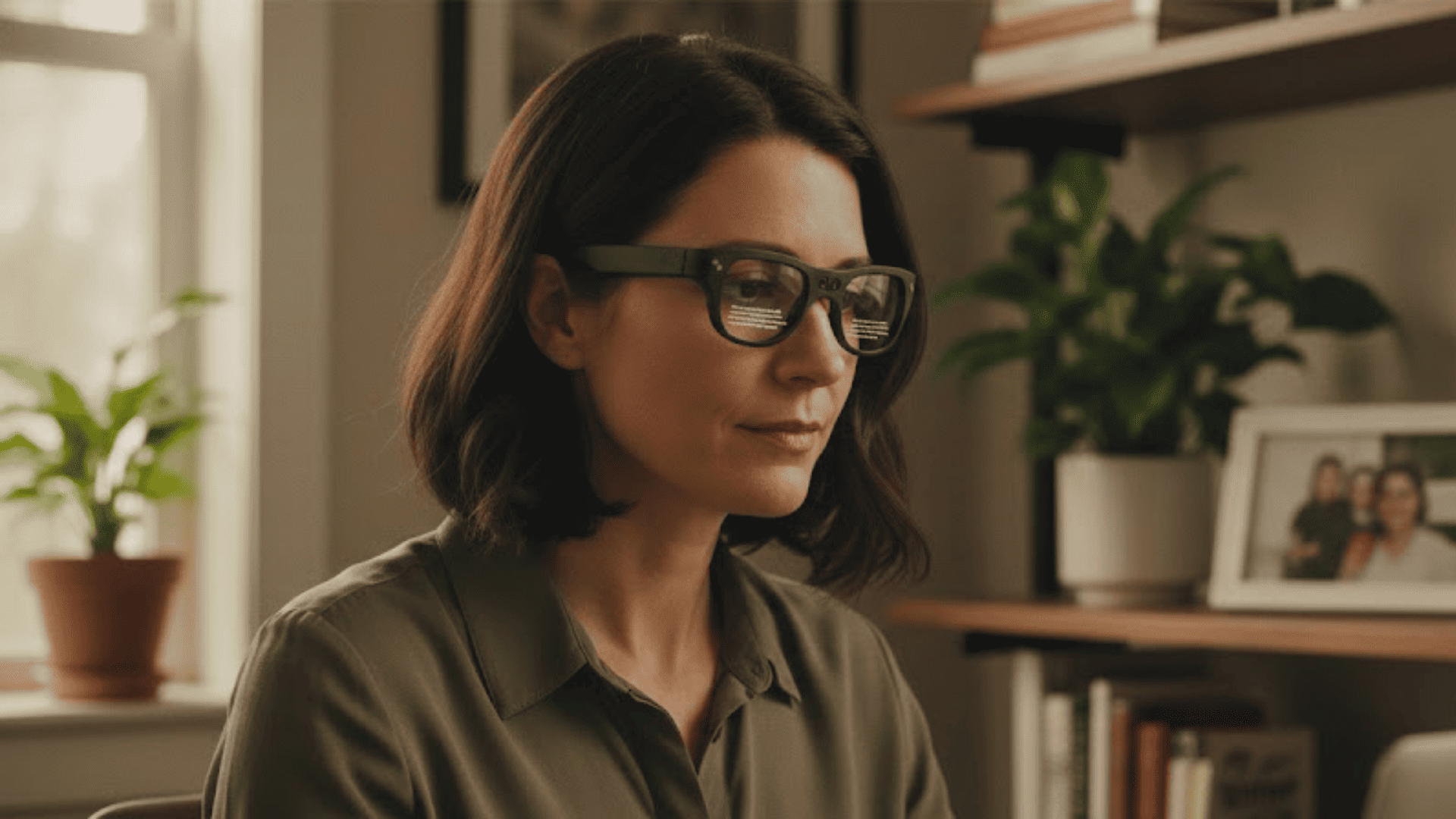
In the daily lives of those with blindness or low vision, individuals are often troubled by subtle details right in front of them. For example, a protruding step, a temporarily placed sign, or someone suddenly crossing from the side. In response, products like AI glasses for the blind transform visual information into audible and perceptible cues, allowing users to regain a sense of initiative during movement and communication.
At RayNeo, our core focus is making this initiative more instantaneous and natural. We aim to reduce the time spent reaching for a phone, searching for buttons, or waiting for feedback. This allows blind users to build a mental map through AI Glasses for the Blind before entering an unfamiliar space, rather than learning the environment through physical collisions.
AI smart glasses indeed provide significant help to blind and low-vision users, with the most noticeable benefits in obstacle recognition, text reading, and orientation support. To understand how these specialized devices differ from mainstream wearables, it is helpful to first look at what are smart glasses and their general evolution from simple audio frames to advanced visual assistants. However, AI Glasses for the Blind also have boundaries and shortcomings, such as challenges with complex lighting and wearing comfort. At an industry level, accessibility-focused smart glasses are moving from single-capability tools toward multimodal combinations.
Object and obstacle recognition is one of the foundational capabilities of AI glasses for the blind. The glasses continuously capture images through a front-facing camera and use computer vision to identify common targets such as pedestrians, vehicles, curbs, steps, doorways, and indoor furniture, then provide risk information to the user via voice or vibration alerts. In practical use, users care more about whether alerts are timely and understandable rather than how long the identification list is, because truly dangerous situations often happen the moment you turn around, take a step, or move through a crowd.
Solutions represented by .lumen follow a path closer to that of a guide dog: they integrate obstacle detection with walkable path planning and use haptic feedback to guide direction, reducing the burden of being interrupted by voice alerts on noisy streets. This technology stands out at exhibitions and public demonstrations because it turns recognition results into action commands. This closed loop from perception to action is closer to travel needs than simply announcing object names. For many users, the greatest value is not knowing what is ahead, but knowing how to take the next step safely.

Text reading is another high-frequency, essential demand, covering menus, delivery slips, medicine instructions, street signs, meeting materials, and home appliance panels. The glasses convert text in the frame into audible content. The core challenges lie in two areas: first is alignment, or whether the user can frame the text without repeatedly moving their head; second is structure, or whether the device can read a page of paper as layered content, allowing the user to quickly find dates, amounts, titles, or key paragraphs.

From a real-world experience perspective, the value of text reading is often underestimated. Understanding how ai glasses text recognition helps reading highlights a massive shift for low-vision users, who can look at rough outlines but get stuck on small print, reflections, stylized fonts, and low-contrast printing. AI reading smooths out these points of friction all at once, directly increasing the probability of completing tasks independently., directly increasing the probability of completing tasks independently. In professional settings, it also reduces reliance on colleagues, especially at moments when information needs to be confirmed quickly.
Navigation and orientation support determine whether a user can expand their range of activity from familiar routes to unfamiliar spaces. Outdoor navigation is relatively mature, relying on positioning and road network information, but the difficulty lies in the last fifty meters: how to find the elevator, front desk, turnstile, or restroom after walking into a lobby. Indoor navigation is more complex and requires a stable understanding of the environmental structure. Relying on GPS alone is not enough; a fusion of visual understanding and inertial measurement must be introduced.
In these types of needs, AI glasses that emphasize spatial understanding have an advantage because they can describe the environment as an executable route, such as noting a corner a few meters ahead, a door on the right, or steps if you continue straight. Users do not need a string of coordinates; they need language that can be converted into footsteps. Your suggested scenario of establishing a mental map before entering an unfamiliar space is very accurate; it significantly lowers the stress for blind users and reduces dependence on others.
Of course, AI glasses for the blind still encounter significant limitations. For example, strong backlight, low nighttime illumination, rain or snow reflections, dense crowds, and fast-crossing targets can make recognition and path judgment less stable. To avoid false positives, systems often become conservative, providing fewer prompts, which can actually leave users feeling less secure. Secondary issues include battery life and heat; keeping the camera open for a long time with real-time inference consumes significant power. A truly usable product must find a balance between weight, battery life, and computing power.
There are also issues regarding privacy and social acceptance. The always-on camera of AI glasses for the blind may cause concern for people nearby, while voice broadcasts might expose a user's information needs in public places. Therefore, in the future iterative development of AI glasses for the blind, improvements in haptic output, bone conduction, or directional audio will become increasingly important. Finally, there is the accessibility design itself: speech rate, prompt frequency, interruptibility, offline capability, and false-alarm strategies will all determine whether the glasses are a help or a hindrance.
The stability of AI glasses for the blind is not credited to any single model. It is a systems engineering achievement formed by the hardware, algorithms, sensor fusion, and interaction strategies of AI glasses for the blind. This naturally leads to a standard of judgment: whether a pair of glasses is suitable for a blind user depends not on gimmicks, but on its ability to continuously provide actionable prompts in real-world, complex scenarios.
The core hardware of AI glasses for the blind typically includes cameras, inertial sensors, microphones, speakers or vibration motors, and edge computing chips. The camera determines the upper limit of identifiable details, the IMU determines the continuity of direction and gait changes, the microphone determines whether voice interaction feels natural, and the output module determines whether prompts are intrusive. For blind users, output is especially critical; voice must be clear and quickly interruptible, while haptic feedback must be intuitive and not cause fatigue.
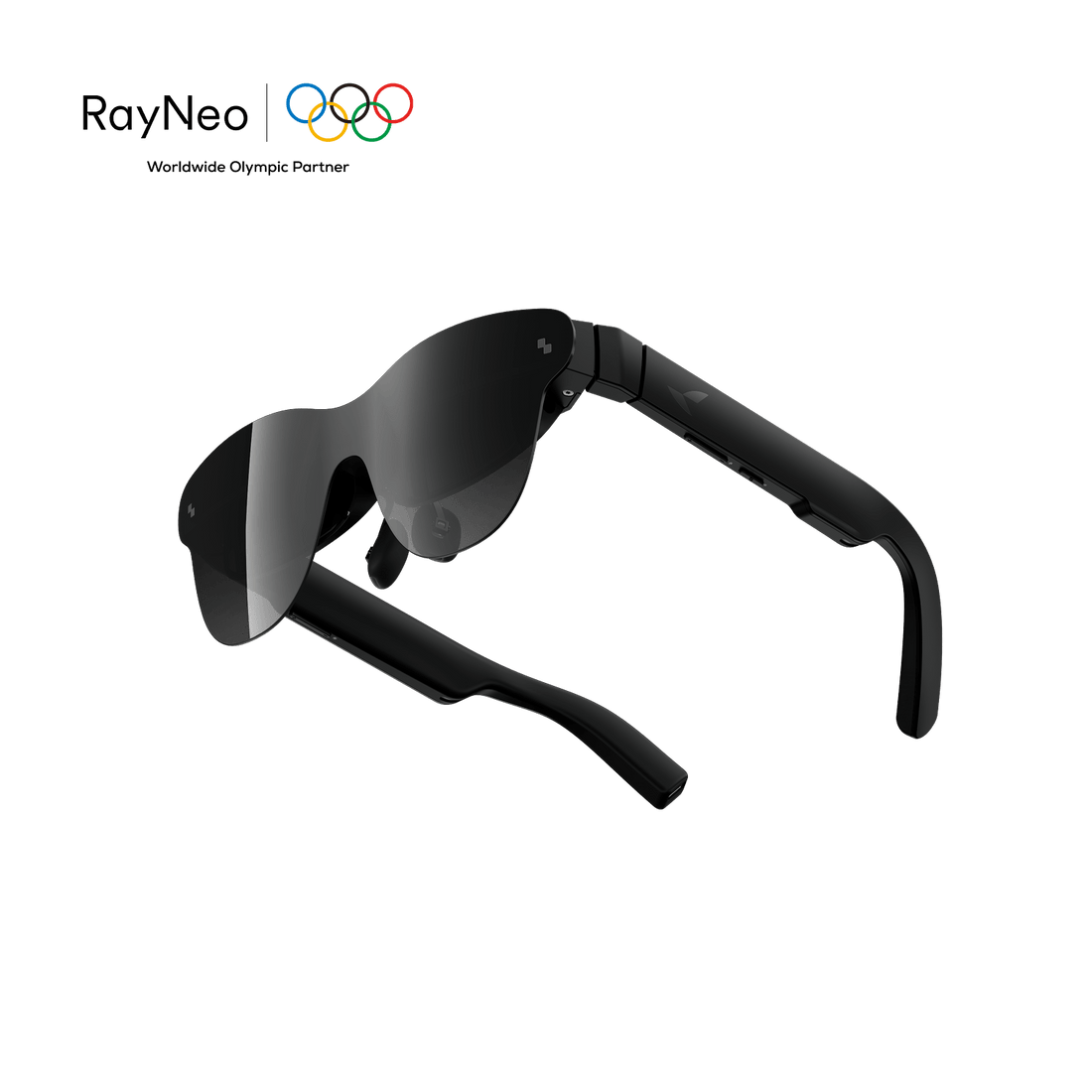
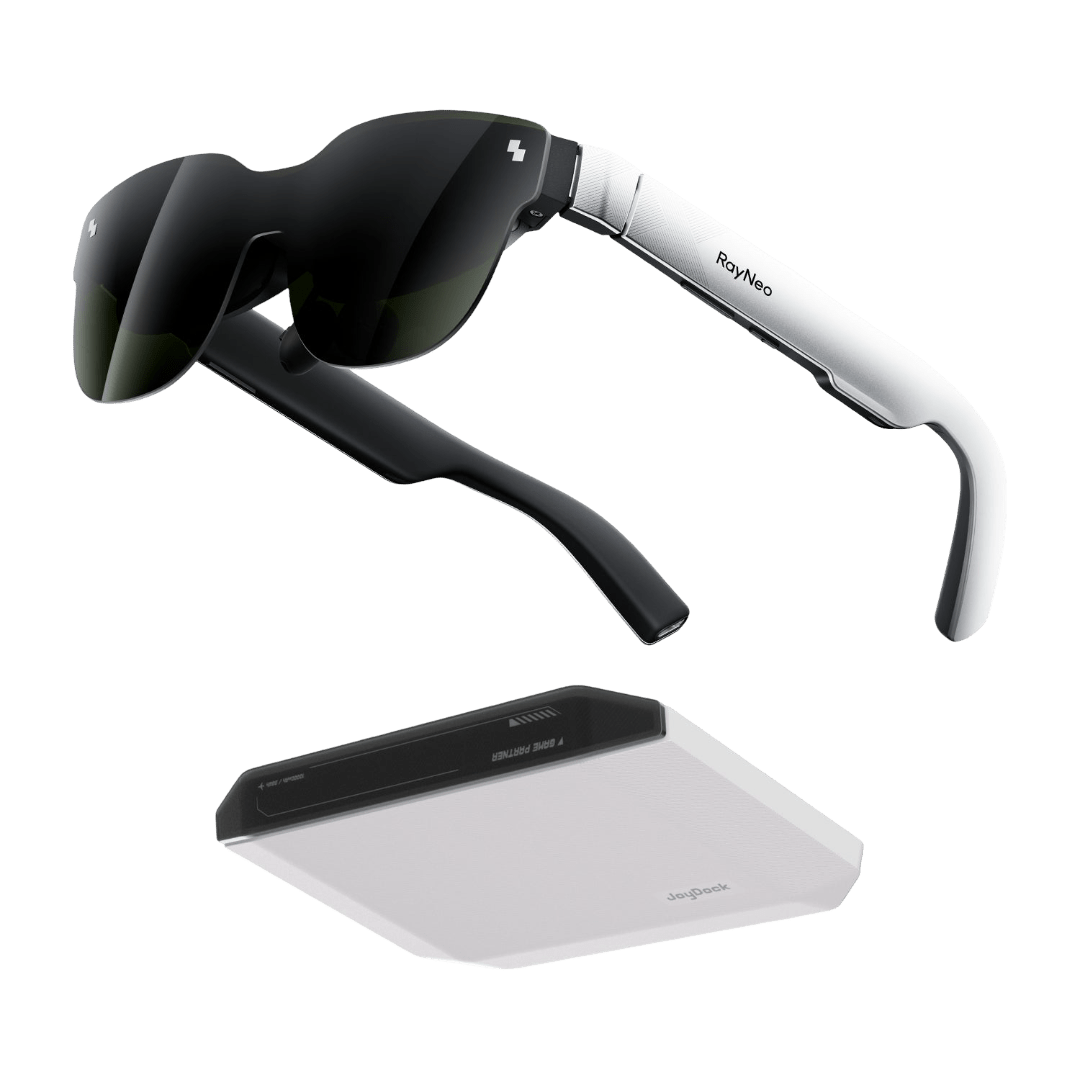
On AI+AR smart glasses like the RayNeo X3 Pro, the core differentiator is that it possesses not only sensing hardware but also functional display and system capabilities. While totally blind users rely primarily on voice, low-vision users often need to depend on both hearing and residual vision simultaneously; superimposed information in front of the eyes can serve as an extra layer of confirmation. More importantly, X3 Pro smart glasses with AI Assistant centralize multimodal capabilities within a single pair of glasses, creating a shorter loop between inquiry and feedback and reducing the interruptions caused by frequently picking up a phone.

Algorithms generally include object detection and segmentation, depth estimation and scene understanding, OCR text recognition, and large model inference for description and dialogue. Object detection solves what is in front of you; depth and scene understanding solve how far away it is and whether it is in your path; OCR handles readable information; and large models organize recognition results into prompts that sound more like human speech, making it easier for users to act quickly.
For blindness scenarios, the key to a good smart AI glasses for blind algorithm is not how many nouns it can state, but whether it can provide priority. For example, reporting the most dangerous obstacle first, followed by optional information, avoids outputting too many descriptions at critical moments that might cause a user to miss an action window. This is also why navigation-focused solutions tend toward haptic prompts, as touch is better suited for expressing direction and urgency.
Sensor fusion is the key step that elevates usability. Cameras can degrade in strong or low light, IMUs can accumulate error, and distance sensors can produce noise when dealing with complex materials. Fusing multi-source data improves robustness. For the user, the most direct benefit of fusion is that prompts are more stable and usable anywhere, rather than only being effective in evenly lit indoor environments.
The core workflow of AI glasses for the blind can be summarized in three stages: capture, understanding, and output. The design of each stage directly affects latency and reliability; the lower the latency, the more confident a user feels walking faster and moving independently.
The first step is video input capture. The glasses' camera continuously films the scene ahead, and some products add wide-angle or depth information to improve judgment of close-range obstacles. For blind users, reliability within the immediate few meters is more important than long-distance recognition because danger usually occurs within the next step or two.
The second step is AI processing and analysis. The system performs recognition and inference on every frame to identify obstacles, navigable areas, text content, and information relevant to user queries. Of course, there are trade-offs here: relying more on local computing power means lower latency and stronger privacy, while relying more on the cloud means more powerful language understanding and faster model iterations. Actual products often adopt a hybrid strategy, switching based on network conditions and task complexity.
The third step is output. Voice output is suitable for describing scenes and reading text, while haptic output is better for directions and emergency alerts. Excellent output design gives users control, such as one-tap repeat, one-tap pause, or switching modes via short commands to avoid being constantly interrupted by the system in high-pressure situations.
The RayNeo X3 Pro functions more like a portable multimodal AI assistant, emphasizing generalized spatial perception and information acquisition capabilities. The interaction method you proposed closely aligns with real-world usage habits: tap the temple, ask what is in front of me, and the system uses visual understanding to tell you about key objects, relative positions, and potential risks. At the same time, you can follow up with specific questions when needed, such as where the entrance is, whether there are stairs or an elevator ahead, or what is written on a sign.
In real-world scenarios, the RayNeo X3 Pro, as one of the best smart glasses with a display, is particularly suitable for two types of people. The first is low-vision users who can often see general outlines but are limited by details and text; the environmental description and text understanding of RayNeo X3 Pro Smart Glasses help fill in those gaps. The second is individuals who frequently travel for business or enter unfamiliar office buildings. The spatial description and translation capabilities of the X3 Pro allow you to be more composed when asking for directions, reading signage, or confirming room numbers.
On the CES 2026 Innovation Awards page, .lumen is positioned as a glass solution for the blind. Its highlight is the integration of obstacle detection and path guidance into a closed loop, using haptic feedback to guide user movement. The value of this approach lies in reducing cognitive load; users do not need to mentally translate verbal descriptions into a route but can simply follow the tactile prompts. For users who frequently travel alone and feel anxious about complex streetscapes, this type of solution is often a primary source of security.
Overall, the value of AI glasses for the blind lies in taking tasks that previously required someone else to take a look for you and turning them into a capability you can call upon at any time. Navigation-based AI glasses for the blind provide a sense of security, while multimodal assistant-style AI glasses for the blind offer interpretability of an unfamiliar world. Together, both drive a transformation for blind and low-vision users from passive reliance to active independence. We believe the mainstream direction of the future involves the simultaneous advancement of multimodality and sensor fusion, allowing users to obtain more reliable action prompts with lower learning costs. The RayNeo X3 Pro is currently turning this trend into a product experience suitable for daily wear and continuous iteration.
AI cannot restore biological sight, but it can translate visual information into voice and haptic cues, providing users with environmental understanding and navigation guidance. For users, this assistance is more akin to having a personal narrator and guide, which is most effective for identifying obstacles, reading text, and orienting oneself in unfamiliar spaces.
Pricing varies depending on the specific product approach. Smart glasses focused on professional assistive features tend to be more expensive, while products leaning toward general AI assistant capabilities are relatively more affordable. Users should evaluate value based on their most frequent use cases. To avoid providing unverified figures, it is recommended to refer to current pricing on official brand websites or authoritative channels before publishing, and to note any regional or tax differences on the page.
Battery life depends on whether the camera is always on, whether real-time inference is running, whether cloud services are being used, and the output method. Continuous navigation and visual analysis typically consume the most power, while intermittent, query-based use lasts significantly longer. For blind users, it is more critical to know if the AI glasses can still provide basic safety functions, such as obstacle alerts or simple descriptions, when the battery is low.
Many AI smart glasses support prescription lenses or clip-on solutions. Low-vision users should confirm the frame structure and customization channels before purchasing. Consulting our prescription smart glasses guide can help you understand how to integrate corrective lenses with the sensors and cameras of the device. For users who are totally blind, prescription strength is not the priority; the focus should instead be on the quality of voice output, the clarity of haptic feedback, and usability in noisy environments.





Share:
Subtitle Glasses vs. Translation Apps: Which Works Better?
How AI Glasses Text Recognition Helps Reading