

$429.00

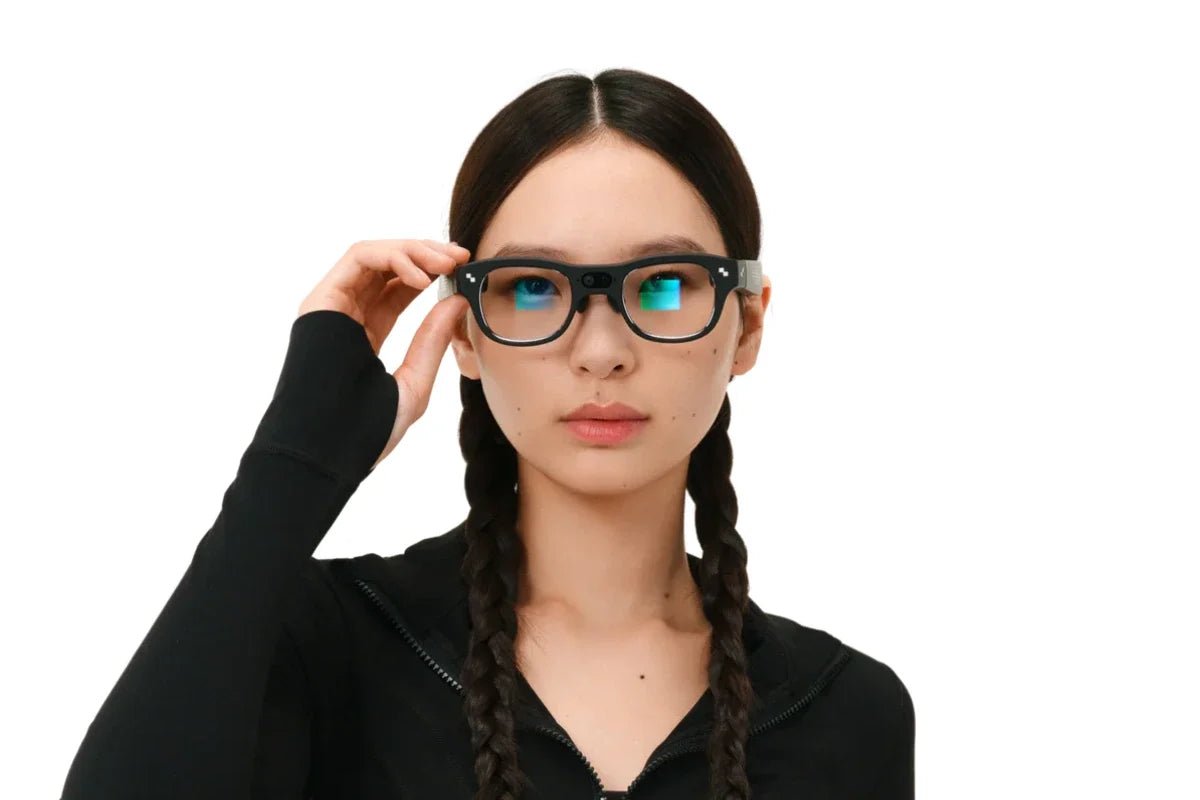
You might have been wearing prescription contact lenses for years, and you rely on them to see clearly without spectacles. But what if you want to switch to prescription glasses at night, keep a backup pair, or try prescription-compatible smart glasses? You may naturally wonder whether you can translate your contact prescription to glasses and use those numbers for your new lenses.
Contact lenses and glasses may correct the same vision problem, but their prescriptions are not always interchangeable because the lenses sit at different distances from your eyes. This guide explains how contact and glasses prescriptions differ, how conversion works, and when you should get a proper glasses prescription rather than relying on an estimate.

You can estimate a glasses prescription from a contact lens prescription, but they are not usually identical. Contact lenses sit directly on the eye, while glasses sit a short distance in front of the eyes. This difference, known as vertex distance, can affect the lens power you need, especially for stronger prescriptions.
A contact lens prescription also includes contact-specific fitting details, such as base curve and diameter, while glasses require measurements such as pupillary distance (PD) and frame-related adjustments.
A conversion can provide a rough estimate, but you should use a proper eyeglass prescription when ordering prescription glasses or smart glasses for the most accurate vision correction.
Both prescriptions correct refractive error, but they apply that correction through different devices and from different positions in front of the eye. Understanding these differences explains why a contact lens prescription should not simply be copied into a glasses order.
A contact lens sits directly on the eye, while a glasses lens usually sits about 12-14 mm in front of it. This gap is called the vertex distance. Moving a lens farther from the eye changes its effective power, which is why a contact lens prescription cannot always be copied directly into glasses.
The difference is usually small for lower prescriptions but becomes more noticeable above about 4.00 D:
The National Academy of Opticianry’s vertex-distance guidance recommends compensating contact lens powers above 4.00 D in either principal meridian. The examples below assume a 12 mm glasses vertex distance and are rounded to the nearest typical 0.25 D step.
| Contact Lens Sphere | Approximate Glasses Sphere | What Changes |
| -4.00 D | -4.25 D | Slightly more minus power |
| -6.00 D | -6.50 D | More minus power |
| -8.00 D | -8.75 D | The difference becomes larger |
| +4.00 D | +3.75 D | Slightly less plus power |
| +6.00 D | +5.50 D | Less plus power |
| +8.00 D | +7.25 D | The difference becomes larger |
For example, a -6.00 D contact lens sits on the cornea, but a glasses lens positioned 12 mm away would need to be approximately -6.50 D to create a similar optical effect. A +6.00 D contact lens would move in the opposite direction, to approximately +5.50 D in glasses.
These values only demonstrate how vertex distance affects simple spherical powers. They are not prescription recommendations. A real conversion must also account for cylinder, axis, prism, multifocal requirements, frame fit, and the measured vertex distance.
For astigmatism prescriptions, each principal meridian may need to be calculated separately by an eye-care professional.
If you are wondering how to translate a glasses prescription to contacts, professionals handle the process in two stages: first they estimate the change in effective power, and then they complete a contact lens fitting. The calculation alone does not create a valid contact lens prescription.
The general direction is easier to understand than it may first appear:
After that first estimate, an eye care professional still needs to:
That is why a mathematically sensible estimate can still differ from the contact lens power that gives you the clearest and most comfortable result.
Astigmatism and multifocal correction add variables that a basic sphere table cannot represent. Both usually need product-specific fitting and real-world vision checks.
Cylinder describes the amount of astigmatism correction, while axis identifies its orientation. For stronger prescriptions, the power in each principal meridian may need its own vertex calculation before the result is converted back into sphere and cylinder.
Toric contacts can also rotate after they are placed on the eye. The practitioner may adjust the selected axis to account for that rotation, and the exact cylinder or axis may be limited by the parameters available for a particular lens.
A glasses prescription may provide a numerical ADD, but multifocal contact lenses often use brand-specific low, medium, or high additions. Different designs divide distance and near power in different ways.
Eye dominance, reading distance, computer use, lighting, and your tolerance for visual compromise can all affect the final choice. Progressive glasses also need pupillary and fitting-height measurements that cannot be calculated from a contact lens prescription.
A conversion chart is useful for understanding why the numbers differ, but it cannot confirm what correction your eyes currently need. Using an estimate as an order-ready prescription may lead to:
An estimated pair of glasses also does not replace an eye health examination, which can identify changes that a conversion calculation cannot detect.
Use a chart only to understand the approximate relationship between lens positions. Get a current eyeglass prescription before ordering glasses, especially when:
Bring both prescriptions to the appointment if you have them. They can help your eye care professional understand your previous correction, but neither should be used as a substitute for the other.
RayNeo offers prescription-friendly smart glasses for different parts of your day, from immersive entertainment to lightweight AI assistance. Air 4 Pro uses a separate prescription insert with its large, connected display, while RayNeo iO is designed as everyday AI eyewear with custom prescription lenses and glanceable information directly in view.
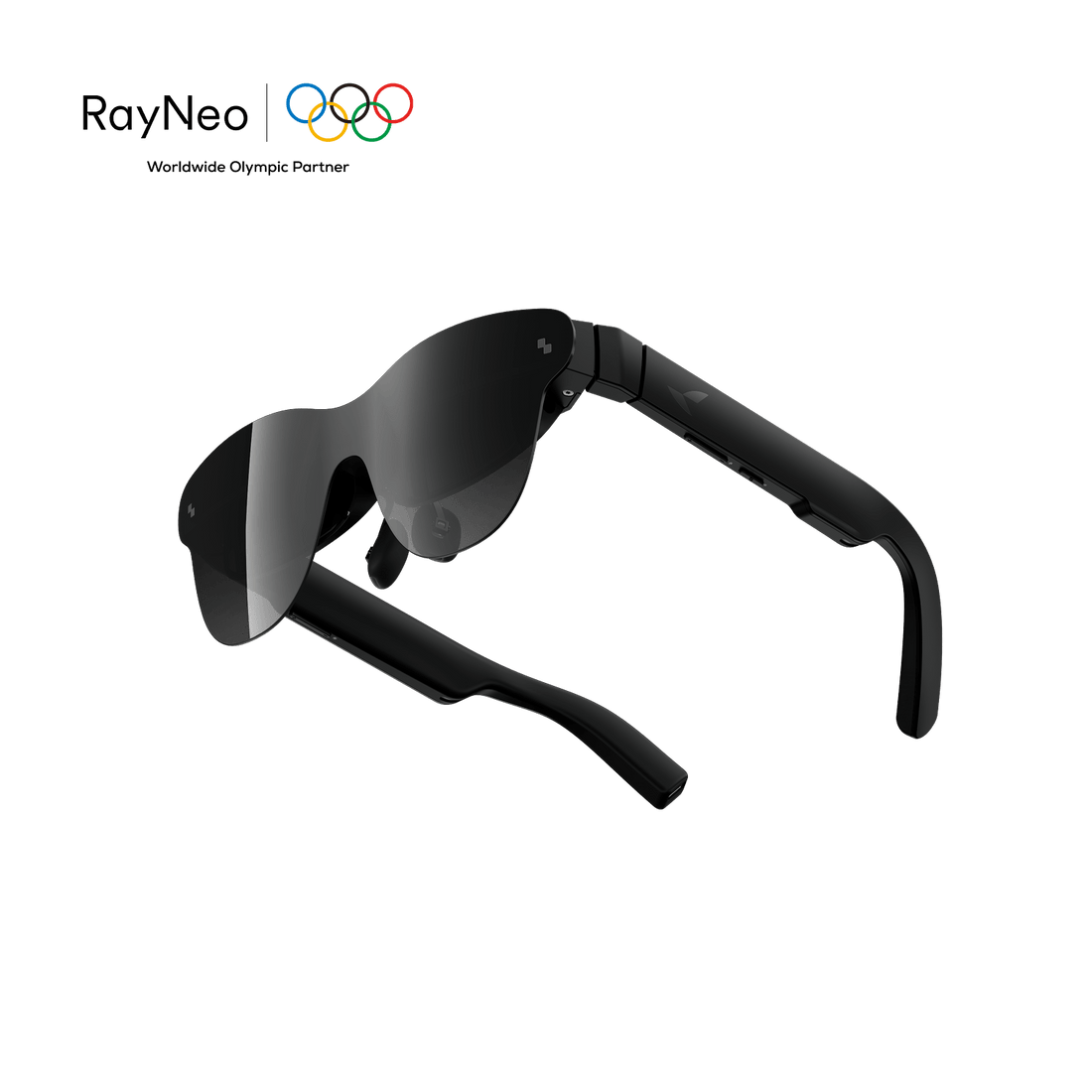
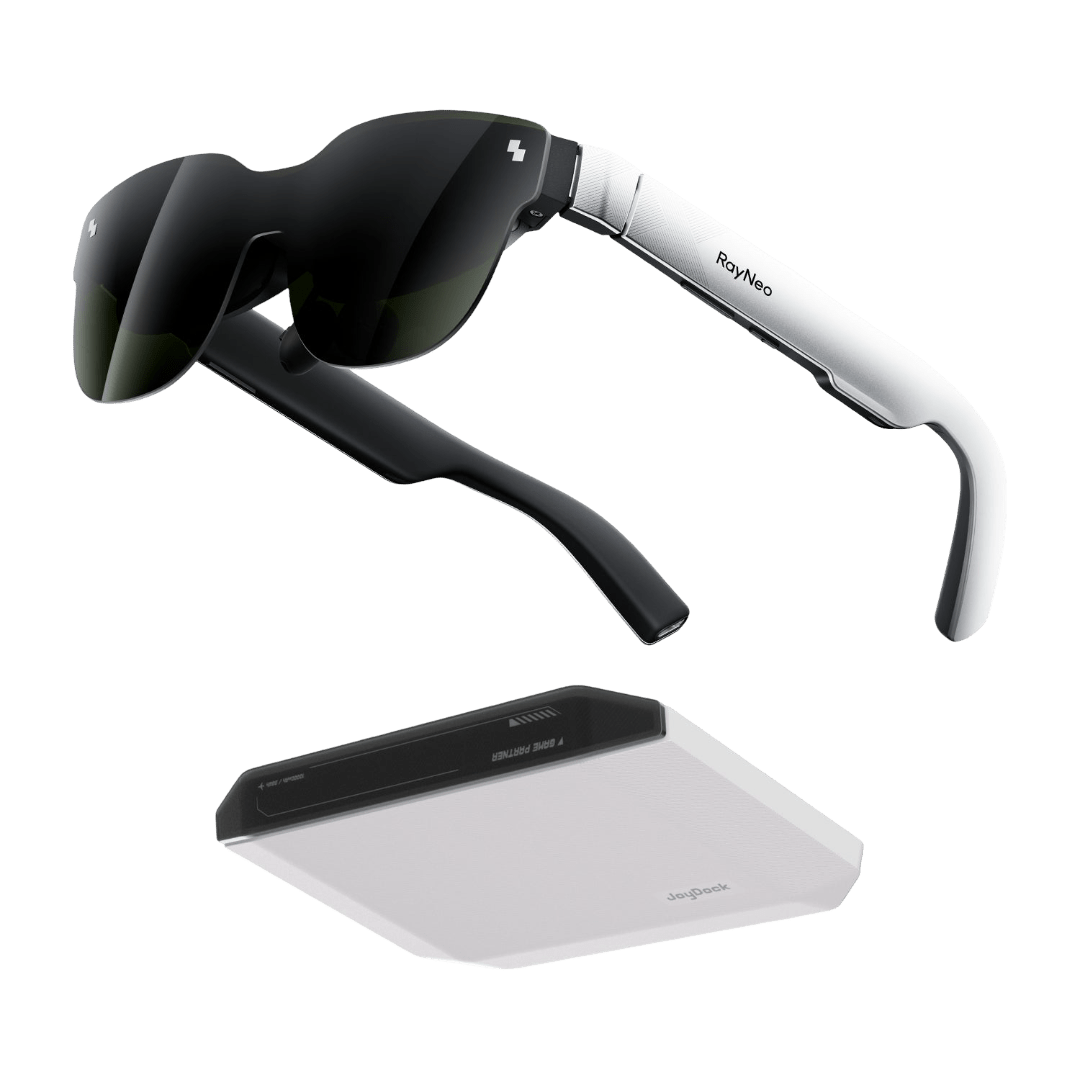
The RayNeo Air 4 Pro AR Glasses use separately ordered prescription lens inserts, so you can see the virtual display clearly without wearing the AR glasses over your regular frames. Connect them to a compatible phone, computer, tablet, or gaming device when you want a large private screen for movies, gaming, travel, or focused work.

Best for: Prescription wearers who want a personal display and broad device compatibility rather than an everyday conversational AI assistant.
For day-to-day use, the benefits are straightforward:
The RayNeo iO AI Glasses take a different approach. Instead of acting mainly as a connected cinema display, they are designed as everyday AI eyewear with a discreet near-eye display.
Custom prescription lenses let you use the same pair for clear vision, live captions, reminders, meeting notes, and other glanceable information without layering smart glasses over your regular frames.
At just 34 g with a 50:50 weight distribution, iO is designed to feel more like familiar eyewear during a full workday. Multiple nose pads, flexible titanium temples, silicone tips, and a subtle outward flare help the frame sit comfortably across different face shapes.
Best for: Professionals, students, presenters, and frequent travelers who want prescription vision correction and everyday AI support in one lightweight frame.
For someone who wears prescription lenses every day, the benefits are:
Whichever model you choose, use a current glasses prescription and confirm that the lens provider can make the required sphere, cylinder, axis, prism, and pupillary-distance combination.
Contact and glasses prescriptions correct the same refractive error, but they are not interchangeable. A conversion table can explain how vertex distance changes stronger spherical powers, yet it cannot provide the measurements needed to make and fit glasses.
If you need to translate a contact prescription to glasses, treat the result as an estimate and get a current eyeglass prescription before ordering standard frames, progressive lenses, or smart-glasses inserts.
A glasses prescription is not always higher than a contact lens prescription. For weaker powers, usually below about ±4.00 diopters, the numbers may be identical or very close. With stronger prescriptions, lens distance creates a larger difference: strong minus glasses generally need more minus power than contacts, while strong plus contacts may need more plus power than glasses. An optometrist can determine the correct values for your individual eyes accurately.
You cannot reliably read a contact prescription as a complete glasses prescription because the two use different measurements. Instead, identify the OD for your right eye, OS for your left eye, SPH for lens power, and any CYL and AXIS values for astigmatism. Contact details such as base curve and diameter do not apply to glasses, so you still need an eyeglass prescription and pupillary-distance measurement before ordering new lenses.
The number 1.25 indicates the lens power in diopters, but its meaning depends on whether it has a plus or minus sign. A −1.25 contact lens corrects mild nearsightedness, helping distant objects appear clearer. A +1.25 lens corrects farsightedness or may provide near-vision support in a multifocal prescription. This number describes optical power, not base curve or diameter, and should match the contact prescription your optometrist provided for that eye.





Share:
Best Smart Glasses with AI Assistant in 2026: Choosing the Right One
Best Smart Glasses on Reddit: Top Picks in 2026