

Sale price$399.00
Regular priceReg. $429.00
Save $30.00

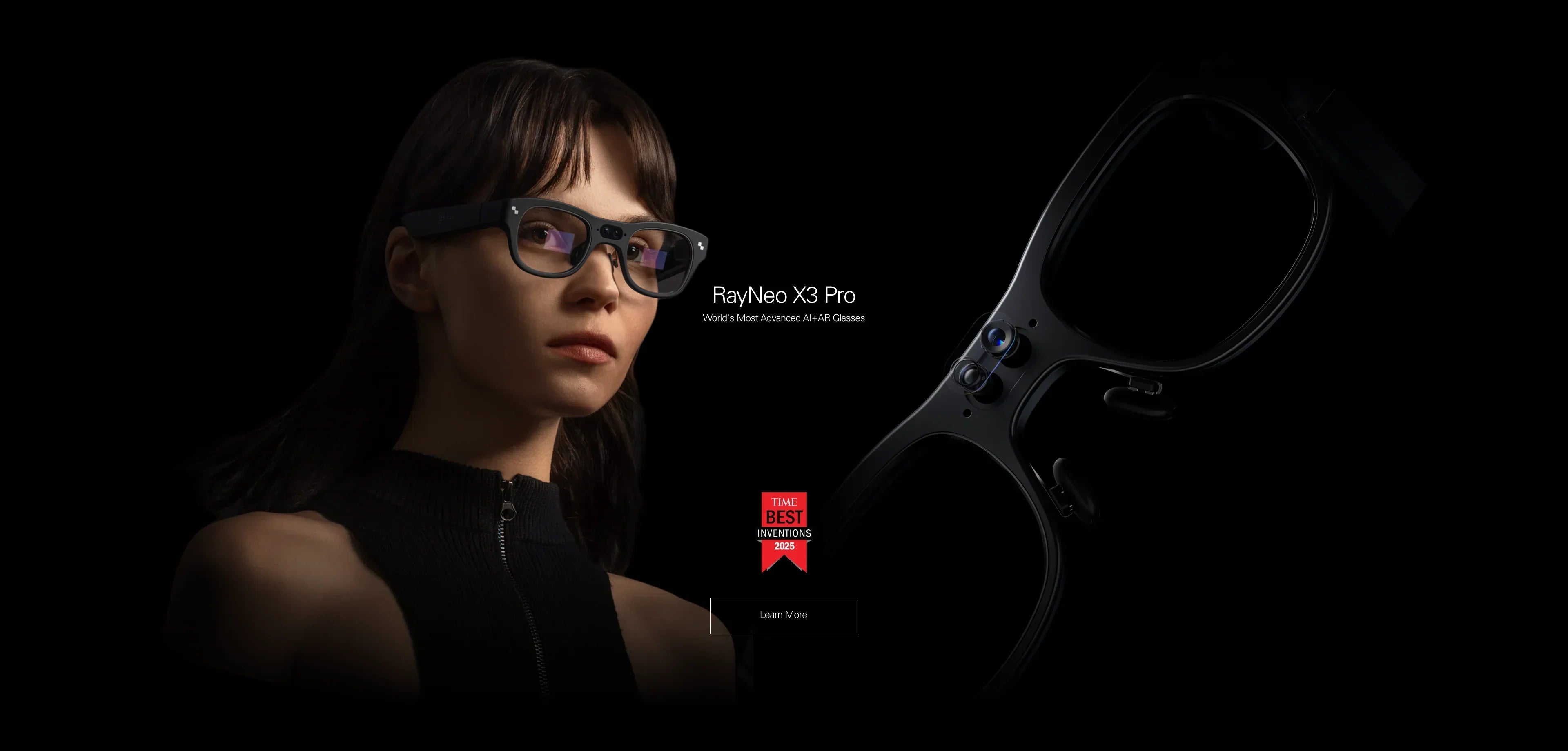
When communicating across languages, the barrier isn't just vocabulary; it's the friction of the medium. Holding a smartphone translation app creates a physical wall, breaking eye contact and interrupting the natural flow of conversation. Smart glasses aim to remove this barrier by placing subtitles directly in your line of sight.
However, choosing the right hardware involves navigating a fundamental trade-off between processing independence and physical comfort. The market currently offers two distinct approaches: standalone AR computers (exemplified by the RayNeo X2 series) and tethered display accessories (lightweight glasses that offload processing to your smartphone).
The Short Answer: The "better" choice depends on your tolerance for weight versus your need for reliability.
Standalone Systems (RayNeo X2 / X3 Pro): Offer higher reliability and lower latency because they process data on-device, removing the variable of Bluetooth connection. They are better suited for professional or extended interactions where accuracy is paramount.
Tethered Systems: Act as a secondary screen for your phone. They are generally lighter and less expensive, making them a practical choice for casual travelers who only need occasional assistance and prioritize wearing comfort.

This guide analyzes the technical architecture, real-world performance, and hidden limitations of both form factors to help you make an informed decision.

Before looking at specific features, it is crucial to understand the "brain" of the device, as this dictates performance and battery life.
How it works: These glasses function as an independent Android device worn on your face. They contain their own Snapdragon processor, battery, Wi-Fi module, and microphones.
Implication: Translation apps run natively on the RayNeo X2. Audio is processed locally or sent directly to the cloud via Wi-Fi, minimizing the "round-trip" time.
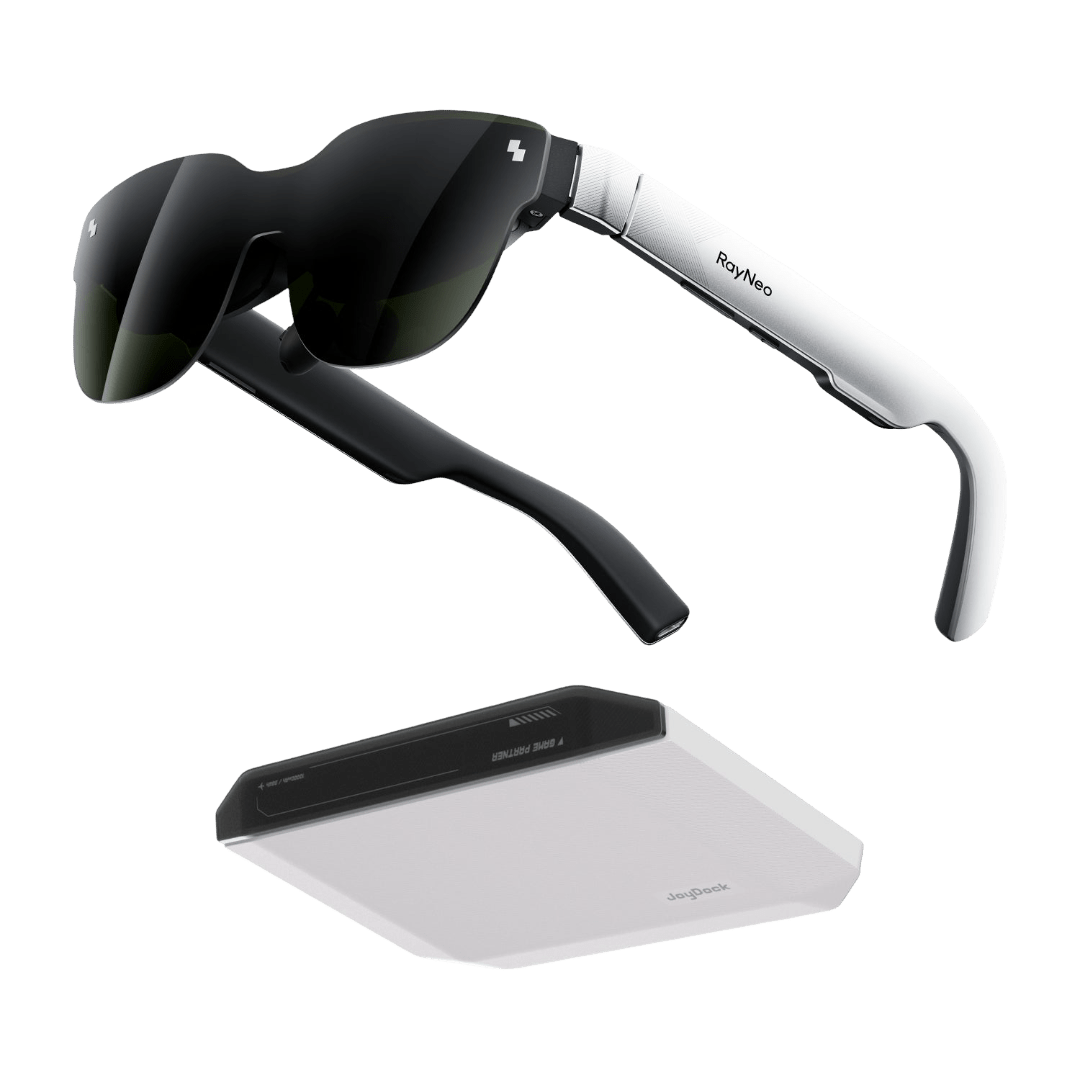
How it works: These glasses are essentially a monitor with microphones. They connect to your smartphone via Bluetooth or USB-C. Your phone runs the translation app and does the processing.
Implication: Audio must travel from glasses to phone, be processed, and text sent back to glasses. This adds a layer of dependency on the phone's operating state and Bluetooth signal integrity.
Smart glasses are endpoints for cloud AI services. Regardless of which approach you choose, you must ensure your environment supports them. Do not buy either device if you cannot meet these conditions:
Stable Network is Mandatory: High-quality neural machine translation (NMT) requires an active internet connection. Offline modes exist but significantly reduce grammatical accuracy.
Travel Requirement: You will need a mobile hotspot or a local SIM card with generous data roaming.
Regional Service Availability: Many translation engines (Google Gemini, Microsoft Azure, ChatGPT) have geo-restrictions. Ensure the services supported by your chosen glasses function in your destination country.
Power Management:
Standalone: Requires charging the glasses case daily.
Tethered: Will drain your smartphone battery significantly faster (often 15-20% per hour of active use). A power bank is essential. You can check detailed device compatibility to see if your phone supports extended tethering.
We evaluated both device types across four critical dimensions for cross-language communication.
RayNeo X2: The onboard processing eliminates the Bluetooth audio hop. In tests, subtitle latency is typically under 1 second (network dependent). This speed allows for relatively fluid turn-taking in conversation.
Tethered Glasses: The reliance on Bluetooth transmission adds inherent latency. In environments with heavy radio interference (like airports or trade shows), this can result in a "subtitle lag" where the text appears after the speaker has finished a sentence, potentially disrupting the conversation rhythm.
RayNeo X2: Utilizes MicroLED Optical Waveguides. This technology is notable for its high brightness (up to 1,500 nits). Text remains high-contrast and legible even against bright outdoor backgrounds, such as a sunny street or snowy landscape. You can view the full tech specs to understand how MicroLED differs from standard OLED.
Tethered Glasses: Typically use Birdbath optics or standard OLED. While offering excellent color depth for movies, these displays often struggle with brightness in direct sunlight, sometimes requiring a lens cover (shade) to make text readable, which can look socially obtrusive.
RayNeo X2: Features an integrated camera located centrally on the frame. This allows for "point-of-view" translation. The AI can analyze the video feed to translate menus, road signs, or handwritten notes directly overlaying the physical world.
Tethered Glasses: Most tethered units lack a camera or rely on the phone's camera. To translate a sign, you would typically need to pull out your phone, negating the hands-free benefit of the glasses.
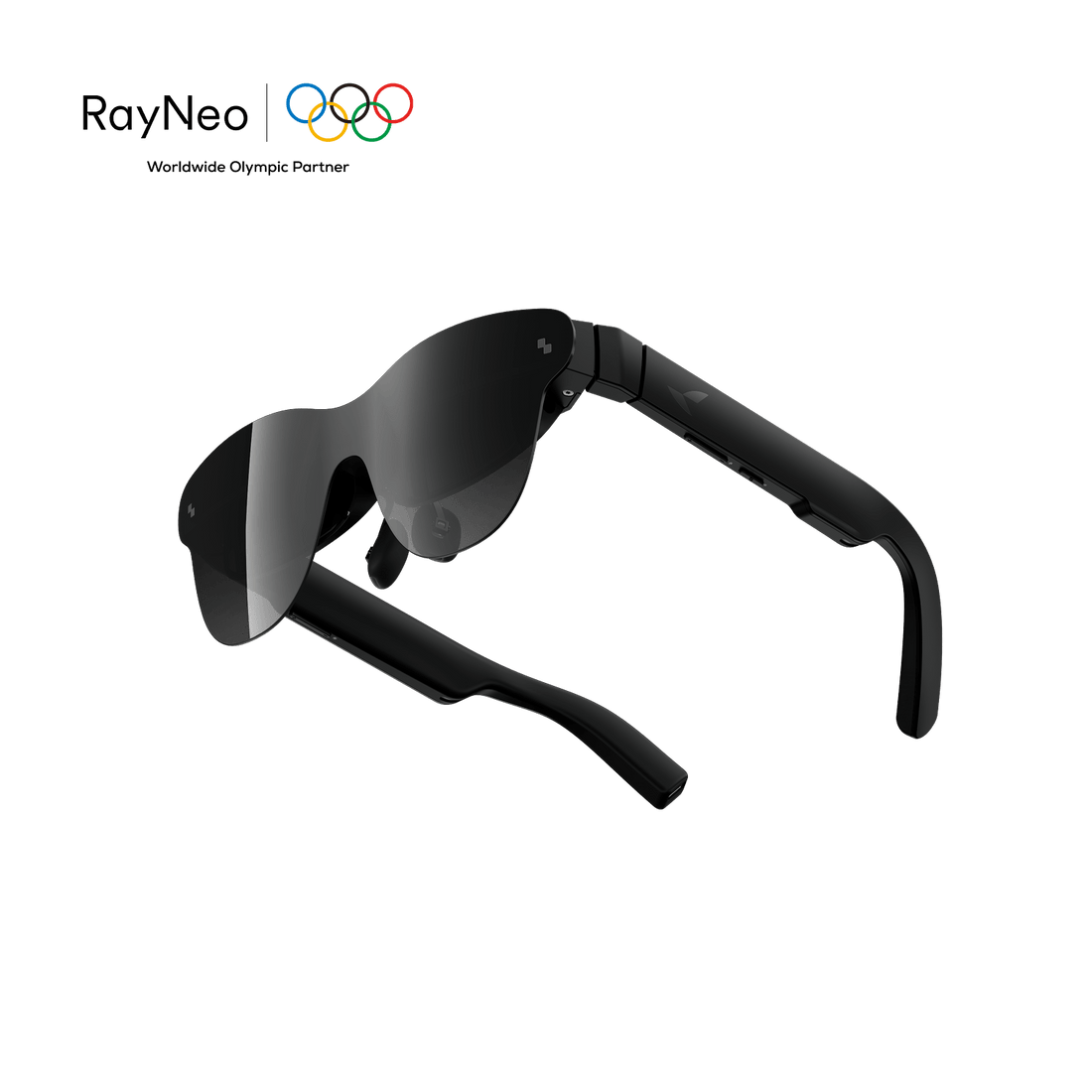
RayNeo X2: The standalone components (battery, CPU) add weight (~119g). While balanced, it is noticeably heavier than standard eyewear. Note: The newer X3 Pro model addresses this, reducing weight to ~76g.
Tethered Glasses: By offloading processing to the phone, the headset is lighter (~75-90g) and generates less heat on the temple. For users sensitive to nose bridge pressure, this is a significant advantage.
| Feature | RayNeo X2 (Standalone) | Tethered AR Glasses |
|---|---|---|
| Processing | On-Device (Snapdragon) | Host Smartphone |
| Display Tech | MicroLED Waveguide | OLED / Birdbath |
| Outdoor Legibility | High (High Brightness) | Moderate (May need shade) |
| Point-of-View Camera | Yes (Visual Translation) | No (Usually Audio Only) |
| Phone Battery Impact | Minimal | Significant |
| Weight | ~119g (Heavier) | ~75g-90g (Lighter) |
| Price Tier | Premium ($700+) | Mid-Range ($300-$500) |
To illustrate the standalone workflow, here is how a device like the RayNeo X2 (or X3 Pro) functions in a typical travel day.
09:00 - The Taxi: You activate "Conversation Mode" via the RayNeo App. The driver asks a question. The glasses pick up the audio, process it locally or via cloud, and display the English translation in the upper right of your vision. You reply, and the glasses' speaker plays the translated audio to the driver.
13:00 - The Restaurant: You encounter a menu with no pictures. Using "Visual Search," you look at the text. The glasses identify the characters and overlay the translation directly onto the menu surface in your field of view.
19:00 - The Networking Event: In a dimly lit hall, the MicroLED display automatically dims to avoid blinding you, while the directional microphones attempt to isolate the voice of the person standing directly in front of you from the background noise.
There is no "perfect" translator, only the right tool for your specific trip.
Consider the RayNeo X2 / X3 Pro If:
You are a Power User: You need a device that works independently of your phone status.
You need Visual Context: Translating signs and menus hands-free is a priority.
You work Outdoors: High brightness is required for legibility.
Check Availability: RayNeo X3 Pro Product Page (The lighter evolution of the X2).
Consider a Tethered Display Approach If:
Comfort is King: You cannot tolerate wearing anything over 100g.
Budget is a Constraint: You want a lower-cost entry point into smart glasses.
Usage is Casual: You mainly need translation for short bursts (checking in at a hotel, ordering coffee) rather than hour-long meetings.
Q: Do these glasses record conversations? A: Generally, translation glasses process audio in a temporary buffer for translation. However, features vary by app. Some apps allow you to save a text transcript of the conversation, which can be useful for business meetings. Always inform your conversation partner for privacy transparency.
Q: Can I use them offline? A: The RayNeo X2 supports offline language packs for major pairs (e.g., English-Chinese, English-Spanish). However, offline translation is less accurate than cloud-based neural translation and may miss nuances or slang.
Q: Why is the standalone model heavier? A: It houses the battery and computer necessary to run Android and the AI models. Tethered glasses offload these heavy components to your phone, connected by a cable or Bluetooth. For troubleshooting weight or fit issues, visit the Support Center.





Share:
What Smart Glasses Support Prescription Lenses? The 2026 Vision Guide
Which Smart Glasses Have a Heads-Up Display? The 2026 Guide