

$429.00


Want to build a smart-glasses app, modify the firmware, experiment with new sensors, or even assemble your own frame? Open-source smart glasses can give developers access to parts of the technology that closed consumer products keep behind proprietary hardware and software.
But “open source” does not always mean the same thing: one project may publish an app SDK, another may expose firmware, while a true open-hardware project can release schematics, PCB files, and mechanical designs.
This guide explains those differences, looks at current platforms and research projects, and shows how to choose between building, developing, or simply buying a ready-to-use AI or AR experience.

Open-source smart glasses are wearable devices or development platforms that make parts of their technology available for others to inspect, modify, and build upon.
However, “open source” can mean different things depending on the project. Some platforms open their software, operating system, or development tools, while others go further by publishing hardware designs, electronics files, or firmware.
Unlike closed commercial smart glasses, which usually provide a fixed hardware and software experience, open-source projects give developers more control over how the technology works and what they can create with it. This can include building custom applications, experimenting with AI features, modifying interfaces, or developing new hardware configurations.
It is also important to separate open-source software from open-source hardware. Open software generally focuses on making source code available for inspection and modification, while open hardware usually involves publishing design information that allows others to study, modify, or recreate physical components.
For smart glasses, this means an open-source project could range from an accessible developer platform for creating wearable apps to a fully customizable hardware platform for AI, AR, and sensor research. For example, some projects focus on software ecosystems and app development, while others explore modular hardware and on-device AI capabilities.
When evaluating open source AR glasses against commercial options, the primary differences involve data control, customization, transparency, and platform flexibility. The comparison below highlights how these approaches typically differ across key features.
| Feature | Commercial Smart Glasses | Open-Source Smart Glasses |
| Data Processing | May rely on cloud-based services for some AI features. | Often emphasizes on-device processing and local data handling. |
| Customization | Hardware and software customization is generally limited. | Open firmware and modular hardware support extensive customization. |
| Transparency | Source code is typically proprietary. | Source code is publicly available for inspection and auditing. |
| Platform | Usually designed around the manufacturer's software ecosystem. | Supports community-developed software, open SDKs, and broader customization. |
An AI glasses open-source platform supports a wide range of applications beyond consumer entertainment, making it suitable for research, development, and specialized AI projects.
The easiest way to start is to choose one ecosystem first. Do not mix hardware, firmware, and operating-system instructions from unrelated smart-glasses projects unless the developers explicitly document compatibility.
If you mainly want to build an app, start with an SDK or OS rather than designing glasses from scratch.
If you want to modify firmware, choose a platform with a published firmware codebase.
If your goal is hardware research, look for projects that publish schematics, PCB files, CAD designs, and a reproducible build guide.
Do not assume a Raspberry Pi, GAP9, ESP32, or another board can simply be substituted across projects. The processor, power architecture, camera interface, firmware, and physical design are tightly linked.
Before investing significant development time, inspect the license, repository activity, documentation, hardware availability, and whether the project is still maintained.
This is particularly important with the name “OpenGlass.” The older BasedHardware/OpenGlass GitHub repository currently states that it is no longer supported and has moved to Omi, while the 2026 academic OpenGlass project is an unrelated event-based smart-glasses research platform.
Open source makes code easier to audit, but it does not automatically mean data stays local or that the system is secure.
Check which sensors are active, where audio/images are processed, whether information is uploaded to a server, how credentials are stored, and what network services the project depends on.
Building or configuring an open platform makes sense when customization is the goal. If you mainly want to use AI, AR, or a wearable display without assembling hardware or maintaining software yourself, a commercial pair can be the simpler route.
The RayNeo models below are not open-source smart glasses; they are ready-to-use alternatives for different AI and AR experiences.
If your interest in open-source AI glasses comes from wanting a customizable AI assistant but you would rather skip the hardware build, RayNeo iO takes a finished-product approach.
Its 34g, 50:50 balanced frame is designed around everyday wear, with a transparent display, Personal Dashboard, Live Captions, Voice Memo, and contextual AI tools built into the experience.
Best for: Users who want lightweight everyday AI and glanceable information without assembling or maintaining a developer platform.
Key features:
If you want to experiment with AR experiences without first building the eyewear itself, the RayNeo X3 Pro AI+AR Smart Glasses provide a more development-friendly commercial route.
They combine a Full-Color MicroLED display, Snapdragon AR1, Gemini, RayNeo AI OS, and Creator Mode, giving developers a finished AI+AR hardware platform while avoiding PCB assembly or optical integration.
Creator Mode provides development access, but it should not be confused with the hardware or operating system being open source.
Best for: AR developers, tech enthusiasts, and creators who want to prototype experiences on a finished full-color AI+AR wearable rather than build an open-hardware frame.
Key features:

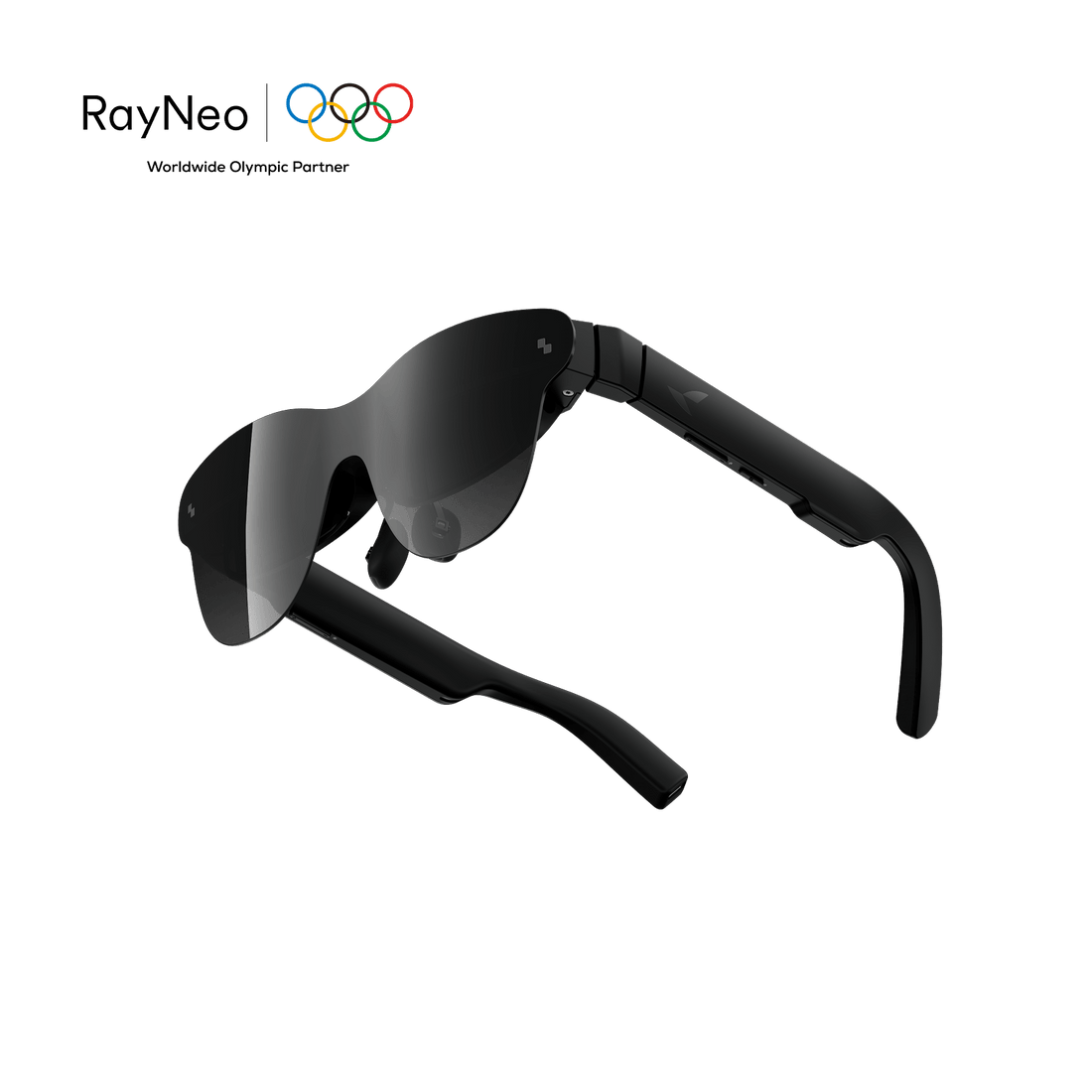
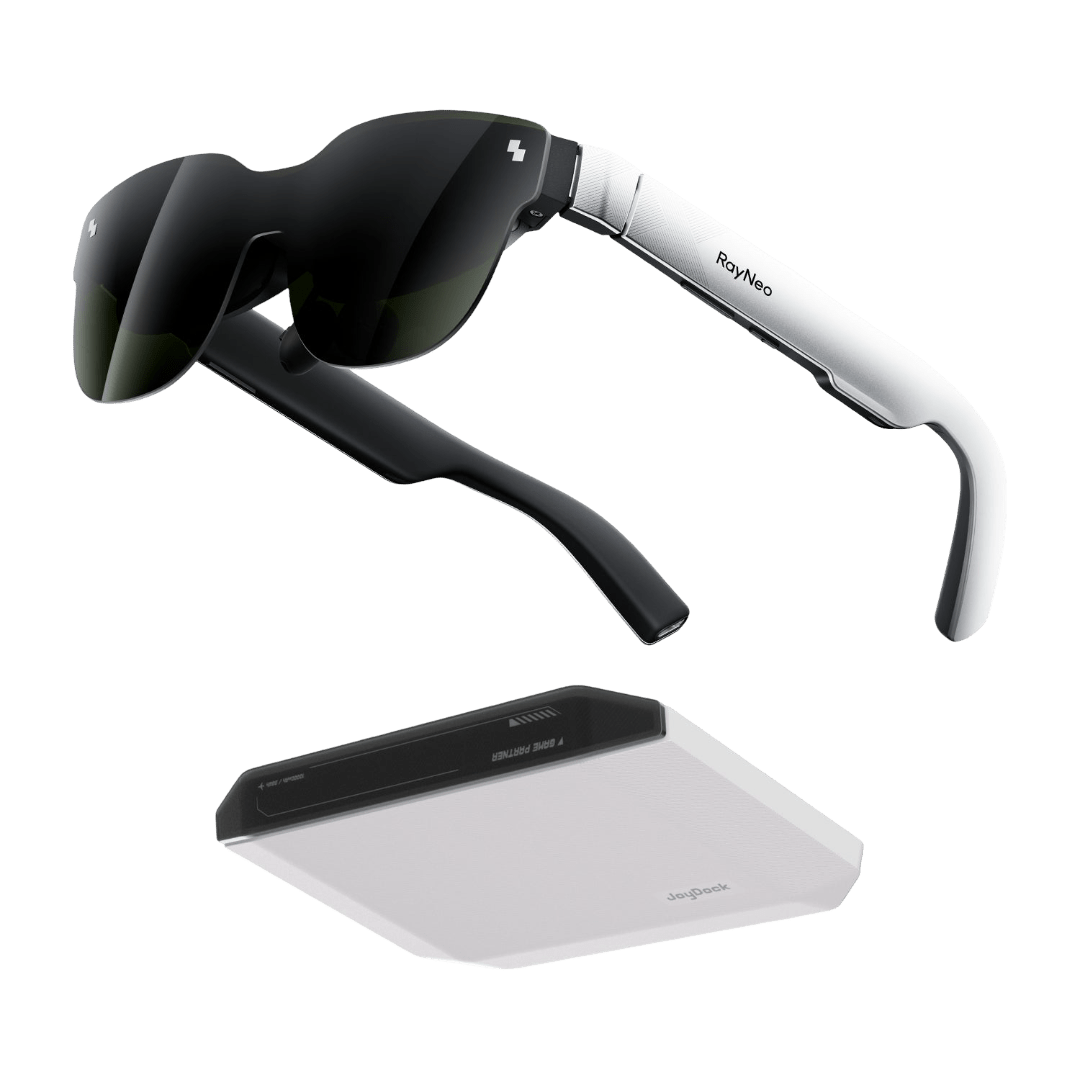
For users who are researching open-source eyewear mainly because they want a portable AR display, the RayNeo Air 4 Pro AR Glasses offer a much simpler finished solution. They create an up to 201-inch perceived virtual screen and support HDR10 and 120Hz, with video supplied by a compatible connected device rather than an open development platform.
Best for: Gamers, travelers, and mobile workers who want a private wearable screen rather than an open-source hardware or AI-development project.
Key features:

Open-source smart glasses provide a flexible foundation for developing AI and AR applications with transparent software, customizable hardware, and community-driven innovation. Whether you're exploring wearable AI for research, prototyping, or custom development, open-source platforms offer extensive possibilities. For those who prefer a ready-to-use experience, commercial smart glasses deliver advanced AI and AR features without the need to build or configure hardware.
Yes, several platforms provide the necessary resources for DIY projects. OpenGlass is a fully open-source platform that has released its hardware designs, firmware, and AI models on GitHub. Other initiatives like Brilliant Labs' Frame and the OSSG platform offer public access to schematics and mechanical designs. Developers can use these building blocks to assemble and customize their own devices in workshops or homes using tools like 3D printing.
Open-source smart glasses can offer greater transparency because their source code is publicly available for inspection and auditing. Many projects also emphasize on-device processing and local data storage, allowing photos, videos, and other sensitive information to remain on the device instead of being uploaded for remote processing. Actual privacy depends on how each project is implemented and configured.
Many open-source AI glasses are designed to operate without cloud services. Platforms such as OpenGlass support on-device machine learning, allowing processing to take place locally on efficient RISC-V hardware. Some open-source operating systems, including MentraOS, also provide local-only storage and offline privacy features, enabling core functions to run without an internet connection.





Share:
Smart Glasses for Deaf People: Features, Uses, and How to Choose
Cheapest AR Glasses (2026): Best Specs & Buyer's Guide