

$429.00

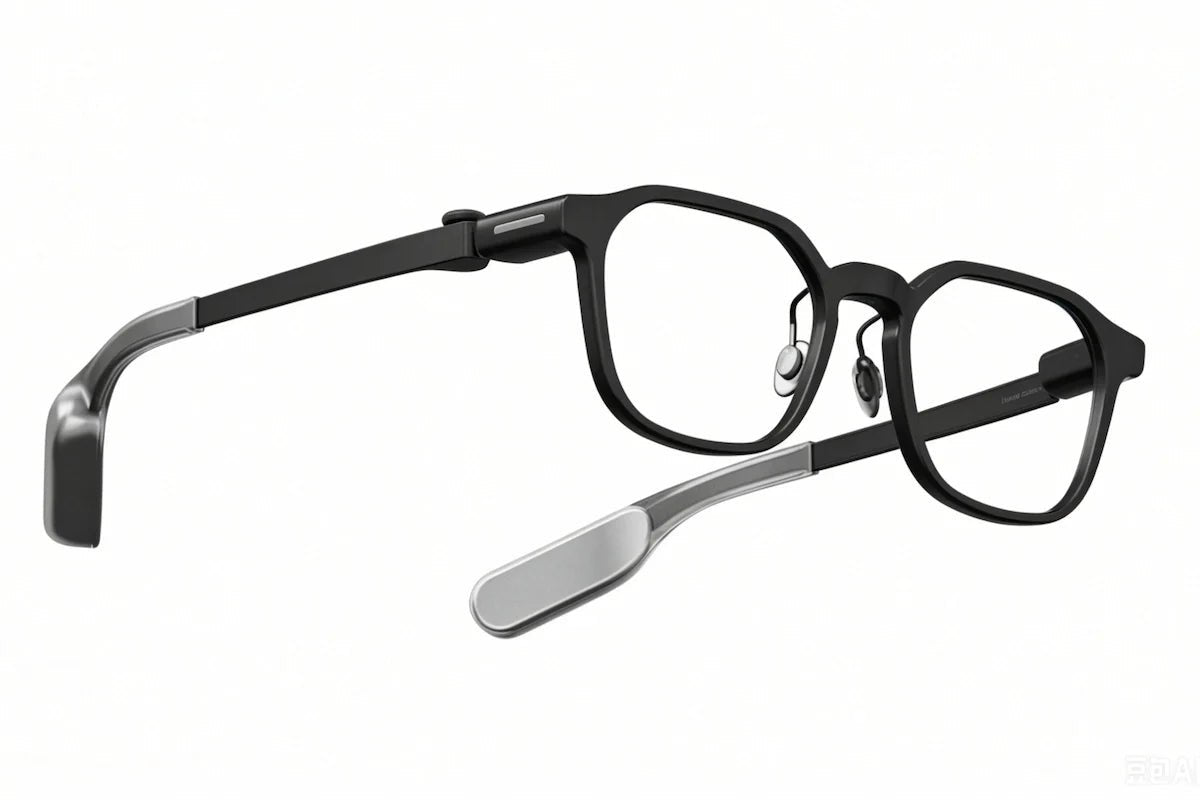
Only one pair in RayNeo's lineup is built to stay on your face from morning to evening, and that is the RayNeo iO at 33 grams. Everything else in the range weighs roughly twice that, between 68 and 78 grams, because a large virtual screen needs optics and speakers that a heads-up display does not.
Weight is only the first of four things that decide whether a pair is actually wearable all day. The others are how that weight sits on your face, how long the battery lasts in the mode you will really use, and how warm the frame gets. A 76-gram pair with good balance can feel better after two hours than a lighter pair that presses on one point.
Battery and heat are what turn a comfortable pair into one that comes off by mid-afternoon, so they carry as much weight here as grams do. For the physical side in detail, frame thickness, nose bridge pressure, and how each model sits on different faces, see our guide to lightweight frames; for a commute-by-commute checklist, the everyday and commuting guide covers it.
| Model | Weight | Designed to be worn | Battery for continuous use |
|---|---|---|---|
| iO | 33g | All day, as ordinary glasses | Up to 2 days typical, 6.2 hours continuous translation, 18 hours continuous recording |
| GT | 68g | For sessions of content | Powered by the connected device |
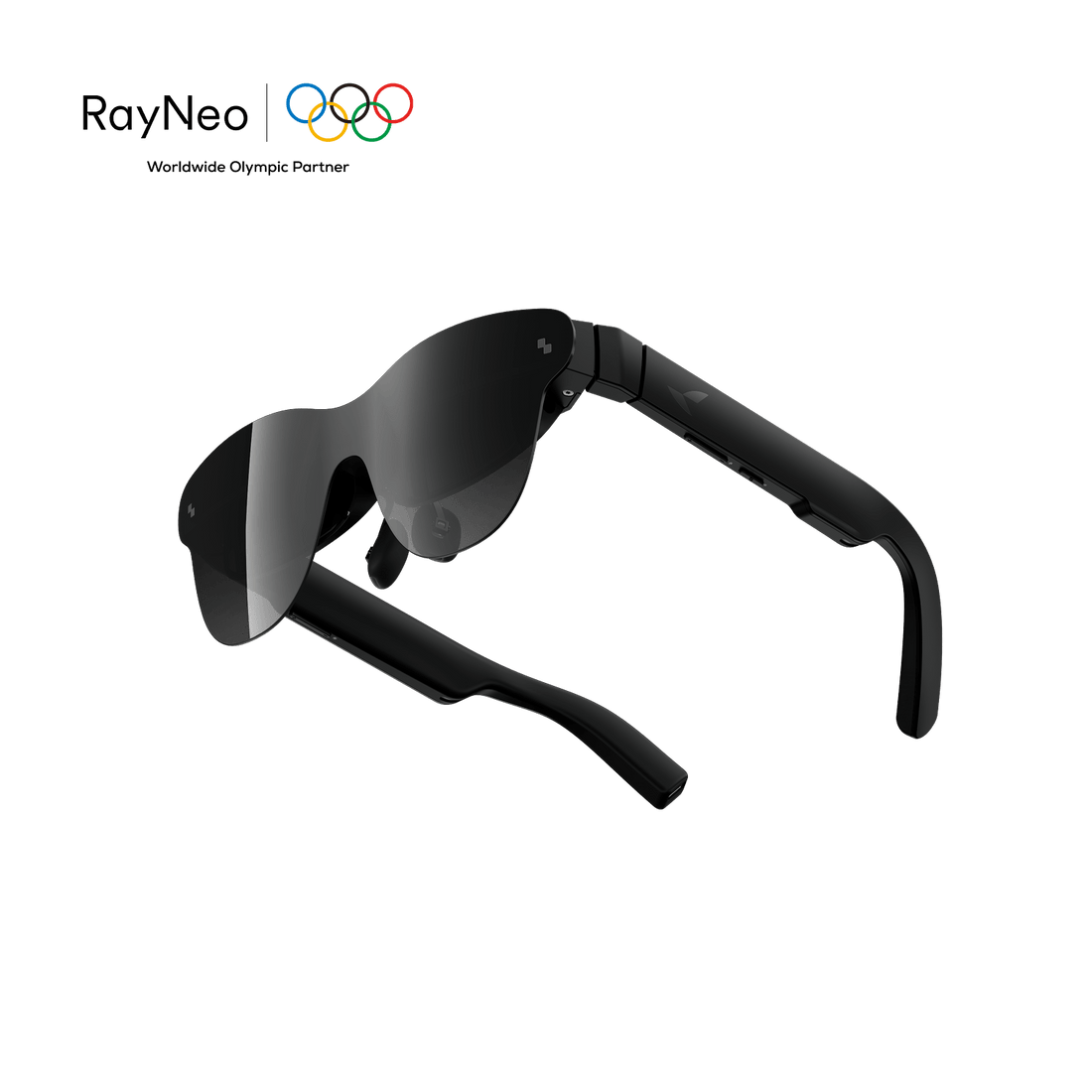
| Air 3s Pro | 76g | For sessions of content | Powered by the connected device |
| X3 Pro | 76g plus or minus 1g | For stretches of AI and camera use | 245mAh, recharges in 38 minutes |
| GT Max | 78g | For sessions of content | Powered by the connected device |
The display models draw power from whatever they are plugged into, so their wearing limit is comfort and content rather than charge. The two AI models carry their own batteries, which is why battery rating belongs in a conversation about all-day wear at all. The X3 Pro's 38-minute figure is RayNeo's own charging spec; TechRadar's testing described a recharge of around 45 minutes in practice.
Grams on a page are hard to feel. The quickest way to place these numbers is to put the glasses you already wear on a kitchen scale, then compare: if your current frames come in near 30 grams, the iO will feel familiar and the display models will feel like something you put on for a purpose.
Three design decisions line up behind that 33-gram figure.
Materials chosen for stiffness at low weight. The front frame is AZ91D magnesium-aluminum alloy, the temples are aerospace-grade titanium, specified at 1.15mm thin, and more than 80% of the structure is metal. Metal lets a frame hold its shape at a thickness that plastic could not.
A display that costs almost nothing to carry. The monochrome green MicroLED image, equivalent to a 33-inch screen at two meters, is the reason there are no birdbath optics or speaker chambers in the temples. That single choice is what separates 33 grams from 78.
A battery rating that matches a workday. The 240mAh cell is rated for up to two days of typical use, and the heavy modes have their own ratings: 6.2 hours of continuous translation, 18 hours of continuous recording, and 63 hours of standby while worn. All-day wear is only meaningful if the glasses are still working at 5pm.

A display you wear all day has to know when to stay out of the way, and iO is built around that. The image is monochrome green on a lens held at 97% transparency, sized to the equivalent of a 33-inch screen at two meters, and the information layer is something you call up rather than something that sits there: dashboard widgets appear one at a time in the order you set, and captions run only while a session is active. The rest of the time you are looking through clear glass. Save the display for moments when you can give it part of your attention, and keep it off when the road needs all of it.
It is also the model RayNeo sells with a prescription option and markets as camera-free, the two things that decide whether a pair is socially viable to wear through meetings, lunch, and a commute rather than taken off and put back on.
Published wear impressions are thinner than spec sheets, so here is what exists.
On the 76-gram class, TechRadar Pro wore the Air 3s Pro for an hour of viewing and reported that the weight "didn't feel like it put too much pressure on my nose," singling out that you no longer have to perch these halfway down your nose the way earlier designs demanded. That matches what the product page claims for balance: a 46.7 to 53.3 front-to-back weight distribution, nine levels of temple adjustment, and three levels of nose pad height.

X3 Pro sits in the same weight class at 76 grams while carrying cameras, a full-color display, and its own radios, which is an engineering achievement Tom's Hardware noted in its review. Wear detection powers the glasses down the moment you take them off, so a pair you pick up and put down through the day is not quietly draining between sessions, and a full recharge takes 38 minutes.
That is the split worth understanding. X3 Pro is built around bursts of capability: navigation, camera, visual AI, then a quick top-up. iO is built to disappear for the whole day, which is why it looks and weighs like ordinary eyewear.
On wired display glasses, the connected device does the heavy lifting: it powers the glasses and processes the video, so mild warmth and faster battery use on the phone or handheld are part of how the system works. The glasses themselves carry no processor or battery of their own on that path, which is exactly why they stay light.
Read that carefully, because it points at where the heat actually shows up. On wired display glasses, the phone or handheld doing the work gets warm, which commuters notice in a pocket more than on their temples. On the iO, the workload is a monochrome display and a microphone array, which is a fraction of the power draw, and the frame is largely metal, which spreads what little heat there is.
Two settings are built to claw that back, both by dimming the source rather than the glasses: Eco Mode, turned on inside the XR Space video player, dims the phone screen during playback, and Auto-Dim Brightness, enabled through the RayNeo XR app for screen casting, dims it after about ten seconds of inactivity. Switch one on for a long commute, start the trip charged, and a power bank covers the rest.
Thirty days of free returns give you a full day of real wear to judge it by, which beats any demo.
A commute is where all-day claims meet reality, and three settings decide the outcome. The wider commuting checklist lives in our commuting guide; what follows is the part that bears on wearing them for hours.
Brightness against daylight. The display models run up to 1,200 nits, which TechRadar described as making the screen viewable both in a shaded room and outside, usable on a morning commute. The iO publishes 1,300 nits at eye level for its heads-up layer.
Sound that does not annoy the person beside you. Whisper Mode, on both the GT series and the Air series, is described by RayNeo as reducing audio leakage in quiet or public environments, and TechRadar's commuting test concluded you are not going to bother nearby passengers with it enabled. RayNeo's own FAQ notes the open speakers are difficult to hear clearly from about 1.5 meters away, while someone very close may still hear something.
Something to hold the picture still. On GT and GT Max, Steady mode is described by RayNeo as stable viewing with subtle natural movement, recommended for travel and commuting, which is the setting built for a moving vehicle. Follow keeps the screen centered as you move your head, and Pinned locks it in one place, which works poorly in a car or train.

Is 33 grams comparable to normal glasses?
It is in the range people describe as unremarkable to wear, and RayNeo designs the iO to be worn as regular eyewear, including a prescription purchase option and an HSA or FSA eligibility note in the US. The more useful comparison is internal: at 33 grams it is less than half the weight of the display models in the same lineup.
Do the display glasses have to be worn for hours at a time?
No, and they are not built for it. They are session devices: a film, a gaming stretch, a work block on a virtual monitor. Comfort over a two-hour film is the relevant test, not eight hours of wear.
Does a heavier frame always feel worse?
Balance matters as much as mass. Air 3s Pro publishes a near-even front-to-back weight split specifically to reduce nose load, and TechRadar's hour of wear supports that. A well-balanced 76 grams can be easier than a front-heavy 60.
Can I wear them in the rain or at the gym?
The iO carries an IP54 rating, which covers dust and splashing water rather than immersion, so rain on a walk to the station is within scope and a workout in heavy sweat or a swim is not. The display models are built for indoor and transit use, where a cable is already part of the setup.
Will prescription lenses add noticeable weight?
Prescription lenses add a little mass, and RayNeo's optical partner matches the lens material to your prescription when you order. For iO specifically, prescription is a purchase option rather than an add-on, so the fit is designed in from the start.
Which model should I buy if I want to forget I am wearing them?
The iO, on weight, materials, battery, and the fact that it has no camera, which changes how other people react to it. If you want the big screen instead, accept that it is a session device and pick the frame that fits your face best rather than the lightest one on the list.
Find the pair you will actually keep on: RayNeo iO at 33 grams for all-day wear, or GT Max and Air 3s Pro when the session is the point.





Share:
Which Camera Glasses Record the Best Video?
Which Smart Glasses Have the Best Display? Nits, FOV, and PPD