

$429.00


In 2026, AR glasses have evolved from futuristic concepts to practical consumer products. While the broader market spans from budget devices under $200 to enterprise systems exceeding $3,500 (like Apple Vision Pro at $3,499 or Microsoft HoloLens 2 at $3,500+), the mainstream consumer AR glasses segment sits between $299 and $1,500—offering the best balance of functionality and affordability.
This analysis focuses on this consumer sweet spot. For first-time buyers, the key question isn't whether the technology is impressive—it's whether these devices deliver tangible value worth the investment.
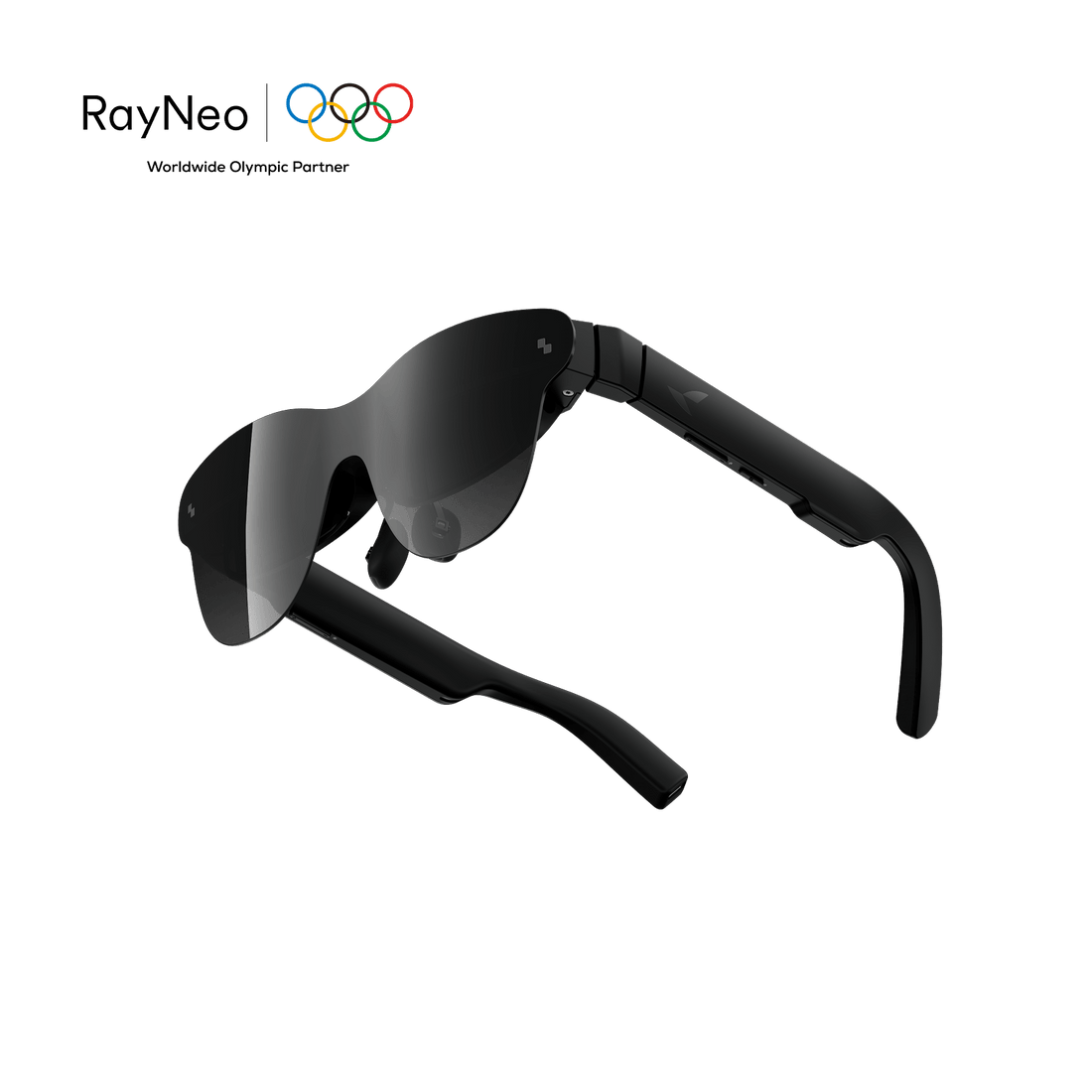
We examine AR glasses through three lenses: productivity gains, entertainment value, and daily convenience. Using RayNeo's Air 4 Pro ($299) and X3 Pro ($1,299) as representative examples of this mainstream category, we'll calculate real ROI, compare alternatives, and provide a clear decision framework.
The Air 4 Pro delivers a 135-inch virtual display weighing just 76 grams versus portable monitors ($300-600, 2-3 lbs) requiring cables and desk space. For frequent travelers and remote workers, this $299 investment provides multi-window workspace in a pocket-sized package.
A consultant on a flight can simultaneously view presentations, reference documents, and emails without laptop screen limitations. Remote workers in small apartments gain multi-monitor capability without sacrificing desk space or buying monitor arms ($200-400).
Professional interpretation costs $30-150/hour. For business travelers making 10 international trips annually with 3 hours of translation needs per trip, annual costs reach $900-4,500. The X3 Pro's 14-language real-time translation eliminates these recurring expenses.
ROI Calculation:
Translation savings: $1,500-4,500/year
Meeting AI summaries (vs. manual notes): 150 hours saved × $50/hour = $7,500 value
Year 1 ROI: 7-9x return on $1,299 investment
The Gemini 2.5 AI assistant understands visual context—point at equipment and ask "How do I operate this?" for instant guidance. This hands-free capability proves invaluable during repair work, cooking, or navigating while carrying materials.
At $299, the Air 4 Pro competes with tablets while offering distinct advantages: a private 135-inch virtual screen with HDR10 support (world's first in AR glasses) versus iPad Pro 12.9" at $1,099 with visible screen content.
For commuters on 90-minute train rides, this creates theater-quality viewing invisible to others. The $800 savings alone justifies purchase for frequent travelers, plus 93% less weight than iPad Pro and no required table space.
Bang & Olufsen collaboration delivers cinema-level sound through innovative fittings reducing sound loss by 80%. Dual modes—Whisper for privacy, Surround for immersion—eliminate need for separate headphones ($150-300 savings) while maintaining open-ear awareness.
Connect to PS5, PCs, or Switch 2 via USB-C for HDR10 gaming at 120Hz on massive virtual screen. This replaces portable gaming monitors ($300-500) requiring power, extra weight, and table space. College students in shared dorms enjoy AAA titles late-night without disturbing roommates or occupying shared TV.
The X3 Pro transforms international travel through hands-free translation. At Tokyo airport, Japanese signs instantly convert to English with directional overlays. At Seoul restaurants, photograph Korean-only menus for immediate translation. Real-time voice translation enables natural conversation—speak English, they hear Korean; they respond in Korean, you hear English.
While translation apps are free, they require constant phone interaction. The X3 Pro's always-ready, hands-free approach delivers value beyond cost: reduced stress, increased confidence, and richer cultural experiences.
Gemini 2.5's visual understanding creates practical advantages: facing unfamiliar appliance issues, look and ask "What's wrong here?" for instant troubleshooting. At hardware stores, identify parts and suggest compatible alternatives. For students, receive instant explanations of complex diagrams or equations.
Hands-free operation proves essential during cooking, repair work, cycling, or carrying items—situations where manual device operation is impossible.
The 3840Hz PWM dimming reduces eye strain versus standard displays. Combined with 76g weight and 46.7:53.3 front-rear balance, the glasses support hours of comfortable wearing—critical for all-day productivity or long-haul flights. Reduced eye strain translates to fewer headaches and potentially avoiding vision problems from extended screen time.
Market Context: While AR glasses exist at various price points (budget models under $200, enterprise devices over $3,500 like Vision Pro), the $299-$1,500 consumer segment offers the optimal balance: reliable hardware, practical features, and accessible pricing. Budget models often compromise on core functionality; enterprise devices target different use cases with features most consumers don't need. RayNeo's lineup exemplifies this mainstream sweet spot.
| Alternative | Cost | Air 4 Pro Advantage |
|---|---|---|
| iPad Pro 12.9" | $1,099 | 135" virtual screen, privacy, hands-free |
| Portable 4K Monitor | $300-600 | 76g vs 2-3 lbs, no cables, works anywhere |
| Headphones + Tablet | $500-700 | Integrated solution, single device |
Daily Cost: $299 ÷ (365 × 3 years) = $0.27/day (less than coffee)
Annual Savings by User Type:
International Business (10 trips/year):
Translation: $1,500-5,000
Transcription: $500-1,200
Payback: 2.5-8 months
Content Creator:
Transcription: $1,200-3,600/year
Translation interviews: $800-2,000
Payback: 4-10 months
Travel Frequently - Entertainment/productivity value justifies investment within months
Work Remotely - Multi-monitor capability in 76g package for mobile professionals
Live in Shared/Small Spaces - Private entertainment without occupying communal TV or desk space
Value Privacy - Public content consumption without visible screens
Need Translation (X3 Pro) - International professionals recover cost in 1-3 uses
Consume Content Daily - 1+ hours daily of movies/gaming justifies HDR10 theater quality
Rarely Leave Home - Fixed workspace with adequate monitors already
Have Multi-Monitor Setup - Established desktop superior for sustained stationary work
Don't Use Media On-the-Go - Only watch content at home on TV
Prefer Large Fixed Displays - Some genuinely prefer physical screen immersion
Tight Budget + No Mobile Needs - $299 significant strain without travel/commute/mobile work
Need Shared Viewing - AR glasses personal; TV/projector better for family viewing
| Your Profile | Device | Payback Period |
|---|---|---|
| Frequent traveler + entertainment | Air 4 Pro | 2-4 months |
| International business | X3 Pro | 2-6 months |
| Remote worker, small space | Air 4 Pro | 4-8 months |
| Daily commuter (1+ hour) | Air 4 Pro | 3-6 months |
| Casual user, rare travel | Wait | 12+ months |
Q1: For average users (not tech enthusiasts), are AR glasses worth the investment?
If you commute regularly, travel even occasionally, or live in shared spaces where private viewing matters, yes—especially the Air 4 Pro at $299. The value doesn't require being a tech enthusiast; it requires having situations where traditional screens are inconvenient, uncomfortable, or impractical. A 60-minute daily commute means 260 hours annually of potential entertainment or productivity time. Paying $299 to transform that time costs $1.15 per hour of improved experience—less than a cup of coffee.
However, if you only consume content at home on a TV and work at a stationary desk, the value proposition weakens significantly. AR glasses solve mobility and privacy challenges; without those challenges, the investment doesn't make practical sense.
Q2: Air 4 Pro ($299) vs X3 Pro ($1,299) - Which offers better value for money?
The answer depends entirely on your use case:
Choose Air 4 Pro if: Entertainment and mobile productivity are your primary needs. You want a better screen for watching content during commutes, flights, or in shared spaces, plus occasional laptop screen extension for work. The $299 price delivers exceptional value for these uses—you're essentially buying a premium portable display with integrated audio.
Choose X3 Pro if: You regularly need translation services, AI-powered assistance, or true standalone AR capabilities. Business professionals who travel internationally, content creators needing transcription and AI tools, or field workers requiring hands-free information access will recover the $1,299 cost through eliminated service fees and time savings. The ROI calculation is straightforward: if you'd spend $1,000+ annually on translation, transcription, or similar services, the X3 Pro pays for itself in year one.
For most first-time buyers, the Air 4 Pro offers better value-to-cost ratio unless specific professional needs justify the X3 Pro's advanced features.
Q3: Compared to TVs and monitors, what are AR glasses' core advantages?
Portability: A 135-inch virtual screen fits in your pocket and works anywhere—airplanes, trains, parks, or hotel rooms. No TV or monitor offers this mobility.
Privacy: Your viewing is invisible to others, enabling content consumption in public spaces without social constraints or privacy concerns about sensitive information.
Space Efficiency: Zero desk or wall space required. Critical for small apartments, dorm rooms, or any space-constrained environment.
Flexibility: Works with any source device (phones, laptops, consoles) without requiring dedicated space or complex setup. Connect via single USB-C cable and start immediately.
However, AR glasses don't replace TVs for shared family viewing or monitors for sustained stationary work at a fixed desk. They excel in different use cases—complement rather than replace.
Q4: How much time or money can AR glasses actually save me?
Time Savings:
Daily commuters: 2-5 hours weekly transformed from "dead time" to productive/entertainment time
Remote workers: 1-2 hours weekly from improved mobile workspace efficiency
International travelers (X3 Pro): 5-10 hours per trip saved from translation and communication efficiency
Meeting participants (X3 Pro): 1-3 hours weekly saved from AI-powered summarization replacing manual note organization
Money Savings:
Entertainment: $0-500/year (avoided iPad purchase for portable viewing, reduced need for business class upgrades on flights)
Productivity: $200-1,000/year (portable monitor replacement, coffee shop working efficiency)
Professional services (X3 Pro): $1,500-5,000/year (translation, transcription, interpretation services)
Total annual value ranges from $200-6,500 depending on usage patterns, with most users experiencing $500-2,000 in combined time/money savings.
Q5: Should I buy now or wait for technology to mature?
AR glasses technology in 2026 is mature enough for daily practical use—this isn't experimental hardware. The Air 4 Pro's world-first HDR10 support and X3 Pro's Gemini 2.5 AI integration represent current cutting-edge capabilities that deliver immediate value.
Reasons to buy now:
Current devices solve real problems today; waiting means missing months or years of benefits
Technology improvements will be incremental, not revolutionary, in the next 12-24 months
Prices are competitive and unlikely to drop significantly soon
The value (especially time reclaimed and experiences enhanced) compounds daily
Reasons to wait:
You don't currently have use cases that AR glasses address well
Your budget is extremely tight and the investment would strain finances
You're uncertain about form factor comfort (try before buying if possible)
For people with clear use cases (travel, commuting, small spaces, mobile productivity), buying now makes sense. You'll recover the cost through use while technology continues improving in the background—future models will be upgrades, not fixes for fundamental problems.
Are AR glasses worth it? Yes—but with qualifications based on your lifestyle.
Value Delivered:
Productivity - Mobile workspace, AI assistance, time savings (hours weekly) and cost reduction ($500-5,000/year for professionals)
Entertainment - Theater-quality private viewing for less than premium tablets, transforming travel/commute time
Convenience - Hands-free AI, real-time translation, health-conscious design reducing eye strain
Purchase Guide:
Air 4 Pro ($299) → Entertainment + mobile productivity. At $0.27/day over 3 years, accessible entry delivering immediate value for travelers, commuters, and space-constrained living.
X3 Pro ($1,299) → Professional AI + translation needs. For international business, content creation, or field work. Cost recovers through eliminated service fees.
The Bottom Line:
AR glasses don't replace smartphones or computers—they excel in specific situations: mobility, privacy, and hands-free assistance. Technology has matured from concept to practical daily tool. For users with genuine mobility needs, privacy concerns, or professional applications, measurable value exceeds cost within months.
The decision is clear: assess your daily patterns, calculate potential savings, and choose accordingly. AR glasses' worth depends less on the technology and everything on whether your lifestyle aligns with what they uniquely provide.
Ready to experience AR? Visit www.rayneo.com for specifications, demonstrations, and informed purchase decisions based on your specific needs.





Share:
AI-Powered Smart Glasses: What Artificial Intelligence Actually Does for You
AR Glasses for Beginners: Your First Steps into Augmented Reality