

$429.00


The idea of carrying a personal movie theater in a pair of glasses is no longer limited to science fiction. Modern AR glasses can display content on a large virtual screen, giving users a more immersive way to watch movies without needing a physical television or monitor. This makes AR glasses for movies an interesting option for home entertainment, travel, or other spaces where a large screen is impractical.
Still, the experience depends heavily on the technology behind the glasses. Display resolution and clarity, field of view, virtual screen size, audio performance, comfort, and device compatibility all play important roles. In this guide, we’ll explain the features that matter most, explore leading AR glasses for movie watching, and compare their advantages with traditional VR headsets.

Can you watch videos on smart glasses? Yes, compatible AR glasses can create a large virtual screen for movies, shows, and other video content. The best models combine sharp resolution, a wide field of view, immersive audio, effective light blocking, and comfortable designs for extended viewing.
Device compatibility is also important, as some glasses require USB-C DisplayPort or HDMI connections. Compared with VR headsets, AR glasses offer a more portable viewing experience while generally allowing you to remain aware of your surroundings.
AR glasses turn movie watching into a personal cinema by replacing physical screen limitations with a virtual display. Instead of being restricted by wall size, viewing distance, or room layout, you can create a large screen that appears naturally within your field of view. On supported devices, you may be able to position or resize the virtual display to suit your space, whether you’re sitting on a couch, relaxing in bed, or traveling.
On glasses with 3DoF or similar tracking, the virtual screen can remain anchored or stabilized as you move your head, creating a more consistent viewing experience. Depending on the model, you may also be able to adjust display brightness for different viewing conditions.
When choosing AR glasses for watching movies, consider the features that have the biggest impact on picture quality, comfort, and immersion. Resolution, virtual screen size, audio, light blocking, prescription support, and device compatibility all help create a more enjoyable movie-watching experience.
Display resolution directly affects how sharp and detailed movies appear. Higher-resolution displays produce clearer images with less visible pixelation, while OLED or Micro-OLED panels deliver deeper blacks and stronger contrast. HDR support can further enhance bright highlights and dark scenes, while adjustable brightness helps maintain image quality in different lighting conditions.
Virtual screen size affects how immersive movies feel, while FOV determines how much content you see at once. Narrower fields of view can work well for simple overlays, while wider fields of view generally provide a more immersive experience for movies and gaming. Clarity and stable brightness also matter for longer viewing.
Lighter glasses can be more comfortable for extended wear, although weight distribution, fit, and frame design also play important roles. Look for balanced weight, adjustable nose pads and temples, and good heat management to reduce discomfort around the nose and temples.
Audio quality is important for clear dialogue, music, and movie effects. Integrated speakers offer convenient, headphone-free listening, while spatial audio can create a more immersive experience. Open-ear designs let you hear your surroundings but provide less isolation and bass than sealed headphones, so consider which suits your viewing needs.
Dimming and light-blocking features help AR glasses maintain clear, high-contrast images in different lighting conditions. This is especially important for movies, as bright surroundings can wash out dark scenes and colors. Look for effective dimming that improves contrast and color consistency while reducing distractions from the real world.
If you wear glasses, check whether the AR glasses support prescription lenses or removable inserts. Full prescription lenses may offer a cleaner fit, while inserts can provide flexibility. Also review the manufacturer’s return policy and confirm whether your HSA or FSA plan covers prescription accessories.
Before buying AR glasses, check whether they work with your smartphone, laptop, tablet, or gaming console. USB-C with DisplayPort support offers simple wired connections, while an HDMI adapter can provide another connection option for devices without compatible USB-C video output. Wireless features may rely on Wi-Fi, wireless casting technologies, or dedicated accessories, but always verify device and operating system compatibility first.
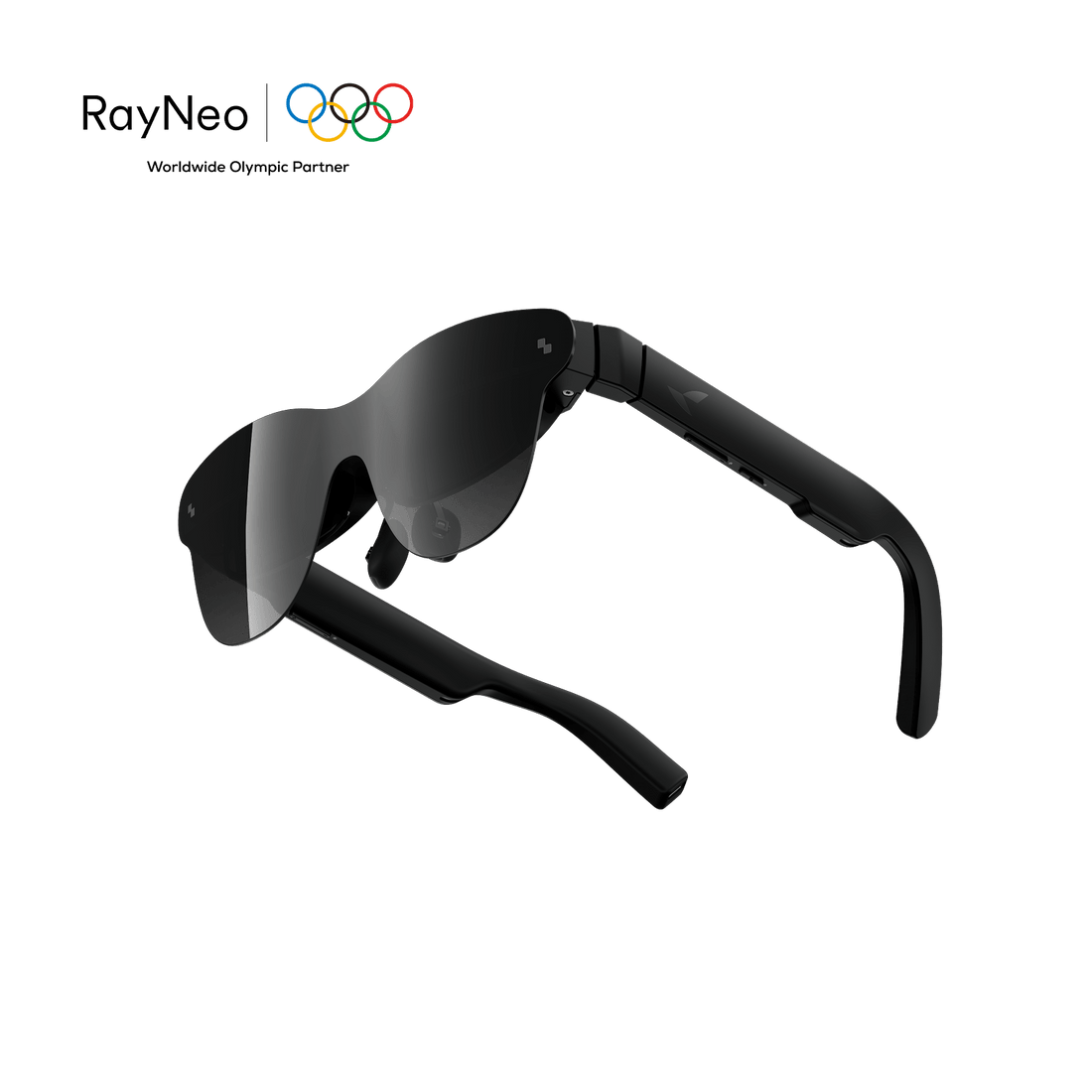
RayNeo offers several AR glasses designed for large-screen entertainment. The Air 4 Pro focuses on HDR and 3D viewing, the GT combines a large virtual display with a lightweight design, while the GT Max provides a wider field of view and a larger cinema-style screen.
Best for: Movies, 3D content, and everyday entertainment
The RayNeo Air 4 Pro AR Glasses is designed for cinematic entertainment with a large virtual display and dedicated picture-processing features.

Best for: A larger and more immersive cinema-style view
The RayNeo GT Max AR Glasses is designed for viewers who want a wider field of view and a larger virtual cinema experience.
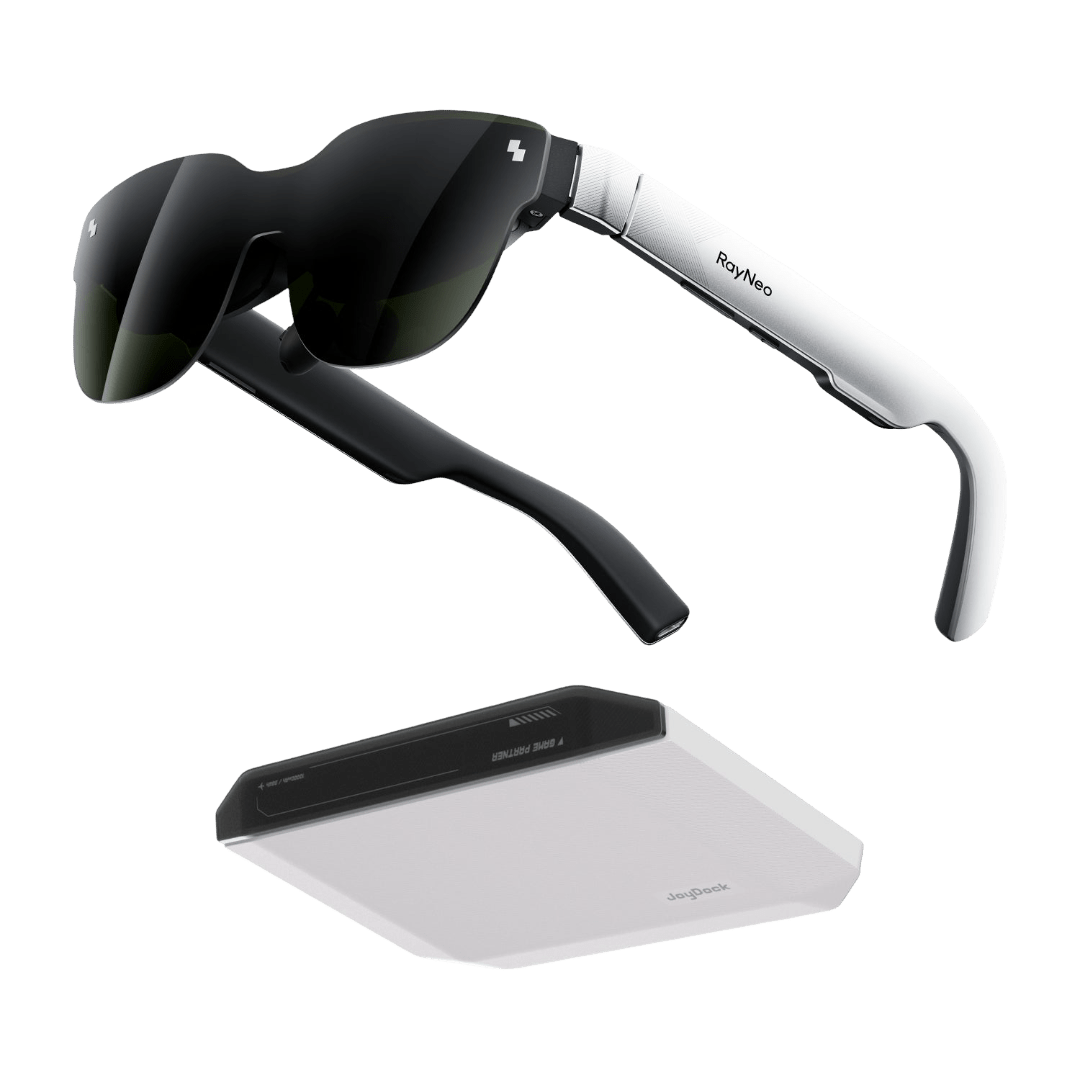
When paired with the RayNeo Pocket TV Pro, the GT Max supports Dolby Vision playback for compatible content.

Best for: Comfortable movie watching over longer sessions
The RayNeo GT AR Glasses combines an adjustable cinema-size display with a lightweight 68g design, making it suitable for watching movies at home or while travelling.
AR glasses use a virtual screen while keeping your surroundings visible, making them lightweight, portable, and convenient for everyday entertainment. VR headsets can block out the physical environment and place you inside a fully virtual space, creating stronger immersion for movies and gaming.
| Feature | AR Glasses | VR Headsets |
|---|---|---|
| Viewing | Virtual screen with surroundings visible | Fully enclosed virtual cinema |
| Design | Lightweight and portable | Larger and heavier |
| Immersion | Cinematic without isolation | Maximum immersion and isolation |
| Best for | Casual, portable movie watching | Deep, uninterrupted viewing |
AR glasses offer a convenient way to enjoy a large, private virtual screen without the size of a traditional TV or the bulk of a VR headset. When choosing AR glasses for movies, consider display quality, field of view, audio, comfort, dimming, and device compatibility. Models such as the RayNeo Air 4 Pro, GT, and GT Max provide different combinations of cinematic visuals and immersive sound. Ultimately, the right choice depends on your viewing preferences, comfort needs, and desired level of immersion.
Some AR glasses are marketed with 4K-related specifications, but these claims do not always mean 4K native resolution per eye; they may instead refer to video input or combined display resolution. For movie watching, higher resolution can improve fine details, edge definition, and overall image clarity, making content appear more natural and reducing visible pixels. However, resolution is only one factor; screen size, brightness, field of view, and comfort also matter.
There is no universal comfortable wear time for AR glasses, as the experience varies from person to person. Comfort depends on factors such as weight, nose and temple pressure, display brightness, and heat. For longer viewing sessions, choose adjustable frames and take short breaks when needed.
For movie watching, AR glasses are often more convenient because they are lighter, easier to wear, and provide a large virtual screen without fully blocking your surroundings. VR headsets offer deeper immersion and stronger isolation, but they are typically heavier. Your choice depends on whether you prioritize comfort and portability or maximum immersion.





Share:
Smart Glasses with Screen: 2026’s Best Picks & Buying Guide
Smart Glasses for Music: How to Choose the Right Pair