Table of Contents
Most people have just one question about smart glasses: how much can they actually change my daily life and work? Here is the direct answer. By 2026, smart glasses have evolved from conceptual toys into legitimate productivity and entertainment tools. They can now replace smartphones and laptops in specific scenarios. Their core capabilities focus on three main areas: audio interaction, visual overlays, and environmental awareness. This article will help you clearly understand the core functions of smart glasses so you can decide if they are right for you before making a purchase.
What Are Smart Glasses Today
By 2026, smart glasses have settled into three distinct categories: audio and camera-focused AI glasses, near-eye display glasses with projection, and AR glasses with full spatial awareness. They all share a common goal: cramming micro-computing modules, sensors, and connectivity into a frame that looks as much like regular eyewear as possible. The key to long-term wear is not the number of features. Instead, it depends on whether the glasses are light, discreet, and fit into your daily routine.

Modern Definition Of Smart Glasses In 2026
In 2026, the industry defines smart glasses as wearable computing devices in the form of eyewear. They feature independent processing, constant cloud connectivity, and support for voice, touch, or gesture interaction. These devices provide a continuous stream of information through sight or sound. Compared to a few years ago, today's products are more specialized. Audio glasses focus on calls and AI assistants; display glasses prioritize content consumption; and AR glasses add full spatial tracking and environmental understanding.
The global market is accelerating. Data shows the AI smart glasses market was worth about $2.9 billion in 2025. It is expected to grow at a compound annual rate of 11.6% to reach $8.4 billion by 2035. Starting in 2026, every new generation will see significant jumps in performance and utility. This growth reflects long-term demand across multiple industries rather than short-term hype.
Core Audio And Interaction Capabilities
The first layer of capability comes from audio and interaction. While commuting, walking, or doing chores, many people want to keep their eyes on the road and ears open. They still want to call an AI assistant, reply to messages, or listen to meeting recordings using natural voice. This requires bone conduction or directional speakers with clear vocal frequency response and stable microphone beamforming.
In terms of interaction, 2026 mainstream products generally feature multi-mic arrays for far-field voice wake-up and touch controls on the temples for precision. Some AR models now support head tracking and gesture recognition to reduce the awkwardness of constant touching.
Visual Overlays And Augmented Reality Displays
The second layer involves visual overlays and AR display capabilities. This determines if you will rely on glasses for mobile work, navigation, translation, or gaming. 2026 AR smart glasses mostly use micro-projection with optical waveguides or Birdbath optics to overlay virtual images onto the real world. Common specs include a field of view (FOV) around 30 degrees, equivalent brightness up to 6000 nits, and refresh rates from 60Hz to 120Hz to ensure a stable, dizzy-free experience.
For near-eye display glasses focused on content, such as Micro-OLED setups with 1080p resolution and 120Hz refresh rates, the focus is on pixel structure and HDR. These must maintain high contrast and color depth even at 1200 nits of perceived brightness. These specs might sound technical, but the real-world difference is whether subtitles are sharp, action games are blur-free, and dark movie scenes remain clear.
Capture Sensing And Environmental Awareness
The third layer is environmental sensing and capture. This allows smart glasses to move from just showing content to understanding the world. AI glasses with cameras allow for first-person photos and videos, using AI to generate notes or highlights. AR glasses with depth sensing and spatial positioning use SLAM technology to build a 3D map of the surroundings.
Regarding sensors, many products now include light, proximity, temperature, and geomagnetic sensors alongside IMUs. These tools automatically adjust brightness, optimize power use, and improve positioning stability.
Why You Might Need Them: Solving Real World Problems
Understanding what smart glasses can do is one thing, but the more important question is how they solve specific real-world pain points.
Benefits For Desk Nomads And Remote Workers
For remote workers who switch between home and coffee shops every day, the biggest pain points come from three areas: limited desk space, the difficulty of replicating multi-screen efficiency, and neck strain caused by looking down at a laptop for long periods. Many people try to carry portable monitors or folding keyboards, but the more gear you have, the less you want to move. This is a common complaint among the desk nomad community.
Smart glasses provide an invisible extended screen. By carrying only a thin laptop or a phone, you can view your main content at eye level. This avoids long periods of looking down and reduces reliance on a physical desk. In our one-week test of cross-city remote work, we found that using display-style smart glasses with a Bluetooth keyboard and mouse allowed us to maintain a dual-screen layout at temporary workstations. Video calls and document editing did not block each other, which significantly reduced the distractions caused by frequent window switching.
The desk nomad lifestyle truly works when you no longer need to find a coffee shop with a large enough table to start working.
Mobile Office and Multi-Monitor Setup Anywhere
For mobile offices, a high-efficiency multi-screen experience has always been a demand that laptops and tablets cannot fully meet. Smart glasses use near-eye display to fix a second or even third virtual screen in your field of vision. This takes up no physical space and is not limited by screen stand angles or desk height.
A typical scenario includes displaying a main document on a 27-inch equivalent screen while keeping an instant messaging window in your peripheral vision. Alternatively, you can lock reference materials on one side and a code window on the other. You can switch focus with a slight eye movement without frequent Alt-Tab commands. In long-term testing, we care more about image stability and text sharpness. Only when font edges are clear enough and there is no obvious delay in switching sightlines will users treat it as a primary work screen rather than a novelty device.
For power users of multi-screen setups, the value of smart glasses lies in carrying an entire desktop work environment with you, rather than simply mirroring a large phone screen.
On-The-Go Screen Privacy For Confidential Work
Another typical pain point comes from professionals who handle sensitive information in public places. When working at airports, high-speed trains, or coffee shops, you always have to worry about people looking over your shoulder. Physical privacy filters often affect image quality and color. The virtual screens provided by smart glasses are naturally private. As long as the image is not projected to an external display, bystanders cannot see the specific content.
This is especially important for roles in finance, consulting, product, and legal fields that involve frequent viewing of internal documents and client materials. It reduces psychological pressure and the hidden cost of choosing specific seats just to avoid prying eyes. In our surveys, we found that once users experience the feeling of safely debugging a production environment in an airport lounge, they often make smart glasses a standard item for business travel.
Real privacy comes from others seeing nothing at all, not just adding a dark gray filter to a screen.
Advantages For Travellers And Explorers
For travelers and urban explorers, the problem with phones is not a lack of features, but that they constantly pull you out of the real world. Navigating while walking requires looking down at a screen, and taking photos can break the rhythm of your companions. Smart glasses move some functions to a heads-up view, floating necessary information within your sightline without blocking the road.
Many users first realize this when they feel exposed while checking a large phone for directions in a strange neighborhood at night. Glasses-based navigation and translation act as low-profile tools. You are still looking at the real street, just with an added layer of helpful information.

Good travel tech should let you focus more on the moment, not trap you inside a screen.
AR heads-up navigation is one of the most requested features for travel and commuting. Directional arrows, street names, and turn prompts appear as transparent overlays in front of you. Users can look down less while cycling, walking, or even jogging. These features require high precision in spatial positioning, IMU stability, and map data fusion algorithms.
Instant Sign Translation For Foreign Environments
Instant sign translation is another highly practical feature, especially in foreign language environments. Dual cameras capture the scene, and AI models identify text on signs, menus, and street markers. The translation is then overlaid on the original location. This keeps the original context while allowing you to understand what you see.
Once instant translation becomes natural enough, you will find that walking through foreign streets changes from cautiously checking your phone to browsing smoothly with your eyes.
Value For Gamers And Media Enthusiasts
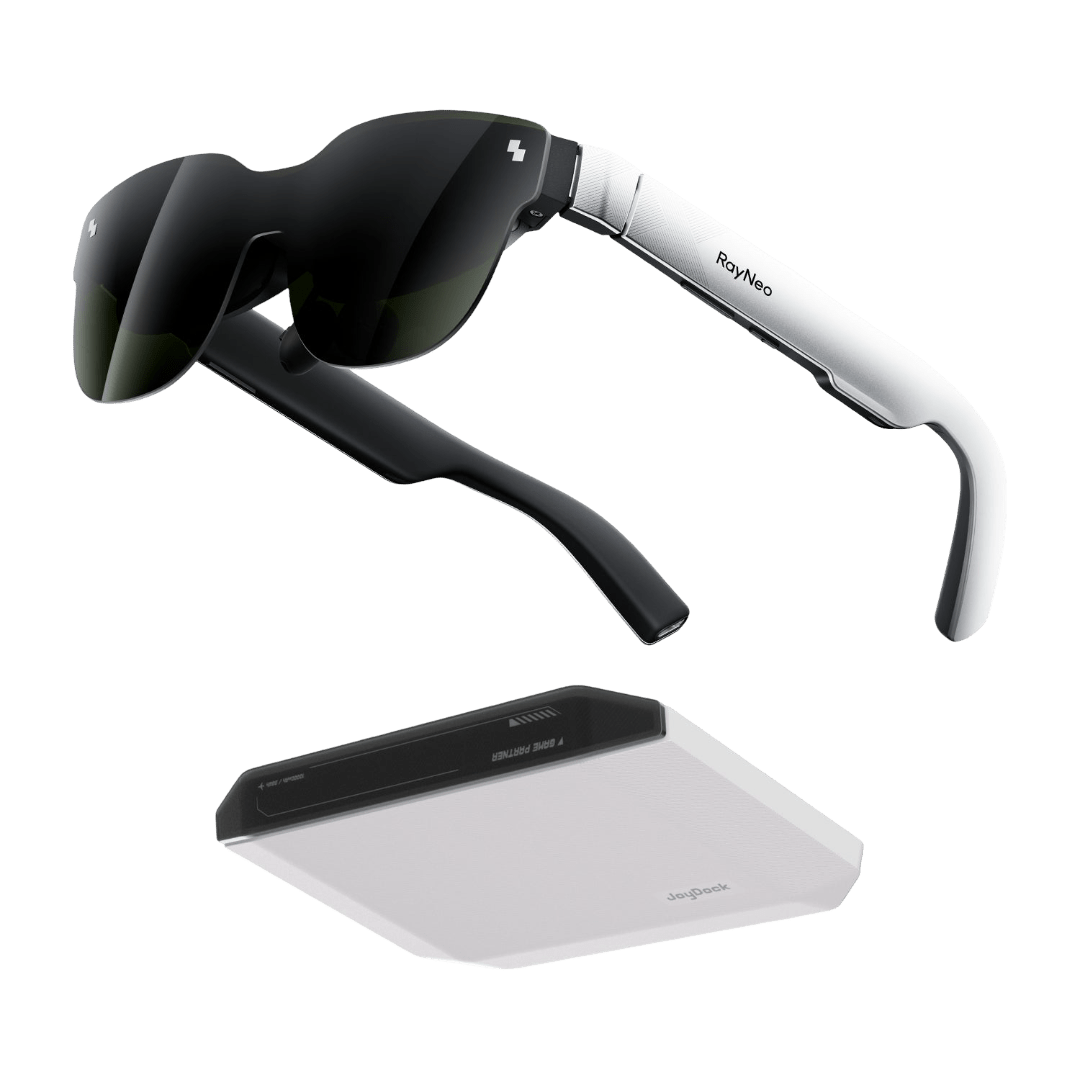
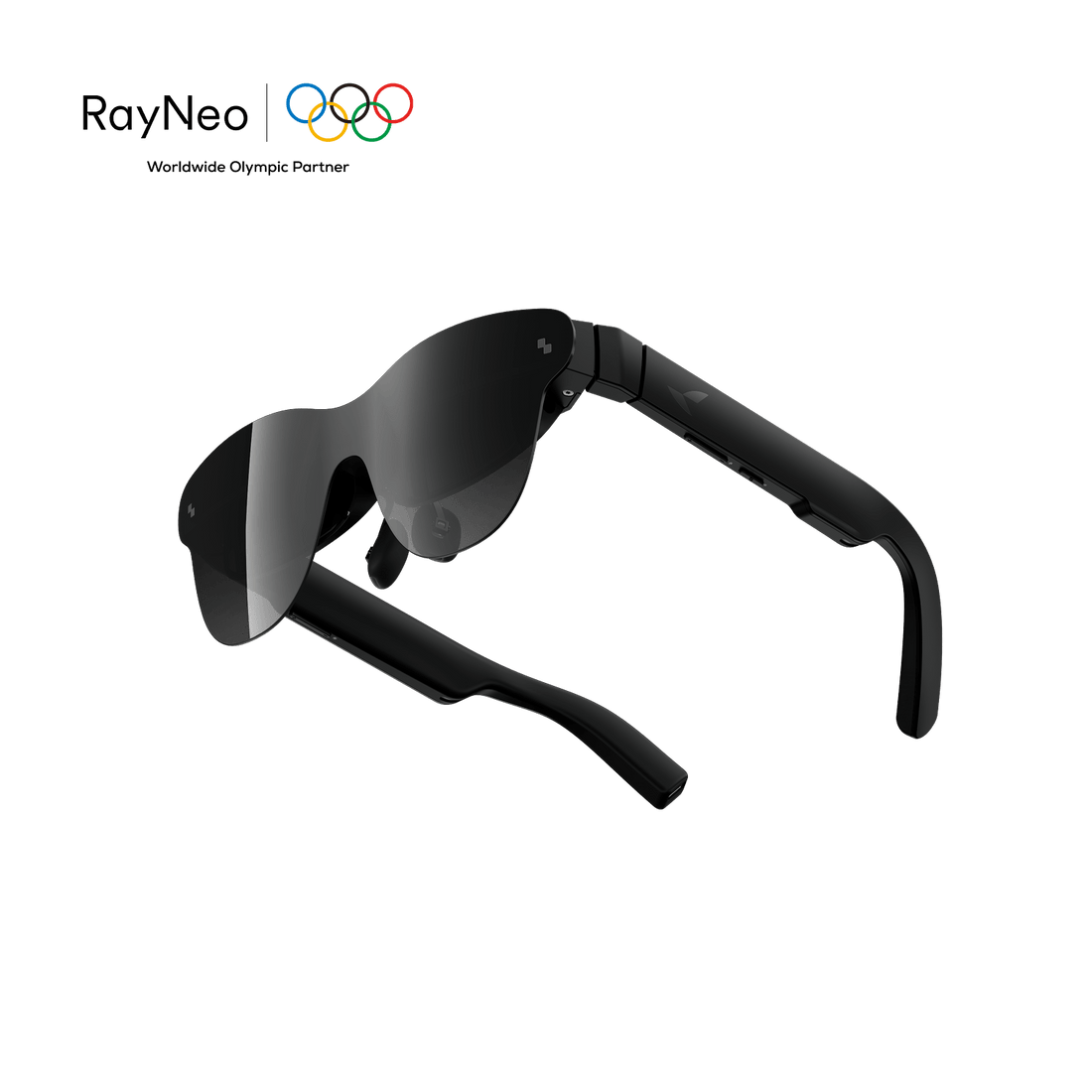
For heavy gamers and movie lovers, smart glasses are like a portable private big screen. Compared to phones and tablets, small micro OLED or micro LED screens with high pixel density have natural advantages in color contrast and black levels. The RayNeo Air 4 Pro AR Glasses, for instance, is specifically engineered for this immersive experience, boasting a 120Hz high-refresh Micro-OLED display and HDR10 support to ensure every frame of an action movie or fast-paced game is rendered with cinematic fluidity. Combined with refresh rates of 60Hz or higher and low input latency, they are capable of handling action games and high-speed sports content.
Community discussions often mention pain points like the difficulty of setting up large TVs in small apartments or rentals, the worry of disturbing roommates or family during late-night viewing, and eye dryness or neck discomfort from facing a monitor for too long. Display-style smart glasses project images onto a far-focal plane. With an equivalent view of over 100 inches, they can rebuild a home theater in a limited space while avoiding staring at a phone screen from a very close distance.
For many users, smart glasses are not competing with phones; they are competing with a TV that is hard to move.
Immersive Entertainment With High Refresh Rates
High refresh rates determine the ceiling of the immersive entertainment experience, especially in fast-paced games and high-frame-rate movies. A 120Hz display, for example, significantly reduces motion blur and improves hand-eye coordination compared to traditional 60Hz screens. This is particularly noticeable in shooting, racing, and rhythm games.
True immersion comes when you forget the device exists, and high refresh rates are a key factor in making the device boundaries fade away.
When frame rates and response times are stable enough during long gaming sessions, the brain more easily accepts the virtual big screen as a natural presence. This reduces dizziness and the feeling of disconnect. To achieve this, latency control across the entire chain is crucial, including the video source, transmission protocol, and rendering buffer.
Improved Neck Health And Better Viewing Posture
Chronic neck and back issues caused by looking down at phones and laptops have become a health concern for remote workers and heavy phone users. Smart glasses raise main information to a level near the horizon. This extends the time the cervical spine stays in a natural curve and reduces the total time spent at extreme downward angles. This change can be clearly felt after a few weeks of use.
By recording daily screen usage postures, we can observe a transition from a noticeable forward head tilt to primarily eye movement. This relieves tension in the neck and shoulder muscles. While smart glasses do not replace professional physical therapy, the posture optimization in daily use is a practical health benefit that is often overlooked.
See What I See Guidance For Hands-Free Repairs
For professional scenarios, smart glasses are a tool first and an electronic product second. In repair and hands-on scenarios, the value of smart glasses is mainly in the first-person view sharing feature. Users wearing camera-equipped glasses transmit their view of equipment, wires, or parts to a remote expert in real-time. After seeing the same perspective, the expert can provide guidance via voice or AR annotations. This greatly improves the efficiency of remote troubleshooting.
Live Teleprompter Support For Presentations
In presentation and video recording scenarios, smart glasses can act as a real-time teleprompter. Short prompts or bullet points float at the edge of the vision, allowing the speaker to maintain eye contact with the audience while avoiding looking down at paper or a teleprompter screen. For content creators, this lightweight prompting is perfect for street interviews, vlogs, or product explanations. It removes the need for complex lighting setups and keeps facial expressions natural by preventing frequent eye shifts. When you can complete a long script as naturally as having a conversation, the teleprompter function truly integrates into the creative workflow.
Why You Might Need Them: Solving Real-World Problems
From a structured perspective, we can break down the core value of smart glasses by user group. For desk nomads, travelers, gamers, and technical professionals, the value lies in efficiency, freedom, immersion, and safety. Current device forms struggle to meet this combination of needs simultaneously.
Think of smart glasses as a comprehensive upgrade to the entire phone plus supporting devices chain, rather than a replacement for a single piece of hardware.
For Desk Nomads And Remote Workers
Desk nomads frequently switch between home, the office, coworking spaces, and coffee shops. Every move requires resetting screens and stands. Smart glasses provide a stable view coordinate system. Regardless of how the environment changes, the work interface stays consistent. This consistency is vital for deep work.
Many remote workers share similar experiences. It used to take 20 minutes to set up a temporary workstation. Now, they just set down the laptop, put on the glasses, and continue with their previous window layout. Combined with cloud documents and remote desktops, the glasses can become the primary work interface. The laptop simply handles the processing and connectivity.
We believe a high-quality mobile office experience is not about having more gear. It is about freeing your attention from setting up your desk.
For Travelers And Explorers
Travelers care about packing light and switching states instantly. Whether walking through a city, visiting a museum, or exploring remote sights, they want to check their phones less without giving up the ability to take photos and record memories. Smart glasses handle navigation, translation, and filming hands-free. They can even record important segments of a trip and organize them automatically.
In our interviews with long-term travelers, one noted a clear change: the number of photos decreased, but the number of segments worth rewatching increased. The glasses record a more natural first-person highlight rather than every moment interrupted by a phone. With cloud syncing and AI editing, the workload of organizing after the trip is also heavily reduced.
Truly great travel tech does not help you take more photos. it helps you keep more complete memories.
For Gamers And Media Enthusiasts
For gamers and film fans, smart glasses solve two long-standing conflicts: lack of space and lack of free time. You can get a screen size and surround-sound feel close to a home theater during commutes, trips, or before bed without disturbing others. This combines with low-latency input for console or cloud gaming.
In our test environments, including bright living rooms, dark bedrooms, and night flights, we verified the contrast performance of high-brightness micro OLED panels under different lighting. HDR capability is especially critical for dark scenes. For cloud gaming, we also focus on image stability during network fluctuations to ensure the glasses are not the bottleneck of the experience.

For many users, smart glasses are a way to quietly expand their living space beyond the screen.
For Professional And Technical Use
In professional and technical settings, the value of smart glasses is even more obvious. Manufacturing, logistics, healthcare, and field service industries have already proven that remote expert collaboration, AR step-by-step guides, and real-time data overlays can significantly reduce error rates. This is where all-in-one AR glasses like the RayNeo X3 Pro shine; equipped with full-color Micro-LED displays that maintain high visibility even in outdoor sunlight and integrated spatial sensing, they act as a powerful AI assistant for hands-free productivity throughout the day. These tools shorten training cycles and improve individual task performance.
Market analysis in North America shows that enterprise applications, particularly in healthcare and manufacturing logistics, have become the most mature part of AI smart glasses revenue with the clearest financial returns. These tools help companies gain quantifiable efficiency in quality control, warehouse picking, and remote diagnostics. In our work with enterprise clients, we have seen that the turning point from pilot to large-scale deployment happens when field workers start asking for the devices themselves, rather than management pushing them down.
When field engineers start treating smart glasses as a must-have item in their daily tool kit, the category has truly entered the productivity phase.
Conclusion
Returning to the initial question: what can smart glasses actually do, and do you really need them? In 2026, smart glasses are moving beyond being mere gadgets and into practical use. They are shifting from single-function devices to seamless tools for various scenarios. Whether it is a desk nomad using a mobile multi-screen office, a traveler needing heads-up navigation and translation, a gamer wanting immersive movies, or a pro using remote collaboration, mature usage patterns now exist.
FAQ
Can I wear smart glasses over my regular prescription?
For users with nearsightedness or other vision needs, there are three main solutions: direct prescription lens replacement, using dedicated prescription inserts, or optimizing the viewing experience through virtual focal length adjustment within a certain range. If you need to get prescription lenses for RayNeo AR smart glasses, you can find the corresponding models through our partner, Lensology.
How is the privacy of people around me protected (Recording LEDs)?
Smart glasses with camera functions typically feature a visible indicator light on the front or side of the frame that stays lit during recording. Some models also use a short audio cue to notify the wearer and those nearby, creating a clear and perceptible recording status. Because of this, being open and providing friendly reminders to those around you when using recording features in public is a key part of responsible smart glasses use.
Do these glasses work with iPhones, Androids, and Laptops?
Most smart glasses currently connect to devices via Bluetooth and wired video output. Audio and AI assistant functions mainly rely on Bluetooth compatibility with iOS and Android. Display mirroring depends on USB-C DP Alt Mode or using an adapter to connect to laptops and console devices that support video output. However, we still recommend checking if your phone and laptop support video output standards before buying to avoid extra hassle with cables and adapters later.
What is the typical battery life for heavy AR use?
In heavy AR use cases—such as constant spatial tracking, real-time navigation, and camera stream input—the battery life for the current generation of standalone AR smart glasses typically ranges from two to five hours. This depends on processor power consumption, display brightness, and environmental temperature.

Share:
Translation Glasses: What You Can Actually Do with Them Today
10 Latest Gadgets for Tech Enthusiasts in 2026