

$449.00



Traditional headphones and earbuds have dominated personal audio for decades, but they come with inherent compromises: ear canal blockage causes discomfort during extended wear, complete isolation from surroundings creates safety concerns, and bulky designs conflict with active lifestyles. Understanding smart glasses audio is essential when choosing wearable tech that balances immersive sound with situational awareness. AR smart glasses represent a paradigm shift, delivering high-quality audio through open-ear designs that let you hear both digital content and the world around you.
Smart glasses audio technology has evolved dramatically, with innovations like directional speakers and acoustic optimization now delivering cinema-quality sound without blocking your ears. The technical challenge lies in achieving rich, detailed audio reproduction within ultra-lightweight frames while preventing sound leakage. Leading brands like RayNeo have invested heavily in audio engineering partnerships and proprietary acoustic designs to overcome these obstacles, making AR glasses a viable alternative to traditional headphones for entertainment, productivity, and everyday use.
Smart glasses employ open-ear audio architecture fundamentally different from conventional headphones. Rather than sealing sound inside your ear canal, they use micro-speakers positioned near your ears to create a personal sound zone through directional audio projection. This approach maintains environmental awareness, crucial for safety when walking, commuting, or multitasking. The open design eliminates pressure buildup and heat accumulation, making smart glasses comfortable for all-day wear without the fatigue associated with sealed earbuds.
The trade-off traditionally involved compromised audio quality and sound leakage, but modern AR glasses have largely solved these issues through advanced acoustic engineering. Users can now enjoy private listening experiences in offices, public transport, or home environments without disturbing others, while remaining aware of important sounds like conversations, announcements, or traffic.
Effective smart glasses audio relies on several key technical elements working in harmony. Speaker positioning determines how sound reaches your ears without broadcasting to everyone nearby. Precision placement creates a focused acoustic field that follows your head movements while minimizing spillage beyond a few inches.
Acoustic tube fittings serve as sound conduits, channeling audio from internal drivers to optimal exit points near the ear. These tubes reduce energy loss during transmission, preserving detail and frequency response that would otherwise dissipate. The tube design also shapes sound characteristics, allowing engineers to tune bass response and treble clarity.
Directional speaker technology uses carefully angled drivers and acoustic chambers to beam sound toward your ears rather than dispersing it omnidirectionally. This focused delivery improves efficiency, enabling louder volumes with less power while reducing external sound leakage.
Audio processing chips handle digital signal processing tasks: equalizing frequency response across the audible spectrum, dynamically adjusting volume based on ambient noise levels, and managing multiple audio modes optimized for different content types. High-quality processing ensures consistent sound whether you're watching action movies, listening to classical music, or taking voice calls.
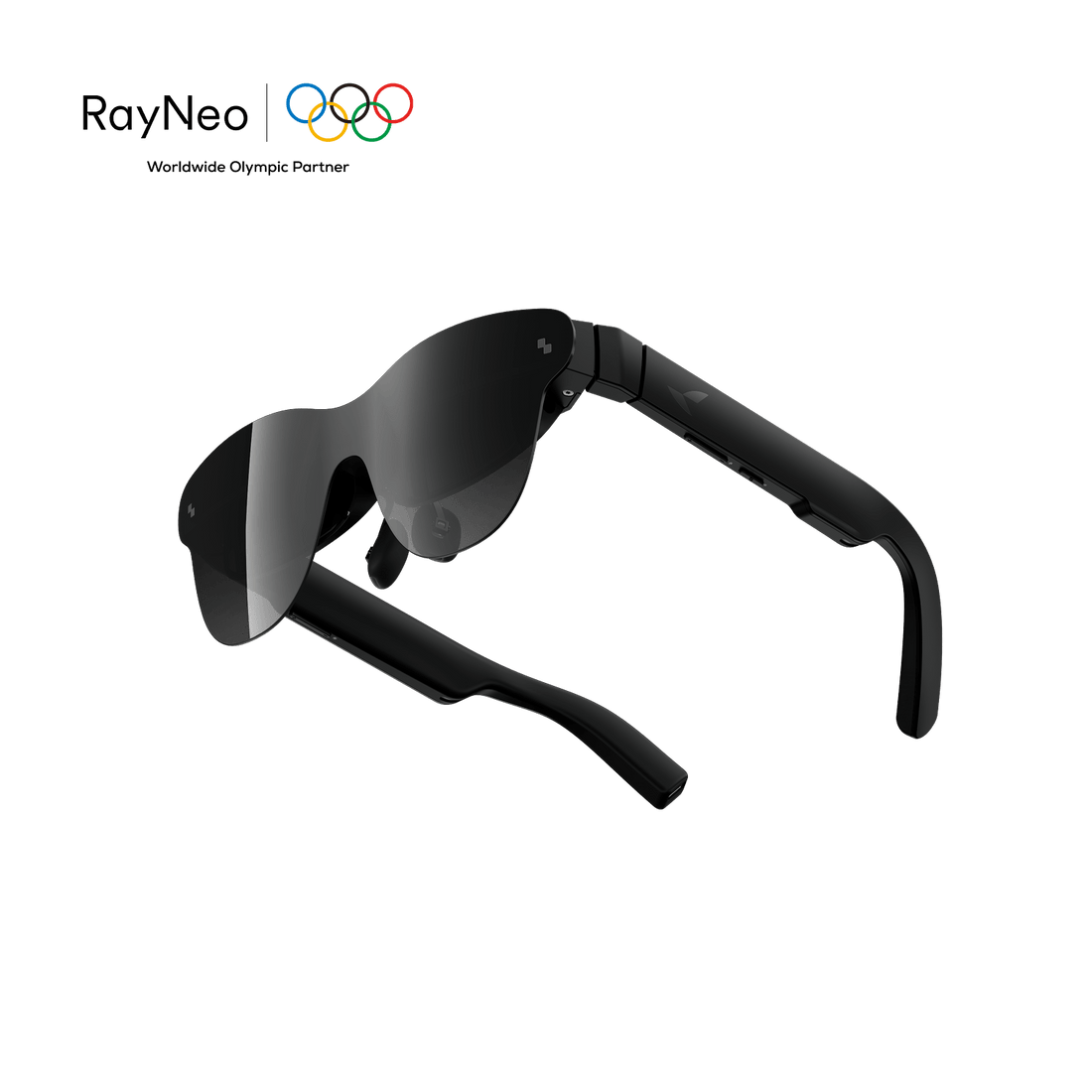
RayNeo Air 4 Pro establishes a new benchmark for smart glasses audio through its collaboration with Bang & Olufsen, the legendary Danish audio company renowned for over 90 years of acoustic innovation. This partnership goes beyond simple speaker integration—Bang & Olufsen's engineers worked directly on tuning the Air 4 Pro's entire audio chain to achieve their signature sound profile: balanced frequency response, exceptional clarity across all volume levels, and rich tonal depth that brings content to life.
The resulting sound quality delivers layered soundscapes where you can distinguish individual instruments in orchestral pieces, catch whispered dialogue in films without cranking volume, and feel the impact of explosive sound effects in action sequences. Unlike generic AR glasses that treat audio as an afterthought, the Air 4 Pro positions sound as equal to its world-first HDR10 visual capabilities. Whether you're immersed in a cinematic blockbuster, enjoying your favorite album, or playing graphically intensive games, the audio fidelity matches the visual excellence.
Users report the Air 4 Pro produces more natural, less fatiguing sound compared to typical AR glasses, which often exhibit tinny highs or muddy bass. The Bang & Olufsen tuning maintains tonal balance even at low volumes, ensuring you catch every detail without needing to raise levels that might disturb others nearby.
The Air 4 Pro incorporates breakthrough acoustic tube fittings that address one of smart glasses audio's biggest challenges: sound loss during transmission from driver to ear. Traditional open-ear designs lose up to 80% of acoustic energy as sound travels through air gaps and reflects off internal surfaces. RayNeo's proprietary tube design reduces this loss by 80%, effectively recovering most of the wasted energy and channeling it precisely where needed.
This engineering advancement delivers two immediate benefits. First, you hear complete audio detail that would otherwise vanish—subtle sound effects, background instrumentation, quiet vocal nuances—enhancing the emotional impact of content. Second, higher efficiency means longer battery life, since the system requires less power to achieve target volume levels.
The tubes themselves represent years of acoustic engineering refinement. Their internal geometry, material selection, and damping characteristics all contribute to the Air 4 Pro's signature sound. RayNeo engineered them to maintain consistent acoustic impedance, preventing unwanted resonances that color sound or create harshness.

RayNeo Air 4 Pro offers two distinct audio profiles tailored to different usage scenarios, accessible through simple controls on the temple arm.
Whisper Mode optimizes audio for shared spaces where you need privacy without isolation. The system intelligently reduces high-frequency density—sounds most likely to leak beyond your immediate area—while preserving midrange clarity crucial for dialogue and vocals. Background noise filtering helps you focus on content even in moderately noisy environments like coffee shops or airplane cabins. Whisper mode proves invaluable during late-night viewing when others are sleeping nearby, allowing full enjoyment without disturbing household members.
Surround Mode unleashes the Air 4 Pro's full acoustic potential for immersive entertainment. Dynamic spatial audio enhancement creates three-dimensional soundscapes where effects appear to originate from specific directions, matching the visual action on your 135-inch equivalent screen. Explosions rumble with weight, ambient sounds envelop you from all angles, and musical performances gain concert-hall spaciousness. This mode transforms your viewing experience into something approaching premium home theaters, despite the Air 4 Pro's portable 76-gram form factor.
The dual-mode approach recognizes that smart glasses serve multiple roles throughout your day. Morning commute content needs different audio characteristics than evening movie sessions, and the Air 4 Pro adapts accordingly without requiring separate devices.
The Air 4 Pro's audio system comprises four precision-tuned speaker units working in concert to deliver its exceptional sound. The proprietary active acoustic tube fittings achieve the aforementioned 80% reduction in sound loss, a specification that represents tangible performance improvements you'll hear immediately when comparing to other AR glasses. Professional Bang & Olufsen tuning ensures tonal accuracy across all genres and content types. The audio system integrates seamlessly with the Air 4 Pro's Vision 4000 chip and HDR10 visual processing, enabling synchronized audio-visual experiences where sound perfectly complements the stunning picture quality.
RayNeo Air 4 Pro transforms personal entertainment by combining its 135-inch equivalent visual experience with cinema-quality audio that immerses you completely. The HDR10 visual processing works in concert with the Bang & Olufsen audio system—when bright highlights bloom on screen during an explosion, the accompanying sound hits with appropriate weight and depth. Subtle color gradations in sunset scenes pair with delicate ambient soundscapes that place you inside the movie's environment.
This audio-visual synergy surpasses typical home viewing setups. Traditional televisions require room for large screens and separate sound systems, compromising living space and creating installation complexity. The Air 4 Pro delivers comparable impact in a device you can slip into a pocket, letting you recreate the theater experience anywhere—bedroom, hotel room, outdoor spaces, even airplane seats. The private nature of the audio means you never disturb others, removing the social friction that comes with late-night viewing or shared living situations.
Users describe the combination of visual scale and audio depth as genuinely cinematic, creating emotional engagement similar to premium theaters but with added convenience and privacy.
Smart glasses audio truly shines during travel and commuting, situations where traditional headphones prove problematic. During flights, the Air 4 Pro's open-ear design prevents the pressure discomfort that sealed earbuds cause during altitude changes, while Whisper mode keeps your entertainment private despite close quarters with other passengers. The 135-inch screen creates immersive viewing even in cramped economy seats, with audio quality that makes long flights enjoyable rather than endurable.
Train and bus commutes benefit from maintained environmental awareness—you can enjoy your content while staying alert to station announcements, upcoming stops, or potential safety concerns. The lightweight 76-gram design causes no neck strain during extended commutes, unlike heavier alternatives. Walking while wearing the Air 4 Pro remains safe because you hear approaching vehicles, cyclists, and pedestrians naturally, avoiding the isolated bubble that sealed earbuds create.
Battery management becomes relevant for extended travel days. While specific runtime varies with usage patterns, the Air 4 Pro's efficient audio system contributes to reasonable usage duration for typical daily entertainment needs.
The 76-gram total weight of the Air 4 Pro distributes evenly across your head through its carefully engineered 46.7:53.3 front-to-rear counterweight ratio, preventing the forward slide or pressure points that plague heavier devices. Audio components positioned in the temple arms keep center of gravity optimal, so you barely notice you're wearing them even during extended sessions.
The speaker positioning places sound sources just millimeters from your ears without touching them, avoiding the soreness and heat buildup that closed headphones cause. This placement remains effective whether you're sitting upright, reclining, or moving around, maintaining consistent audio quality regardless of posture.
For users requiring vision correction, the Air 4 Pro supports prescription lens customization through magnetic attachments that don't interfere with the audio path. You can enjoy perfect sound quality whether using the included clear lenses or custom prescription inserts, ensuring accessibility for the majority of users who need corrective eyewear.
Smart glasses audio follows different design principles than traditional headphones, making direct comparisons misleading. Sealed over-ear headphones achieve certain acoustic characteristics—deep bass extension, extreme isolation—that open-ear designs cannot match due to physical constraints. However, AR glasses offer unique advantages: all-day wearability without discomfort, environmental awareness for safety, visual display integration, and social acceptability in public spaces where headphones appear isolating.
The key lies in matching audio technology to usage scenarios. For critical music listening where you want maximum bass impact and total isolation, dedicated audiophile headphones remain optimal. For entertainment, productivity, and lifestyle usage where comfort, awareness, and visual integration matter, smart glasses like the RayNeo Air 4 Pro deliver superior overall experiences despite different acoustic characteristics.
RayNeo's approach balances these factors thoughtfully. The Bang & Olufsen partnership ensures audio quality doesn't compromise portability—you get genuinely impressive sound from a 76-gram device that fits in your pocket. The dual-mode system adapts to situations requiring either privacy or immersion, maximizing versatility within the open-ear framework.
Open-ear audio design particularly benefits users who value situational awareness and extended comfort over maximum isolation. Outdoor enthusiasts appreciate hearing nature sounds, trail warnings, or approaching vehicles while enjoying entertainment during activities. Office workers need to catch colleague questions or phone calls without constantly removing devices. Parents want to monitor children while watching content or taking calls. Fitness users require awareness of gym environment, traffic, or workout partners.
Long-session comfort favors open-ear designs decisively. Content marathons, all-day work usage, or extended travel become sustainable without the ear soreness, heat buildup, or pressure fatigue that closed headphones inevitably cause. The Air 4 Pro's 76-gram weight and balanced design enable truly all-day wear that sealed alternatives cannot match.
Multi-scenario users who move between different environments throughout the day benefit from carrying a single device that adapts rather than switching between multiple specialized gadgets. The Air 4 Pro serves equally well for commute entertainment, office productivity, and evening relaxation, replacing separate headphones, displays, and glasses.
Audio engineering expertise matters enormously in compact devices where space constraints limit driver size and acoustic chamber design. Bang & Olufsen brings decades of experience achieving exceptional sound from challenging form factors—their work with compact wireless speakers, slim televisions, and portable audio demonstrates the specialized knowledge required for the Air 4 Pro.
Professional tuning addresses issues that generic implementations miss. Frequency response remains balanced across volume levels, preventing the shrill highs or booming bass that plague poorly engineered devices. Transient response captures attack and decay of musical notes accurately, reproducing instrument textures faithfully. Dynamic range handling ensures quiet passages remain audible while loud sections don't distort or compress unnaturally.
Brand reputation in audio indicates commitment to quality beyond mere specifications. Bang & Olufsen's involvement signals that RayNeo prioritized audio excellence rather than treating it as a checkbox feature, resulting in tangible sonic differences you'll perceive immediately when comparing to alternatives lacking such partnerships.
While RayNeo Air 4 Pro emphasizes entertainment audio quality, the X3 Pro takes a complementary approach focused on AI interaction and productivity scenarios. The X3 Pro's audio system prioritizes voice clarity for its Google Gemini 2.5 AI assistant, ensuring accurate speech recognition even in noisy environments and delivering crisp AI responses through its speakers.
The audio profile differences reflect each product's primary use cases. Air 4 Pro targets immersive entertainment with cinema-quality sound tuned by Bang & Olufsen, optimized for movies, music, and gaming where audio richness enhances enjoyment. X3 Pro serves professional users needing reliable communication, real-time translation across 14 languages, and voice-based AI interaction, where intelligibility matters more than tonal warmth.
Choosing between them depends on your priorities. Entertainment and casual users seeking the best possible audio for content consumption should select the Air 4 Pro at $299 MSRP, launching January 25, 2026. Professionals requiring AI capabilities, translation features, and productivity tools benefit more from the X3 Pro's $1,299 offering, available since December 17, 2025. Both share the 76-gram lightweight design and all-day comfort philosophy, ensuring whichever you choose won't burden you during extended wear.
RayNeo, initially incubated within TCL, is a leading brand in the AR space dedicated to redefining augmented reality through groundbreaking technology and wearable innovation. The company develops AR glasses that seamlessly integrate into everyday life, delivering immersive and intuitive experiences.
RayNeo stands apart as the only AR company with full in-house research and development plus mass production capabilities for core optical solutions. Operating proprietary optical manufacturing facilities and complete device production plants, RayNeo controls quality and innovation at every stage rather than relying on third-party suppliers. This vertical integration enables competitive pricing—delivering premium technology at accessible price points like the Air 4 Pro's $299 MSRP.
The company leverages 25+ years of optical expertise inherited from TCL's display technology heritage, applying this knowledge to solve AR's unique challenges: ultra-compact optical engines, high-brightness displays visible in all lighting conditions, and lightweight designs suitable for extended wear. This experience foundation accelerates innovation while ensuring production reliability.
RayNeo's global reach spans 70+ countries, with growing communities of users worldwide adopting AR glasses for entertainment, productivity, and lifestyle enhancement. This international presence demonstrates market confidence in RayNeo's technology and commitment to serving diverse user needs.
For more information about RayNeo and its innovative AR technology, visit www.rayneo.com.
Smart glasses audio technology represents the convergence of acoustics, optics, and wearable computing, creating new possibilities for how we experience digital content. The open-ear approach pioneered by devices like RayNeo Air 4 Pro demonstrates that high-quality audio doesn't require isolation—properly engineered systems can deliver immersive sound while maintaining environmental awareness and all-day comfort.
RayNeo Air 4 Pro sets new standards for entertainment-focused AR glasses through its Bang & Olufsen audio partnership, innovative acoustic tube technology, and dual-mode versatility. As the world's first HDR10-enabled AR glasses, it pairs cutting-edge visual capabilities with audio quality that does justice to premium content, all in a 76-gram package you can carry anywhere.
The evolution continues as audio processing algorithms grow more sophisticated, AI integration enables adaptive sound profiles, and acoustic engineering advances push boundaries of what's possible in ultra-compact form factors. Early adopters of smart glasses audio technology gain immediate benefits while positioning themselves at the forefront of how personal entertainment and productivity will evolve in coming years.
Experience the future of wearable audio technology by exploring RayNeo Air 4 Pro at www.rayneo.com, where cinema-quality sound meets cutting-edge AR innovation.
Q: How does smart glasses audio differ from traditional headphones?
Smart glasses use open-ear designs with directional speakers positioned near your ears, allowing you to hear both your content and surroundings simultaneously. Unlike sealed earbuds that block your ear canal, this approach maintains environmental awareness for safety while preventing the discomfort and heat buildup of prolonged headphone wear. Modern implementations like RayNeo Air 4 Pro achieve cinema-quality sound through advanced acoustic engineering, eliminating the audio quality compromises that once plagued open-ear designs.
Q: Will smart glasses audio disturb people around me?
No, when properly engineered. RayNeo Air 4 Pro's directional speaker technology and innovative acoustic tube fittings focus sound directly toward your ears while minimizing leakage beyond a few inches. The Whisper mode further reduces high-frequency sounds most likely to escape, making it ideal for offices, public transport, or late-night viewing. The 80% reduction in sound loss means audio energy reaches your ears efficiently rather than dispersing into the environment.
Q: Can smart glasses audio quality match dedicated headphones?
Smart glasses audio excels in different ways than traditional headphones. While sealed over-ear models achieve deeper bass extension and total isolation, AR glasses like the Air 4 Pro—with Bang & Olufsen tuning—deliver impressive clarity, balanced frequency response, and rich soundscapes in a 76-gram package you can wear all day comfortably. For entertainment, productivity, and lifestyle use where awareness and comfort matter, smart glasses provide superior overall experiences despite different acoustic characteristics.





Share:
Smart Glasses Navigation: Hands-Free Directions for Every Journey
The Complete AR Glasses Buying Guide: 7 Essential Factors for First-Time Buyers