

$449.00



The question "What smart glasses are best for audio?" reflects a fundamental shift in how people consume audio content throughout their day. Traditional audio solutions force trade-offs—earbuds provide sound isolation but block environmental awareness, headphones deliver quality but create social barriers, and phone speakers lack privacy and quality. Smart glasses audio technology offers a distinct approach: delivering personal audio while maintaining environmental connection, combining visual information with sound, and enabling all-day comfortable wear that earbuds and headphones struggle to match.
Understanding what makes smart glasses excel for audio requires examining both the technical implementations that deliver quality sound in an open-ear format and the diverse scenarios where this capability transforms daily audio experiences. The evaluation extends beyond simple frequency response specifications to encompass spatial audio positioning, environmental awareness balance, battery life supporting extended listening sessions, and comfort enabling hours of continuous wear across commuting, work, exercise, and entertainment contexts.
Smart glasses audio implementation differs fundamentally from traditional headphones. Rather than creating sealed acoustic chambers isolating ears from environment, smart glasses employ open-ear architectures using directional speakers or bone conduction systems. These approaches deliver sound while allowing ambient sound to reach ears naturally, maintaining awareness essential for safety and social appropriateness.
Directional speaker systems position audio sources near ears, using acoustic design to focus sound toward the ear canal while minimizing sound leakage. Speaker placement on temple arms creates consistent spatial relationship with ears. Advanced implementations use multiple speaker elements per side, enabling stereo separation and spatial audio effects.
The acoustic engineering involves balancing competing requirements: sufficient volume for varied environments without excessive power consumption, frequency response covering 20Hz to 20kHz despite size constraints, and minimal sound leakage while maintaining adequate volume.
Bone conduction represents an alternative implementation transmitting sound through skull vibrations rather than air. This eliminates speakers, using transducers pressed against temporal bones. Bone conduction maintains maximum environmental awareness and creates zero sound leakage, but typically produces lower bass response and overall quality compared to speaker systems.
Smart glasses audio quality depends on wireless transmission protocols and codecs managing compression. Basic SBC codec provides universal compatibility but applies heavy compression reducing fidelity and introducing latency. Advanced codecs like AAC, aptX, or LDAC reduce compression artifacts, improve frequency response, and minimize latency.
Latency becomes critical during video watching or gaming—even 100-200 milliseconds delay creates noticeable lip-sync issues. Smart glasses supporting multiple codec options provide best compatibility and quality, automatically negotiating highest quality the device ecosystem supports.
Commuting represents a primary audio consumption context where smart glasses offer distinct advantages. Travelers need audio entertainment while maintaining awareness of environmental sounds—train announcements, traffic alerts, or calls for attention. Smart glasses open-ear audio preserves this awareness while delivering clear podcast, music, or audiobook content.
Extended battery requirements for commuting demand efficient power management. Typical commutes involve 45-90 minutes each direction, requiring at least 2-3 hours continuous playback capability. Ambient noise varies dramatically—quiet train cars require minimal volume while subway systems demand higher output maintaining comprehension above background noise.
Content types influence requirements. Podcast and audiobook content requires clear midrange for voice intelligibility but tolerates modest bass. Music demands fuller frequency coverage and better dynamic range.
Professional environments require audio solutions balancing personal content with workplace interaction demands. Smart glasses enable listening to background music improving focus while remaining available for colleague interactions without the social barrier of visible headphones signaling unavailability.
The open-ear design proves essential—sealed earbuds create social friction where colleagues can't determine availability, leading to awkward interruptions. Smart glasses maintain visual availability while providing private audio.
Audio quality for calls requires excellent microphone performance. Smart glasses must capture clear speech while filtering keyboard typing and environmental noise. All-day comfort becomes critical for eight-hour workdays potentially involving several hours of audio consumption.
Physical activities create unique requirements emphasizing secure fit, sweat resistance, and environmental awareness for safety. Smart glasses must remain stable during running, cycling, or gym workouts without shifting. The open-ear approach maintains critical environmental awareness detecting approaching vehicles or trail conditions.
Sweat and moisture resistance protects electronics during intense exercise. Resistance to perspiration and light rain enables outdoor running or gym use. Workout music listening requires adequate bass response and sufficient volume overcoming gym noise or outdoor wind.
Podcast listening during long runs requires battery life supporting 2-4 hour activities. Quick charging helps users recharge between morning and evening workouts.
Home entertainment represents demanding audio scenarios where quality expectations derive from home theater systems or high-end headphones. Users consuming movies, series, or gaming expect immersive audio with clear dialogue, impactful sound effects, and adequate bass.
The private viewing advantage benefits shared living situations—watching content late at night without disturbing household members, or enjoying content where TV use would be inconvenient. Audio quality must satisfy throughout extended viewing sessions potentially lasting several hours.
Spatial audio implementation enhances entertainment immersion. Proper stereo separation creates sense of audio positioning making sound feel like it originates from the virtual screen. Advanced processing simulates surround sound effects providing cinematic audio experiences.

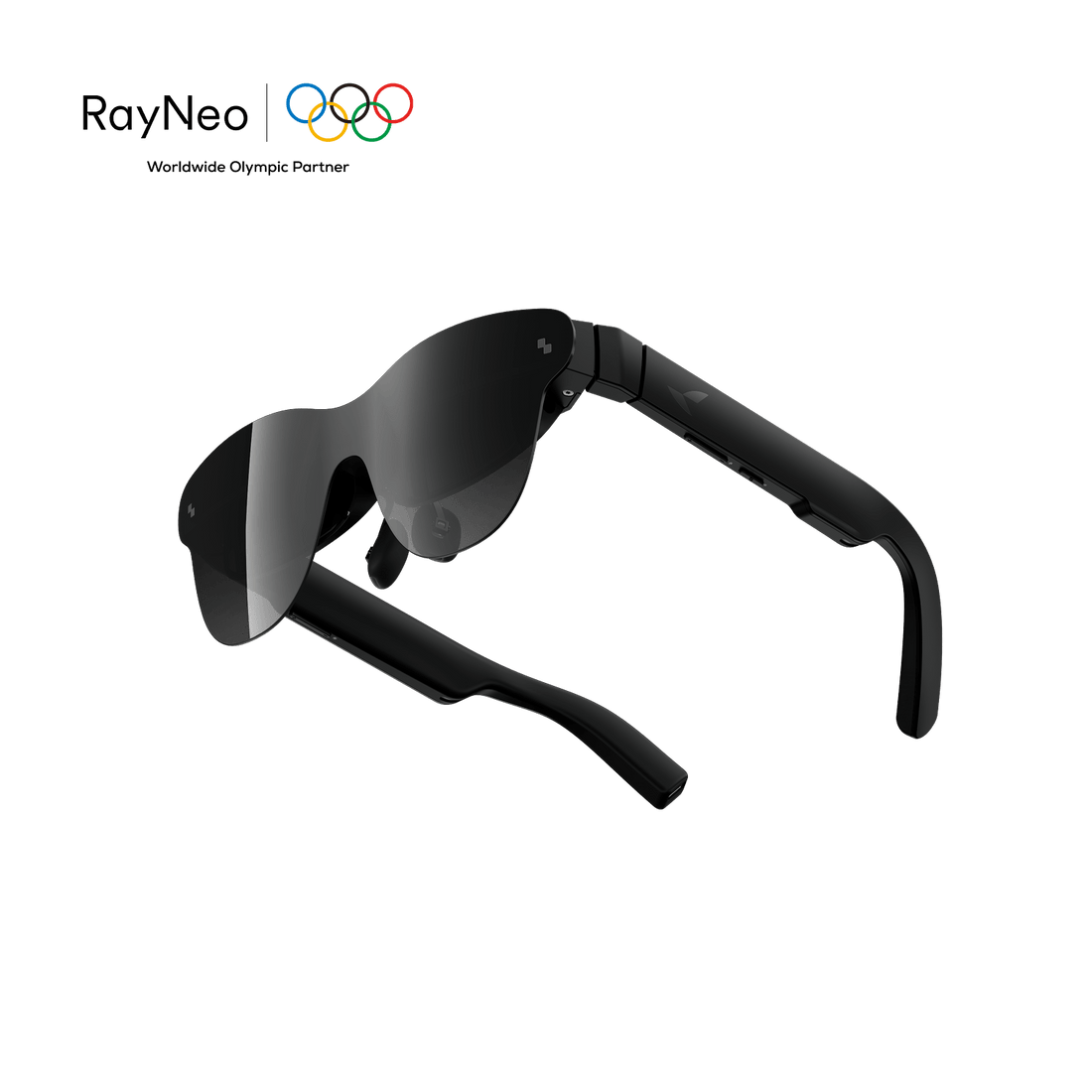
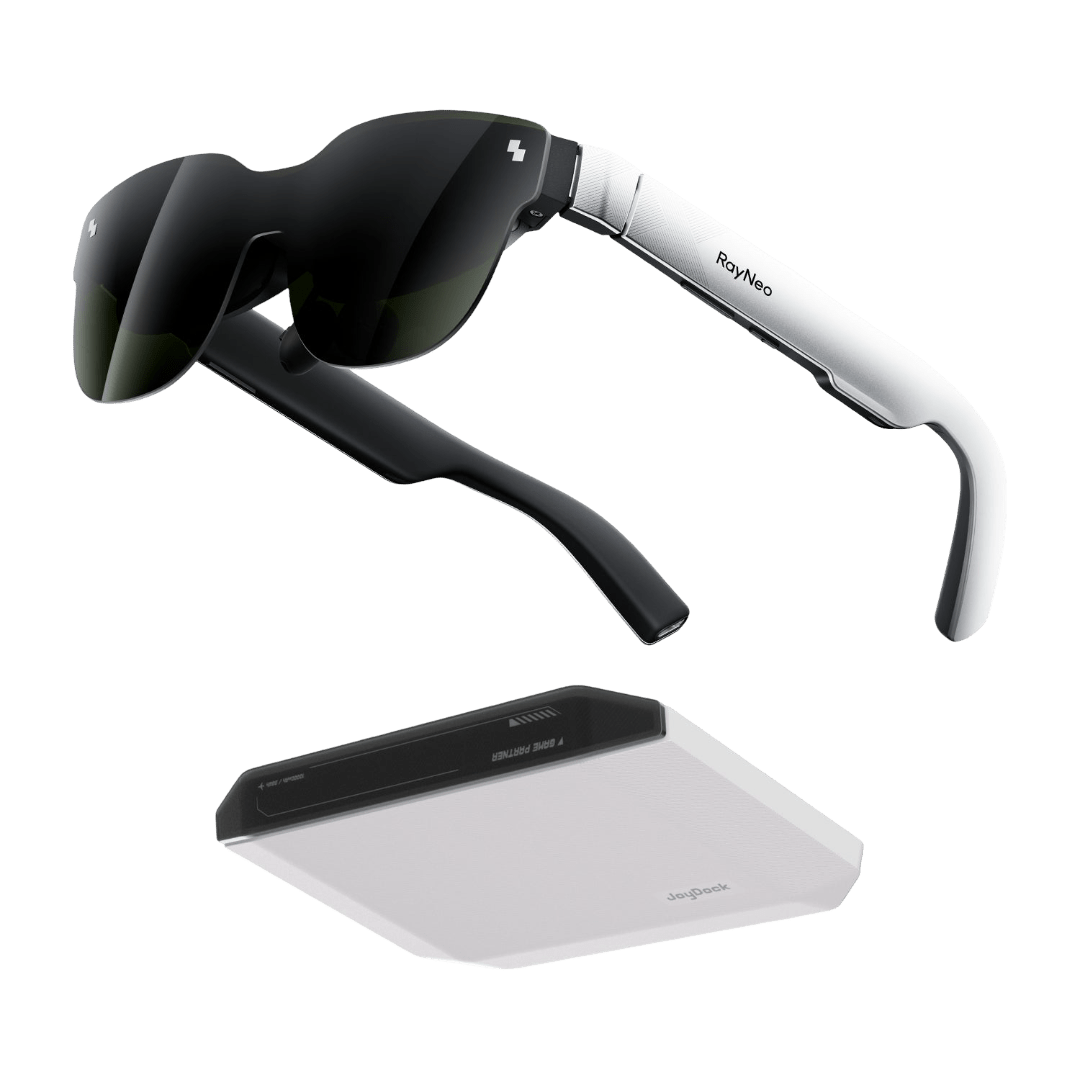
When examining practical audio implementations in smart glasses, RayNeo's approach demonstrates how audio technology serves different user priorities. The Air 4 Pro focuses specifically on entertainment audio quality through collaboration with audio specialists, while both models maintain the fundamental open-ear comfort and awareness benefits smart glasses audio provides.
The Air 4 Pro incorporates audio systems co-engineered with Bang & Olufsen, leveraging specialized audio expertise producing refined sound signature tuned for entertainment content. The implementation utilizes four speakers with redesigned tube fittings that reduce sound loss by 80% compared to conventional approaches, retaining more complete sound detail that would otherwise dissipate. This efficiency improvement allows adequate volume and quality while maintaining battery efficiency for extended viewing sessions.
The audio system provides two distinct operational modes optimizing for different scenarios. Whisper mode reduces high-density sounds and minimizes environmental interference, designed for quiet environments or late-night viewing where subtle audio matters without disturbing others. Surround mode enhances spatial audio effects dynamically, creating immersive soundscapes for gaming and movies that simulate multi-speaker surround sound systems from the compact speaker implementation.
The 76-gram weight distribution enables comfortable audio listening during extended sessions. The lightweight design prevents the fatigue heavier implementations cause after a few hours of wear, supporting marathon viewing or long podcast listening sessions without developing pressure points or discomfort requiring device removal for relief. The ergonomic temple design with nine-level adjustment accommodates different head shapes, ensuring proper speaker positioning relative to ears for consistent audio quality across users.
The audio architecture integrates with the 135-inch equivalent viewing experience for synchronized audio-visual content consumption. The implementation handles audio-video synchronization through low-latency wireless protocols ensuring dialogue matches on-screen lip movements and sound effects correspond accurately with visual actions. This synchronization proves essential for immersive entertainment where perceptible audio delay would undermine the viewing experience quality.
Battery life supports typical entertainment usage patterns. While specific duration depends on volume levels and content types, the implementation balances audio quality and power consumption enabling multiple hours of continuous playback appropriate for movie viewing, series watching, or extended music listening sessions. The passive viewing mode without intensive processing requirements extends battery life compared to devices running continuous computation-heavy features.
Audio Feature Implementation:
| Feature | Entertainment Focus |
|---|---|
| Audio Partnership | Bang & Olufsen co-engineered |
| Speaker Configuration | 4 speakers with optimized tube fittings |
| Sound Loss Reduction | 80% reduction vs conventional |
| Audio Modes | Whisper mode, Surround mode |
| Designed For | Movies, gaming, music, entertainment |
| Weight | 76g for extended comfort |
| Viewing Integration | 135-inch display with audio sync |
| Codec Support | High-quality wireless audio transmission |
The audio implementation demonstrates the engineering priorities for entertainment-focused smart glasses—quality speaker elements, acoustic optimization reducing sound loss, mode customization for different listening environments, and comfortable ergonomics enabling extended wearing during long entertainment sessions. The Bang & Olufsen collaboration brings specialized audio engineering expertise ensuring sound quality meets expectations users develop from premium audio equipment.
When assessing smart glasses for audio, consider factors beyond frequency response specifications. The open-ear implementation inherently trades sound isolation for environmental awareness, making direct comparisons with sealed earbuds misleading. Instead, evaluate how well the implementation serves intended usage scenarios.
Volume adequacy—can speakers produce sufficient output for comfortable listening in your typical environments? Battery life must align with usage patterns—commuters need round-trip travel capability, office users require full workday support. Comfort during extended wear matters for hours-long sessions. The 70-80 gram weight range enables comfortable all-day wear for most users.
Microphone quality affects call experiences. Clear speech capture with effective noise filtering determines whether others hear you clearly during calls and whether voice assistants accurately interpret commands.
RayNeo, initially incubated within TCL, develops AR glasses designed for everyday integration. With full in-house R&D and manufacturing capabilities for optical systems, the company leverages 25+ years of optical expertise from its TCL heritage. Products are available in over 70 countries. Visit www.rayneo.com for more information.
Q: How do smart glasses deliver audio without blocking my ears like earbuds?
Smart glasses use open-ear audio technology with directional speakers positioned on the temple arms near your ears. These speakers project focused sound directly toward your ear canal while minimizing leakage to others nearby. Advanced models like RayNeo Air 4 Pro use optimized acoustic tube fittings that reduce sound loss by 80%, delivering clear, private audio without sealing your ear canal. This open design maintains environmental awareness—you hear traffic, conversations, and announcements—while avoiding the ear pressure, heat buildup, and discomfort that sealed earbuds cause during extended wear.
Q: Can smart glasses audio quality compete with traditional headphones?
Smart glasses audio excels differently than sealed headphones. While over-ear headphones achieve deeper bass and total isolation, quality smart glasses like the Air 4 Pro—with Bang & Olufsen engineering—deliver impressive clarity, balanced frequency response, and immersive soundscapes. The Air 4 Pro's dual audio modes optimize for different scenarios: Whisper mode for quiet environments without disturbing others, and Surround mode simulating multi-speaker surround sound for movies and gaming. For daily audio consumption across commuting, work, and entertainment where comfort and awareness matter, smart glasses provide superior overall experiences despite different acoustic characteristics than traditional headphones.
Q: How long can I listen to audio on smart glasses before charging?
Battery life varies based on usage patterns and volume levels. Quality smart glasses typically provide 3-5+ hours of continuous audio playback—adequate for daily commutes, workday listening, or movie sessions. Entertainment-focused models like RayNeo Air 4 Pro optimize power consumption for extended passive viewing, while the lightweight 76-gram design enables comfortable all-day wear. The efficient acoustic design (80% reduced sound loss) means less power needed for target volumes, extending battery life. For all-day use, look for models supporting fast charging or use-while-charging capability via USB-C, which eliminates forced interruptions during extended sessions.
Smart glasses for audio lovers offer distinct advantages across diverse usage scenarios—commuting with environmental awareness, workplace productivity balancing focus and availability, exercise with safety and motivation, and home entertainment with immersive quality. The open-ear implementation provides fundamental benefits sealed audio solutions cannot match while delivering quality sufficient for most audio consumption contexts.
Understanding what makes smart glasses excel for audio requires examining both technical implementations—speaker design, acoustic optimization, codec support, power management—and practical scenario requirements across the varied contexts where people consume audio throughout their day. The technology has matured to deliver genuine quality that satisfies audio enthusiasts while providing unique benefits traditional headphones and earbuds cannot replicate.
When evaluating smart glasses for audio applications, prioritize implementations matching your primary usage scenarios. Entertainment-focused designs emphasize audio quality and immersive features. Workplace designs balance audio quality with microphone performance and all-day comfort. Active designs emphasize secure fit and moisture resistance. The convergence of quality audio and smart glasses functionality has created devices that genuinely serve audio lovers seeking better integration of sound into their daily lives beyond what traditional audio equipment provides.





Share:
Smart Glasses Navigation: Hands-Free Directions for Every Journey
The Complete AR Glasses Buying Guide: 7 Essential Factors for First-Time Buyers