

$449.00


The Oakley Meta HSTN smart glasses are built with athletes in mind, offering features like 3K video recording and an advertised eight-hour battery life. At the same time, a starting price of $399 and a few noticeable limitations raise valid questions. Before buying, it helps to clearly understand what these glasses actually offer and how they compare to other options on the market.
This guide breaks down Oakley Meta AI glasses by looking at their features, pricing, and how they perform in everyday use. It also highlights alternative smart glasses across different price points and capabilities, so you can make an informed decision and choose a pair that better matches how you’ll really use them.
The Oakley Meta HSTN brings together camera hardware, audio, and Meta’s AI inside a frame clearly designed for active use. Breaking down these core features helps clarify whether they actually fit how you plan to use smart glasses day to day.
The built in 12MP ultrawide camera records 3K video, putting it on par with the camera found in Ray-Ban Meta Gen 2 glasses. A five microphone array helps cut down wind noise during calls, which is useful outdoors. Open ear speakers provide workable audio for workouts and runs without blocking surrounding sounds, though they don’t replace a good pair of headphones.
Meta AI activates with the “Hey Meta” wake word, allowing you to ask questions or request information without touching your phone. The assistant can analyze what the camera sees, read incoming texts aloud, and identify landmarks or products in real time. Voice controls also manage calls, messages, and music playback, letting you reply, change tracks, or adjust volume while staying hands free.
Oakley’s PRIZM™ lenses are designed to enhance contrast in changing lighting conditions, from bright sunlight to cloudy days. An IPX4 rating covers sweat and light rain, but not full water exposure like swimming. The bold, athletic frame works well for sports and outdoor activity, though it can feel out of place in more formal or social settings.

Pricing for Oakley Meta smart glasses starts at $399, with options like transition lenses pushing the price up to $479. For comparison, Ray-Ban Meta Gen 2 models begin at $379, putting the Oakley version just $20 higher. Both offer the same rated eight-hour battery life while Oakley claims to have 19 hours of standby time.
In the box, you get the glasses themselves, a charging case that adds up to 48 hours of extra power, and a USB-C charging cable. The overall package is similar across Meta’s lineup, with no major differences in what’s included.
Using the Oakley Meta glasses day to day highlights limitations that don’t show up on a spec sheet. They work well in certain situations but fall short in others that matter when you’re wearing them as part of a normal routine.
Hands free POV recording does what it’s supposed to, within clear limits. Each video is capped at three minutes, which means longer activities require frequent restarts. The 3K resolution holds up well during movement, and voice commands make it easy to capture moments without stopping, but battery concerns start to creep in during extended sessions.
Navigation relies entirely on spoken directions rather than visual overlays. That’s fine while running or biking, but it lacks the clarity of seeing a map. Notifications are read out loud, which can feel awkward in public, and the bold frame doesn’t blend easily with everyday outfits. They work for the gym, but can feel out of place in meetings or at a coffee shop.
The advertised eight hour battery life drops to under an hour when recording continuously at high quality. The charging case helps stretch usage across the day, and quick charging is useful if you forget to top them up overnight.
An external LED indicates when recording is active, but its subtle design is a frequent point of criticism. Meta’s privacy policy also states that captured content may be used to train AI models unless you manually opt out in the settings, which raises additional concerns for some users.
Several smart glasses offer features the Oakley Meta simply doesn't have, making it easier to find the best alternatives for meta smart glasses based on your specific budget and tech needs. Which option makes sense ultimately comes down to what you actually want to use your eyewear for on a daily basis.
Oakley Meta glasses deliver AI responses through audio only, with no visual confirmation, while most display based glasses rely on opaque screens that block your view. True AR glasses take a different approach by layering transparent information onto the real world, letting you see useful data without losing awareness of your surroundings.
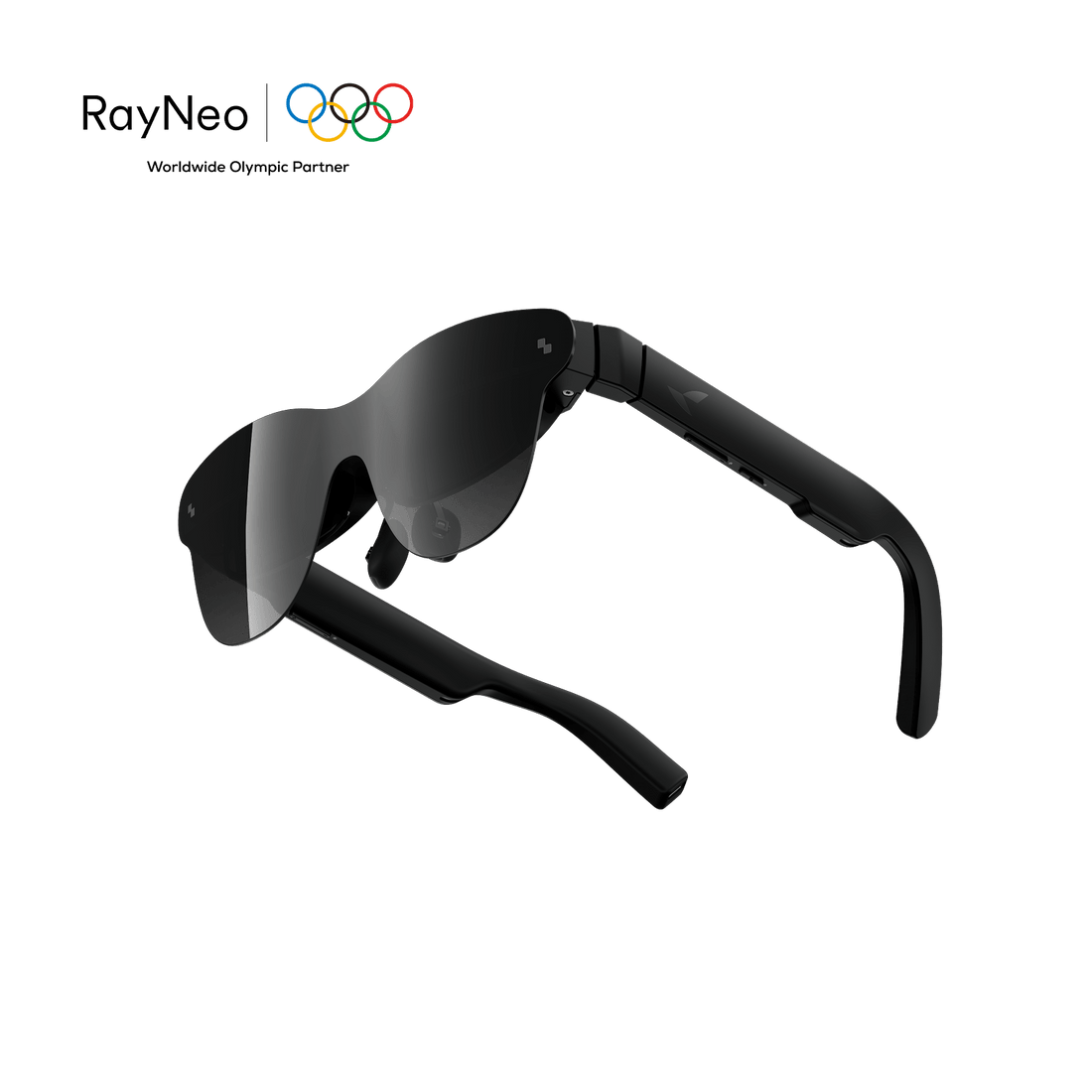
The RayNeo X3 Pro runs Google Gemini 2.5 and supports real time translation in 14 languages. Instead of reading translations out loud, it displays them as subtitles directly in your field of view, allowing conversations to flow naturally without constantly checking your phone. Its MicroLED waveguide projects a 43 inch floating display that stays clear without blocking vision, reaching up to 6,000 nits of peak brightness for use in any lighting.
AI: Google Gemini 2.5 with live translation subtitles and context-aware assistance
Display: MicroLED waveguide with transparent 3D overlays
Navigation: SLAM powered AR arrows anchored to real world locations
Battery: 245 mAh, supporting around four hours of active use with fast magnetic charging

Other options focus on lighter, more discreet use cases. Even Realities G2 offers minimal heads up navigation and notification cues without overwhelming your view, making it a good fit for professionals who want subtle assistance without committing fully to AR. Solos AirGo 3 takes a voice first approach, integrating ChatGPT for conversation, supporting translation in more than 25 languages, and offering modular, camera-free frame options for privacy sensitive environments like gyms.
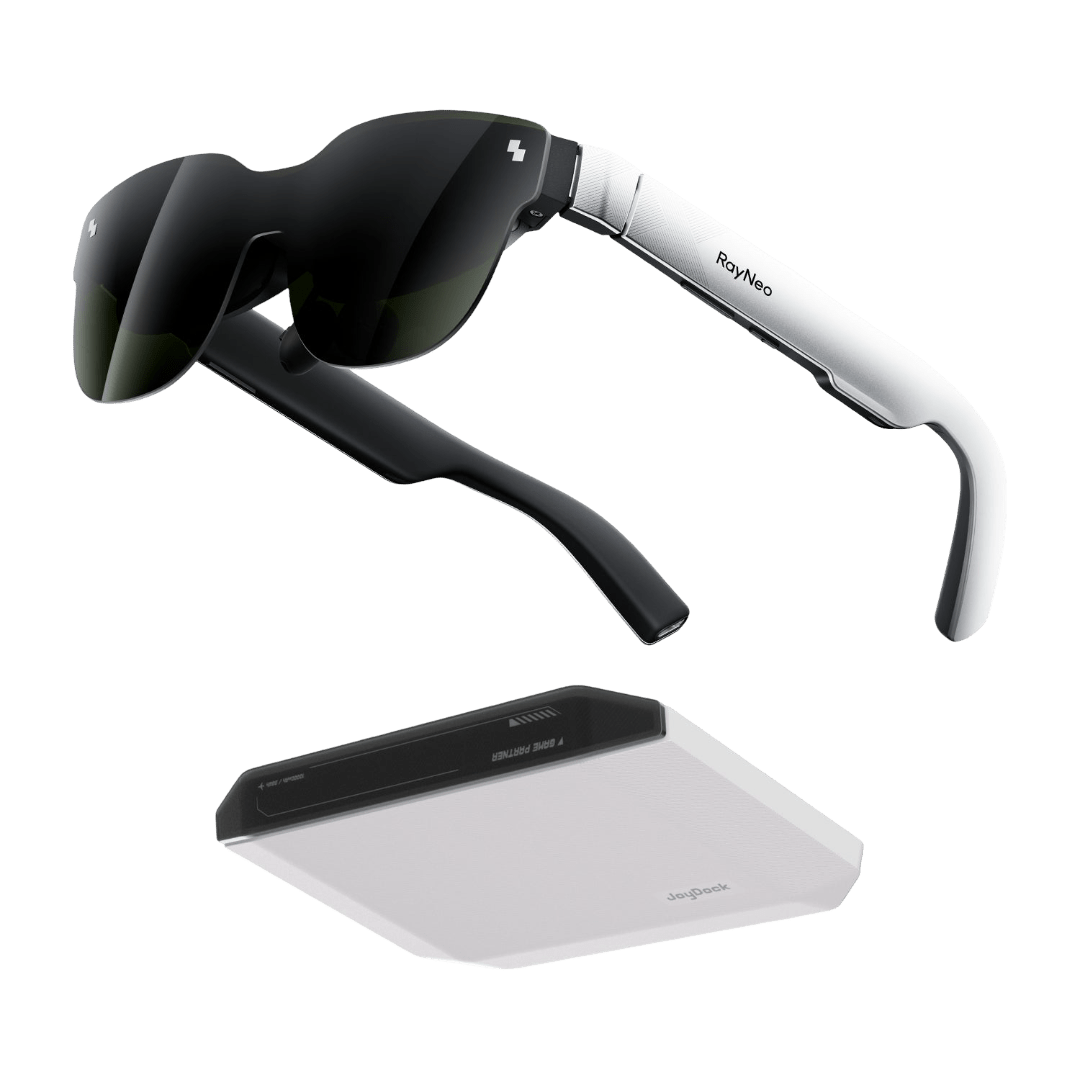
The affordable smart glasses RayNeo Air 3s delivers the same core experience as the Air 3s Pro, but at a more budget friendly price. Both models share a 201 inch virtual screen, a 46° field of view, and the same OptiCare 3840Hz eye protection technology. The main difference comes down to brightness, 650 nits on the Air 3s versus 1,200 nits on the Pro, which only really matters in very bright environments.
For users watching content on flights, at home, or during evening commutes, that brightness gap is barely noticeable. The Air 3s works with Android phones, iPhones via USB-C, PCs, and gaming consoles using an HDMI adapter. Prescription lenses support myopia up to 10.00D and astigmatism up to 2.00D. At a discounted price of $199 (down from $269), it offers one of the easiest and most affordable ways to get into display-based smart glasses.
[ ] Do you prioritize sports performance and lens clarity?
Best Pick: Oakley Meta HSTN (With PRIZM™ lenses and IPX4 water resistance for active use).
[ ] Do you need real-time visual assistance and AI translation?
Best Pick: RayNeo X3 Pro (Multimodal AI with Google Gemini 2.5 and MicroLED subtitles).
[ ] Are you looking for a portable "Big Screen" for movies and gaming?
Best Pick: RayNeo Air 3s (201-inch virtual display at an unbeatable $199 price point).
[ ] Is privacy your top concern in public spaces?
Best Pick: Solos AirGo 3 (Modular, camera-free design with ChatGPT integration).
[ ] Do you want a classic look that blends into the office?
Best Pick: Ray-Ban Meta or Even Realities G2 (Subtle HUD and iconic aesthetics).
Oakley Meta HSTN works well for athletes who want hands free recording, voice based AI, and dependable battery life in a sport focused design, but its $399 starting price and missing visual features limit its appeal beyond that niche. Looking at alternatives opens up far more flexibility.
Display glasses like the RayNeo Air 3s Pro turn entertainment into an immersive, big screen experience, while AR options such as the X3 Pro place information directly in your line of sight. At $199, the RayNeo Air 3s makes display based smart glasses far more accessible. The key is choosing technology that fits how you actually live and work, Meta for social creators and fitness use, display glasses for travelers and gamers, and AR glasses for professional and productivity driven needs.
They’re designed for hands free use, letting you record 3K POV video, listen to music through open ear speakers, and interact with Meta AI using voice commands. They also support basic activity tracking when paired with compatible fitness and tracking apps.
No. A smartphone is required for setup and everyday use. The glasses rely on the Meta AI app and connect via Bluetooth for features like calls, music playback, and AI interactions.
Yes, They work well for certain sports and workouts. The 3K camera captures clear action footage, and the IPX4 rating handles sweat and light rain. However, they’re not suitable for water-based sports.
The comparison comes down to design rather than specs. Both Oakley Meta HSTN and Ray-Ban Meta Gen 2 use the same 12MP camera, offer similar eight-hour battery life, and run the same Meta AI features. Oakley costs about $20 more ($399 vs. $379) but adds PRIZM™ sport lenses and IPX4 water resistance. Ray-Ban, on the other hand, offers a more classic, everyday look.
Comparison at a Glance: Oakley vs. Ray-Ban Meta
|
Feature |
Oakley Meta HSTN |
Ray-Ban Meta (Wayfarer/Headliner) |
|
Starting Price |
$399 |
$299 - $329 (Standard) |
|
Camera |
12MP Ultra-wide |
12MP Ultra-wide |
|
Lens Tech |
PRIZM™ (Sport-tuned contrast) |
High-quality (Polarized/Transition options) |
|
Water Resistance |
IPX4 (Sweat & Splash proof) |
IPX4 (Sweat & Splash proof) |
|
Design Language |
Sport-tech / Geometric |
Iconic / Classic Everyday |
|
Battery Life |
Up to 4 hours (32 hrs with case) |
Up to 4 hours (32 hrs with case) |
|
AI Features |
Meta AI Integration |
Meta AI Integration |
Yes. Oakley Meta HSTN and Oakley Meta Vanguard were both introduced in 2025 as part of Meta’s first expansion beyond Ray-Ban-branded smart glasses.





Share:
Best AR Glasses: Top Picks for Augmented Reality Experiences
What Are the Smart Glasses With Display? Types, Uses, and Buying Guide