

$449.00



The concept of perfect smart glasses remains elusive in an industry filled with prototype demonstrations and aspirational marketing. What defines truly excellent smart eyewear differs significantly from vendor specifications or technology showcase features. The perfect smart glasses balance five critical dimensions that determine whether a device transitions from occasional novelty to daily essential: lightweight ergonomics that enable all-day wear, intelligent features that enhance rather than interrupt daily activities, aesthetic design that users willingly wear in public, battery endurance that matches real usage patterns, and ecosystem compatibility that integrates seamlessly with existing devices.
Understanding what makes perfect smart glasses requires examining actual usage patterns rather than hypothetical capabilities. The gap between promised features and practical daily value has characterized much of the smart glasses industry's history. This guide identifies the five features that separate genuinely useful smart eyewear from technological demonstrations, providing concrete criteria for evaluating whether specific products deliver meaningful improvements to daily life. The focus remains on attributes that matter during weeks of continued use, not minutes of initial impression.
Weight represents the single most critical factor determining whether smart glasses become part of daily routine or remain occasional novelty items. Traditional eyeglasses typically weigh 20-30 grams. Smart glasses must incorporate display systems, processors, batteries, sensors, and communication modules while maintaining weight profiles that don't create fatigue or constant awareness of wearing a device.
The ergonomic challenge extends beyond raw weight to distribution. Front-heavy designs slide down the nose. Rear-heavy configurations create pressure behind the ears. The ideal weight distribution maintains approximately 45-55% front-to-rear balance, allowing natural facial contours to support the device without concentrated pressure points.
Research on wearable comfort suggests the 50-80 gram range represents a critical zone where weight becomes noticeable but remains manageable for extended periods if properly distributed. Above 80 grams, most users report significant discomfort during all-day wear regardless of distribution optimization. This explains why achieving sub-80 gram weights has become a defining goal for consumer smart glasses.
Perfect smart glasses require adjustment mechanisms that accommodate different facial structures. Nose pad systems should offer multiple height positions, allowing users to position displays correctly relative to their natural gaze direction. Temple arm adjustments enable proper positioning behind the ears, preventing slippage while avoiding excessive pressure.
Intelligence in smart glasses should amplify human capabilities rather than demand attention. The fundamental challenge involves determining which information warrants interruption and which should remain available on-demand. Perfect smart glasses distinguish between urgent information requiring immediate attention, contextual data enhancing current activities, and background information accessible when needed without forcing itself into awareness.
The most valuable intelligent features understand user context and adapt behavior accordingly. During conversations, smart glasses should minimize interruptions—notifications can wait, displays should dim, and audio systems should reduce output. While reading, text-heavy notifications make sense, but during physical activities, voice summaries prove more practical. Perfect smart glasses learn individual patterns, adjusting notification timing and formats based on activity recognition.
This context awareness extends to information presentation formats. Visual displays work well for structured data—directions, lists, reference information—where users can process details at their own pace. Audio suits quick updates, short messages, or information consumption while attention remains elsewhere. Multimodal presentation, combining visual and audio elements, enhances comprehension for complex information but increases cognitive load if overused.
Artificial intelligence in smart glasses should function as an invisible assistant rather than requiring constant interaction. Perfect implementations handle routine tasks autonomously—summarizing messages, translating text automatically, organizing information by relevance, and anticipating needs based on patterns.
Language translation represents one of the highest-value AI applications. The ability to understand foreign text in real-time—restaurant menus, street signs, documents—removes barriers to international travel and cross-cultural communication. Perfect implementations handle multiple languages seamlessly, switching automatically based on detected text.
Technology specifications matter little if users feel uncomfortable wearing devices in public. Perfect smart glasses must achieve aesthetic design that fits social contexts—professional environments, social gatherings, casual daily activities—without marking wearers as technology enthusiasts.
The physics of display systems, battery cells, and processing units impose hard constraints on smart glasses design. Perfect smart glasses minimize these compromises through advanced engineering—ultra-compact optical engines that reduce bulk, innovative battery designs that distribute capacity across the frame, and creative component integration that maintains recognizable eyewear proportions.
Materials communicate quality and attention to detail. Perfect smart glasses use premium materials—aluminum alloys for strength, high-quality plastics for complex shapes, and durable lens coatings that resist scratches. Surface finishes should favor matte or subtle metallic treatments that align with premium eyewear expectations.
Build quality becomes immediately apparent during handling. Perfect smart glasses exhibit solid construction with tight tolerances, smooth adjustment mechanisms, and materials that maintain appearance despite daily wear.
Battery capacity specifications mean little without context about actual usage patterns. Perfect smart glasses provide battery life that accommodates realistic daily scenarios. The critical metric involves whether users can rely on glasses functioning throughout typical use cases without anxiety about charging.
Battery life varies dramatically based on usage. Passive content viewing consumes less power than active AI processing or navigation. Display brightness significantly impacts consumption, with outdoor use potentially doubling power draw compared to indoor use. Perfect smart glasses provide clear communication about expected battery life under different scenarios rather than citing maximum possible duration.
Battery capacity matters less when charging occurs quickly and conveniently. Perfect smart glasses support fast charging that delivers meaningful use time from brief charging sessions. The charging interface should use standard connectors, preferably USB-C, avoiding proprietary cables. The ability to use glasses while charging extends effective battery life significantly for stationary applications.
Perfect smart glasses integrate smoothly with existing technology ecosystems. Compatibility spans device connectivity, application support, content access, and service integration—determining whether smart glasses enhance existing workflows or require entirely new patterns.
Smart glasses should connect reliably to smartphones, tablets, and computers across different operating systems through standard protocols—Bluetooth, WiFi, and potentially USB. Perfect implementations remember multiple paired devices, enabling quick switching without lengthy re-pairing processes. Connection stability across typical usage distances matters more than maximum range.
The value of smart glasses increases with available applications. Perfect implementations either run applications directly or facilitate seamless integration from paired devices. Open development platforms that enable third-party applications expand functionality beyond manufacturer-provided features while maintaining security and quality control.
Direct access to content platforms users already utilize—streaming services, e-book libraries, document storage, communication platforms—adds significant value. Perfect implementations authenticate seamlessly with these services, avoiding repeated login processes. Cloud service integration enables functionality exceeding onboard processing capabilities, with users unaware whether processing occurs locally or remotely.

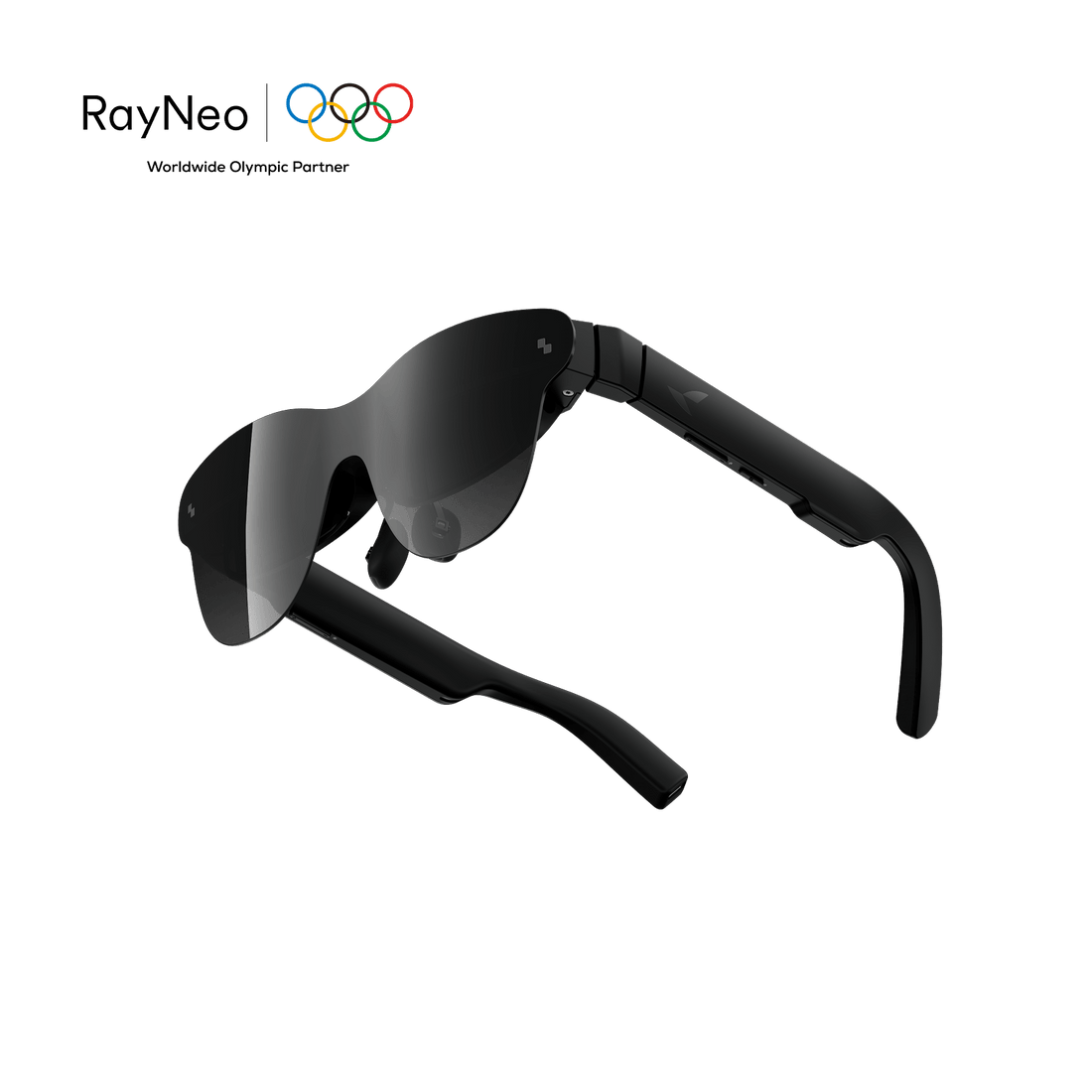
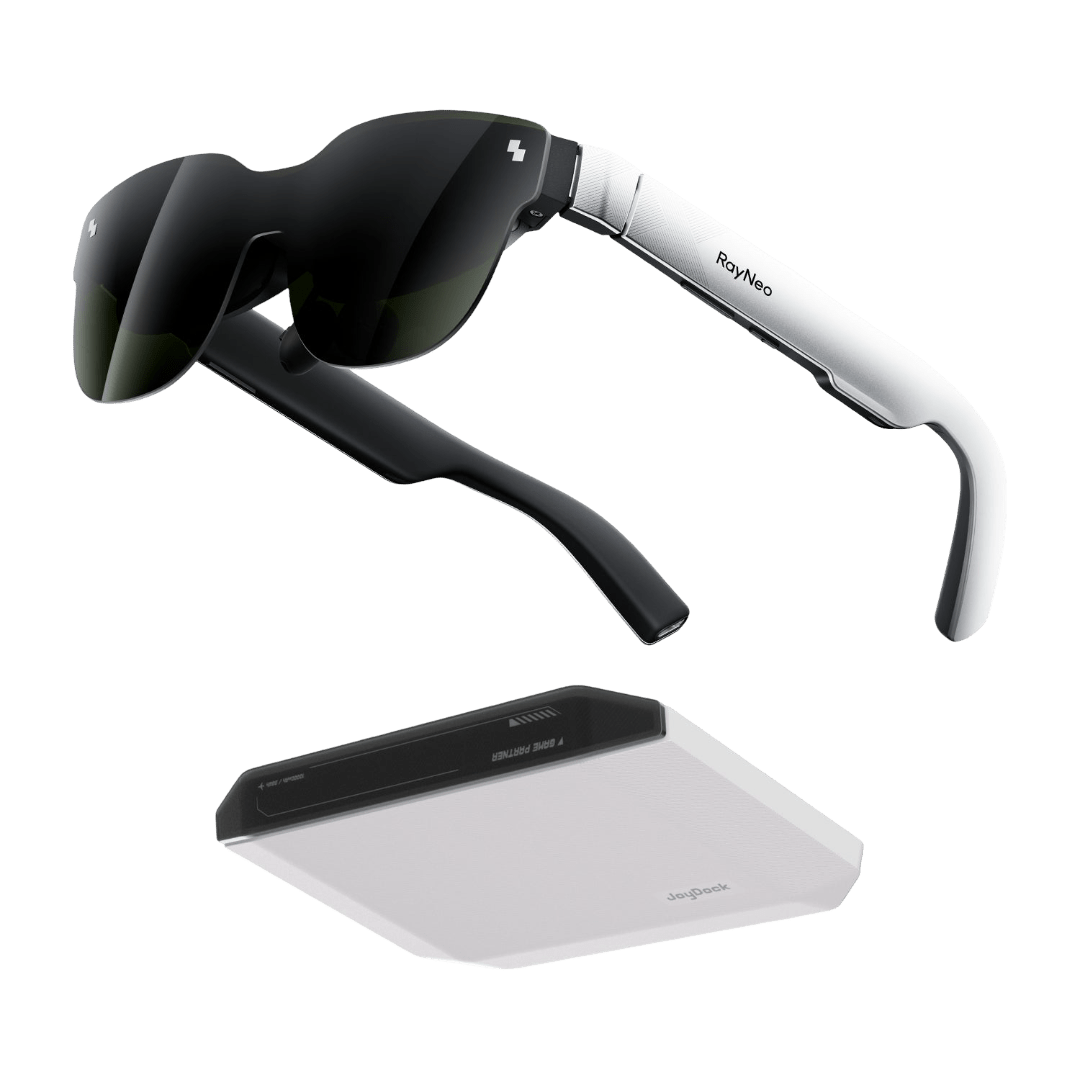
When examining how these five critical features manifest in actual products, RayNeo's approach demonstrates practical implementation. Both the Air 4 Pro and X3 Pro models address the key dimensions that define perfect smart glasses.
Both models achieve 76-gram weight within the comfortable extended-wear threshold, with 46.7:53.3 front-to-rear distribution preventing nose sliding while avoiding ear pressure. Adjustable nose pads offer three positions, and temple arms provide nine-level adjustment.
The Air 4 Pro focuses intelligence on content enhancement. The Vision 4000 chip processes video signals for AI HDR conversion and 2D-to-3D transformation, enhancing content without requiring user interaction. The X3 Pro implements extensive AI through Google Gemini 2.5, providing context-aware assistance, real-time translation in 14 languages, and multimodal understanding. The AI operates through voice activation, remaining dormant until summoned.
Both models maintain eyewear-like proportions with frames that fold for compact storage. Material selection emphasizes durability without excessive weight, balancing rigidity for optical stability with flexibility for comfortable fit.
The X3 Pro implements a 245mAh battery providing 4 hours typical use with 38-minute fast charging. USB-C connectivity supports use while charging for extended sessions. The Air 4 Pro achieves extended viewing times through lower power consumption in passive display mode.
Both models implement Bluetooth 5.2 and WiFi 6. The X3 Pro adds 4GB RAM and 32GB storage, enabling standalone application execution. Connectivity supports simultaneous pairing with multiple devices. Open development environment enables third-party applications.
Feature Implementation Comparison:
| Critical Feature | Entertainment Focus | AI-Enhanced Focus |
|---|---|---|
| Weight | 76g optimal distribution | 76g ergonomic design |
| Intelligence | AI HDR/3D processing | Interactive AI |
| Design | Compact foldable form | Professional aesthetic |
| Battery | Extended passive viewing | 4h active + fast charging |
| Compatibility | Bluetooth 5.2, WiFi 6 | Multi-device ecosystem |
| Price | $299 (accessible) | $1,299 (advanced) |
RayNeo, initially incubated within TCL, develops AR glasses designed for everyday integration. With full in-house R&D and manufacturing capabilities for optical systems, the company leverages 25+ years of optical expertise from its TCL heritage. Products are available in over 70 countries. Visit www.rayneo.com for more information.
Q: What weight should I look for in smart glasses for all-day comfort?
Look for smart glasses weighing under 80 grams with balanced weight distribution (approximately 45-55% front-to-rear ratio). Traditional eyeglasses weigh 20-30 grams, while quality smart glasses like RayNeo's 76-gram models stay within the comfortable extended-wear threshold. Above 80 grams, most users experience significant discomfort during all-day use regardless of weight distribution. Proper balance prevents nose sliding and ear pressure, while adjustable nose pads and temple arms accommodate different facial structures for personalized fit.
Q: What kind of battery life should I expect from good smart glasses?
Battery life depends heavily on usage patterns. Passive content viewing (movies, reading) consumes less power than active AI processing or outdoor navigation with high brightness. Quality models provide 4+ hours for typical active use, with fast charging (30-40 minutes to full) and USB-C compatibility. The most practical feature is charging-while-using capability, which eliminates forced interruptions and enables all-day use at desks or during extended sessions. Evaluate battery specs based on your actual usage scenarios rather than maximum claimed duration.
Q: How do smart glasses integrate with my existing devices and apps?
Perfect smart glasses connect seamlessly via standard Bluetooth 5.2 and WiFi protocols to smartphones, tablets, and computers across different operating systems. They should remember multiple paired devices for quick switching without re-pairing. Look for compatibility with content platforms you already use—streaming services, audiobook libraries, document storage—with seamless authentication. Some models like RayNeo X3 Pro include onboard storage (32GB) and RAM (4GB) for standalone app execution, while others mirror content from paired devices, depending on your independence vs. simplicity preference.
Perfect smart glasses balance five critical features that determine practical daily value: lightweight ergonomics enabling comfortable extended wear, intelligent features that enhance activities without constant interruption, aesthetic design users willingly wear in social contexts, battery life matching realistic usage patterns, and ecosystem compatibility enabling seamless integration with existing devices and services.
The technology has matured to where these features can coexist in production devices rather than remaining mutually exclusive prototypes. Weight can reach the 70-80 gram comfortable range while incorporating capable display systems, processors, and batteries. AI integration can provide valuable assistance without constant interaction demands. Design can maintain eyewear aesthetics while housing necessary components. Battery systems can support typical daily use with fast charging addressing extended needs. And connectivity standards enable integration across device ecosystems without requiring users to abandon existing technology investments.
When evaluating specific smart glasses products, assess each of these five dimensions against your actual usage patterns rather than hypothetical scenarios. The perfect smart glasses for one use case may prove suboptimal for another—entertainment-focused designs prioritize different features than productivity-oriented implementations. Understanding which features matter most for your intended applications guides selection toward devices that deliver genuine daily value rather than impressive demonstrations.





Share:
Smart Glasses Navigation: Hands-Free Directions for Every Journey
The Complete AR Glasses Buying Guide: 7 Essential Factors for First-Time Buyers