

$429.00

When travelling abroad, language barriers often hit you when you least expect them. Whether you are walking into a Tokyo izakaya facing a wall of handwritten menus or sitting at a conference table in Paris struggling to keep up with rapid-fire French, the need for real-time translation becomes undeniable. By 2026, translation glasses will have moved from futuristic gadgets to everyday tools. Over the past year, we have tested several models across airports, trade shows, multilingual business meetings, and international trips. Our conclusion is clear: today's translation glasses are far more capable than most people realize. This article explores what they can do, where they fall short, and when they are truly worth your trust.
Before understanding the specific functions of translation glasses, it is necessary to place them within the broader landscape of smart glasses, AI glasses, and AR glasses: essentially, it is a perceptual computing device worn on the face—responsible for hearing, seeing, thinking, and then overlaying the results onto the real world.

The core reason translation glasses can understand who you are talking to in noisy airports, exhibitions, or subway stations lies in multi-microphone arrays and beamforming technology. Multiple microphones distributed across the temples and frames determine the direction of the sound source by measuring the time difference of arrival of sound waves, focusing the acoustic beam on the speaker directly in front of the user to suppress nearby chatter and ambient noise. In scenarios where the speaker is moving or turning around, the system integrates head-tracking data with changes in voice power to dynamically adjust the pickup direction, ensuring that continuous sentences remain uninterrupted.
In real-world user feedback, this capability directly determines whether a product is seen as a professional tool or a mere toy. For instance, in trials involving AR captioning glasses in university classrooms, students with hearing impairments consistently reported that even when a teacher turned toward the blackboard and was not speaking directly at them, glasses with directional audio pickup maintained a relatively stable caption output. In contrast, standard mobile phone recording and transcription solutions showed a significantly higher error rate in these same settings.
After the multi-microphone array captures the signal, algorithms are still required for noise reduction and speech enhancement. Current mainstream translation glasses combine traditional spectral subtraction, deep learning noise reduction models, and adaptive filtering. The former is highly effective against stable background noise like air conditioning or engines, while the latter can dynamically learn noise characteristics in complex environments such as cafe chatter or street broadcasts to pull clear speech out of the reverberant mud.
For translation scenarios, ensuring a high signal-to-noise ratio at the front end of speech recognition is critical. Some AI glasses have integrated lightweight noise reduction models directly into on-device chips to complete the initial processing locally, reducing information loss before data is uploaded to the cloud. The RayNeo X3 Pro AI+AR Glasses utilizes the Snapdragon AR1 Gen 1 platform, a SoC specifically designed for AR devices. This platform provides the computational foundation for real-time processing of multimodal inputs like voice and vision, supporting local preprocessing, noise reduction, and front-end inference for translation.
From a technical standpoint, what translation glasses do can be broken down into: Automatic Speech Recognition (ASR) → Machine Translation (MT) → Text Rearrangement and Compression → Augmented Reality Display. The key to a genuine experience is not just translation accuracy, but also latency and subtitle readability. Currently, more mature products typically adopt a hybrid edge-plus-cloud solution: common languages and short phrases are translated quickly via local models, while complex long sentences and long-tail languages are processed through smartphone or cloud models to balance latency and accuracy. For example, high-frequency short dialogues in scenarios like guided tours or ordering food usually provide results within 1 to 2 seconds, allowing users to continue a conversation with just a slight pause. This factor directly determines whether the device can truly replace smartphone translation apps during real-world travel.
The final translation result must ultimately be comfortable to see, which relies on the optical engine and UI design. AR glasses use waveguides or MicroLED/Micro-OLED displays to project text onto a virtual plane within the user's field of view. The text must be positioned so it does not block the other person's face, yet remains close enough to the center of vision to avoid frequent eye movement. Empirical research shows that placing real-time subtitles just below the speaker and within a few degrees of the center of vision can significantly reduce fatigue caused by eye-tracking shifts. This also makes it easier for hearing-impaired individuals or language learners to stay focused during long classes.
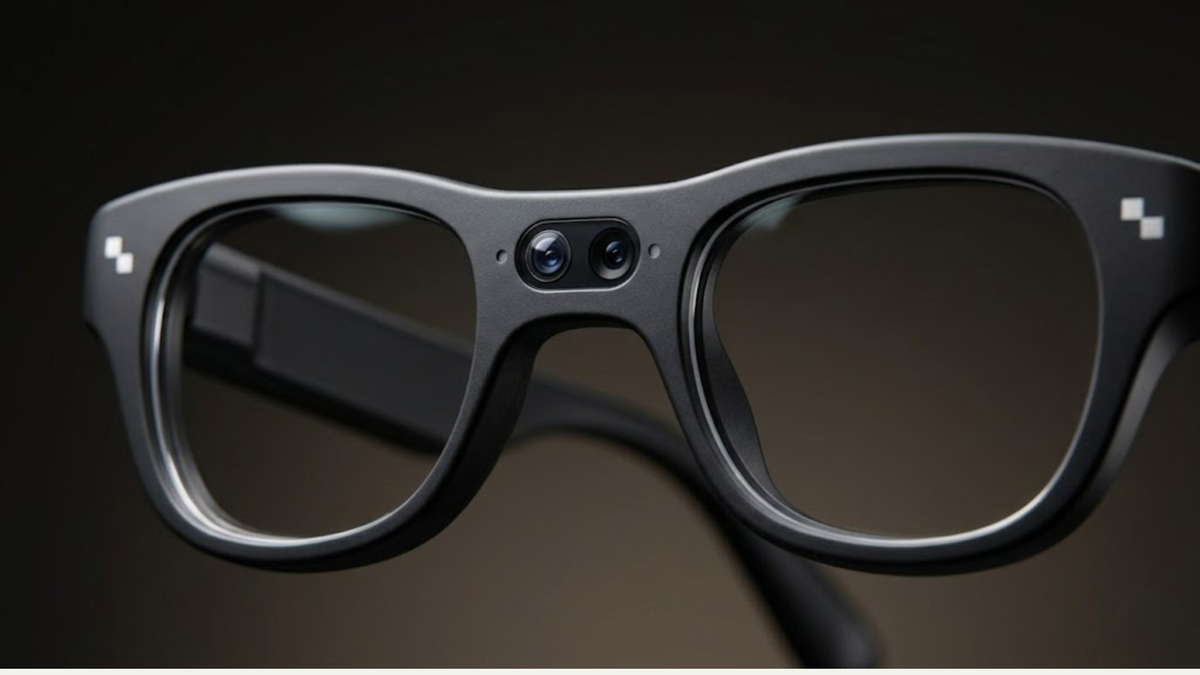
The smart glasses with camera RayNeo X3 Pro, feature a binocular full-colour MicroLED optical engine with a per-eye resolution of 640x480 and a peak brightness of up to 6000 nits. This means that even when walking outdoors in daylight, watching real-world scenes while reading subtitles, the text remains crisp and legible without appearing washed out.
As translation glasses move from technical demos to daily wear, what truly resonates with users is often not the specifications, but a specific moment—such as chatting with an owner in a Tokyo alleyway izakaya, using broken Japanese to hear stories about his younger days running a shop in Osaka. The following scenarios have been repeatedly validated as must-have applications in real-world user and industry cases.
Real-time speech translation with subtitle overlay is the most core and iconic feature of translation glasses today. When a speaker talks to the user, the glasses capture and transcribe the speech, translate it into the user's native language, and overlay it as subtitles near the speaker's outline. This experience of face-to-face conversation combined with screen-level comprehension is difficult for traditional smartphone translation to replicate.
In experiments at Mainz University of Applied Sciences in Germany, researchers used glasses with AR subtitle capabilities to assist hearing-impaired and international students in the classroom. Hearing-impaired students understood lectures through real-time German subtitles, while international students saw automatic German-to-English translations in their glasses. Both groups reported a significant reduction in the cognitive load of switching between watching the teacher, the whiteboard, and the subtitles, especially in long sessions requiring note-taking.
In these scenarios, AR glasses like the RayNeo X3 Pro, equipped with 6DoF spatial positioning and Falcon Image spatial imaging technology, can keep subtitles stable relative to the speaker's position as the user moves or turns their head. This prevents reading difficulties caused by subtitle drifting and creates an experience that aligns more closely with the intuition of face-to-face conversation.

The second major need arises when you cannot read a specific line of text, a menu, or a subway sign. The old way involved pulling out your phone, opening the camera, taking a photo, and waiting for the result while comparing it to the original. Translation glasses use cameras, text detection, and image translation to turn this into one simple motion. You just look at the text, and the translated version appears right over it almost instantly.
More travel-focused smart glasses now include instant translation for menus, street signs, and museum labels as standard features. These devices focus on keeping the original layout and visual style. They place the translated text over the original to keep the cultural context intact. This is huge for travelers in Japan, Korea, or old European cities. You are no longer just looking at raw results. You can understand the meaning while still appreciating the beauty of the original text.
For travelers who love walking and urban exploration, translation glasses are becoming valuable heads-up navigation tools. By integrating with map services, these glasses overlay directional arrows, walking routes, and landmark details directly onto your field of vision. This helps avoid the safety risks and loss of immersion that come with constantly looking down at a phone.
Cutting-edge research and products are now exploring the idea of a proactive cultural assistant. AI glasses use cameras to identify your location, nearby shops, or artwork. They then combine this with your long-term interests to generate personalized suggestions. For example, in Cinque Terre, Italy, the glasses might suggest local restaurants and wineries to a food and wine lover without being asked.
Translation glasses offer another major benefit that is often overlooked. They provide real-time captions for the hearing impaired, the elderly, and those who lack confidence in their listening skills in foreign environments. Research shows that over 430 million people worldwide live with disabling hearing loss. While traditional hearing aids and cochlear implants help people hear, AR captioning glasses help them actually understand.
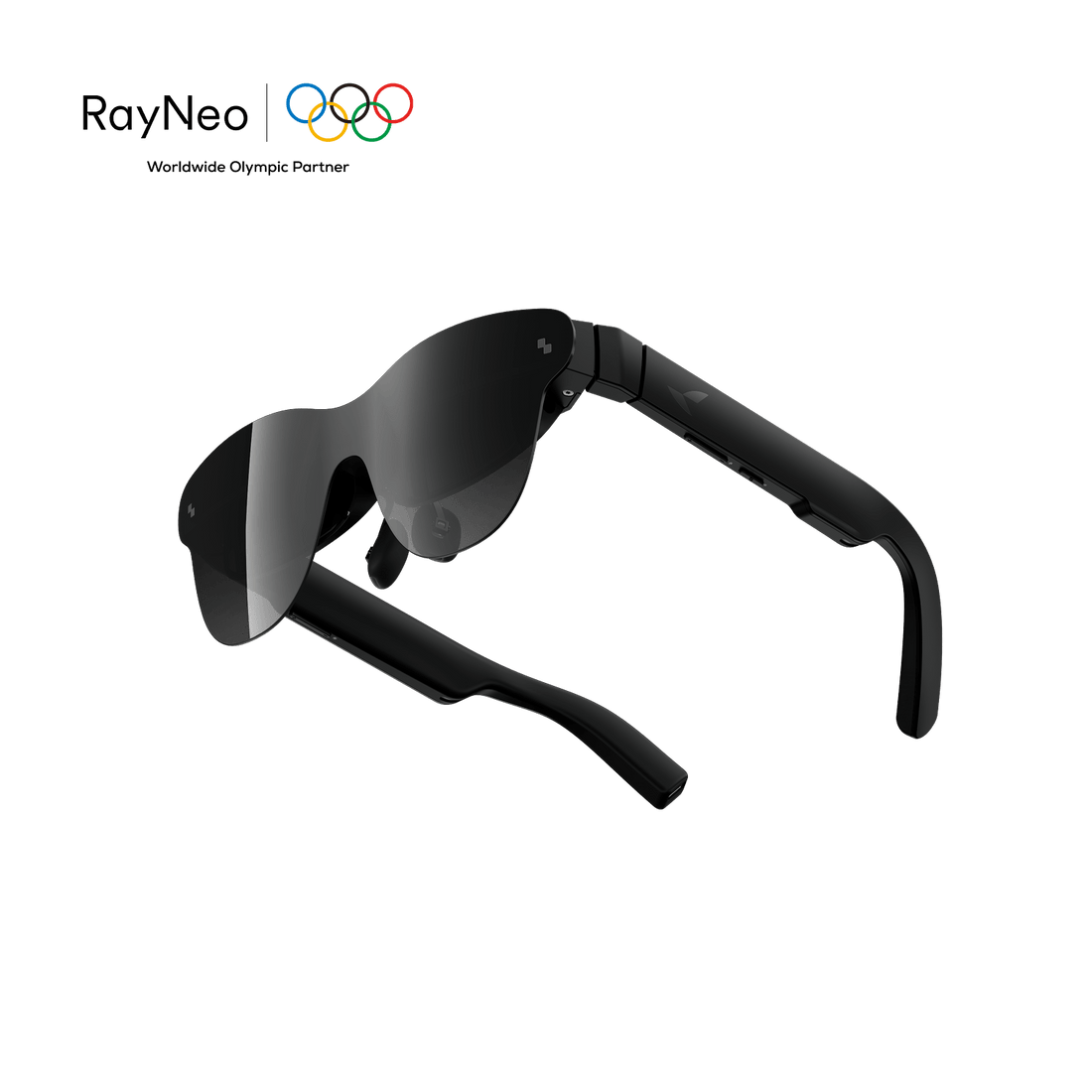
For these accessibility needs, comfort and long-term wear are essential. The RayNeo Air 4 Pro weighs about 76 grams and features adjustable nose pads with a lightweight frame. It also includes a four-speaker directional audio system tuned by Bang and Olufsen. This system delivers clear alerts and media playback while minimizing sound leakage. In a meeting or a classroom, the wearer can read subtitles and receive audio cues with minimal distraction. The overall experience feels like wearing natural glasses rather than carrying an extra device on your head.
When we talk about the best translation glasses to buy in 2026, we are really balancing three things: whether the translation and AI are smart enough, if the display and fit are comfortable, and how naturally they fit into your daily life. Based on current reviews, market data, and real user feedback, translation glasses generally follow two paths. One is the RayNeo X3 Pro model, which serves as a full-feature AR translation and spatial computing terminal. The other is the Meta Ray-Ban style, an ecosystem-linked pair of everyday glasses that handles translation and AI through deep integration with your phone and social networks.
The AI glasses with translation function, RayNeo X3 Pro, have been frequently cited in reviews and awards over the last two years as one of the consumer AR glasses closest to the future of the medium. It even made the TIME Best Inventions of 2025 list in the wearable technology category. Its appeal lies not just in its specs, but in its balance of translation, display, and spatial awareness.
In travel scenarios, the advantages of the X3 Pro are obvious. When walking through an unfamiliar city, the binocular full-color MicroLED display uses its 6000-nit peak brightness to overlay navigation arrows and shop info onto your view. Meanwhile, dual front cameras and 6DoF tracking keep the image stable. The route does not just fly away when you turn your head to look at the scenery. If you stop at a small restaurant, you can just look at the menu. The dense local text is automatically recognized and overlaid with a translation in your native language. This lets you order with confidence like a local instead of constantly checking your phone.
Technically, the X3 Pro runs on the Qualcomm Snapdragon AR1 Gen 1 platform with 4GB of RAM and 32GB of local storage. Paired with RayNeo’s own AIOS and large language models like Gemini, it can run multimodal AI apps directly on the glasses. This includes real-time translation, visual recognition, and AI assistant queries. It offers about 5 hours of battery life and supports fast charging, reaching a full charge in about 40 minutes. For users spending an entire afternoon at a foreign language trade show or exploring a city, this usable battery window is more important than theoretical numbers.
Its suitability for translation is also worth noting. The X3 Pro features a binocular full-color display with a 30° field of view and a 60Hz refresh rate. This ensures that text-heavy captions and menus are clear and free of ghosting.
If your primary needs involve international business trips, overseas trade shows, studying abroad, or deep solo travel, the RayNeo X3 Pro is a top choice. It is a versatile AR translation glass for 2026 that handles real-time translation, spatial navigation, content consumption, and recording in one device, provided you do not mind a slightly high-tech look.
Looking at the big picture, translation glasses have moved past being just tech toys. They are now practical tools for real life. These devices are quietly changing how people interact with the world during international travel, global business, school, and accessible communication.
Two main paths have emerged. The RayNeo X3 Pro is an all-in-one powerhouse focusing on translation, spatial AR, and AI assistance for heavy-duty use. Meanwhile, the RayNeo Air 4 Pro offers a top-tier visual and audio experience with light translation and navigation on the side. These two models cover different needs, setting the standard for how we will use translation glasses over the next few years.
Most mainstream translation glasses currently on the market are primarily designed for voice and text translation and do not yet possess mature, real-time sign language recognition capabilities. This is because sign language translation requires complex computer vision technology to track subtle finger movements, facial expressions, and body posture. However, there are already laboratory prototypes and DIY solutions based on open-source platforms (like Raspberry Pi) that capture gestures via camera and convert them into text or speech.
While social acceptance of wearing translation glasses is increasing, it is still important to mind etiquette in certain settings. Translation glasses are generally viewed as a bridge for communication, especially when overcoming language barriers or providing subtitle support for the hearing impaired. However, in private gatherings, religious sites, or serious business meetings, wearing smart glasses equipped with cameras may raise privacy concerns or be mistaken for covert recording. We recommend that if you are wearing smart translation glasses, it is best to briefly inform the other person before starting a deep conversation: "I'm wearing translation glasses to help me understand you better." Additionally, maintaining eye contact rather than staring at the display inside the lenses will make the interaction feel more natural and respectful.
Yes. With the advancement of hardware processing power, modern translation glasses no longer rely on a "constant internet connection." Offline mode is ideal for travelers in remote areas or locations where international roaming data is expensive. It is sufficient for translating simple travel phrases, menus, or road signs (via camera text recognition). Devices like the RayNeo X3 Pro support downloading offline language packs, allowing for basic translation even without Wi-Fi or mobile data.
The variety of languages supported varies significantly depending on the product's positioning. Generally, mainstream products cover "common languages," while high-end or business-oriented products support more regional dialects. For instance, Ray-Ban Meta supports four languages—English, French, Italian, and Spanish—covering basic social needs. In contrast, the RayNeo X3 Pro supports 14 languages, including Chinese, English, Japanese, Korean, French, Spanish, German, and Italian, helping you achieve a more comprehensive and accurate translation experience.





Share:
How Much Are Smart Glasses in 2026? Average Cost & Buying Guide
What Are Smart Glasses and What Can They Do?