

$429.00

Smart glasses prices have split even more in 2026. You can find AI audio glasses for under $200 and full AR headsets for over $1,000. Why do they share the same name when some cost $99 and others cost $3,500? This is not just about marketing or brand hype. Every technical choice drives the price. This includes the display, AI power, optics, and battery. You need to understand this logic to find the best value for your budget. This guide covers average prices in 2026. We explain what you get at each price level. This will help you make the best choice for your needs.
Before we dive into details, let's clarify the price issue quickly. Then we can break down the technology and the target users for each tier. For most consumers, especially first-time buyers, it is more important to understand the experience limits of each price level than to simply memorize an average number.
In the $150 to $250 range, smart glasses focus primarily on audio and basic AI assistants. Many products in this tier do not have a display screen. The core experience is moving voice assistants, calls, and notifications to your face. This keeps you connected while commuting, driving, or walking without needing to pull out your phone. Typical specs include a battery life of 4 to 6 hours, which can last a full day of calls and podcasts with a charging case. These glasses usually have IPX4 water resistance and prioritize comfort and a lightweight design, typically weighing between 35 and 50 grams.
However, entry-level batteries still struggle with heavy music streaming or constant AI use. In outdoor settings, sound leakage from open speakers can be awkward. Without a display, navigation and translation rely entirely on audio. While this is efficient, it is not as intuitive as a visual guide. We recommend viewing these products as a hybrid of smart headphones and glasses. They are a good starting point, but you should not expect much in terms of visual information.
From $300 to $600, smart glasses begin to include high-quality cameras and high-resolution monocular or binocular displays. AI features upgrade from voice Q&A to visual understanding. For example, several AR glasses priced around $400 offer virtual large screens at 1080p or higher. They also integrate premium audio quality. This gives you a visual experience similar to a 100-inch TV while on a plane, a train, or in a hotel. If you primarily want to watch movies, extend your office screen, or enjoy basic entertainment, look for a display-focused model. Choosing one that weighs around 60 grams and supports HDR will reduce the gap between the theory of all-day wear and the reality of wanting to take them off after two hours.
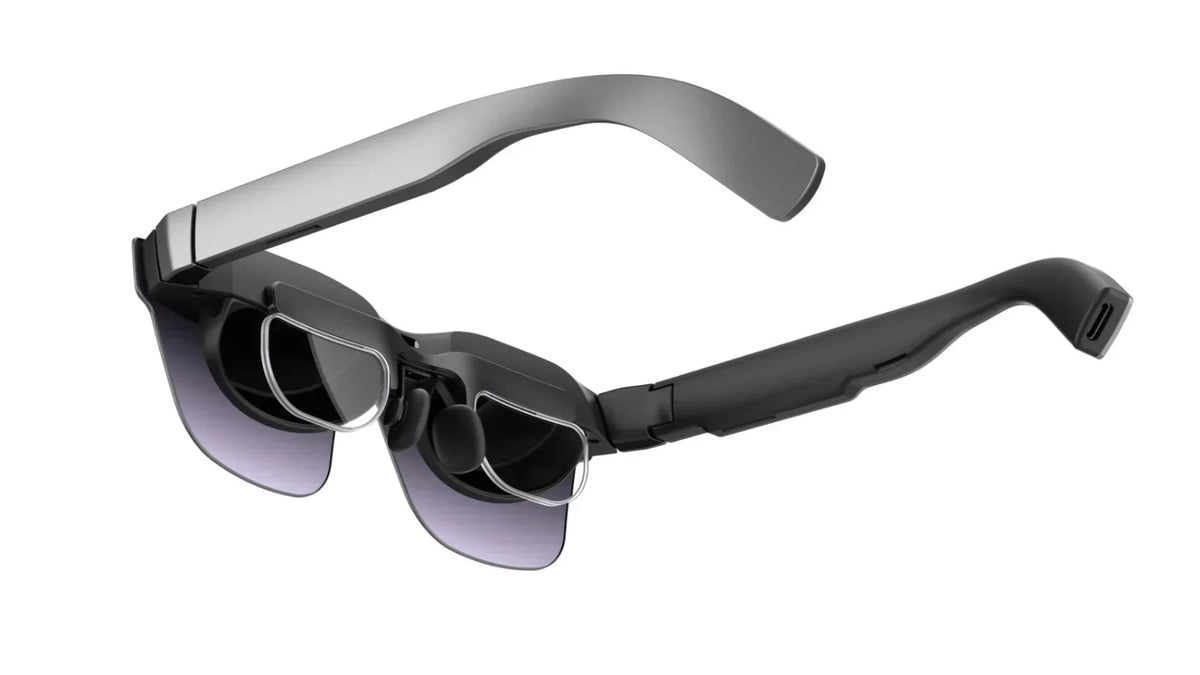
The $700 to $1,200+ range is the primary battlefield for full AR and spatial computing glasses. These products usually feature binocular color MicroLED or MicroOLED waveguide displays. They support 3D spatial UI overlays, room-level positioning, and all-day visual AI. Devices like the RayNeo X3 Pro use high-brightness etched waveguides and self-developed MicroLED technology. Peak brightness can reach 6000 nits with a field of view around 30 degrees. These run on the Qualcomm Snapdragon AR1 Gen 1 processor with 4GB of RAM and 32GB of storage. They also include a 12MP IMX681 main camera and spatial sensors for 4K and spatial video recording.
The RayNeo X3 Pro is particularly suited for users with clear AR workflows. This includes remote collaboration, field maintenance, spatial content creation, or AR navigation. It overlays virtual interfaces onto the real world. This provides real-time info during mobile office tasks or field operations without interrupting your work. Among corporate and creator users, satisfaction is highest when there is a clear use case. Otherwise, these high-end features may go unused, making the device feel less cost-effective than mid-range display glasses.

For consumers who only want to watch videos or play games, high-end features like 3D positioning and gesture interaction might not be necessary. In those cases, the experience feels like an expensive wearable screen. The $1,000 budget is worth it when the glasses are used daily for work or creation. For tasks like spatial tagging, real-time collaborative translation, or first-person spatial recording, the cost per hour becomes much more reasonable through high-frequency use.
After trying products at different price points, it becomes clear that price gaps are more than just brand markup. Analyzing what-are-smart-glasses across various tiers reveals that the differences between $100, $300, and $1,000 models depend heavily on optical architecture, SoC processing power, AI service costs, and design choices. These structural factors ultimately determine the final price tag.
Optical technology is the primary driver of pricing, especially for AR and display glasses. Entry-level models often use basic HUD or single-lens projection. They might have low resolution, like 640x400, and struggle in outdoor sunlight. Narrow fields of view and unnatural focal distances also cause eye fatigue.
Mid-to-high-end models typically use dual 1080p or 3D 3840x1080 MicroOLED panels. They offer peak brightness between 500 and 1,200 nits and simulate a 100 to 200-inch screen. Refresh rates up to 120Hz provide smooth motion for gaming.
Key Performance Indicators:
Entry-Level: 640x400 resolution, HUD/single-lens, narrow FOV.
Mid-High End: Dual 1080p/3D MicroOLED, 500-1200 nits, 120Hz refresh rate.
Premium Features: HDR10 support, such as in the RayNeo Air 4 Pro. It uses 0.6-inch MicroOLED panels to deliver a 201-inch equivalent screen with superior shadow detail.
These high-end components push hardware costs into the $300-plus range.
In 2026, smart glasses are more than hardware. They provide services like real-time translation, visual search, and multi-modal AI assistants. These come with an ongoing AI tax. There are two main business models:
Bundled Model: Basic AI features are included in the hardware price to cover server costs.
Subscription Model: A lower entry price for the hardware, paired with a monthly fee for advanced models and high-frequency computing.
Heavy users report that a $299 hardware price can be misleading. After six months, subscription fees of $10 to $20 per month can equal half the hardware cost. This affects the long-term value. If you mainly need local media, gaming, and notifications, check the boundaries between local and cloud features. Choose a product based on whether you really need to pay for ongoing AI services.
Brand and design also impact the final cost. Collaborations between fashion brands and tech giants often result in frames that look like standard sunglasses. These models feature thinner temples, better hinge quality, and premium lens coatings.
Many users on social media note that they value a low-profile look over top-tier specs. They want a device that does not look like a gadget. People are often willing to pay more for a natural design that blends with their daily style. The value of long-term wearability is often higher than a few extreme technical specs.
Once you understand the price ranges, the real question is what irreplaceable experiences you get for $300 or $500. In 2026, we compare the core capabilities and value of smart glasses across four typical categories.
Products in this tier are essentially headphones with frame functionality. They focus on music, calls, and basic voice AI assistants for commuting. These typically feature open-ear speakers or bone conduction units. They support Bluetooth, multi-point connection, and noise reduction algorithms. Some include simple touch gestures to control volume, skip tracks, or wake the AI.
Open-ear speakers improve comfort but still suffer from sound leakage at high volumes. People nearby can faintly hear your audio in quiet environments. Also, AI features at this price are limited by phone processing power and cloud frequency. They work well for checking weather or setting reminders. However, they lag behind high-end AR glasses in complex visual understanding and multi-turn dialogue.
The $300 to $499 range is home to many social-media-focused smart glasses. These prioritize cameras and microphone arrays. They allow users to capture 1080p or higher resolution video from a first-person POV and upload it instantly. Typical specs include a 12MP main camera, 1080p or 1440p video support, and noise-canceling microphones. Some models include basic AI scene recognition for automatic white balance and exposure.
User reviews show that vloggers and extreme sports fans love the hands-free shooting freedom. Others remain wary of privacy issues. Some people instinctively avoid users wearing camera glasses in social settings. If your goal is content creation and life-logging, these devices can significantly increase your footage. If you are sensitive to privacy concerns, you might prefer audio or display-focused models.

This is the most important category in the 2026 consumer market. Many users find this price point most useful. AR display glasses in this range offer dual 1080p or 3D displays, HDR, high-contrast visuals, 120Hz refresh rates, and peak brightness around 1,200 nits. They connect via USB-C or wireless to phones, tablets, handhelds, and consoles. The core value is turning any device into a portable 200-inch screen.
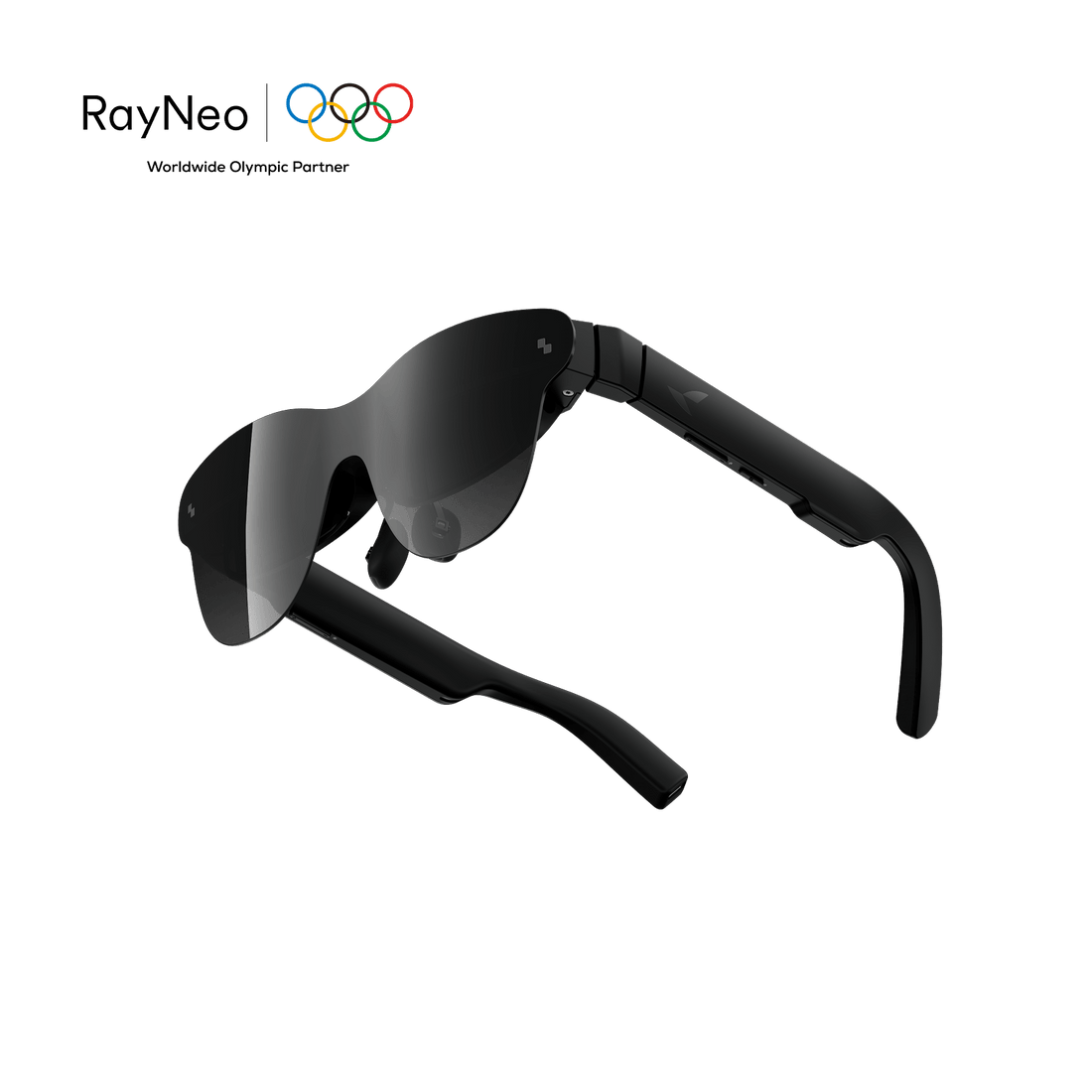
Users can watch movies or play console games for 2 to 3 hours without major fatigue during long flights or train rides. Some optimized models with good weight distribution can support over 4 hours of continuous play. The RayNeo Air 4 Pro AR glasses is a key product in this tier. It features 0.6-inch MicroOLED screens and dual 1080p resolution with 3D 3840x1080 support. With peak brightness up to 1,200 nits, it is one of the first AR glasses to support HDR10. It preserves shadow details remarkably well during playback. Combined with an equivalent 201-inch virtual screen, it provides an immersive experience similar to a living room TV, even in a cramped airplane seat. Professional media reviews have highlighted these strengths.
When the budget exceeds $800 or $1,000, you are no longer buying just a display terminal. You are getting a full AR platform with independent computing, spatial awareness, and a complete AI OS.
These glasses feature binocular color waveguide displays and high-bright MicroLED panels. They support all-day outdoor use and 3D spatial UIs. Some models like RayNeo X3 Pro can reach 6,000 nits peak brightness and 3,500 nits average brightness. They weigh around 76 grams and feature 12MP IMX681 main cameras plus spatial cameras. They support 4K photos and 1440p+ video recording. Running an Android-based AI system, they handle navigation, real-time translation, and visual AI tasks.
|
Category type |
Typical price 2026 |
Key features |
Typical users |
|
Audio & basic AI |
150–299 USD |
Audio, voice assistant, no display |
Commuters, light digital life |
|
Camera & social |
300–499 USD |
HD camera, microphone array |
Vloggers, short video creators |
|
AR displays & gaming |
300–700 USD |
Dual 1080p, HDR, 120Hz |
Movie fans, cloud gamers, mobile workers |
|
All-in-one AR & enterprise |
800+ USD |
AR SoC, spatial computing, dual cams |
Enterprise users, pro creators |
When purchasing smart glasses, we often only see the surface, such as the price on the official website. We fail to consider long-term costs like lenses, accessories, and software subscriptions. Six months later, many find their total investment is far higher than expected. The most common feedback we hear in after-sales interviews is: If someone had helped me calculate these hidden fees at the start, I would have made a completely different choice.
For users with myopia, prescription lenses are an unavoidable obstacle. Mainstream smart glasses usually offer two options: replacing the front lens with a prescription one or using internal prescription inserts. These solutions typically cost between 50 and 200 dollars. The price depends on your prescription, astigmatism, and whether you choose blue light filtering or progressive multifocal designs.
Our data from optical partners shows that many consumers choose standard lenses initially. After a quarter of heavy use, they realize they need blue light protection or anti-reflective coatings due to screen time. This leads to spending a significant amount on lenses a second time. We suggest reserving at least 20 to 30 percent of the device price for prescription lenses in your budget, especially if you plan to use these as your primary work or entertainment screen.
Accessories also drive up the total cost of ownership. For display and AR glasses, hard or soft storage cases, anti-scratch protectors, light shields, and spare nose pads are almost mandatory. A well-designed light shield significantly improves visibility when using HDR displays outdoors. Additionally, some models require dedicated cables, adapter docks, or powered hubs to connect to consoles, handhelds, and laptops for the best experience.
In our tracking of user spending after six months, accessory costs usually account for 10 to 20 percent of the device price. Some heavy users even buy multiple light shields and custom nose pads for different scenarios. If you travel or commute often, factor in a second cable and a spare case during the budgeting phase to avoid extra shipping costs and delays later.
Software subscriptions are the easiest part to overlook but also the easiest to lose control over. In the 2026 market, most AI visual translation, real-time captioning, cloud assistants, and spatial collaboration features are offered via subscriptions. Prices range from 5 to 25 dollars per month depending on the manufacturer and service level.
If you only use translation and AI assistants occasionally, monthly subscriptions are more cost-effective. However, for users who rely on multimodal AI daily for work and study, the long-term subscription cost can easily exceed the hardware price. When making a decision, list the services you might use over the next year. Add the 12-month total to the equipment price to find the true annual cost. Then, decide if the smart glasses are a worthy investment.
The real price is the one-time hardware expense plus the long-term investment in lenses and subscriptions.

Many users searching for a 2026 smart glasses buying guide want to know one thing. They want to see which products fit specific scenarios and if they should wait for the next generation. Based on media reviews and user feedback, we selected representative models for different price points. This will help you find the right fit quickly.
|
Segment |
Typical Price |
Representative Capabilities (2026) |
Ideal Usage |
|
Entry Audio AI |
150–250 USD |
Audio, voice assistant, no screen |
Commuting, calls, podcasts |
|
Social Camera |
300–450 USD |
1080p video, AI scene optimization |
Vlogging, daily recording |
|
AR Display Mid |
300–400 USD |
Dual 1080p, HDR, 1200 nits |
Movies, cloud gaming, extra monitor |
|
AR Display Upper |
500–700 USD |
Larger FOV, premium audio |
Extended gaming, pro viewing |
|
All-in-One AR |
1000–1300 USD |
AR SoC, spatial computing, dual cams |
Enterprise, spatial content |
Within the mid-range AR display segment, the RayNeo Air 4 Pro sits at approximately 299 USD. Its core features include HDR10, a peak brightness of 1200 nits, and a 201-inch equivalent screen. It is ideal for users who pair glasses with a Switch, Steam Deck, or smartphone for movies and gaming. It offers a highly competitive visual experience while staying within budget.
When choosing smart glasses today, everyone faces the same question: is it too early to buy, or should I wait until 2027 or later? We break this down into three time dimensions. By looking at mass production progress and technical iteration cycles, we help you find the balance between value and innovation.
According to a report released this year by the industry research firm Smart Analytics Global, the global AI smart glasses market is expected to enter a period of explosive growth in 2026. Sales volume is projected to jump from 6 million units in 2025 to 20 million units. The market size will grow from approximately 1.2 billion dollars to 5.6 billion dollars. This leap is mainly due to major consumer brands entering the market and the economies of scale in the supply chain.
Mass production means that display and computing configurations that used to cost 600 to 800 dollars are now available in the 400 to 500 dollar range. Display brightness, resolution, and refresh rates have all seen significant upgrades. From our supply chain perspective, the unit prices of AR waveguides, MicroOLED panels, and AR-specific SoCs have continued to drop. This has directly driven a performance jump in products priced between 300 and 500 dollars. For mainstream consumers, 2026 is a relatively smart time to enter the market, especially in the categories of display-centric smart glasses and basic AI glasses.
If your core goal is to improve your movie and gaming experience while reducing time spent staring at phones and tablets, we will be blunt: mid-range AR display glasses in the 300 to 400 dollar range are one of the best value choices in 2026.
This tier of products already offers:
1080p high-definition visuals
Equivalent large screens ranging from 100 to 200 inches
HDR displays with sufficient brightness
When paired with handhelds and phones, these glasses can greatly extend the lifespan of your devices and indirectly increase the value of your existing hardware. While testing the RayNeo Air 4 Pro in a pitch-black environment, the shadow detail and highlight glare control for HDR10 content were clearly superior to previous non-HDR glasses. The experience boost for the same budget is immediately noticeable. These mid-range products have reached a mature state. Short-term iterations will likely focus on minor weight and brightness optimizations rather than revolutionary changes. Therefore, the concern that you are losing out by buying now is not very strong in this category.
If your ideal vision is wearing a pair of spatial computing glasses that are completely independent of a phone—overlaying 3D apps and UI on the real world, having natural conversations with AI, and integrating PC work and phone features—then aggressive all-in-one AR solutions are still evolving rapidly. Current products in the 1000 to 1300 dollar range have some standalone capability, but they still involve compromises in battery life, weight, aesthetics, and software ecosystem.
Smart Analytics Global predicts that AI smart glasses shipments could reach 75 million units by 2030, with revenue hitting 290 billion dollars. HUD-style AI smart glasses are expected to gradually replace audio-only glasses as the mainstream form factor starting in 2028. This means that over the next three to five years, spatial computing and display formats will still undergo fast-paced changes. If you have a sufficient budget and very high expectations for next-gen standalone AR, but do not strictly need a spatial computing device for work or life right now, waiting for one or two more generations in the 800 dollar-plus tier is a rational choice.
In short: buy now for movies and gaming; wait and see for full-stack spatial computing.
How much budget should you reserve for smart glasses in 2026? A better way to put it is how much you are willing to pay for daily wear value. Based on our long-term market observations, we recommend three general budget ranges for different needs.
Smart Glasses in the $150 – $250 Bracket: This tier is for users who just want to try AI assistants and hands-free audio. Focus on comfort and battery life. Choose products that are lighter and have minimal sound leakage from open-ear speakers.
Mainstream AR Displays in the $300 – $400 Bracket: This is the most reasonable mainstream choice for frequent travelers or commuters. It is for those looking to replace part of their TV or monitor experience. Products like the RayNeo Air 4 Pro feature HDR10, excellent brightness, and a lightweight design. These offer a viewing experience far better than a tablet within this budget range.
All-in-One AR Platforms in the $800 – $1,200 Bracket: Consider all-in-one AR solutions if you need a device for remote collaboration, industrial inspection, or spatial content creation. This applies if you expect to use the glasses for more than 4 hours a day. Be sure to include lenses, accessories, and subscription costs in your total budget. Treat this purchase like a professional laptop.
Price differences in smart glasses primarily stem from optics and display technology, followed by SoC processing power and AI services, and finally brand premium. Entry-level products often lack high-resolution displays and dedicated AR chips, offering only audio and basic assistants, which naturally keeps costs low. In contrast, high-end AR products require waveguide optics, MicroOLED or MicroLED panels, AR-specific SoCs, and complex structural designs. These hardware components and R&D costs push the retail price higher.
In some regions, if smart glasses can be fitted with prescription lenses that comply with local regulations, users may be able to reimburse part of the lens cost through vision insurance or an HSA account. However, this usually does not cover the smart device itself. You should consult your local insurance provider and optometry service for specific rules. A typical situation we see with North American users is that the hardware remains an out-of-pocket expense, while prescription lenses and eye exams can be partially covered by vision insurance.
Not all smart glasses require a monthly fee. Most AR glasses that focus on display and local multimedia playback have no mandatory subscription; you buy the hardware and use it. However, products marketed around AI assistants and visual computing are increasingly adopting subscription models. These provide higher-tier cloud models and features like real-time translation, captioning, and visual search, with prices generally ranging from 5 to 25 dollars per month. Before purchasing, be sure to check how the seller divides basic and premium features to confirm if the device meets your daily needs without a subscription.
The upgrade cycle for smart glasses is currently around two to three years, similar to smartphones. However, the actual timing depends heavily on how you use them. For display-centric AR glasses, as long as the optical structure and resolution are sufficient, they can still serve as high-quality external screens even after your phone or console upgrades through a generation or two. All-in-one AR headsets are more susceptible to SoC performance limits and software ecosystem shifts, so power users might consider upgrading every one to two generations.





Share:
Are Smart Glasses Worth It in 2026? Buying Advice
Translation Glasses: What You Can Actually Do with Them Today