

$429.00

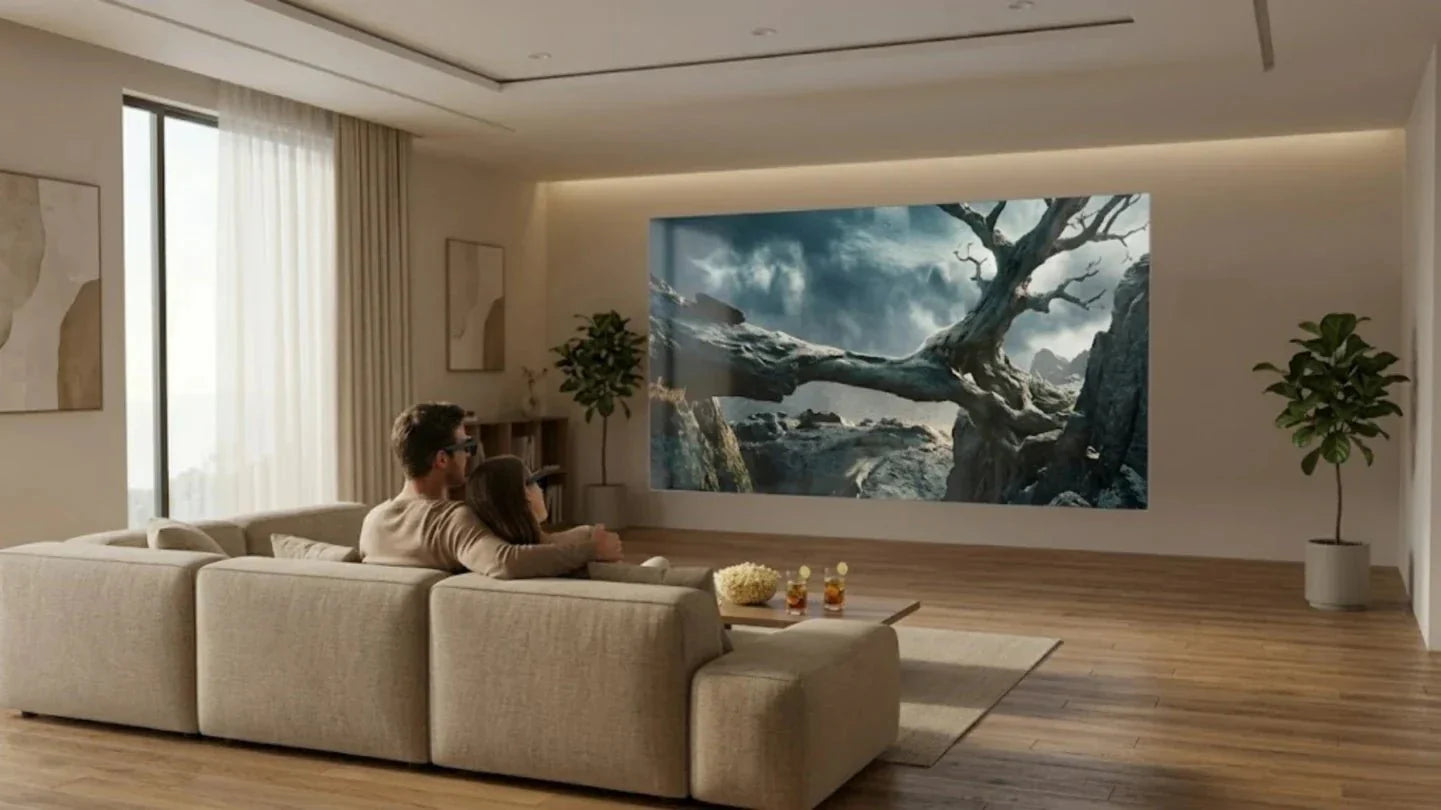
Smart movie glasses are no longer a sci-fi concept in 2026. Put them on, and a 201-inch private screen floats before your eyes. You can lie flat in bed, curl up in an airplane seat, or sit in any quiet corner. As a dedicated AR enthusiast, I believe smart movie glasses can actually outperform physical big screens. In this article, we will analyze four key areas: image quality, immersion, portability, and comfort. By looking at real user pain points and testing data, we will give you a clear verdict on whether smart glasses can truly replace the big screen.
The main difference between smart movie glasses and traditional large screens comes down to personal immersion versus shared high-quality viewing. Comparing the two isn't about picking a winner. Instead, it’s about recognizing that each excels in different scenarios. By understanding these specific dimensions, you can make a choice that truly fits your needs.
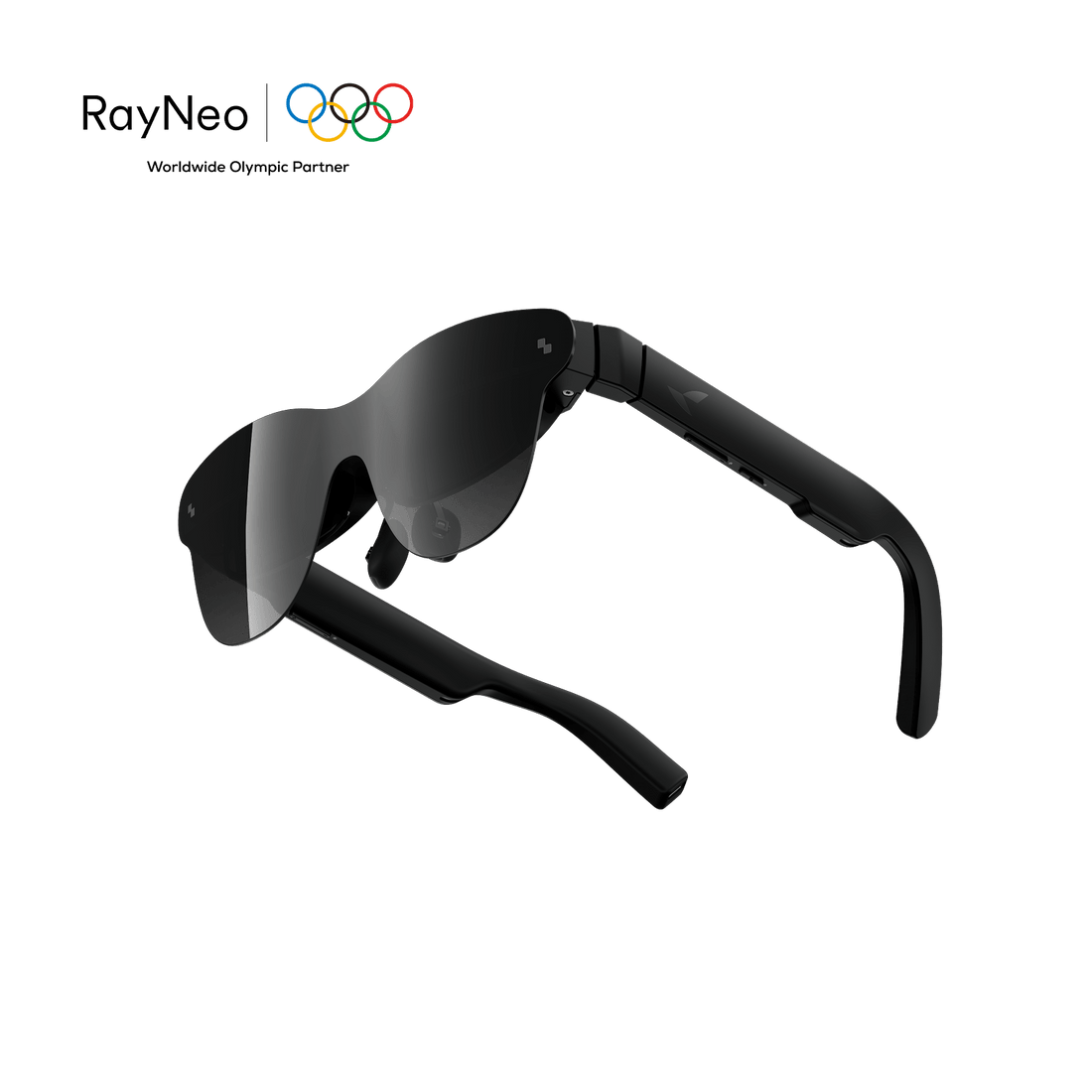
In the r/augmentedreality community on Reddit, users often bring up the same pain point: current AR glasses lack brightness in strong light. This causes images to look gray and colors to look washed out, making them incomparable to home theater OLED screens. This issue has been significantly improved in the 2026 generation of products. Take the RayNeo Air 4 Pro as an example. It features HueView 2.0 micro-OLED displays with a resolution of 1920×1080 per eye and a peak brightness of 1200 nits. It is also the first AR glasses in the world to support the HDR10 standard, displaying over 10.7 billion colors with a color accuracy of ΔE < 2.
Traditional theaters create immersion by physically occupying your entire field of vision. Smart movie glasses achieve a similar effect by closely matching your line of sight. A 47 degree FOV field of view allows the virtual screen to fill your central vision. When paired with spatial audio, your brain’s immersion response kicks in quickly. The RayNeo Air 4 Pro features a four-speaker open-ear audio system co-tuned with Bang and Olufsen. The B&O acoustic optimization reduces sound loss by 80%, delivering a clear, layered soundstage without covering your ears. This directly addresses a common complaint from YouTube users regarding the heat and fatigue caused by wearing headphones for long periods.

When considering buying tv glasses for immersive viewing, many users ask our sales staff if long-term wear will cause eye strain. Based on real-world testing, the key factors for eye comfort include the optical focal length, the pressure distribution on the bridge of the nose, and adjustable brightness levels. However, we must be direct: with any head-worn display, we recommend a 10-minute break after 90 minutes of continuous use. This is essentially the same advice given for staring at a computer screen for a long time.
IDC data shows that global XR device shipments grew 44.4% year-over-year in 2025, with smart glasses acting as the core driver. IDC also predicts that display-enabled glasses will outsell VR and MR headsets by 2027. Behind this trend is a shift in how consumers view media. The 2026 generation of products offers a new paradigm. It is not just about convenience; it is a total reconstruction of how we interact with movies.
The RayNeo Air 4 Pro features a 201-inch virtual screen combined with 1200 nits of high brightness and HDR10 color standards. Visually, the experience is nearly identical to the field of view you get from a front-row seat in an IMAX theater. More importantly, this IMAX screen can unfold anywhere: in a hotel room during a solo business trip, on an international flight at 2 AM, or in any personal space. This portable private cinema experience is something fixed screens, no matter the size, simply cannot replicate.

In 2026, leading smart glasses brands began introducing real-time AI 2D-to-3D algorithms for movies. This technology uses deep neural networks to estimate depth frame-by-frame. It turns standard 2D content into a 3D visual output with a real sense of depth. This creates a noticeable boost in spatial layering when watching nature documentaries or action films. While fixed screens require specialized hardware for this, smart glasses integrate this power natively into their chips without needing extra accessories.
A well-known flaw in the previous two generations of smart glasses was the washed-out image and loss of detail in bright outdoor settings. High peak brightness allows AR glasses to remain readable even in direct sunlight. This is a massive upgrade for users who want to use their devices in outdoor environments.
Open-ear spatial audio is a key advantage of smart movie glasses over traditional over-ear headphones. The four-speaker system co-tuned by B&O builds a realistic soundstage around your ears. At the same time, it allows ambient sound to enter naturally. This keeps you aware of your surroundings in public places. For users in semi-public settings like commutes or waiting rooms, this provides an immersive audio experience without the safety risks of being totally cut off from the world.
After analyzing image specifications, real user feedback, and hands-on testing, here are our top rankings for mainstream smart movie glasses in 2026. Our selection criteria focus on core metrics for viewing: display quality, audio performance, comfort weight, and price point.
Core Position: Priced at $299, these are currently the best value HDR viewing glasses on the market, period.
Display Advantages: Features HueView 2.0 micro-OLED with 1920×1080 resolution per eye, a 120Hz refresh rate, and 1200 nits peak brightness. It is the world’s first HDR10 AR glasses, offering 10.7 billion colors and a color accuracy of ΔE < 2.
Audio Advantages: Equipped with a four-driver open-ear speaker system co-tuned by B&O. It reduces sound loss by 80%, providing a theater-grade stereo soundstage without the need for headphones.
Wearability: Weighs only 76g and supports prescription lens replacements up to -8.00D. The strain on the neck is extremely low during long sessions.
Target Audience: First-time buyers of smart movie glasses, frequent travelers, and daily commuters.
Our main reason for recommending the RayNeo Air 4 Pro is simple: at $299, it delivers HDR quality previously found only in $1,000 products. Its 76g weight ensures this high-end experience actually fits into your daily life.
Core Position: Aimed at advanced users who need AI enhancement and AR overlays, with pricing starting at $1,099.
Display Core: Uses a 0.36cc Micro-LED optical engine with self-developed lithography waveguides. It offers a typical brightness of 3500 nits, a peak of 6000 nits, full-color output of 16.77 million colors, and a 30 degree FOV.
AI and Processing: Powered by the Qualcomm Snapdragon AR1 Gen 1 processor with 4GB RAM and 32GB ROM. The dual-camera system uses Sony and OmniVision sensors, supporting real-time translation for 14 languages, object recognition, and an AI voice assistant.
Spatial Tracking: Features a 6-DoF spatial positioning system. RayNeo Imaging Plus technology keeps positioning errors under 5‰, making AR image stability significantly better than competing products.
Use Scenarios: Not just for watching movies. This is for power users who want real-time subtitle translation or AI content analysis overlaid on their screen. It is perfect for those who consume a lot of foreign language content.

After getting a pair of smart movie glasses, many new users jump straight into playing content. They often skip basic tests that can significantly impact the long-term experience. We recommend following these steps to quickly determine if a pair of glasses fits your viewing habits.
Step 1: Play content that supports HDR10. Choose high-contrast scenes, such as city lights at night or close-ups of faces against dark backgrounds.
Step 2: Check if highlights are overexposed or washed out. Look at whether you can see details in the shadows. Glasses with true HDR10 support show both bright peaks and dark details simultaneously. Ordinary SDR glasses usually fail to balance the two.
Step 3: Compare the color saturation between standard and HDR modes to see if the HDR boost is actually effective.
Step 1: Stand near a window with plenty of natural light and play a colorful video.
Step 2: Note if the image looks gray or if the contrast collapses when the glasses are used without covers.
Step 3: Use light-blocking nose pads or shield accessories. Observe how much the image quality improves with active shading. This helps you evaluate how well the glasses work outdoors.
Step 1: Activate 3DoF mode. While keeping your head mostly still, slowly turn 15 degrees left and right. Watch for any drifting or shaking of the virtual screen.
Step 2: Turn your head quickly and stop. Measure how fast the virtual screen stabilizes. Top-tier products should lock back into place within 0.5 seconds.
Step 3: Run these tests again after 30 minutes of continuous play. This ensures that heat buildup is not causing the tracking accuracy to drop.
Step 1: Connect to a phone and play high-bitrate content. Check the surface temperature of the frame after 30 minutes. It should stay below 40 degrees Celsius. Anything higher will make the bridge of your nose uncomfortable.
Step 2: Test the heat levels when connected to different phones or tablets. Differences in USB-C protocols can affect power consumption.
Step 3: Track the battery drain rate on your phone or external battery. This helps you plan for long flights or commutes.
In 2026, the answer to this question is closer to yes than ever before.
However, we must define the boundaries of that, yes. In a static home theater setup, a top-tier OLED TV still holds an advantage in color volume, peak brightness, and shared viewing. But for travel, privacy, and personal immersion, the new generation of smart glasses like the RayNeo Air 4 Pro changes the game. They outperform almost any screen you will find on the road in terms of field of view, color accuracy, and surround sound.
Ultimately, the value of smart movie glasses is not about replacing big screens. It is about freeing that high-end experience from the living room. These glasses give that power back to you during solo late-night sessions, long flights, or stays in unfamiliar hotel rooms. This is a level of freedom that a fixed screen simply cannot offer.





Share:
3DoF vs. 6DoF: What is the Difference and Which One Do You Need?
Top 10 Glasses AI Features That Are Changing Reality